
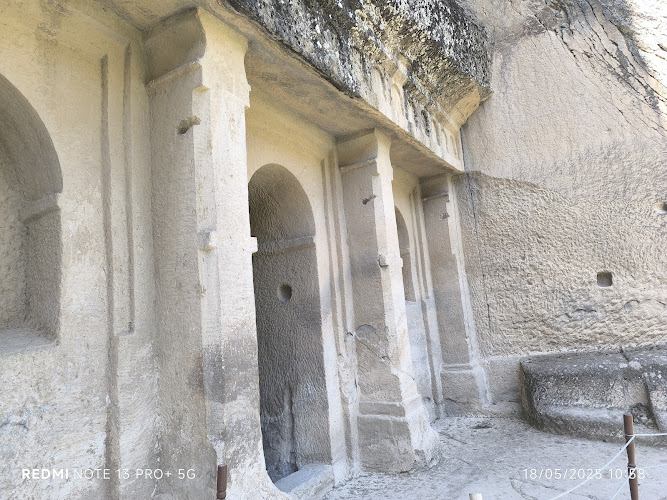
Sümbüllü kilise
About Sümbüllü kilise
When you first lay eyes on the Sümbüllü Kilise—which, by the way, means Hyacinth Church for those curious souls who find language fun—it’s easy to see you’re stepping into a fragment of hidden Cappadocian history. This Byzantine era church, carved gracefully into volcanic rock, is quietly stationed in the heart of the storied Ihlara Valley, putting it smack dab in one of Central Turkey’s most hiked and whispered-about landscapes. Some folks come looking for the famous frescoes or the sense of being surrounded by something ancient and spiritual, while others might just fall in love with the stark contrast between the greenery blanketing the Melendiz River and the almost otherworldly silence inside the church’s cool stone walls. Either way, it kind of sits near the intersection of both history nerd’s paradise and contemplative pilgrim’s haven.
One of the intriguing things is that the Sümbüllü kilise isn’t flashily grand. Unlike some of the huge cathedrals you find in other corners of Türkiye, this church’s magic lies in its embrace of modesty—small, dim, yet full of evocative detail. The cave walls are etched and painted with faded Byzantine religious motifs, surprisingly intact given all they’ve weathered over the centuries. Some might even argue the weathering adds to its charm, like wrinkles on a wise old face. There’s a slightly rough-hewn look, and part of me just loves that. You’ll see traditional cross-in-square architecture, domed ceilings, and columns left right where nature and ancient stonemasons agreed they belonged (or, maybe it just felt right at the time).
Now, make no mistake—getting here means threading through the lush valley or traversing narrow, sometimes testing footpaths cut into the dramatic volcanic tufa. The church isn’t wheelchair accessible, which is unfortunately a limitation, and parking nearby is also not accessible for those with mobility needs. But for those up for a light hiking adventure, the walk itself becomes part of the experience.
Sümbüllü kilise sits among a network of other historical churches trailing through Ihlara valley—true, there are a lot of them—but it still manages to keep its own kind of hush-hush mystique. The scenery, the history, and the relative lack of crowds (even during mid-season months) give the place a quietly memorable flavor. I’ll admit—I’ve been known to linger much longer, captivated by the echo of birdcalls and the hum of bees outside or the smell of rain on warm rock. You don’t even need to be a history buff to feel the weight (and gentle magic) of this place. It’s a hidden gem, but not in an overhyped way—just in the way that makes you want to show everyone your photos while secretly wishing it stayed just this quiet.
Key Features
- Authentic Byzantine Cave Church: Carved directly into the volcanic tufa of Ihlara valley, the church is a stellar example of rock-cut religious architecture that defines the region of Cappadocia (or Kapadokya, as locals say).
- Historic Frescoes: Peek at the church’s faded, centuries-old wall paintings and religious icons—some depicting saints, scenes from the life of Christ, and Byzantine crosses. Honestly, even for someone not well-versed in Orthodox iconography, it’s hard not to be moved.
- Peaceful, Undisturbed Atmosphere: Given its more out-of-the-way spot compared to the likes of Ağaçaltı or Yılanlı kilise, the Sümbüllü kilise has a hushed tranquility rarely disturbed by crowds.
- Surrounded by Natural Beauty: Set right in Güzelyurt’s patch of the Ihlara Valley, you’re flanked by the Melendiz River, lush greenery, and dramatic canyon walls—this spot is a hybrid between historical site and nature escape.
- Part of Ihlara Valley Church Cluster: Sümbüllü is just one among many ancient churches and monasteries camped along the valley, including the renowned Kokar Kilise, Direkli Kilise, and Karagedik Kilisesi, so it’s ideal for church-hoppers or architecture fans.
- Quiet Pilgrimage Route: Still used as a pilgrimage or meditative spot, with some visitors lighting a candle or sitting in quiet for a bit—hard not to, honestly, when the silence gets in your bones.
- Hand-Carved Architectural Features: Look for original rock-hewn columns, domes, apse, and the narthex, crafted when picking up a trowel meant you’d better have a lot of time and some solid faith.
- Authentic Rural Cappadocia Experience: Because it’s in a less tourist-heavy corner of Aksaray, you’ll quickly discover this is true Anatolia, with small villages, narrow trails, and that timeless Turkish hospitality.
Best Time to Visit
So, what’s the best season for dropping in on Sümbüllü kilise? In honest, semi-reliable traveler opinion, spring (April to early June) and fall (late September to November) have always been my favorites. Spring brings wildflowers and a river full to the brim, making the Ihlara valley look like something out of a mythology textbook—a bit like what I imagine early Anatolian travelers might have seen back in the day.
Think soft air, birdsong, and the scent of wild herbs wafting in off the rocks. Summer can be pretty, but I’ll warn you—the climate in Aksaray can get toasty, and hiking those exposed footpaths will have you wishing you’d packed more water and a sensible hat. Autumn is also pretty spectacular, with all those riverbank trees putting on their best color show.
Winter? Okay, it’s less popular—and it can get chilly, occasionally snowy—but if you want to have the whole place practically to yourself and you’re bundled up with a thermos of Turkish tea, it borders on magical. There’s no ticket-booth rush, just you and old stones weathering the season together.
How to Get There
Alright, buckle up for a bit of practical talk—getting to Sümbüllü kilise is half the adventure (as anyone who has tried reaching a remote Turkish ruin will know). The church is located in the Ihlara Valley, Güzelyurt region, Aksaray province—a central node in the broader tapestry of Cappadocia. Most international visitors will land in either Nevşehir (about 80 km away) or Kayseri (around 140 km), since both feature airports and car rental options. From those starting points, it’s a scenic two-hour drive over rolling Anatolian steppe.
If you’re already exploring Güzelürt or Aksaray city, head south toward the Ihlara village entrance—signposts will guide you, but don’t expect glitzy tourist infrastructure. You’ll mostly follow the main road toward Ihlara Vadisi National Park, then veer onto secondary roads to reach the closest access points. Some intrepid souls catch minibuses (dolmuş) to Ihlara or Belisırma, then walk: the church is set along a network of marked paths running the valley floor above the Melendiz River.
One thing: the final approach involves descending steps or navigating rocky footpaths that weave through the valley’s unique terrain. There’s a charger for adventure in that—the way the air changes as you drop into the canyon. If you go with a guide (or just a well-charged phone and an offline map!), you’ll find the church signposted, though it never hurts to ask a local for a directional nudge.
Tips for Visiting
- Pack Accordingly: Wear sturdy shoes; the valley trails are often rocky, a little uneven, and can get slippery if it rains. Save the flip-flops for the Mediterranean coast.
- Bring a Flashlight: Even on a clear Cappadocia morning, the church interior can be dim. A pocket flashlight (or honestly, your phone torch) will help you spot the finer details in the frescoes without relying on problematic camera flashes.
- Respect the Silence: This is a spot that draws both tourists and spiritual visitors. It’s easy to get caught up taking photos, but pause. Take one minute to really listen—you might even hear the echo of the old chants (or maybe that’s just your own footsteps, but who knows?).
- Time Your Trek: Visit early in the morning or late afternoon if you want softer light for photography and fewer people breathing over your shoulder as you squint at ancient paintings. And never underestimate just how lovely the golden hour can make even the dustiest corner look.
- Carry Water and Snacks: Facilities in Ihlara valley are basic. Once you hit the trails, don’t count on kiosks or restaurants right at the church, especially compared to other busier Valley stops. Packing a little spread of Turkish leblebi or baklava for after your visit? No one will judge.
- Check the Weather: Storms and heatwaves happen. Especially in spring, bring a rain jacket. In summer, sunscreen is absolutely not optional. I once forgot mine and came home just as red as the church’s old paintwork.
- Photography Etiquette: While photography is generally allowed, do avoid using flash on what’s left of the frescos—it accelerates fading. And please, resist the urge to touch the old walls, however tempting.
- Be Prepared for Limited Accessibility: There’s no wheelchair access or adapted parking by the church. If mobility is an issue, you might sadly have to admire this one via photos and tales from trail-worn friends.
- Make It a Daytrip: Sümbüllü kilise pairs perfectly with visits to other area churches like Kokar Kilise or Direkli Kilise. If you’ve got stamina and curiosity, string a few together for a full valley day—in my book, there’s no better way to get to the true heart of Cappadocia’s ancient culture.
- Talk to Locals: Don’t be shy about striking up a chat with village residents. Turkish hospitality is legendary—and sometimes they’ll point you to a tucked-away teahouse or an even more secretive cave church not on your map.
In the end, if you’re seeking an experience tied tight to Anatolian history, vivid natural beauty, and maybe just a whisper of adventure, Sümbüllü kilise is an absolute must for your bucket list. From the hands that shaped its stone to the stories echoing through its dome, this little church stands as a testament to the lived, layered soul of the Ihlara valley. Come with an open mind, patient steps, and a sense of curiosity—you won’t leave disappointed, I promise.
You Might Also Like

*BDT BELEK DOGA TOUR | Daily Tours, Day Trips and Excursions in Antalya*
1464. Sk. No:55
2006. Sk. No:2
Tours & Activities
GetYourGuide provides this tour inventory. We may earn a commission if you book through it; verify current availability, prices, and terms with the provider.
Visitor Reviews
There are no reviews yet. Be the first one to write one.
Share Your Experience
Have you visited Sümbüllü kilise? Help other travelers by leaving a review.