
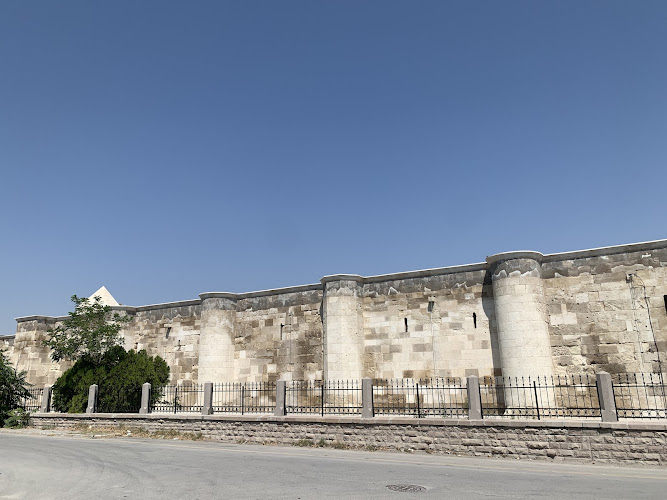
Sultanhanı Caravanserai
About Sultanhanı Caravanserai
Description
The Sultanhanı Caravanserai is one of those places in Turkey—scratch that, anywhere—that just sticks with you long after you’ve wandered through its massive doors. Built in the 13th century, this monumental Seljuk caravanserai rises above Anatolia’s plains, almost as if it’s still waiting for a caravan of camels from the old Silk Road to roll in for the night. It’s not some crumbling relic either; the structure feels solid, stately, and surprisingly well-preserved, having been restored over the years with careful attention to its history.
If you’re picturing miles of arid steppe, wide open sky, with the Aksaray-Konya road shimmering in the heat, you’re on the right track. The Sultanhanı Caravanserai was, and still is, perfectly situated along this important trade route. Centuries ago, merchants from everywhere between Asia and the Mediterranean would shelter here. Honestly, standing in the main open courtyard today, it’s not too hard to imagine tired travelers and animals bundling up for a chilly Anatolian night. There’s a certain timeless silence to the place that really gets under your skin.
Let me add, as someone who’s stumbled through plenty of Ottoman and Seljuk buildings across Turkey, Sultanhanı is in a league of its own. There’s this monumental entrance portal (locals will call it the taçkapı), just covered in intricate geometrical and floral Seljuk carvings. Look up: it’s high enough you half-expect a sultan on horseback to ride through at any second. Pass inside, and the play of light and shadow across the stone arches is, I kid you not, just magical at sunrise or sunset.
Accessibility is also great for such an ancient site. You’ll find ramps, a wheelchair accessible entrance and parking, and top-notch restrooms. The atmosphere is very relaxed; you can meander at your own pace, whether you’re a history buff, architecture geek, or just someone who loves a good ambient photo spot. And if you’re traveling with kids, there’s a safe vibe here (and not so many places where little ones can genuinely explore an ancient building with so much room to roam).
While Sultanhanı’s fame draws tourists and the occasional busload of school kids, there’s still a deeply authentic feel. You’ll get Turkish families, couples, a few dreamy backpackers, and history lovers from around the globe, all drawn to this same lap of stone and history on the Silk Road. The energy is welcoming, never rushed. Even if you come away with dusty shoes, you’ll probably leave kind of awestruck—and maybe, if you’re anything like me, a little envious of those old spice merchants who called this home on the road.
Key Features
- Imposing Entrance Portal: The main gate of Sultanhanı Caravanserai is nothing short of jaw-dropping—one of the finest examples of Seljuk stonework out there, all interlaced geometric designs and deep relief carvings. Step in and you can almost feel the echo of centuries rolling behind you.
- Expansive Open Courtyard: The heart of the caravanserai is a vast, sun-baked courtyard, once alive with traders, their animals, and a hive of activity. On a slow afternoon with just a handful of visitors, it’s hard not to imagine those days of bustling Silk Road trade.
- Covered Winter Hall: To the north stands a vast covered hall, barrel-vaulted and echoing—used in winter by both travelers and animals for shelter. Thick stone walls keep the place cool in summer and cozy in the colder months.
- Kiosk Mosque: There’s a small mosque raised on a platform in the middle of the courtyard. Unique for its position and design, this is the only example of an “elevated kiosk mosque” in caravanserais of Anatolia. Even if you’re not religious, it’s a fascinating architectural detail.
- Stables and Service Rooms: Rows of rooms line the perimeter—some served as sleeping quarters, others stored goods, and many functioned as stables. Archaeologists have found little traces of daily life, from charred fire pits to worn troughs.
- Seljuk Architecture & Restoration: Sultanhanı is considered the largest and one of the most monumental Seljuk caravanserais in Turkey. The scale, the ornamented arches, the perfect symmetry—if you care about architecture, you’re in for a treat.
- Accessible for All: Unlike many ancient sites, Sultanhanı is extremely accessible. Wheelchair users won’t struggle with steep gradients, and facilities like restrooms have been modernized without stealing from the historic atmosphere.
- Family & Kid Friendly: The open space, hidden nooks, and general sense of adventure make this a surprisingly good stop for families. Kids tend to love clambering over the massive stone steps or hunting for “treasures” in the old rooms—trust me, I tried this out with my niece. Instant hit.
- Photography Paradise: Between early morning light slicing across the courtyard and the purple hues of sunset bouncing off antique stone, Sultanhanı is made for photography lovers.
- Silk Road Heritage: Not just a pretty building—the place is an authentic slice of Silk Road history. Every arch, gate, and slab of stone has its own story etched in the slow grind of centuries of trade.
Best Time to Visit
Take it from me: the best months to visit Sultanhanı Caravanserai are April through late June and then September to October. During these months, temperatures in Aksaray province are pleasant, so you avoid the broiling summer heat and bitter Anatolian winter chills. The stone courtyards can get especially hot under that open sky in July or August—bring water if you’re brave enough for mid-summer!
As for time of day, I’ve found that coming early in the morning or later in the afternoon not only beats the crowds (if there are any), but the quality of the light can transform the whole experience. Shadows stretch across the courtyard, the carvings seem to come alive, and the sunrises—if you’re up for it—just feel magical out there, almost like a private glimpse back in time.
Avoid religious holidays if possible, unless you specifically want a local and lively experience—sometimes huge groups come through for national tourism. Winters do provide a unique mood; the covered halls are cool and echoey, and a mist rising above the stone can feel straight out of a legend. But if it’s your first visit, aim for milder weather to really linger and explore every detail.
How to Get There
Sultanhanı is located along the Aksaray–Konya road, making it incredibly easy to visit whether you’re coming from the east or west. Most travelers pass through Aksaray city (about 45 km east) or Konya (roughly 100 km west). Having done this drive, I’d say it’s one of the smoothest intercity routes in Central Anatolia—good roads, with highway signs for Sultanhanı (no need for eagle-eyed navigation skills).
If you’re relying on public transport, you’re in luck: there are frequent minibuses and buses running between Aksaray and Konya that stop in the town of Sultanhanı, often right near the caravanserai. From the bus stop, it’s just a short, flat walk—no hills to dread!
For self-drivers, parking is plentiful and right out front. And for those staying in Cappadocia or the wider region, Sultanhanı makes a killer half-day or full-day trip—combine it with a visit to other historic Seljuk caravanserais, or make a small detour during your Central Anatolian road trip. I’ve even met a few cyclists braving the old Silk Road route, and they all pointed out Sultanhanı as a must-see pitstop.
Tips for Visiting
- Go early or late. The main courtyard basks in dreamy sunlight at dawn and dusk, with soft shadows highlighting the ornate details of the stonework. Plus, fewer people overall.
- Wear sturdy shoes. Stone floors can be uneven after centuries of wear. If you have kids, prepare for a bit of climbing and exploring.
- Bring water (and a hat in summer). The open courtyard gets very hot between May and September. There are shops and small eateries in the nearby town, but nothing inside the caravanserai itself.
- Don’t rush. Part of Sultanhanı’s magic comes from slowly taking in the arches, peering into old rooms, and just listening—for a while, you’ll probably have a courtyard or corner to yourself. Let the history do its thing.
- Respect the mosque area. The small raised mosque in the center courtyard is still a sacred space. If entering, be considerate—no shoes, and keep voices down.
- Read the signs. Information panels explain sections of the caravanserai, from the purpose of each room to cool bits about Silk Road trade across Anatolia. Even if you tend to skip museum text, these are short, sweet, and worth your time.
- Bring your camera or sketchbook. Towers, intricate patterns, and vistas opening onto the Anatolian steppe here are a goldmine for photographers and artists. The interplay of light in the covered halls is seriously cool.
- Pair it with other sights. While Sultanhanı Caravanserai is a destination in itself, I recommend combining your stop with nearby Aksaray, or with another lesser-known Seljuk monument on the same road. Trust me, the region is brimming with architectural surprises if you’re up for a bit of adventure.
- Accessibility is excellent. Strollers, wheelchairs, and travelers with reduced mobility will find few obstacles—an all-too-rare bonus at Turkish architectural sites!
- Look for the details. I always spot something new: tiny stone engravings, old animal feed troughs, or scorch marks from centuries-old fires. The place rewards curious eyes.
If you ask me, Sultanhanı Caravanserai is more than just a photo stop or a tick on the ancient sites list—it’s an experience of Turkish heritage that still feels alive. Whether you’re a Silk Road romantic, a family looking for real history, or simply a curious visitor passing through Aksaray province, it’s a gem of Anatolia not to be rushed.
Key Features
- 13th-century Seljuk architecture and massive portal (crown door)
- Large vaulted central courtyard and covered arcades
- Kiosk mosque positioned above the main entrance
- Well-preserved stone-carved geometric and vegetal decoration
- Historic setting on the Konya–Aksaray caravan route with visitor facilities nearby
Nearby Attractions
You Might Also Like

*BDT BELEK DOGA TOUR | Daily Tours, Day Trips and Excursions in Antalya*
1464. Sk. No:55
2006. Sk. No:2
Tours & Activities
GetYourGuide provides this tour inventory. We may earn a commission if you book through it; verify current availability, prices, and terms with the provider.
Visitor Reviews
There are no reviews yet. Be the first one to write one.
Share Your Experience
Have you visited Sultanhanı Caravanserai? Help other travelers by leaving a review.