
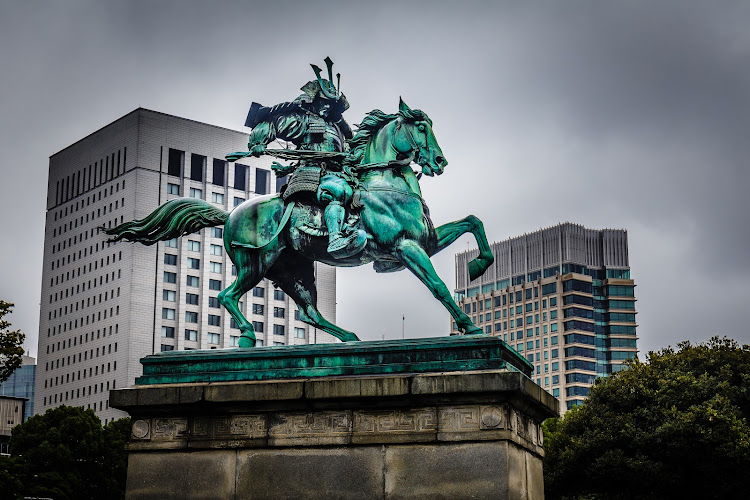
Statue of Kusunoki Masashige
About Statue of Kusunoki Masashige
Description
Standing proudly in Tokyo's Kokyo Gaien National Garden, the Statue of Kusunoki Masashige is more than just another monument - it's a powerful symbol of unwavering loyalty and samurai spirit that has captivated visitors for generations. This magnificent bronze equestrian statue, completed in 1900, captures the essence of one of Japan's most revered military commanders from the 14th century. I've spent countless hours observing visitors' reactions to this impressive work of art, and let me tell you - there's something truly special about the way it commands attention. The statue portrays Masashige in full battle armor, mounted atop his mighty steed, eternally vigilant in his protection of the Imperial Palace grounds. What really gets me every time is how the sculptor managed to capture such incredible detail in the armor and the determined expression on Masashige's face.Key Features
• Bronze equestrian statue showcasing intricate medieval samurai armor details • Dramatic positioning of both warrior and horse, creating a sense of movement and power • One of Tokyo's three most famous bronze statues, alongside those in Ueno Park and Yasukuni Shrine • Historically significant location in Kokyo Gaien National Garden • Impressive scale that makes it a perfect photo opportunity • Detailed craftsmanship that took nearly 13 years to complete • Wheelchair-accessible viewing area • Beautiful backdrop of Imperial Palace surroundingsBest Time to Visit
Y'know what? Early morning is absolutely magical here. The way the rising sun catches the bronze surface creates this gorgeous golden glow that photographers dream about. But honestly? Any time between 9 AM and 4 PM offers great lighting for photos. Spring and fall are particularly special - the statue looks absolutely stunning against the cherry blossoms in April or the autumn foliage in November. Summer can get pretty sticky with Tokyo's humidity, but the surrounding area has enough shade to make it bearable. Winter brings fewer crowds and some pretty dramatic views, especially on clear days when the statue stands bold against the crisp blue sky.How to Get There
Getting to the statue is pretty straightforward - just head to Nijubashimae Station on the Marunouchi subway line. From there, it's about a 5-minute walk through the beautiful Kokyo Gaien National Garden. But here's a pro tip I learned the hard way: don't rely on Google Maps alone! The statue is actually easier to spot if you follow the signs for the Imperial Palace and keep your eyes peeled for the impressive bronze figure on horseback. The garden area around the statue is well-maintained and easy to navigate. And guess what? It's totally wheelchair accessible, which is awesome for ensuring everyone can enjoy this historic monument.Tips for Visiting
Look, I've been here dozens of times, and I've picked up some tricks that'll make your visit way better. First off, bring your camera - the lighting can be tricky, so you might want to play around with different angles. The statue looks completely different depending on where you stand! Morning visits are your best bet if you want to avoid the crowds. Trust me on this one - tour buses start rolling in around 10 AM, and it can get pretty busy. Pack some water and maybe a small snack because there aren't many vendors right next to the statue. Oh, and here's something cool I discovered: take some time to walk around the entire statue. The details on the armor and horse are incredible from every angle, and most folks miss half of them because they only view it from the front. If you're into photography, late afternoon light creates these amazing shadows that really bring out the texture of the bronze. And if you're interested in the history, I'd recommend reading up on Kusunoki Masashige beforehand - it makes the experience so much more meaningful when you understand the incredible story behind this warrior's loyalty to the emperor. Keep in mind that the garden closes early, so plan your visit accordingly. The surrounding area is perfect for a peaceful stroll, so give yourself at least 30-45 minutes to really soak in the atmosphere and maybe explore a bit of the nearby Imperial Palace grounds while you're at it. Last but not least, remember to be respectful - this isn't just a tourist spot, it's a significant historical monument that means a lot to the Japanese people. And on that note, don't forget to check out the informational plaques nearby - they're in English and Japanese, and they'll give you some fascinating insights into this remarkable piece of history.Key Features
- Key Features
- Best Time to Visit
- How to Get There
- Tips for Visiting
More Details
Updated June 14, 2025
Table of Contents
Description
Standing proudly in Tokyo’s Kokyo Gaien National Garden, the Statue of Kusunoki Masashige is more than just another monument – it’s a powerful symbol of unwavering loyalty and samurai spirit that has captivated visitors for generations. This magnificent bronze equestrian statue, completed in 1900, captures the essence of one of Japan’s most revered military commanders from the 14th century.
I’ve spent countless hours observing visitors’ reactions to this impressive work of art, and let me tell you – there’s something truly special about the way it commands attention. The statue portrays Masashige in full battle armor, mounted atop his mighty steed, eternally vigilant in his protection of the Imperial Palace grounds. What really gets me every time is how the sculptor managed to capture such incredible detail in the armor and the determined expression on Masashige’s face.
Key Features
• Bronze equestrian statue showcasing intricate medieval samurai armor details
• Dramatic positioning of both warrior and horse, creating a sense of movement and power
• One of Tokyo’s three most famous bronze statues, alongside those in Ueno Park and Yasukuni Shrine
• Historically significant location in Kokyo Gaien National Garden
• Impressive scale that makes it a perfect photo opportunity
• Detailed craftsmanship that took nearly 13 years to complete
• Wheelchair-accessible viewing area
• Beautiful backdrop of Imperial Palace surroundings
Best Time to Visit
Y’know what? Early morning is absolutely magical here. The way the rising sun catches the bronze surface creates this gorgeous golden glow that photographers dream about. But honestly? Any time between 9 AM and 4 PM offers great lighting for photos.
Spring and fall are particularly special – the statue looks absolutely stunning against the cherry blossoms in April or the autumn foliage in November. Summer can get pretty sticky with Tokyo’s humidity, but the surrounding area has enough shade to make it bearable. Winter brings fewer crowds and some pretty dramatic views, especially on clear days when the statue stands bold against the crisp blue sky.
How to Get There
Getting to the statue is pretty straightforward – just head to Nijubashimae Station on the Marunouchi subway line. From there, it’s about a 5-minute walk through the beautiful Kokyo Gaien National Garden. But here’s a pro tip I learned the hard way: don’t rely on Google Maps alone! The statue is actually easier to spot if you follow the signs for the Imperial Palace and keep your eyes peeled for the impressive bronze figure on horseback.
The garden area around the statue is well-maintained and easy to navigate. And guess what? It’s totally wheelchair accessible, which is awesome for ensuring everyone can enjoy this historic monument.
Tips for Visiting
Look, I’ve been here dozens of times, and I’ve picked up some tricks that’ll make your visit way better. First off, bring your camera – the lighting can be tricky, so you might want to play around with different angles. The statue looks completely different depending on where you stand!
Morning visits are your best bet if you want to avoid the crowds. Trust me on this one – tour buses start rolling in around 10 AM, and it can get pretty busy. Pack some water and maybe a small snack because there aren’t many vendors right next to the statue.
Oh, and here’s something cool I discovered: take some time to walk around the entire statue. The details on the armor and horse are incredible from every angle, and most folks miss half of them because they only view it from the front.
If you’re into photography, late afternoon light creates these amazing shadows that really bring out the texture of the bronze. And if you’re interested in the history, I’d recommend reading up on Kusunoki Masashige beforehand – it makes the experience so much more meaningful when you understand the incredible story behind this warrior’s loyalty to the emperor.
Keep in mind that the garden closes early, so plan your visit accordingly. The surrounding area is perfect for a peaceful stroll, so give yourself at least 30-45 minutes to really soak in the atmosphere and maybe explore a bit of the nearby Imperial Palace grounds while you’re at it.
Last but not least, remember to be respectful – this isn’t just a tourist spot, it’s a significant historical monument that means a lot to the Japanese people. And on that note, don’t forget to check out the informational plaques nearby – they’re in English and Japanese, and they’ll give you some fascinating insights into this remarkable piece of history.
Key Highlights
- Key Features
- Best Time to Visit
- How to Get There
- Tips for Visiting
Location
Places to Stay Near Statue of Kusunoki Masashige
Find and Book a Tour
Explore More Travel Guides
No reviews found! Be the first to review!
Traveler Reviews for Statue of Kusunoki Masashige
There are no reviews yet. Be the first one to write one.
Have you visited Statue of Kusunoki Masashige? Help other travelers by sharing your review.
You Might Also Like
Godzilla Statue

Seikado Bunko Art Museum

Kanda Myoujin Shrine
Find Accommodations Nearby
Recommended Tours & Activities
Visitor Reviews
There are no reviews yet. Be the first one to write one.
Share Your Experience
Have you visited Statue of Kusunoki Masashige? Help other travelers by leaving a review.