
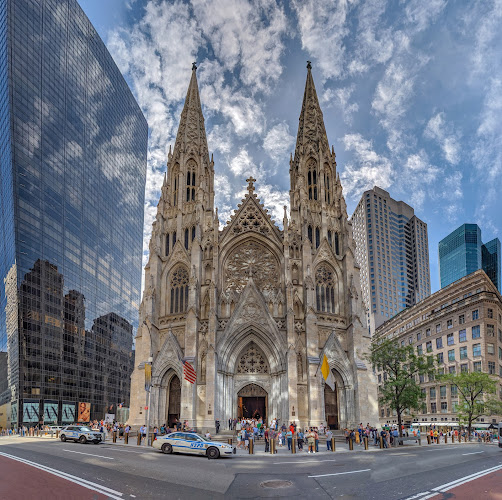
St. Patrick’s Cathedral
About St. Patrick’s Cathedral
Description
St. Patrick's Cathedral stands as one of New York City's most magnificent architectural treasures, and honestly, it's hard not to feel a little awestruck when you first lay eyes on it. This Neo-Gothic masterpiece has been holding court on Fifth Avenue since 1879, and it's still turning heads today. The cathedral rises dramatically between the modern skyscrapers of Midtown Manhattan, creating this really striking contrast between old-world European grandeur and American urban energy that you just don't see everywhere. The building itself took over twenty years to complete, which seems like forever but makes sense when you consider the insane level of detail that went into every square inch of this place. I remember the first time I walked past it – I was rushing to meet a friend for lunch and just stopped dead in my tracks. Those twin spires reach 330 feet into the sky, and they have this way of making you forget you're standing in one of the busiest parts of Manhattan. What really sets St. Patrick's apart is how it manages to be both a functioning Catholic church and a major tourist destination without losing its sacred atmosphere. You'll find worshippers kneeling in prayer right alongside tourists snapping photos, and somehow it all works. The cathedral serves as the seat of the Archbishop of New York and hosts everything from daily masses to major ceremonies that draw thousands of attendees. The architecture draws heavily from the great cathedrals of Europe, particularly Cologne Cathedral in Germany, but it's got its own American story to tell. Built primarily by Irish immigrants during a time when anti-Catholic sentiment ran pretty high in New York, St. Patrick's Cathedral became a symbol of perseverance and faith for the Catholic community. And that history still resonates when you walk through those massive bronze doors.Key Features
St. Patrick's Cathedral offers visitors an incredible array of architectural and spiritual elements that make it worth spending a good hour or two exploring:- The Great Organ - This musical giant contains over 7,300 pipes and is one of the largest church organs in the United States. The sound it produces during services is absolutely spine-tingling.
- Stunning Stained Glass Windows - The cathedral features stained glass created by artists from both England and the United States. The rose window above the great organ is particularly breathtaking, especially when afternoon light streams through it.
- The Pietà - Located behind the main altar, this sculpture is three times larger than Michelangelo's famous version in Rome and creates a powerful focal point for reflection.
- Saint Shrines - Individual shrines dedicated to various saints line the perimeter, each beautifully crafted with its own altar and artwork. These smaller spaces offer quieter spots for contemplation.
- The Baldachin - The bronze canopy over the high altar stands as a masterwork of metalworking, rising 57 feet high and featuring intricate religious imagery.
- Lady Chapel - This separate chapel behind the main altar is dedicated to the Virgin Mary and features its own unique architectural style with stunning mosaics.
- The Crypt - Below the main floor lies the final resting place of several prominent archbishops and church leaders, though access can be limited.
- Bronze Doors - The main entrance doors weigh 20,000 pounds and feature sculpted panels depicting saints who have special significance to New York Catholics.
Best Time to Visit
Figuring out when to visit St. Patrick's Cathedral really depends on what kind of experience you're after, and I'll be straight with you – there's no perfect time that works for everyone. If you want to avoid the biggest crowds, weekday mornings between 10 AM and noon tend to be your best bet. The morning rush of commuters has passed, tour groups haven't quite hit their peak, and you can actually move around without constantly dodging selfie-sticks. But here's the thing – even during "quiet" times, this cathedral attracts visitors, so don't expect to have the place to yourself. For the most atmospheric experience, try attending an evening service. The cathedral takes on this whole different character when the exterior lights are on and organ music fills the space. Evening Mass typically happens around 5:30 PM on weekdays, and the combination of faithful worshippers, dimmer lighting, and sacred music creates something genuinely moving. Just remember to be respectful since you're participating in an actual religious service, not watching a performance. Weekends get absolutely packed, particularly Saturday afternoons and Sundays. Tour groups, families, and visitors converge all at once, and the noise level can sometimes work against that peaceful cathedral vibe you might be seeking. However, Sunday Mass (offered multiple times throughout the morning) gives you an authentic sense of the cathedral's primary purpose as a place of worship. Holiday seasons present their own unique considerations. Christmas and Easter bring spectacular decorations and special services, but also draw massive crowds. St. Patrick's Day – well, you can probably guess that one gets crazy since this is literally St. Patrick's Cathedral in New York City. The parade route goes right past the cathedral, and the area becomes absolutely mobbed. It's exciting if you're into that sort of thing, but not ideal for a contemplative visit. Weather matters less since you're mostly indoors, but rainy days do tend to push more people inside. One thing I learned the hard way – avoid visiting right when cruise ships dock in the city, usually on summer weekday mornings, because those tour buses head straight for major landmarks including this one.How to Get There
Getting to St. Patrick's Cathedral is refreshingly straightforward since it sits right in the heart of Midtown Manhattan. The location directly across from Rockefeller Center means you're basically at the epicenter of the city's most tourist-friendly area. The subway is hands-down your most efficient option. Multiple lines stop within easy walking distance, which is one of those New York conveniences that actually works in your favor. The B, D, F, and M trains all stop at 47-50 Streets-Rockefeller Center, which literally deposits you across the street. The E and M trains stop at Fifth Avenue/53rd Street, about a five-minute walk north. And if you're coming from downtown or further uptown, the 4, 5, and 6 trains to Grand Central-42nd Street put you about a ten-minute walk south of the cathedral. Buses work too, though they're slower thanks to Midtown traffic. The M1, M2, M3, M4, and M5 buses all run along Fifth Avenue and stop near the cathedral. But honestly, unless you've got mobility issues or really want to see street-level scenery, the subway makes more sense. Walking is totally doable if you're already in Midtown. From Times Square, it's about a fifteen-minute walk east and slightly south. From Grand Central Terminal, head north on Fifth Avenue for about ten minutes. The cathedral's spires are visible from blocks away, so you can literally navigate by sight once you get close. Taxis and rideshares will get you there, sure, but Fifth Avenue traffic can be brutal. Your driver will likely drop you off on a side street since stopping directly in front isn't always possible. Factor in the cost too – if you're traveling from anywhere in Manhattan, you're probably better off taking the subway unless you're traveling with several people or dealing with accessibility needs. For visitors with mobility considerations, there's a wheelchair accessible entrance, and the cathedral has made genuine efforts to accommodate everyone. The main entrance has steps, but staff can direct you to accessible options.Tips for Visiting
Walking into St. Patrick's Cathedral for the first time can feel a bit overwhelming, so let me share some practical advice that'll help you make the most of your visit. First off, dress codes matter here. This is an active Catholic cathedral, not just a museum, so showing up in beach attire or anything too revealing isn't appropriate. You don't need to wear Sunday best, but shoulders and knees should be covered. I've seen security politely turn away visitors who didn't meet these standards, and it's awkward for everyone involved. Photography is generally allowed, but flash photography during services is a hard no. Also, be mindful about what you're photographing – if people are praying, maybe don't position them as your foreground subject. Common courtesy goes a long way. The cathedral is beautiful and absolutely worth photographing, but remember you're in someone's sacred space. Entry is free, which still amazes me given how expensive everything else in New York can be. However, donations are encouraged and appreciated. The cathedral relies heavily on contributions for maintenance and preservation work. There are donation boxes throughout if you feel moved to contribute. Security screening happens at the entrance – similar to airport security but usually quicker. You'll walk through metal detectors and bags get checked. Don't bring large backpacks or luggage if you can avoid it, as they may not be permitted inside. Timing your visit around services can enhance or detract from your experience depending on what you want. Check the cathedral's schedule beforehand. If you want to quietly explore, avoid service times. If you want to experience the cathedral in action, plan to attend Mass – just be prepared to participate respectfully in standing and sitting when the congregation does. The cathedral offers guided tours, though times vary. Self-guided visits work perfectly fine too since the architecture speaks for itself. Audio guides used to be available but check current offerings since these things change. Restrooms are available on-site, which is genuinely helpful since public restrooms are scarce in Midtown Manhattan. Don't take this for granted. Plan to spend at least 45 minutes to an hour if you actually want to appreciate the details. Rushing through in fifteen minutes means you'll miss the artistry that makes this place special. The stained glass alone deserves careful viewing from multiple angles as light changes throughout the day. The surrounding area offers plenty to see – Rockefeller Center, Fifth Avenue shopping, and numerous restaurants are all within a few blocks. Consider making the cathedral part of a larger Midtown itinerary rather than a standalone destination. One last thing – and this might sound odd – try visiting twice if you're in the city for several days. Once during the day to appreciate the architectural details and stained glass, and once in evening for the completely different atmosphere. The cathedral reveals different aspects of itself depending on time and light, and both versions are worth experiencing. Be patient with crowds and noise levels. This is one of New York's most-visited religious sites, pulling in millions annually, so some commotion comes with the territory. Finding moments of quiet reflection requires intentionality, but they're absolutely possible if you seek them out.Key Features
- Neo-Gothic architecture with twin spires and ornate façade
- Extensive stained-glass windows and intricate interior carvings
- Imposing high altar and multiple side chapels
- Active cathedral — regular Masses, choir, and pipe organ
- Prime Midtown location across from Rockefeller Center
More Details
Updated January 17, 2026
Description
St. Patrick’s Cathedral stands as one of New York City’s most magnificent architectural treasures, and honestly, it’s hard not to feel a little awestruck when you first lay eyes on it. This Neo-Gothic masterpiece has been holding court on Fifth Avenue since 1879, and it’s still turning heads today. The cathedral rises dramatically between the modern skyscrapers of Midtown Manhattan, creating this really striking contrast between old-world European grandeur and American urban energy that you just don’t see everywhere.
The building itself took over twenty years to complete, which seems like forever but makes sense when you consider the insane level of detail that went into every square inch of this place. I remember the first time I walked past it – I was rushing to meet a friend for lunch and just stopped dead in my tracks. Those twin spires reach 330 feet into the sky, and they have this way of making you forget you’re standing in one of the busiest parts of Manhattan.
What really sets St. Patrick’s apart is how it manages to be both a functioning Catholic church and a major tourist destination without losing its sacred atmosphere. You’ll find worshippers kneeling in prayer right alongside tourists snapping photos, and somehow it all works. The cathedral serves as the seat of the Archbishop of New York and hosts everything from daily masses to major ceremonies that draw thousands of attendees.
The architecture draws heavily from the great cathedrals of Europe, particularly Cologne Cathedral in Germany, but it’s got its own American story to tell. Built primarily by Irish immigrants during a time when anti-Catholic sentiment ran pretty high in New York, St. Patrick’s Cathedral became a symbol of perseverance and faith for the Catholic community. And that history still resonates when you walk through those massive bronze doors.
Key Features
St. Patrick’s Cathedral offers visitors an incredible array of architectural and spiritual elements that make it worth spending a good hour or two exploring:
- The Great Organ – This musical giant contains over 7,300 pipes and is one of the largest church organs in the United States. The sound it produces during services is absolutely spine-tingling.
- Stunning Stained Glass Windows – The cathedral features stained glass created by artists from both England and the United States. The rose window above the great organ is particularly breathtaking, especially when afternoon light streams through it.
- The Pietà – Located behind the main altar, this sculpture is three times larger than Michelangelo’s famous version in Rome and creates a powerful focal point for reflection.
- Saint Shrines – Individual shrines dedicated to various saints line the perimeter, each beautifully crafted with its own altar and artwork. These smaller spaces offer quieter spots for contemplation.
- The Baldachin – The bronze canopy over the high altar stands as a masterwork of metalworking, rising 57 feet high and featuring intricate religious imagery.
- Lady Chapel – This separate chapel behind the main altar is dedicated to the Virgin Mary and features its own unique architectural style with stunning mosaics.
- The Crypt – Below the main floor lies the final resting place of several prominent archbishops and church leaders, though access can be limited.
- Bronze Doors – The main entrance doors weigh 20,000 pounds and feature sculpted panels depicting saints who have special significance to New York Catholics.
Best Time to Visit
Figuring out when to visit St. Patrick’s Cathedral really depends on what kind of experience you’re after, and I’ll be straight with you – there’s no perfect time that works for everyone.
If you want to avoid the biggest crowds, weekday mornings between 10 AM and noon tend to be your best bet. The morning rush of commuters has passed, tour groups haven’t quite hit their peak, and you can actually move around without constantly dodging selfie-sticks. But here’s the thing – even during “quiet” times, this cathedral attracts visitors, so don’t expect to have the place to yourself.
For the most atmospheric experience, try attending an evening service. The cathedral takes on this whole different character when the exterior lights are on and organ music fills the space. Evening Mass typically happens around 5:30 PM on weekdays, and the combination of faithful worshippers, dimmer lighting, and sacred music creates something genuinely moving. Just remember to be respectful since you’re participating in an actual religious service, not watching a performance.
Weekends get absolutely packed, particularly Saturday afternoons and Sundays. Tour groups, families, and visitors converge all at once, and the noise level can sometimes work against that peaceful cathedral vibe you might be seeking. However, Sunday Mass (offered multiple times throughout the morning) gives you an authentic sense of the cathedral’s primary purpose as a place of worship.
Holiday seasons present their own unique considerations. Christmas and Easter bring spectacular decorations and special services, but also draw massive crowds. St. Patrick’s Day – well, you can probably guess that one gets crazy since this is literally St. Patrick’s Cathedral in New York City. The parade route goes right past the cathedral, and the area becomes absolutely mobbed. It’s exciting if you’re into that sort of thing, but not ideal for a contemplative visit.
Weather matters less since you’re mostly indoors, but rainy days do tend to push more people inside. One thing I learned the hard way – avoid visiting right when cruise ships dock in the city, usually on summer weekday mornings, because those tour buses head straight for major landmarks including this one.
How to Get There
Getting to St. Patrick’s Cathedral is refreshingly straightforward since it sits right in the heart of Midtown Manhattan. The location directly across from Rockefeller Center means you’re basically at the epicenter of the city’s most tourist-friendly area.
The subway is hands-down your most efficient option. Multiple lines stop within easy walking distance, which is one of those New York conveniences that actually works in your favor. The B, D, F, and M trains all stop at 47-50 Streets-Rockefeller Center, which literally deposits you across the street. The E and M trains stop at Fifth Avenue/53rd Street, about a five-minute walk north. And if you’re coming from downtown or further uptown, the 4, 5, and 6 trains to Grand Central-42nd Street put you about a ten-minute walk south of the cathedral.
Buses work too, though they’re slower thanks to Midtown traffic. The M1, M2, M3, M4, and M5 buses all run along Fifth Avenue and stop near the cathedral. But honestly, unless you’ve got mobility issues or really want to see street-level scenery, the subway makes more sense.
Walking is totally doable if you’re already in Midtown. From Times Square, it’s about a fifteen-minute walk east and slightly south. From Grand Central Terminal, head north on Fifth Avenue for about ten minutes. The cathedral’s spires are visible from blocks away, so you can literally navigate by sight once you get close.
Taxis and rideshares will get you there, sure, but Fifth Avenue traffic can be brutal. Your driver will likely drop you off on a side street since stopping directly in front isn’t always possible. Factor in the cost too – if you’re traveling from anywhere in Manhattan, you’re probably better off taking the subway unless you’re traveling with several people or dealing with accessibility needs.
For visitors with mobility considerations, there’s a wheelchair accessible entrance, and the cathedral has made genuine efforts to accommodate everyone. The main entrance has steps, but staff can direct you to accessible options.
Tips for Visiting
Walking into St. Patrick’s Cathedral for the first time can feel a bit overwhelming, so let me share some practical advice that’ll help you make the most of your visit.
First off, dress codes matter here. This is an active Catholic cathedral, not just a museum, so showing up in beach attire or anything too revealing isn’t appropriate. You don’t need to wear Sunday best, but shoulders and knees should be covered. I’ve seen security politely turn away visitors who didn’t meet these standards, and it’s awkward for everyone involved.
Photography is generally allowed, but flash photography during services is a hard no. Also, be mindful about what you’re photographing – if people are praying, maybe don’t position them as your foreground subject. Common courtesy goes a long way. The cathedral is beautiful and absolutely worth photographing, but remember you’re in someone’s sacred space.
Entry is free, which still amazes me given how expensive everything else in New York can be. However, donations are encouraged and appreciated. The cathedral relies heavily on contributions for maintenance and preservation work. There are donation boxes throughout if you feel moved to contribute.
Security screening happens at the entrance – similar to airport security but usually quicker. You’ll walk through metal detectors and bags get checked. Don’t bring large backpacks or luggage if you can avoid it, as they may not be permitted inside.
Timing your visit around services can enhance or detract from your experience depending on what you want. Check the cathedral’s schedule beforehand. If you want to quietly explore, avoid service times. If you want to experience the cathedral in action, plan to attend Mass – just be prepared to participate respectfully in standing and sitting when the congregation does.
The cathedral offers guided tours, though times vary. Self-guided visits work perfectly fine too since the architecture speaks for itself. Audio guides used to be available but check current offerings since these things change.
Restrooms are available on-site, which is genuinely helpful since public restrooms are scarce in Midtown Manhattan. Don’t take this for granted.
Plan to spend at least 45 minutes to an hour if you actually want to appreciate the details. Rushing through in fifteen minutes means you’ll miss the artistry that makes this place special. The stained glass alone deserves careful viewing from multiple angles as light changes throughout the day.
The surrounding area offers plenty to see – Rockefeller Center, Fifth Avenue shopping, and numerous restaurants are all within a few blocks. Consider making the cathedral part of a larger Midtown itinerary rather than a standalone destination.
One last thing – and this might sound odd – try visiting twice if you’re in the city for several days. Once during the day to appreciate the architectural details and stained glass, and once in evening for the completely different atmosphere. The cathedral reveals different aspects of itself depending on time and light, and both versions are worth experiencing.
Be patient with crowds and noise levels. This is one of New York’s most-visited religious sites, pulling in millions annually, so some commotion comes with the territory. Finding moments of quiet reflection requires intentionality, but they’re absolutely possible if you seek them out.
Key Highlights
- Neo-Gothic architecture with twin spires and ornate façade
- Extensive stained-glass windows and intricate interior carvings
- Imposing high altar and multiple side chapels
- Active cathedral — regular Masses, choir, and pipe organ
- Prime Midtown location across from Rockefeller Center
Location
Places to Stay Near St. Patrick's Cathedral
Find and Book a Tour
Explore More Travel Guides
No reviews found! Be the first to review!
Traveler Reviews for St. Patrick’s Cathedral
There are no reviews yet. Be the first one to write one.
Have you visited St. Patrick’s Cathedral? Help other travelers by sharing your review.
Nearby Attractions
You Might Also Like

Bath & Body Works

Massawa
Washington Square Park
Find Accommodations Nearby
Recommended Tours & Activities
Visitor Reviews
There are no reviews yet. Be the first one to write one.
Share Your Experience
Have you visited St. Patrick’s Cathedral? Help other travelers by leaving a review.