
St Dunstan in the East Church Garden
About St Dunstan in the East Church Garden
Description
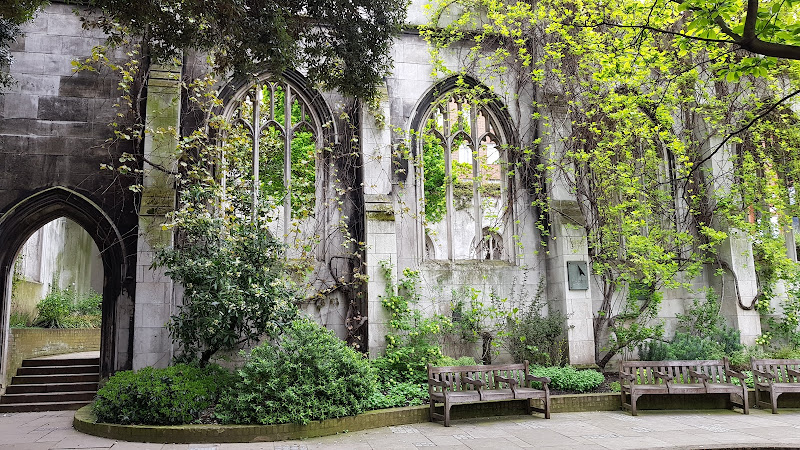
There’s something quietly magical about St Dunstan in the East Church Garden. Tucked between the modern towers of the City of London, this tranquil garden feels like a secret that somehow survived centuries of chaos. The ruins of a medieval church, once damaged in the Great Fire of London and later bombed during the Blitz of World War II, now stand gracefully wrapped in ivy and framed by lush greenery. It’s one of those rare places where history and nature seem to have made peace with each other.
Originally built around 1100 and later redesigned by Sir Christopher Wren after the Great Fire, the church’s Gothic arches and Wren’s elegant steeple still rise proudly above the garden. The stone walls, cracked and mossy, tell stories of survival. And yet, despite its tragic past, the space feels peaceful—almost sacred. You can hear the faint hum of the city beyond the walls, but inside, the sound softens into birdsong and the gentle splash of the fountain that now sits where the nave once stood.
I remember the first time I stumbled upon it—completely by accident, actually. I’d been wandering aimlessly after a meeting nearby, coffee in hand, when I saw a small gate and a flash of green between the buildings. I walked in, and it felt like stepping through time. It’s not grand or flashy, but it’s deeply atmospheric. The kind of place that makes you slow down without even realizing it.
Today, St Dunstan in the East is a public garden managed by the City of London. Locals come here for lunch breaks, couples sneak in for romantic photos, and travelers often find it while exploring nearby landmarks like the Tower of London or London Bridge. It’s also a surprisingly photogenic spot—whether you’re a professional photographer or just snapping shots on your phone, the interplay of light and shadow through the arches is mesmerizing.
It’s not perfect, of course. On sunny weekends, it can get a bit busy, and sometimes you’ll find a few people treating it more like a picnic spot than a historic site. But that’s part of its charm—it’s a living ruin, not a museum piece. The garden feels alive, constantly changing with the seasons: bright green in spring, golden in autumn, and hauntingly beautiful in winter when the bare branches frame the stonework.
Key Features
- Historic Ruins: The remains of a medieval church dating back over 900 years, with Wren’s 17th-century steeple still standing tall.
- Peaceful Garden: A lush, well-maintained garden filled with ivy, ferns, and seasonal flowers that bring color to the ancient stone.
- Central Fountain: A gentle fountain located where the church’s nave once stood, adding a soothing soundtrack to your visit.
- Photogenic Arches: The Gothic arches and crumbling walls create a dramatic backdrop for photos—especially when sunlight filters through the leaves.
- Pet Friendly: Dogs are welcome, making it a great stop for travelers exploring London with their furry companions.
- Family Friendly: Kids often love exploring the ruins and open spaces—it feels like a secret castle garden straight out of a storybook.
- Event Venue: Occasionally used for small events, photo shoots, and intimate gatherings, though it retains its peaceful atmosphere most days.
What makes this place special isn’t just its history—it’s how it makes you feel. There’s a strange comfort in seeing life thrive among ruins. It reminds you that even after destruction, beauty can return in unexpected ways. And honestly, that’s something we all need to see once in a while.
Best Time to Visit
If you want to experience St Dunstan in the East at its most serene, come early in the morning on a weekday. The city hasn’t quite woken up yet, and you’ll likely have the garden to yourself. The light at that hour is soft, filtering through the arches and vines in a way that feels almost cinematic.
Spring and early summer are particularly lovely—the garden bursts into shades of green, with flowers creeping up the old walls. Autumn, though, might be my personal favorite. The golden leaves against the gray stone give it a kind of melancholy beauty that feels very London. Winter has its own charm too: quiet, moody, and perfect for reflection.
Avoid lunchtime on weekdays if you’re looking for solitude; it’s a popular spot for office workers seeking a break. On weekends, mornings are usually calm, but afternoons can get busy with tourists. Still, even with a few people around, it never loses that sense of calm.
How to Get There
Reaching St Dunstan in the East is surprisingly easy, though you might walk right past it if you’re not paying attention. It’s tucked between the Tower of London and Monument, in the heart of the City. The nearest Underground stations are Monument and Tower Hill—both just a few minutes’ walk away. From there, follow the signs or simply wander; half the fun is discovering it on your own.
If you’re already exploring the riverside, it’s a pleasant detour from the Thames Path. You’ll know you’re close when the noise of traffic starts to fade and you spot a patch of greenery behind the stone walls. There’s no entry fee, and the gates are open daily during daylight hours.
For those traveling by bus, several routes stop nearby, and if you’re cycling, you’ll find docking stations close enough to leave your bike and stroll in. Just keep in mind that there’s no dedicated parking lot, and the narrow lanes around it aren’t ideal for cars.
Tips for Visiting
Here’s the thing: St Dunstan in the East isn’t a big place, so it’s best enjoyed slowly. Don’t rush through it like another item on your sightseeing list. Sit on one of the benches, listen to the fountain, and let the city fade into the background for a bit. If you’re into photography, bring your camera early or late in the day—the light is softer and the crowds thinner.
- Bring a coffee or picnic: While there aren’t any cafés inside, there are plenty nearby. Grab something to go and enjoy it among the ruins.
- Mind the weather: It’s an open-air garden, so check the forecast. After rain, the stone paths can get slippery.
- Respect the space: It’s a public garden, but also a historic site. Avoid climbing on the ruins or leaving litter behind.
- Visit nearby attractions: Combine your visit with a walk to the Tower of London, Monument, or the Sky Garden for a full day of exploring.
- Bring your dog: Dogs are welcome, but keep them on a leash—it’s a peaceful spot, not a playground.
- Accessibility: The garden paths are mostly flat, but some uneven surfaces may be tricky for wheelchairs or strollers.
And maybe this is just me, but I always find it worth visiting places like this alone at least once. There’s something about being there in silence, surrounded by centuries of history and rebirth, that hits differently when you’re not distracted. It’s a reminder that even in one of the busiest cities in the world, you can still find moments of stillness if you know where to look.
So, whether you’re a history buff, a photographer, or just someone who loves discovering hidden corners of London, St Dunstan in the East Church Garden deserves a spot on your itinerary. It’s not loud or flashy—it’s quiet, poetic, and beautifully imperfect. And honestly, that’s what makes it unforgettable.
Key Features
- Key Features
- Best Time to Visit
- How to Get There
- Tips for Visiting
More Details
Updated December 1, 2025
Table of Contents
- Description
- Key Features
- Best Time to Visit
- How to Get There
- Tips for Visiting
- Key Highlights
- Location
- Places to Stay Near St Dunstan in the East Church Garden
- Find and Book a Tour
- Explore More Travel Guides
- Nearby Places You Might Like
- Traveler Reviews for St Dunstan in the East Church Garden
- Share Your Experience
Description
There’s something quietly magical about St Dunstan in the East Church Garden. Tucked between the modern towers of the City of London, this tranquil garden feels like a secret that somehow survived centuries of chaos. The ruins of a medieval church, once damaged in the Great Fire of London and later bombed during the Blitz of World War II, now stand gracefully wrapped in ivy and framed by lush greenery. It’s one of those rare places where history and nature seem to have made peace with each other.
Originally built around 1100 and later redesigned by Sir Christopher Wren after the Great Fire, the church’s Gothic arches and Wren’s elegant steeple still rise proudly above the garden. The stone walls, cracked and mossy, tell stories of survival. And yet, despite its tragic past, the space feels peaceful—almost sacred. You can hear the faint hum of the city beyond the walls, but inside, the sound softens into birdsong and the gentle splash of the fountain that now sits where the nave once stood.
I remember the first time I stumbled upon it—completely by accident, actually. I’d been wandering aimlessly after a meeting nearby, coffee in hand, when I saw a small gate and a flash of green between the buildings. I walked in, and it felt like stepping through time. It’s not grand or flashy, but it’s deeply atmospheric. The kind of place that makes you slow down without even realizing it.
Today, St Dunstan in the East is a public garden managed by the City of London. Locals come here for lunch breaks, couples sneak in for romantic photos, and travelers often find it while exploring nearby landmarks like the Tower of London or London Bridge. It’s also a surprisingly photogenic spot—whether you’re a professional photographer or just snapping shots on your phone, the interplay of light and shadow through the arches is mesmerizing.
It’s not perfect, of course. On sunny weekends, it can get a bit busy, and sometimes you’ll find a few people treating it more like a picnic spot than a historic site. But that’s part of its charm—it’s a living ruin, not a museum piece. The garden feels alive, constantly changing with the seasons: bright green in spring, golden in autumn, and hauntingly beautiful in winter when the bare branches frame the stonework.
Key Features
- Historic Ruins: The remains of a medieval church dating back over 900 years, with Wren’s 17th-century steeple still standing tall.
- Peaceful Garden: A lush, well-maintained garden filled with ivy, ferns, and seasonal flowers that bring color to the ancient stone.
- Central Fountain: A gentle fountain located where the church’s nave once stood, adding a soothing soundtrack to your visit.
- Photogenic Arches: The Gothic arches and crumbling walls create a dramatic backdrop for photos—especially when sunlight filters through the leaves.
- Pet Friendly: Dogs are welcome, making it a great stop for travelers exploring London with their furry companions.
- Family Friendly: Kids often love exploring the ruins and open spaces—it feels like a secret castle garden straight out of a storybook.
- Event Venue: Occasionally used for small events, photo shoots, and intimate gatherings, though it retains its peaceful atmosphere most days.
What makes this place special isn’t just its history—it’s how it makes you feel. There’s a strange comfort in seeing life thrive among ruins. It reminds you that even after destruction, beauty can return in unexpected ways. And honestly, that’s something we all need to see once in a while.
Best Time to Visit
If you want to experience St Dunstan in the East at its most serene, come early in the morning on a weekday. The city hasn’t quite woken up yet, and you’ll likely have the garden to yourself. The light at that hour is soft, filtering through the arches and vines in a way that feels almost cinematic.
Spring and early summer are particularly lovely—the garden bursts into shades of green, with flowers creeping up the old walls. Autumn, though, might be my personal favorite. The golden leaves against the gray stone give it a kind of melancholy beauty that feels very London. Winter has its own charm too: quiet, moody, and perfect for reflection.
Avoid lunchtime on weekdays if you’re looking for solitude; it’s a popular spot for office workers seeking a break. On weekends, mornings are usually calm, but afternoons can get busy with tourists. Still, even with a few people around, it never loses that sense of calm.
How to Get There
Reaching St Dunstan in the East is surprisingly easy, though you might walk right past it if you’re not paying attention. It’s tucked between the Tower of London and Monument, in the heart of the City. The nearest Underground stations are Monument and Tower Hill—both just a few minutes’ walk away. From there, follow the signs or simply wander; half the fun is discovering it on your own.
If you’re already exploring the riverside, it’s a pleasant detour from the Thames Path. You’ll know you’re close when the noise of traffic starts to fade and you spot a patch of greenery behind the stone walls. There’s no entry fee, and the gates are open daily during daylight hours.
For those traveling by bus, several routes stop nearby, and if you’re cycling, you’ll find docking stations close enough to leave your bike and stroll in. Just keep in mind that there’s no dedicated parking lot, and the narrow lanes around it aren’t ideal for cars.
Tips for Visiting
Here’s the thing: St Dunstan in the East isn’t a big place, so it’s best enjoyed slowly. Don’t rush through it like another item on your sightseeing list. Sit on one of the benches, listen to the fountain, and let the city fade into the background for a bit. If you’re into photography, bring your camera early or late in the day—the light is softer and the crowds thinner.
- Bring a coffee or picnic: While there aren’t any cafés inside, there are plenty nearby. Grab something to go and enjoy it among the ruins.
- Mind the weather: It’s an open-air garden, so check the forecast. After rain, the stone paths can get slippery.
- Respect the space: It’s a public garden, but also a historic site. Avoid climbing on the ruins or leaving litter behind.
- Visit nearby attractions: Combine your visit with a walk to the Tower of London, Monument, or the Sky Garden for a full day of exploring.
- Bring your dog: Dogs are welcome, but keep them on a leash—it’s a peaceful spot, not a playground.
- Accessibility: The garden paths are mostly flat, but some uneven surfaces may be tricky for wheelchairs or strollers.
And maybe this is just me, but I always find it worth visiting places like this alone at least once. There’s something about being there in silence, surrounded by centuries of history and rebirth, that hits differently when you’re not distracted. It’s a reminder that even in one of the busiest cities in the world, you can still find moments of stillness if you know where to look.
So, whether you’re a history buff, a photographer, or just someone who loves discovering hidden corners of London, St Dunstan in the East Church Garden deserves a spot on your itinerary. It’s not loud or flashy—it’s quiet, poetic, and beautifully imperfect. And honestly, that’s what makes it unforgettable.
Key Highlights
- Key Features
- Best Time to Visit
- How to Get There
- Tips for Visiting
Location
Places to Stay Near St Dunstan in the East Church Garden
Find and Book a Tour
Explore More Travel Guides
No reviews found! Be the first to review!
Traveler Reviews for St Dunstan in the East Church Garden
There are no reviews yet. Be the first one to write one.
Have you visited St Dunstan in the East Church Garden? Help other travelers by sharing your review.
You Might Also Like
Wimbledon Park

Stratford High Street

Horse Tunnel Market
Find Accommodations Nearby
Recommended Tours & Activities
Visitor Reviews
There are no reviews yet. Be the first one to write one.
Share Your Experience
Have you visited St Dunstan in the East Church Garden? Help other travelers by leaving a review.