
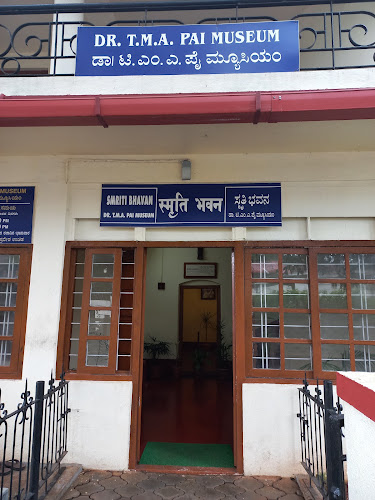
Smriti Bhavan Museum
About Smriti Bhavan Museum
Description
The Smriti Bhavan Museum preserves the life and legacy of Dr. T.M.A. Pai, the visionary who helped shape higher education in the region and founded the institution widely known today as Manipal University. Housed in the very home where Dr. Pai lived and worked, the museum feels less like a sterile institution and more like stepping into a carefully kept memory: original furniture, personal letters, framed photographs, and the sort of small, human objects that reveal a life lived with purpose. Visitors leave with a sense of how a single person's stubborn optimism and organizational skill can change a place — and, yes, it's the kind of story that still gets people talking around campus coffee carts.
The museum is modest in scale but rich in context. Rooms that once served as a study, a drawing room and a private office now contain curated displays: archival photos that chart the evolution of the university, personal effects that humanize the founder, and interpretive panels that explain the social and educational context of the mid-20th century. There’s also a quiet garden area adjoining the house — good for a pause, a reflective moment, or flipping through a small brochure. It’s the kind of spot where a visitor can easily spend 45 minutes to an hour if they read everything, or just pop in for a quick look if time is tight.
The atmosphere is unevenly polished in a way that’s oddly charming. The building is preserved rather than glamorized; artifacts are visible, labels are straightforward, and the tone is respectful without being reverential. Accessibility is limited — the entrance is not wheelchair-accessible — so visitors with mobility concerns should plan accordingly. There is no on-site restaurant, and amenities are minimal, which keeps the experience quiet and focused on the exhibits. Families with curious children will find the displays surprisingly approachable; if a child wants to see how a university started from a handful of classrooms, this place tells that tale in a direct, human way.
The museum’s strengths are its authenticity and proximity to the living campus of Manipal. Because it occupies the founder’s former residence, the layout and objects carry a narrative quality that some purpose-built museums lack. Pieces of ephemera — invitations, handwritten notes, trophies, and early campus plans — make the story concrete. The exhibition approach favors storytelling over glossy spectacle: readers may encounter typed correspondence that reveals the nitty-gritty decisions behind major initiatives, and framed photos that trace friendships and collaborations. For the visitor who likes context, this is a small but rewarding stop.
To be candid, the museum is not meant to be a blockbuster, and that’s part of its appeal. It’s intimate. It’s quiet. It’s local history told without heavy-handed interpretation. The author remembers walking through the rooms on a hot afternoon, finding a simple table lamp and a stack of notes that made a bureaucrat suddenly into a man of ideas. That kind of moment stays with you longer than a flashy display ever would.
Key Features
- Former residence of Dr. T.M.A. Pai, preserved with original room layouts and household items
- Archival photographs and documents detailing the founding and growth of Manipal University
- Personal artifacts: letters, awards, manuscripts, and office furnishings that tell a human story
- Interpretive panels that provide historical context in clear, readable language
- Child-friendly exhibits and storytelling elements suitable for school groups and families
- Quiet outdoor garden area adjacent to the house for reflection or small-group discussions
- Small-scale, low-key experience — ideal for visitors who prefer meaningful depth over spectacle
- Limited accessibility at the entrance and minimal on-site amenities (no restaurant)
Best Time to Visit
The best time to visit is in the cooler hours of the morning, roughly when local students are heading to class and the campus still feels fresh. Early mornings are quieter and give visitors space to read the exhibits at their own pace. Weekdays tend to be less crowded than weekends, especially outside of graduation season and university events. If the museum visit is combined with a campus walk, late afternoon can be pleasant — light tends to be softer for photos, and the atmosphere is a little slower.
Seasonally, the months outside the monsoon window are preferable for travelers who want to linger outside in the garden area. The coastal Karnataka climate can be humid, so plan a visit on a mild day if possible. For those with limited time, choosing a weekday morning will reduce queuing and distraction. The museum is compact; a focused 45–90 minute visit usually covers everything comfortably.
How to Get There
The Smriti Bhavan Museum sits within the Manipal area and is easy to reach from nearby points of interest. Local transport options include auto-rickshaws and taxis, which are convenient for short hops across town. Many visitors staying near the university campus find the museum walkable from student housing and guesthouses; that makes it a pleasant, low-effort stop during a campus stroll.
For travelers arriving from farther afield, the region is served by regional rail and road connections. The nearest larger towns have frequent bus and taxi services that connect to Manipal. If arriving by air, travelers typically transit through nearby airports and then proceed by car or bus; the final leg of the journey is usually a scenic drive that underscores how educational projects shaped this coastal region. Once in Manipal, locals and signage generally make the museum straightforward to locate — still, a brief chat with a hotel receptionist or a local shopkeeper will get a precise direction should one be needed.
Tips for Visiting
Plan ahead for a calm, contemplative visit. The museum is not large, so pacing oneself makes the experience more rewarding. The visitor should budget roughly an hour, more if they wish to read every plaque and letter or sketch in the garden. Photography policies can be strict in house museums; flash or tripods may be prohibited to protect old documents, so it’s best to ask at the entrance.
Because there’s no restaurant on-site, bring water and a small snack if needed — or plan to eat at a nearby café after the visit. Cash may still be handy for small museum fees, donations or for buying a modest brochure or souvenir from a local stall. The entrance is not wheelchair-accessible; visitors with mobility needs should check with museum staff in advance to explore possible accommodations or alternate routes.
Children respond well to the storytelling approach, but they will do best with a little preparatory context. A quick chat about what a university founder actually does — and why saving letters or maps matters — turns the exhibits into a live story for younger minds. School groups often find the place useful for civic and regional history lessons because the displays are tangible and immediate.
Do consider visiting during a quieter weekday. And don’t expect a glossy, commercial museum experience: Smriti Bhavan rewards curiosity and a willingness to read. Little details matter here — the author once noticed a folded program tucked into a drawer that mapped a graduation ceremony from decades ago; a neat, small detail that brought the exhibit to life in a way no big panel could. Keep an eye out for such surprises.
Finally, show respect. This is a memorial space and a former home; voices kept to a moderate level and careful handling of any interactive elements keeps it pleasant for everyone. If the visitor wants a richer experience, asking staff about the provenance of certain items or about recommended readings can open up layers that the labels don’t fully cover. Staff tend to be knowledgeable and quietly proud of the collection, and a short conversation often yields helpful, little-known tidbits that make the visit memorable.
Key Features
- Former residence of Dr. T.M.A. Pai, preserved with original room layouts and household items
- Archival photographs and documents detailing the founding and growth of Manipal University
- Personal artifacts: letters, awards, manuscripts, and office furnishings that tell a human story
- Interpretive panels that provide historical context in clear, readable language
- Child-friendly exhibits and storytelling elements suitable for school groups and families
- Quiet outdoor garden area adjacent to the house for reflection or small-group discussions
- Small-scale, low-key experience — ideal for visitors who prefer meaningful depth over spectacle
- Limited accessibility at the entrance and minimal on-site amenities (no restaurant)
More Details
Updated August 30, 2025
Table of Contents
Description
The Smriti Bhavan Museum preserves the life and legacy of Dr. T.M.A. Pai, the visionary who helped shape higher education in the region and founded the institution widely known today as Manipal University. Housed in the very home where Dr. Pai lived and worked, the museum feels less like a sterile institution and more like stepping into a carefully kept memory: original furniture, personal letters, framed photographs, and the sort of small, human objects that reveal a life lived with purpose. Visitors leave with a sense of how a single person’s stubborn optimism and organizational skill can change a place — and, yes, it’s the kind of story that still gets people talking around campus coffee carts.
The museum is modest in scale but rich in context. Rooms that once served as a study, a drawing room and a private office now contain curated displays: archival photos that chart the evolution of the university, personal effects that humanize the founder, and interpretive panels that explain the social and educational context of the mid-20th century. There’s also a quiet garden area adjoining the house — good for a pause, a reflective moment, or flipping through a small brochure. It’s the kind of spot where a visitor can easily spend 45 minutes to an hour if they read everything, or just pop in for a quick look if time is tight.
The atmosphere is unevenly polished in a way that’s oddly charming. The building is preserved rather than glamorized; artifacts are visible, labels are straightforward, and the tone is respectful without being reverential. Accessibility is limited — the entrance is not wheelchair-accessible — so visitors with mobility concerns should plan accordingly. There is no on-site restaurant, and amenities are minimal, which keeps the experience quiet and focused on the exhibits. Families with curious children will find the displays surprisingly approachable; if a child wants to see how a university started from a handful of classrooms, this place tells that tale in a direct, human way.
The museum’s strengths are its authenticity and proximity to the living campus of Manipal. Because it occupies the founder’s former residence, the layout and objects carry a narrative quality that some purpose-built museums lack. Pieces of ephemera — invitations, handwritten notes, trophies, and early campus plans — make the story concrete. The exhibition approach favors storytelling over glossy spectacle: readers may encounter typed correspondence that reveals the nitty-gritty decisions behind major initiatives, and framed photos that trace friendships and collaborations. For the visitor who likes context, this is a small but rewarding stop.
To be candid, the museum is not meant to be a blockbuster, and that’s part of its appeal. It’s intimate. It’s quiet. It’s local history told without heavy-handed interpretation. The author remembers walking through the rooms on a hot afternoon, finding a simple table lamp and a stack of notes that made a bureaucrat suddenly into a man of ideas. That kind of moment stays with you longer than a flashy display ever would.
Key Features
- Former residence of Dr. T.M.A. Pai, preserved with original room layouts and household items
- Archival photographs and documents detailing the founding and growth of Manipal University
- Personal artifacts: letters, awards, manuscripts, and office furnishings that tell a human story
- Interpretive panels that provide historical context in clear, readable language
- Child-friendly exhibits and storytelling elements suitable for school groups and families
- Quiet outdoor garden area adjacent to the house for reflection or small-group discussions
- Small-scale, low-key experience — ideal for visitors who prefer meaningful depth over spectacle
- Limited accessibility at the entrance and minimal on-site amenities (no restaurant)
Best Time to Visit
The best time to visit is in the cooler hours of the morning, roughly when local students are heading to class and the campus still feels fresh. Early mornings are quieter and give visitors space to read the exhibits at their own pace. Weekdays tend to be less crowded than weekends, especially outside of graduation season and university events. If the museum visit is combined with a campus walk, late afternoon can be pleasant — light tends to be softer for photos, and the atmosphere is a little slower.
Seasonally, the months outside the monsoon window are preferable for travelers who want to linger outside in the garden area. The coastal Karnataka climate can be humid, so plan a visit on a mild day if possible. For those with limited time, choosing a weekday morning will reduce queuing and distraction. The museum is compact; a focused 45–90 minute visit usually covers everything comfortably.
How to Get There
The Smriti Bhavan Museum sits within the Manipal area and is easy to reach from nearby points of interest. Local transport options include auto-rickshaws and taxis, which are convenient for short hops across town. Many visitors staying near the university campus find the museum walkable from student housing and guesthouses; that makes it a pleasant, low-effort stop during a campus stroll.
For travelers arriving from farther afield, the region is served by regional rail and road connections. The nearest larger towns have frequent bus and taxi services that connect to Manipal. If arriving by air, travelers typically transit through nearby airports and then proceed by car or bus; the final leg of the journey is usually a scenic drive that underscores how educational projects shaped this coastal region. Once in Manipal, locals and signage generally make the museum straightforward to locate — still, a brief chat with a hotel receptionist or a local shopkeeper will get a precise direction should one be needed.
Tips for Visiting
Plan ahead for a calm, contemplative visit. The museum is not large, so pacing oneself makes the experience more rewarding. The visitor should budget roughly an hour, more if they wish to read every plaque and letter or sketch in the garden. Photography policies can be strict in house museums; flash or tripods may be prohibited to protect old documents, so it’s best to ask at the entrance.
Because there’s no restaurant on-site, bring water and a small snack if needed — or plan to eat at a nearby café after the visit. Cash may still be handy for small museum fees, donations or for buying a modest brochure or souvenir from a local stall. The entrance is not wheelchair-accessible; visitors with mobility needs should check with museum staff in advance to explore possible accommodations or alternate routes.
Children respond well to the storytelling approach, but they will do best with a little preparatory context. A quick chat about what a university founder actually does — and why saving letters or maps matters — turns the exhibits into a live story for younger minds. School groups often find the place useful for civic and regional history lessons because the displays are tangible and immediate.
Do consider visiting during a quieter weekday. And don’t expect a glossy, commercial museum experience: Smriti Bhavan rewards curiosity and a willingness to read. Little details matter here — the author once noticed a folded program tucked into a drawer that mapped a graduation ceremony from decades ago; a neat, small detail that brought the exhibit to life in a way no big panel could. Keep an eye out for such surprises.
Finally, show respect. This is a memorial space and a former home; voices kept to a moderate level and careful handling of any interactive elements keeps it pleasant for everyone. If the visitor wants a richer experience, asking staff about the provenance of certain items or about recommended readings can open up layers that the labels don’t fully cover. Staff tend to be knowledgeable and quietly proud of the collection, and a short conversation often yields helpful, little-known tidbits that make the visit memorable.
Key Highlights
- Former residence of Dr. T.M.A. Pai, preserved with original room layouts and household items
- Archival photographs and documents detailing the founding and growth of Manipal University
- Personal artifacts: letters, awards, manuscripts, and office furnishings that tell a human story
- Interpretive panels that provide historical context in clear, readable language
- Child-friendly exhibits and storytelling elements suitable for school groups and families
- Quiet outdoor garden area adjacent to the house for reflection or small-group discussions
- Small-scale, low-key experience — ideal for visitors who prefer meaningful depth over spectacle
- Limited accessibility at the entrance and minimal on-site amenities (no restaurant)
Location
Places to Stay Near Smriti Bhavan Museum
Find and Book a Tour
Explore More Travel Guides
No reviews found! Be the first to review!
Traveler Reviews for Smriti Bhavan Museum
There are no reviews yet. Be the first one to write one.
Have you visited Smriti Bhavan Museum? Help other travelers by sharing your review.
You Might Also Like

Sharada Children's Park
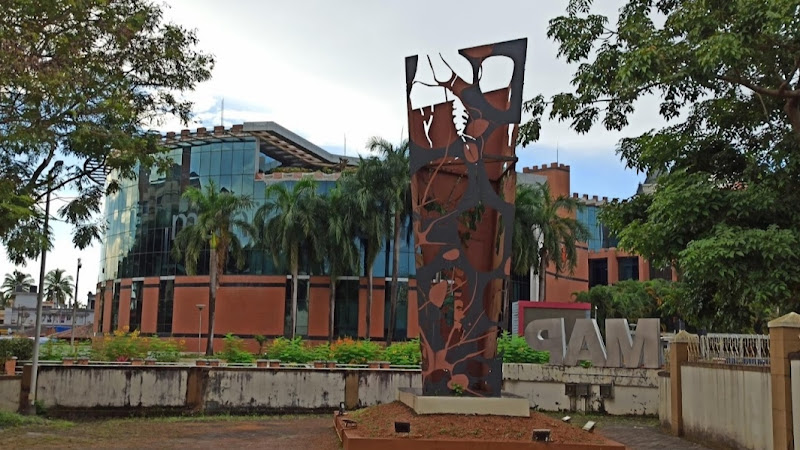
Manipal Museum of Anatomy & Pathology

Hasta Shilpa Heritage Village Museum
Find Accommodations Nearby
Recommended Tours & Activities
Visitor Reviews
There are no reviews yet. Be the first one to write one.
Share Your Experience
Have you visited Smriti Bhavan Museum? Help other travelers by leaving a review.