About Senaru Crater Rim

Description

The Senaru Crater Rim is one of those places that quietly rewires how you think about landscapes. It’s part of Mount Rinjani National Park in Lombok, and it’s often described as a “trek,” but that word feels a bit thin for what actually happens up there. This is a long, slow unfolding of views, effort, weather, and emotion. You earn every meter. And yes, your legs will complain, but your brain will be too busy being blown away to care much.

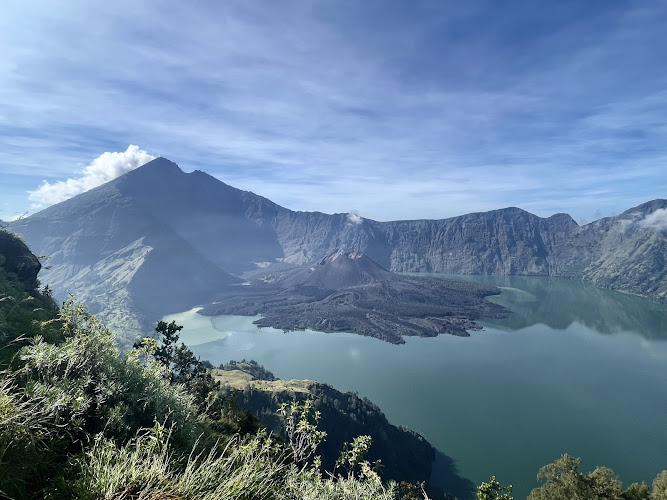
This crater rim sits on the northern approach to Mount Rinjani, starting from Senaru village. It’s the classic route for travelers who want drama without committing to the full summit push. The trail climbs through farmland, thick forest, and eventually into open grassland that feels strangely quiet, like the world hit a mute button. When hikers finally reach the rim, the payoff arrives all at once: a massive volcanic crater, the blue curve of Segara Anak Lake far below, and Mount Barujari puffing steam like it owns the place. Which, honestly, it kinda does.

One thing worth saying out loud: this is not a casual walk. People bring kids, yes, but usually older ones who hike regularly. The terrain is uneven, steep in parts, and absolutely not wheelchair accessible. But it’s also manageable for travelers with average fitness if they pace themselves. Guides matter here. I’ve seen folks try to go it alone to save money and end up exhausted, sunburnt, and slightly panicked by midday clouds rolling in. Not ideal.

What makes Senaru Crater Rim special compared to other viewpoints in Indonesia is how raw it still feels. You don’t arrive to a viewing platform with railings and snack stalls. You arrive to wind, clouds, and space. A lot of space. And sometimes silence, broken only by someone boiling water for coffee or instant noodles. I once shared a sunrise up there with five strangers and a thermos of sweet tea, and nobody spoke for ten minutes. That’s the kind of place this is.

Most travelers camp overnight at the rim. Sunset is impressive, sure, but sunrise is the main event. The light spills slowly into the crater, turning shadows into shapes, shapes into ridges, and ridges into something that feels almost unreal. Photos don’t quite catch it. They try. They fail. And that’s okay.

Key Features

  • Wide panoramic views of Mount Rinjani’s crater and Segara Anak Lake
  • Classic trekking route starting from Senaru village
  • Overnight camping experience with sunrise above the clouds
  • Cool mountain climate compared to coastal Lombok
  • Wildlife sightings including monkeys and unique bird species
  • Volcanic landscape shaped by active geology
  • Good option for travelers who don’t want to summit Rinjani

Best Time to Visit

The best time to visit Senaru Crater Rim is during the dry season, typically from April to October. And even within that window, timing matters. July and August are the busiest months, which means more tents at camp and less of that wild, lonely feeling. Still beautiful, just louder. If quiet matters to you, aim for May, June, or September. The weather is generally stable, trails are safer, and there’s a little more breathing room.

The rainy season, from November to March, is a gamble. Heavy rain can turn sections of the trail into slippery messes, and visibility at the rim can vanish in minutes. Mount Rinjani National Park usually closes access during peak rainy months for safety and conservation reasons. And honestly, that’s a good thing. This isn’t a place you want to challenge just to prove a point.

Daily timing also plays a role. Most treks start early in the morning, around 7 or 8 am, to avoid midday heat in the lower sections. The climb takes several hours, depending on pace and breaks. Sunset and sunrise are the emotional highlights, but midday views can be surprisingly good too, especially when clouds lift briefly and reveal the lake below. Patience helps. Nature runs on her own schedule.

How to Get There

Getting to Senaru Crater Rim starts with getting to Lombok. From there, travelers usually head north to Senaru village, which acts as the main gateway. The drive from popular areas like Senggigi or Mataram takes several hours, winding through hills, small towns, and farmland. It’s a scenic ride, though bumpy in spots. Motion sickness tablets are not a bad idea. Trust me on this one.

Most visitors arrange transport through their accommodation or a local tour operator. Public transport exists but is slow and complicated, especially if you’re carrying trekking gear. Once in Senaru, trekking permits and guides are typically organized locally. Booking in advance is strongly recommended, especially in high season. Guides do more than lead the way. They manage logistics, set up camp, cook meals, and keep an eye on weather changes. That peace of mind is worth a lot when you’re hours away from the nearest road.

The trek itself usually takes one day to reach the crater rim, with an overnight stay, followed by a descent the next day. Some itineraries include extra time for acclimatization or village walks before or after the hike. And honestly, spending a night in Senaru village before the trek is a smart move. It gives your body a chance to rest and your mind a moment to adjust from beach mode to mountain mode.

Tips for Visiting

First tip, and this comes from hard-earned experience: pack lighter than you think you need. Every extra kilo feels personal after the third hour of climbing. Essentials include warm layers (it gets cold at night), a rain jacket, good hiking shoes, sunscreen, and enough water. Guides usually provide meals and camping gear, but it’s always good to double-check what’s included.

Second, pace yourself. This is not a race. I’ve seen very fit travelers burn out early because they charged uphill like it was a gym stairmaster. Slow steps, steady breathing. Take breaks. Look around. The forest section especially is full of small details people miss when they rush, like birds with ridiculous colors or trees that look ancient and wise.

Third, respect the mountain. That sounds dramatic, but it’s practical advice. Weather can change fast. Clouds roll in, wind picks up, temperatures drop. Listen to your guide. If they suggest an early start or an extra layer, they’re not being overcautious. They’ve seen things go sideways before.

Traveling with kids? It can be done, but be realistic. Children need to be comfortable with long walks, uneven ground, and basic camping conditions. There are no bathrooms up there. No shops. No shortcuts. But for the right family, it can be an unforgettable shared experience. I once met a father and daughter duo at the rim, and the kid was beaming like she’d just climbed Everest. Moments like that stick.

One thing people don’t talk about much is the emotional side of the trek. The physical challenge strips away distractions. No phone signal, no noise, no schedules. Just steps and breath. Some people find that uncomfortable at first. Then freeing. If you’re feeling a bit burnt out from life, this place has a way of pressing a reset button. Not magically. Not instantly. But gently, over time.

Finally, leave no trace. Carry your trash back down, respect local customs, and be mindful of the environment. The crater rim looks wild, but it’s also fragile. The fact that it still feels untamed is something worth protecting.

Senaru Crater Rim isn’t about ticking a box or grabbing a photo for social media. It’s about effort, perspective, and those quiet moments when the world feels bigger than your problems. If that sounds like something you need right now, you probably already know the answer.

Key Features

  • Wide panoramic views of Mount Rinjani’s crater and Segara Anak Lake
  • Classic trekking route starting from Senaru village
  • Overnight camping experience with sunrise above the clouds
  • Cool mountain climate compared to coastal Lombok
  • Wildlife sightings including monkeys and unique bird species
  • Volcanic landscape shaped by active geology
  • Good option for travelers who don’t want to summit Rinjani

More Details

Updated January 1, 2026


Description

The Senaru Crater Rim is one of those places that quietly rewires how you think about landscapes. It’s part of Mount Rinjani National Park in Lombok, and it’s often described as a “trek,” but that word feels a bit thin for what actually happens up there. This is a long, slow unfolding of views, effort, weather, and emotion. You earn every meter. And yes, your legs will complain, but your brain will be too busy being blown away to care much.

This crater rim sits on the northern approach to Mount Rinjani, starting from Senaru village. It’s the classic route for travelers who want drama without committing to the full summit push. The trail climbs through farmland, thick forest, and eventually into open grassland that feels strangely quiet, like the world hit a mute button. When hikers finally reach the rim, the payoff arrives all at once: a massive volcanic crater, the blue curve of Segara Anak Lake far below, and Mount Barujari puffing steam like it owns the place. Which, honestly, it kinda does.

One thing worth saying out loud: this is not a casual walk. People bring kids, yes, but usually older ones who hike regularly. The terrain is uneven, steep in parts, and absolutely not wheelchair accessible. But it’s also manageable for travelers with average fitness if they pace themselves. Guides matter here. I’ve seen folks try to go it alone to save money and end up exhausted, sunburnt, and slightly panicked by midday clouds rolling in. Not ideal.

What makes Senaru Crater Rim special compared to other viewpoints in Indonesia is how raw it still feels. You don’t arrive to a viewing platform with railings and snack stalls. You arrive to wind, clouds, and space. A lot of space. And sometimes silence, broken only by someone boiling water for coffee or instant noodles. I once shared a sunrise up there with five strangers and a thermos of sweet tea, and nobody spoke for ten minutes. That’s the kind of place this is.

Most travelers camp overnight at the rim. Sunset is impressive, sure, but sunrise is the main event. The light spills slowly into the crater, turning shadows into shapes, shapes into ridges, and ridges into something that feels almost unreal. Photos don’t quite catch it. They try. They fail. And that’s okay.

Key Features

  • Wide panoramic views of Mount Rinjani’s crater and Segara Anak Lake
  • Classic trekking route starting from Senaru village
  • Overnight camping experience with sunrise above the clouds
  • Cool mountain climate compared to coastal Lombok
  • Wildlife sightings including monkeys and unique bird species
  • Volcanic landscape shaped by active geology
  • Good option for travelers who don’t want to summit Rinjani

Best Time to Visit

The best time to visit Senaru Crater Rim is during the dry season, typically from April to October. And even within that window, timing matters. July and August are the busiest months, which means more tents at camp and less of that wild, lonely feeling. Still beautiful, just louder. If quiet matters to you, aim for May, June, or September. The weather is generally stable, trails are safer, and there’s a little more breathing room.

The rainy season, from November to March, is a gamble. Heavy rain can turn sections of the trail into slippery messes, and visibility at the rim can vanish in minutes. Mount Rinjani National Park usually closes access during peak rainy months for safety and conservation reasons. And honestly, that’s a good thing. This isn’t a place you want to challenge just to prove a point.

Daily timing also plays a role. Most treks start early in the morning, around 7 or 8 am, to avoid midday heat in the lower sections. The climb takes several hours, depending on pace and breaks. Sunset and sunrise are the emotional highlights, but midday views can be surprisingly good too, especially when clouds lift briefly and reveal the lake below. Patience helps. Nature runs on her own schedule.

How to Get There

Getting to Senaru Crater Rim starts with getting to Lombok. From there, travelers usually head north to Senaru village, which acts as the main gateway. The drive from popular areas like Senggigi or Mataram takes several hours, winding through hills, small towns, and farmland. It’s a scenic ride, though bumpy in spots. Motion sickness tablets are not a bad idea. Trust me on this one.

Most visitors arrange transport through their accommodation or a local tour operator. Public transport exists but is slow and complicated, especially if you’re carrying trekking gear. Once in Senaru, trekking permits and guides are typically organized locally. Booking in advance is strongly recommended, especially in high season. Guides do more than lead the way. They manage logistics, set up camp, cook meals, and keep an eye on weather changes. That peace of mind is worth a lot when you’re hours away from the nearest road.

The trek itself usually takes one day to reach the crater rim, with an overnight stay, followed by a descent the next day. Some itineraries include extra time for acclimatization or village walks before or after the hike. And honestly, spending a night in Senaru village before the trek is a smart move. It gives your body a chance to rest and your mind a moment to adjust from beach mode to mountain mode.

Tips for Visiting

First tip, and this comes from hard-earned experience: pack lighter than you think you need. Every extra kilo feels personal after the third hour of climbing. Essentials include warm layers (it gets cold at night), a rain jacket, good hiking shoes, sunscreen, and enough water. Guides usually provide meals and camping gear, but it’s always good to double-check what’s included.

Second, pace yourself. This is not a race. I’ve seen very fit travelers burn out early because they charged uphill like it was a gym stairmaster. Slow steps, steady breathing. Take breaks. Look around. The forest section especially is full of small details people miss when they rush, like birds with ridiculous colors or trees that look ancient and wise.

Third, respect the mountain. That sounds dramatic, but it’s practical advice. Weather can change fast. Clouds roll in, wind picks up, temperatures drop. Listen to your guide. If they suggest an early start or an extra layer, they’re not being overcautious. They’ve seen things go sideways before.

Traveling with kids? It can be done, but be realistic. Children need to be comfortable with long walks, uneven ground, and basic camping conditions. There are no bathrooms up there. No shops. No shortcuts. But for the right family, it can be an unforgettable shared experience. I once met a father and daughter duo at the rim, and the kid was beaming like she’d just climbed Everest. Moments like that stick.

One thing people don’t talk about much is the emotional side of the trek. The physical challenge strips away distractions. No phone signal, no noise, no schedules. Just steps and breath. Some people find that uncomfortable at first. Then freeing. If you’re feeling a bit burnt out from life, this place has a way of pressing a reset button. Not magically. Not instantly. But gently, over time.

Finally, leave no trace. Carry your trash back down, respect local customs, and be mindful of the environment. The crater rim looks wild, but it’s also fragile. The fact that it still feels untamed is something worth protecting.

Senaru Crater Rim isn’t about ticking a box or grabbing a photo for social media. It’s about effort, perspective, and those quiet moments when the world feels bigger than your problems. If that sounds like something you need right now, you probably already know the answer.

Key Highlights

  • Wide panoramic views of Mount Rinjani’s crater and Segara Anak Lake
  • Classic trekking route starting from Senaru village
  • Overnight camping experience with sunrise above the clouds
  • Cool mountain climate compared to coastal Lombok
  • Wildlife sightings including monkeys and unique bird species
  • Volcanic landscape shaped by active geology
  • Good option for travelers who don’t want to summit Rinjani

Location

Places to Stay Near Senaru Crater Rim

Find and Book a Tour

Explore More Travel Guides

No reviews found! Be the first to review!

Traveler Reviews for Senaru Crater Rim

There are no reviews yet. Be the first one to write one.

Share Your Experience

Have you visited Senaru Crater Rim? Help other travelers by sharing your review.

Find Accommodations Nearby

Recommended Tours & Activities

Visitor Reviews

There are no reviews yet. Be the first one to write one.

Share Your Experience

Have you visited Senaru Crater Rim? Help other travelers by leaving a review.