
Sancaklar Mosque
About Sancaklar Mosque
Description
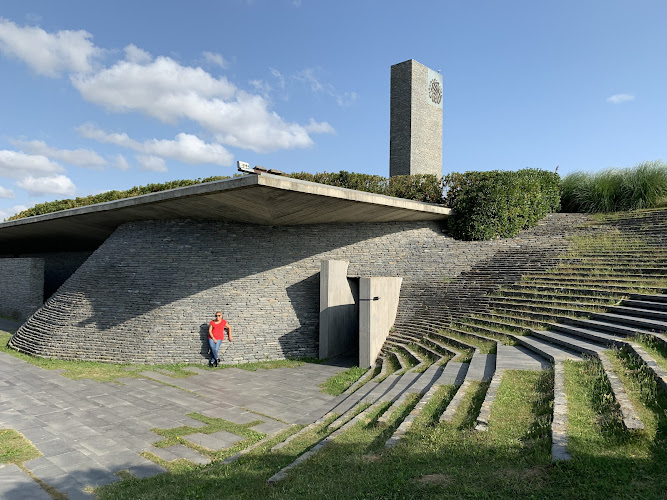
Sancaklar Mosque is one of those places that quietly messes with your expectations. Travelers often arrive thinking they’re visiting “just another mosque,” and leave a little unsettled, in a good way. This is not about domes glittering in the sun or minarets competing for skyline attention. Instead, the building sinks into the earth, almost hiding from the world. And yes, that’s intentional. The architect wanted worshippers and visitors alike to descend, both physically and mentally, into a space stripped of distractions. When I first went, I remember thinking, Is this even the entrance? It felt more like approaching a landscape installation than a religious building.
The mosque’s design is inspired by the idea of a cave, echoing early Islamic worship spaces. That sounds academic, I know, but when you’re actually walking down those stone steps, surrounded by rough textures and filtered light, it hits you differently. The outside noise fades fast. Cars, voices, even your own thoughts quiet down. It’s oddly calming, even if you’re not religious. And that’s probably why it has become such a talked-about tourist attraction, especially among architecture lovers and travelers who’ve already “done” Istanbul’s famous mosques and want something more introspective.
What I appreciate most is how Sancaklar Mosque refuses to show off. There’s no excessive ornamentation, no gold leaf trying to impress you. Instead, the space invites you to slow down. And if you’re the kind of traveler who likes places that linger in your memory long after you leave, this one sticks. Some people do find it too stark or cold, which is fair. It’s not cozy in the traditional sense. But for many visitors, that starkness is exactly the point.
It’s also worth saying that the mosque functions as a real place of worship. This isn’t a museum pretending to be spiritual. Locals come here to pray, daily life continues, and visitors are guests in that rhythm. That balance between tourism and devotion is delicate, and Sancaklar Mosque mostly pulls it off. You’ll feel it when you’re there, that quiet respect in the air, even when a few curious tourists shuffle around with cameras.
Key Features
- Subterranean architecture that places most of the mosque below ground level
- Minimalist design inspired by early Islamic worship spaces
- Natural light filtered through narrow openings instead of large windows
- Stone, concrete, and earth-toned materials that feel raw and intentional
- Wheelchair accessible entrance, parking, and restroom facilities
- Separate prayer areas that respect traditional mosque layout
- A serene courtyard that acts as a transition zone from outside world to prayer space
- Acoustics designed to soften sound and encourage quiet reflection
Best Time to Visit
Timing matters more than you might expect here. Early morning visits are my personal favorite. The light is softer, the air feels cooler, and there’s a kind of hush that suits the space. If you arrive just after sunrise, you’ll probably share the mosque with a handful of worshippers and maybe one or two curious travelers. It feels intimate, almost private, and that’s rare for a well-known attraction.
Late afternoons can also work well, especially if you’re interested in how light plays across the stone walls. As the sun lowers, shadows stretch and shift, changing the mood of the interior. It’s subtle but noticeable, and if you enjoy photography, this is when the mosque really shows its depth. Midday, on the other hand, can feel a bit flat in terms of lighting, and you’re more likely to encounter larger groups.
As for seasons, spring and autumn are ideal. Summers can be hot, and while the underground design helps keep things cooler, getting there and walking around the grounds can still be draining. Winters are quieter, which I like, but rain can make the stone surfaces slick, so you’ll want good shoes. And yes, check prayer times before you go. Visiting outside of major prayer sessions makes for a more relaxed experience, unless you specifically want to observe the mosque in full use.
How to Get There
Getting to Sancaklar Mosque takes a bit of effort, and honestly, that’s part of why it feels special. It’s not sitting right next to a cluster of souvenir shops. Most travelers will need to combine public transport with a short walk or taxi ride. If you’re relying on buses or metro lines, expect to plan ahead. This isn’t a place you just stumble upon while wandering.
I remember my first visit involved a wrong turn, a confused conversation with a shop owner, and a slightly longer walk than expected. But that small hassle made the arrival more rewarding. The area around the mosque is relatively quiet, more residential than touristy, and that contrast heightens the experience. You go from ordinary streets to this deeply considered space, and the shift feels deliberate.
If you’re driving, there is parking available, including accessible spaces. That’s a big plus for travelers with mobility concerns. Taxis and ride-hailing services are also a practical option, especially if you’re short on time. Just be patient and allow extra minutes; traffic patterns can be unpredictable, and drivers don’t always know the mosque by name without a little explanation.
Tips for Visiting
First and foremost, dress respectfully. This should go without saying, but it’s easy to forget when you’re in travel mode. Modest clothing is expected, and head coverings may be required in certain areas. If you’re unsure, observe what locals are wearing and follow their lead. And don’t worry, no one expects perfection, just effort.
Second, give yourself time. This isn’t a quick in-and-out attraction. Even if the physical visit doesn’t take hours, the emotional and sensory impact lingers. Sit down for a few minutes. Let your eyes adjust to the dimmer light. Listen to the silence, or near-silence. On one of my visits, I sat longer than planned and ended up scrapping my next activity. Zero regrets.
Photography is generally allowed, but be discreet. Avoid taking photos of people praying, and definitely skip the flash. The space relies heavily on natural light, and artificial lighting just kills the mood. Plus, there’s something refreshing about experiencing a place without immediately filtering it through a lens. But hey, I get it, some moments beg to be captured.
If you’re traveling with kids, prepare them in advance. The minimalist design might not hold their attention the way colorful landmarks do. That said, older kids and teens interested in architecture or design might find it fascinating. Explain the idea behind the building, the symbolism of descent, and they might surprise you with thoughtful questions.
Accessibility is one of the mosque’s understated strengths. Wheelchair users will find the entrance, parking, and restrooms thoughtfully designed. Still, it’s a good idea to move slowly and carefully, as some surfaces are uneven by nature. Staff and locals are usually helpful if you need assistance, even if language barriers pop up. A smile goes a long way.
Lastly, manage your expectations. If you’re looking for ornate decoration, historical artifacts, or postcard views, this may not be your favorite stop. But if you’re open to a quieter, more conceptual experience, Sancaklar Mosque delivers something rare. It asks you to participate, not just observe. And in a world of loud attractions competing for attention, that quiet invitation feels almost radical.
So, take a breath, slow your pace, and let the place do its thing. You might walk out unchanged. Or you might find, as I did, that the memory of descending into that stone-lined space sticks with you longer than expected. And that, to me, is the mark of a place worth visiting.
Key Features
- Subterranean architecture that places most of the mosque below ground level
- Minimalist design inspired by early Islamic worship spaces
- Natural light filtered through narrow openings instead of large windows
- Stone, concrete, and earth-toned materials that feel raw and intentional
- Wheelchair accessible entrance, parking, and restroom facilities
- Separate prayer areas that respect traditional mosque layout
- A serene courtyard that acts as a transition zone from outside world to prayer space
- Acoustics designed to soften sound and encourage quiet reflection
More Details
Updated December 31, 2025
Table of Contents
Description
Sancaklar Mosque is one of those places that quietly messes with your expectations. Travelers often arrive thinking they’re visiting “just another mosque,” and leave a little unsettled, in a good way. This is not about domes glittering in the sun or minarets competing for skyline attention. Instead, the building sinks into the earth, almost hiding from the world. And yes, that’s intentional. The architect wanted worshippers and visitors alike to descend, both physically and mentally, into a space stripped of distractions. When I first went, I remember thinking, Is this even the entrance? It felt more like approaching a landscape installation than a religious building.
The mosque’s design is inspired by the idea of a cave, echoing early Islamic worship spaces. That sounds academic, I know, but when you’re actually walking down those stone steps, surrounded by rough textures and filtered light, it hits you differently. The outside noise fades fast. Cars, voices, even your own thoughts quiet down. It’s oddly calming, even if you’re not religious. And that’s probably why it has become such a talked-about tourist attraction, especially among architecture lovers and travelers who’ve already “done” Istanbul’s famous mosques and want something more introspective.
What I appreciate most is how Sancaklar Mosque refuses to show off. There’s no excessive ornamentation, no gold leaf trying to impress you. Instead, the space invites you to slow down. And if you’re the kind of traveler who likes places that linger in your memory long after you leave, this one sticks. Some people do find it too stark or cold, which is fair. It’s not cozy in the traditional sense. But for many visitors, that starkness is exactly the point.
It’s also worth saying that the mosque functions as a real place of worship. This isn’t a museum pretending to be spiritual. Locals come here to pray, daily life continues, and visitors are guests in that rhythm. That balance between tourism and devotion is delicate, and Sancaklar Mosque mostly pulls it off. You’ll feel it when you’re there, that quiet respect in the air, even when a few curious tourists shuffle around with cameras.
Key Features
- Subterranean architecture that places most of the mosque below ground level
- Minimalist design inspired by early Islamic worship spaces
- Natural light filtered through narrow openings instead of large windows
- Stone, concrete, and earth-toned materials that feel raw and intentional
- Wheelchair accessible entrance, parking, and restroom facilities
- Separate prayer areas that respect traditional mosque layout
- A serene courtyard that acts as a transition zone from outside world to prayer space
- Acoustics designed to soften sound and encourage quiet reflection
Best Time to Visit
Timing matters more than you might expect here. Early morning visits are my personal favorite. The light is softer, the air feels cooler, and there’s a kind of hush that suits the space. If you arrive just after sunrise, you’ll probably share the mosque with a handful of worshippers and maybe one or two curious travelers. It feels intimate, almost private, and that’s rare for a well-known attraction.
Late afternoons can also work well, especially if you’re interested in how light plays across the stone walls. As the sun lowers, shadows stretch and shift, changing the mood of the interior. It’s subtle but noticeable, and if you enjoy photography, this is when the mosque really shows its depth. Midday, on the other hand, can feel a bit flat in terms of lighting, and you’re more likely to encounter larger groups.
As for seasons, spring and autumn are ideal. Summers can be hot, and while the underground design helps keep things cooler, getting there and walking around the grounds can still be draining. Winters are quieter, which I like, but rain can make the stone surfaces slick, so you’ll want good shoes. And yes, check prayer times before you go. Visiting outside of major prayer sessions makes for a more relaxed experience, unless you specifically want to observe the mosque in full use.
How to Get There
Getting to Sancaklar Mosque takes a bit of effort, and honestly, that’s part of why it feels special. It’s not sitting right next to a cluster of souvenir shops. Most travelers will need to combine public transport with a short walk or taxi ride. If you’re relying on buses or metro lines, expect to plan ahead. This isn’t a place you just stumble upon while wandering.
I remember my first visit involved a wrong turn, a confused conversation with a shop owner, and a slightly longer walk than expected. But that small hassle made the arrival more rewarding. The area around the mosque is relatively quiet, more residential than touristy, and that contrast heightens the experience. You go from ordinary streets to this deeply considered space, and the shift feels deliberate.
If you’re driving, there is parking available, including accessible spaces. That’s a big plus for travelers with mobility concerns. Taxis and ride-hailing services are also a practical option, especially if you’re short on time. Just be patient and allow extra minutes; traffic patterns can be unpredictable, and drivers don’t always know the mosque by name without a little explanation.
Tips for Visiting
First and foremost, dress respectfully. This should go without saying, but it’s easy to forget when you’re in travel mode. Modest clothing is expected, and head coverings may be required in certain areas. If you’re unsure, observe what locals are wearing and follow their lead. And don’t worry, no one expects perfection, just effort.
Second, give yourself time. This isn’t a quick in-and-out attraction. Even if the physical visit doesn’t take hours, the emotional and sensory impact lingers. Sit down for a few minutes. Let your eyes adjust to the dimmer light. Listen to the silence, or near-silence. On one of my visits, I sat longer than planned and ended up scrapping my next activity. Zero regrets.
Photography is generally allowed, but be discreet. Avoid taking photos of people praying, and definitely skip the flash. The space relies heavily on natural light, and artificial lighting just kills the mood. Plus, there’s something refreshing about experiencing a place without immediately filtering it through a lens. But hey, I get it, some moments beg to be captured.
If you’re traveling with kids, prepare them in advance. The minimalist design might not hold their attention the way colorful landmarks do. That said, older kids and teens interested in architecture or design might find it fascinating. Explain the idea behind the building, the symbolism of descent, and they might surprise you with thoughtful questions.
Accessibility is one of the mosque’s understated strengths. Wheelchair users will find the entrance, parking, and restrooms thoughtfully designed. Still, it’s a good idea to move slowly and carefully, as some surfaces are uneven by nature. Staff and locals are usually helpful if you need assistance, even if language barriers pop up. A smile goes a long way.
Lastly, manage your expectations. If you’re looking for ornate decoration, historical artifacts, or postcard views, this may not be your favorite stop. But if you’re open to a quieter, more conceptual experience, Sancaklar Mosque delivers something rare. It asks you to participate, not just observe. And in a world of loud attractions competing for attention, that quiet invitation feels almost radical.
So, take a breath, slow your pace, and let the place do its thing. You might walk out unchanged. Or you might find, as I did, that the memory of descending into that stone-lined space sticks with you longer than expected. And that, to me, is the mark of a place worth visiting.
Key Highlights
- Subterranean architecture that places most of the mosque below ground level
- Minimalist design inspired by early Islamic worship spaces
- Natural light filtered through narrow openings instead of large windows
- Stone, concrete, and earth-toned materials that feel raw and intentional
- Wheelchair accessible entrance, parking, and restroom facilities
- Separate prayer areas that respect traditional mosque layout
- A serene courtyard that acts as a transition zone from outside world to prayer space
- Acoustics designed to soften sound and encourage quiet reflection
Location
Places to Stay Near Sancaklar Mosque
Find and Book a Tour
Explore More Travel Guides
No reviews found! Be the first to review!
Traveler Reviews for Sancaklar Mosque
There are no reviews yet. Be the first one to write one.
Have you visited Sancaklar Mosque? Help other travelers by sharing your review.
You Might Also Like
Sadağı Kanyonu Tabiat Parkı
Panorama 1453 History Museum

Bostancı Deresi
Find Accommodations Nearby
Recommended Tours & Activities
Visitor Reviews
There are no reviews yet. Be the first one to write one.
Share Your Experience
Have you visited Sancaklar Mosque? Help other travelers by leaving a review.