
Rubinstein Piano
About Rubinstein Piano
Description
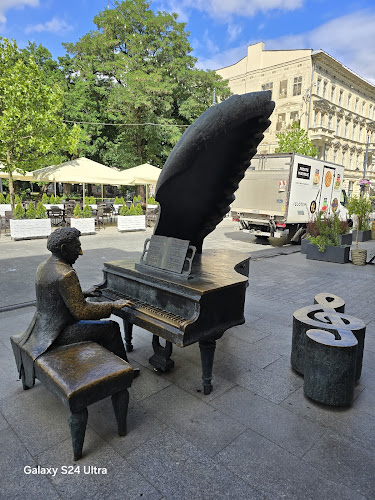
The Rubinstein Piano sculpture in Łódź is one of those places that quietly sneaks up on you. It’s not a grand museum or a massive monument towering over the city. Instead, it’s a life-sized bronze piano that sits right there on Piotrkowska Street, inviting anyone passing by to stop, look, and maybe even imagine the legendary Arthur Rubinstein himself playing a few notes. There’s something about it that feels personal, like a wink from the city to one of its most cherished sons. And honestly, if you’ve ever loved music—or even if you haven’t—you’ll probably find yourself lingering here longer than expected.
Arthur Rubinstein, born in Łódź in 1887, was one of the world’s greatest pianists. His interpretations of Chopin, Debussy, and Brahms are still studied and admired today. This sculpture pays tribute not just to his genius but to his deep connection with his hometown. The piano, paired with a statue of Rubinstein himself, is more than just an art piece—it’s a symbol of pride, memory, and artistry. You can almost feel the energy of the city moving around it, yet the sculpture holds its own quiet dignity.
What makes this spot so appealing is its accessibility. You don’t need a ticket, a tour guide, or even much time. It’s right there, part of the street’s rhythm. People sit on the nearby benches, kids climb around it, and travelers snap photos while street musicians sometimes play nearby. It’s a living, breathing tribute, blending art and life the way Rubinstein blended technique and emotion in his performances. And yes, it’s wheelchair accessible—something that makes it even more welcoming for all visitors.
Key Features
- Beautiful bronze sculpture of Arthur Rubinstein seated at a grand piano, celebrating his legacy as one of the 20th century’s most beloved pianists.
- Located along the iconic Piotrkowska Street, known for its art installations and historical charm.
- Interactive design that encourages visitors to approach, photograph, and experience the sculpture up close.
- Wheelchair accessible area, ensuring inclusivity for all visitors.
- Surrounded by cafés, shops, and historical architecture, making it a convenient stop during a walking tour of Łódź.
- Often accompanied by live street music, adding to the atmosphere and honoring Rubinstein’s musical spirit.
Best Time to Visit
In my experience, the Rubinstein Piano is best enjoyed during the warmer months—late spring through early autumn—when Piotrkowska Street is alive with outdoor dining, street performers, and the hum of local life. Early morning visits have a certain calmness; the light hits the bronze just right, and you can enjoy the sculpture without the usual bustle. But if you prefer energy and people-watching, late afternoon or early evening is perfect. The golden sunset reflecting off the piano gives it this almost magical glow that’s hard to describe unless you’ve seen it yourself.
Winter, though quieter, has its own charm too. The sculpture often gets dusted with snow, and the street lights cast a soft glow that feels almost cinematic. If you’re into photography, that’s your moment. Just remember to bundle up—Łódź winters aren’t exactly forgiving.
How to Get There
Reaching the Rubinstein Piano is straightforward since it’s located along one of the main arteries of Łódź. Most travelers arrive in the city by train or bus, and from the central station, you can easily hop on a tram or simply walk if you enjoy exploring on foot. Piotrkowska Street is pedestrian-friendly, lined with art, restaurants, and cultural landmarks, so getting there becomes part of the experience itself. I’ve walked it a few times, and each time I’ve stumbled upon something new—a mural, a quirky café, or a street musician playing Chopin, which feels oddly appropriate.
If you’re driving, parking can be a little tricky near the busiest sections of the street, but there are paid lots nearby. For those who prefer cycling, the city’s bike-sharing system is a convenient and eco-friendly option, and there are plenty of docking stations within walking distance of the sculpture.
Tips for Visiting
Here’s the thing about visiting the Rubinstein Piano—it’s not just about seeing it, it’s about soaking in the atmosphere around it. Take your time. Don’t just snap a photo and move on. Sit nearby for a few minutes and watch the flow of people. You’ll notice locals greeting each other, artists sketching, and tourists trying to line up the perfect shot. It’s a piece of public art that feels lived-in, and that’s what makes it special.
If you’re a music lover, bring a pair of headphones and listen to Rubinstein’s recordings while you’re there. I did that once—played one of his Chopin nocturnes while standing beside the sculpture—and it was honestly a little emotional. It’s like the city itself hums along with the melody. And if you’re traveling with kids, they’ll love climbing around the sculpture or pretending to play the piano keys. It’s sturdy and built for interaction, not just admiration from afar.
A few practical tips: wear comfortable shoes since Piotrkowska Street is long and best explored on foot. Visit early in the morning if you prefer quiet moments or later in the day if you want that lively, social energy. And if you’re into photography, try visiting just after rain—the wet pavement reflects the sculpture beautifully, giving it a cinematic look that’s hard to replicate.
Lastly, don’t rush off after visiting. The surrounding area is full of hidden gems—small galleries, vintage shops, and local eateries that serve some of the best pierogi in town. Grab a coffee, sit outside, and let the rhythm of Łódź sink in. The Rubinstein Piano isn’t just a sculpture; it’s a reminder of how art, music, and memory can shape a city’s soul. And once you’ve seen it, you’ll understand why so many people—locals and travelers alike—keep coming back.
Key Features
- Beautiful bronze sculpture of Arthur Rubinstein seated at a grand piano, celebrating his legacy as one of the 20th century’s most beloved pianists.
- Located along the iconic Piotrkowska Street, known for its art installations and historical charm.
- Interactive design that encourages visitors to approach, photograph, and experience the sculpture up close.
- Wheelchair accessible area, ensuring inclusivity for all visitors.
- Surrounded by cafés, shops, and historical architecture, making it a convenient stop during a walking tour of Łódź.
- Often accompanied by live street music, adding to the atmosphere and honoring Rubinstein’s musical spirit.
More Details
Updated November 7, 2025
Table of Contents
Description
The Rubinstein Piano sculpture in Łódź is one of those places that quietly sneaks up on you. It’s not a grand museum or a massive monument towering over the city. Instead, it’s a life-sized bronze piano that sits right there on Piotrkowska Street, inviting anyone passing by to stop, look, and maybe even imagine the legendary Arthur Rubinstein himself playing a few notes. There’s something about it that feels personal, like a wink from the city to one of its most cherished sons. And honestly, if you’ve ever loved music—or even if you haven’t—you’ll probably find yourself lingering here longer than expected.
Arthur Rubinstein, born in Łódź in 1887, was one of the world’s greatest pianists. His interpretations of Chopin, Debussy, and Brahms are still studied and admired today. This sculpture pays tribute not just to his genius but to his deep connection with his hometown. The piano, paired with a statue of Rubinstein himself, is more than just an art piece—it’s a symbol of pride, memory, and artistry. You can almost feel the energy of the city moving around it, yet the sculpture holds its own quiet dignity.
What makes this spot so appealing is its accessibility. You don’t need a ticket, a tour guide, or even much time. It’s right there, part of the street’s rhythm. People sit on the nearby benches, kids climb around it, and travelers snap photos while street musicians sometimes play nearby. It’s a living, breathing tribute, blending art and life the way Rubinstein blended technique and emotion in his performances. And yes, it’s wheelchair accessible—something that makes it even more welcoming for all visitors.
Key Features
- Beautiful bronze sculpture of Arthur Rubinstein seated at a grand piano, celebrating his legacy as one of the 20th century’s most beloved pianists.
- Located along the iconic Piotrkowska Street, known for its art installations and historical charm.
- Interactive design that encourages visitors to approach, photograph, and experience the sculpture up close.
- Wheelchair accessible area, ensuring inclusivity for all visitors.
- Surrounded by cafés, shops, and historical architecture, making it a convenient stop during a walking tour of Łódź.
- Often accompanied by live street music, adding to the atmosphere and honoring Rubinstein’s musical spirit.
Best Time to Visit
In my experience, the Rubinstein Piano is best enjoyed during the warmer months—late spring through early autumn—when Piotrkowska Street is alive with outdoor dining, street performers, and the hum of local life. Early morning visits have a certain calmness; the light hits the bronze just right, and you can enjoy the sculpture without the usual bustle. But if you prefer energy and people-watching, late afternoon or early evening is perfect. The golden sunset reflecting off the piano gives it this almost magical glow that’s hard to describe unless you’ve seen it yourself.
Winter, though quieter, has its own charm too. The sculpture often gets dusted with snow, and the street lights cast a soft glow that feels almost cinematic. If you’re into photography, that’s your moment. Just remember to bundle up—Łódź winters aren’t exactly forgiving.
How to Get There
Reaching the Rubinstein Piano is straightforward since it’s located along one of the main arteries of Łódź. Most travelers arrive in the city by train or bus, and from the central station, you can easily hop on a tram or simply walk if you enjoy exploring on foot. Piotrkowska Street is pedestrian-friendly, lined with art, restaurants, and cultural landmarks, so getting there becomes part of the experience itself. I’ve walked it a few times, and each time I’ve stumbled upon something new—a mural, a quirky café, or a street musician playing Chopin, which feels oddly appropriate.
If you’re driving, parking can be a little tricky near the busiest sections of the street, but there are paid lots nearby. For those who prefer cycling, the city’s bike-sharing system is a convenient and eco-friendly option, and there are plenty of docking stations within walking distance of the sculpture.
Tips for Visiting
Here’s the thing about visiting the Rubinstein Piano—it’s not just about seeing it, it’s about soaking in the atmosphere around it. Take your time. Don’t just snap a photo and move on. Sit nearby for a few minutes and watch the flow of people. You’ll notice locals greeting each other, artists sketching, and tourists trying to line up the perfect shot. It’s a piece of public art that feels lived-in, and that’s what makes it special.
If you’re a music lover, bring a pair of headphones and listen to Rubinstein’s recordings while you’re there. I did that once—played one of his Chopin nocturnes while standing beside the sculpture—and it was honestly a little emotional. It’s like the city itself hums along with the melody. And if you’re traveling with kids, they’ll love climbing around the sculpture or pretending to play the piano keys. It’s sturdy and built for interaction, not just admiration from afar.
A few practical tips: wear comfortable shoes since Piotrkowska Street is long and best explored on foot. Visit early in the morning if you prefer quiet moments or later in the day if you want that lively, social energy. And if you’re into photography, try visiting just after rain—the wet pavement reflects the sculpture beautifully, giving it a cinematic look that’s hard to replicate.
Lastly, don’t rush off after visiting. The surrounding area is full of hidden gems—small galleries, vintage shops, and local eateries that serve some of the best pierogi in town. Grab a coffee, sit outside, and let the rhythm of Łódź sink in. The Rubinstein Piano isn’t just a sculpture; it’s a reminder of how art, music, and memory can shape a city’s soul. And once you’ve seen it, you’ll understand why so many people—locals and travelers alike—keep coming back.
Key Highlights
- Beautiful bronze sculpture of Arthur Rubinstein seated at a grand piano, celebrating his legacy as one of the 20th century’s most beloved pianists.
- Located along the iconic Piotrkowska Street, known for its art installations and historical charm.
- Interactive design that encourages visitors to approach, photograph, and experience the sculpture up close.
- Wheelchair accessible area, ensuring inclusivity for all visitors.
- Surrounded by cafés, shops, and historical architecture, making it a convenient stop during a walking tour of Łódź.
- Often accompanied by live street music, adding to the atmosphere and honoring Rubinstein’s musical spirit.
Location
Places to Stay Near Rubinstein Piano
Find and Book a Tour
Explore More Travel Guides
No reviews found! Be the first to review!
Traveler Reviews for Rubinstein Piano
There are no reviews yet. Be the first one to write one.
Have you visited Rubinstein Piano? Help other travelers by sharing your review.
You Might Also Like

Radegast Train Station
Museum of Independence Traditions in Lodz

Adam Mickiewicz Park
Find Accommodations Nearby
Recommended Tours & Activities
Visitor Reviews
There are no reviews yet. Be the first one to write one.
Share Your Experience
Have you visited Rubinstein Piano? Help other travelers by leaving a review.