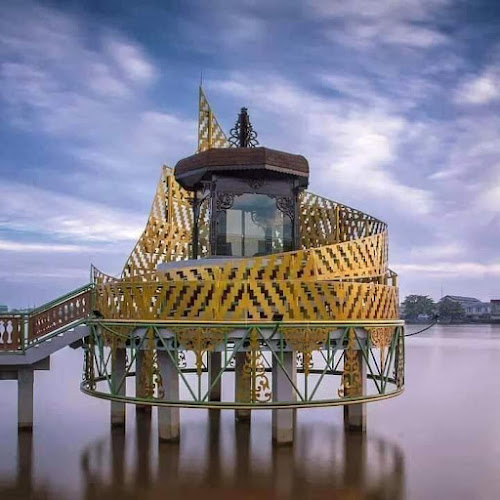
Description
Pontianak sits right on the equator—and I mean literally on it—making this Indonesian city one of those rare places where you can stand with one foot in each hemisphere. The capital of West Kalimantan province sprawls across 118.21 square kilometers where the mighty Kapuas River meets its tributary, the Landak River. This strategic position made Pontianak a natural trading hub centuries ago, and that commercial DNA still pulses through the city today.
The locals, many of Teochew and Hakka descent, call it Khuntien in their dialects, a reminder of the Chinese merchant communities who helped shape this riverside settlement into what it is now. What started as a modest trading port has grown into a proper urban center while somehow maintaining that frontier-town feel you get in places where jungle and civilization negotiate their boundaries daily.
Walking through Pontianak feels different from other Indonesian cities. Maybe it’s the rivers that slice through everything, forcing you to think about water routes as much as roads. Or perhaps it’s the equatorial location giving the place this perpetual tropical intensity that never quite lets up. The city doesn’t present itself as a typical tourist destination—and honestly, that’s part of its charm. You won’t find crowds of backpackers here taking the same Instagram photos at the same spots. Instead, you’ll discover a working city where everyday life happens against a backdrop of stilted houses, floating markets, and that constant reminder that Borneo’s legendary rainforests wait just beyond the urban edges.
I’ve always found cities built on major rivers fascinating because they develop this dual personality—part land-based, part aquatic. Pontianak embodies this completely. The Kapuas, one of Indonesia’s longest rivers, shapes everything here from transportation to commerce to the rhythm of daily life.
Key Features
- Equator Monument (Tugu Khatulistiwa) – The city’s most famous landmark sits precisely on the equatorial line at zero degrees latitude. Visitors can experience the unique phenomenon during the equinox when the sun is directly overhead and objects cast no shadow. It’s touristy, sure, but there’s something undeniably cool about straddling two hemispheres.
- Kapuas River – This massive waterway dominates Pontianak’s geography and daily life. Taking a boat tour reveals the city from its most authentic angle, passing traditional stilted houses, floating markets, and the constant river traffic that has sustained this place for generations.
- Keraton Kadriyah – The wooden palace of the Pontianak Sultanate dates back to 1771 and still stands as a monument to the city’s royal heritage. The architecture reflects Malay traditions, and the complex houses historical artifacts that tell Pontianak’s origin story.
- Masjid Jami’ Pontianak – This distinctive mosque features architectural elements that blend Middle Eastern and local styles. Its location near the waterfront makes it a prominent feature of the riverside skyline.
- Alun Kapuas – A waterfront area that comes alive in the evenings when locals gather to eat street food, exercise, and watch boats pass on the river. It provides one of the best vantage points for observing daily life in Pontianak.
- Pasar Flamboyan – This market gives you the real Pontianak experience with its incredible array of tropical fruits, fresh river fish, and local specialties you won’t find anywhere else in Indonesia.
- Chinese heritage sites – Several Chinese temples and clan houses scattered throughout the city reflect the significant Teochew and Hakka communities that have shaped Pontianak’s multicultural character.
Best Time to Visit
Pontianak sits directly on the equator, which means the whole concept of seasons works differently here than you might expect. There’s no summer or winter—just varying degrees of wet and slightly less wet. But that doesn’t mean timing doesn’t matter.
The drier months typically run from May through September, though calling any period in equatorial Borneo truly “dry” feels generous. You’ll still see rain, just probably not the daily deluges that characterize the wettest months. I’d personally aim for June through August when rainfall drops to more manageable levels and you can actually plan outdoor activities without constant weather contingencies.
The wet season peaks from November through March, and during these months Pontianak can receive serious rainfall. We’re talking about the kind of tropical downpours that stop everything for hours. The rivers swell, flooding becomes a concern in some areas, and your ability to explore gets significantly curtailed. That said, if you’re comfortable with unpredictable weather and want to see fewer tourists (what few tourists come here anyway), the shoulder months of April-May or September-October offer compromises.
Here’s something most travel guides won’t tell you: the equinox periods around March 21st and September 23rd draw small crowds to the Equator Monument for the no-shadow phenomenon. If that interests you, plan accordingly. But also expect slightly more visitors than usual—though “crowds” in Pontianak remain laughably small compared to Bali or Jakarta.
Temperature stays remarkably consistent year-round, hovering between 23-32°C (73-90°F). Humidity, however, is relentless regardless of when you visit. Accept this fact before you arrive and you’ll adjust better.
How to Get There
Getting to Pontianak requires some effort, which partly explains why it remains off most tourist circuits. Supadio International Airport serves the city and receives regular flights from Jakarta, Surabaya, and other major Indonesian cities. Garuda Indonesia, Lion Air, and Citilink operate routes here with reasonable frequency. The flight from Jakarta takes roughly 90 minutes—not bad at all.
The airport sits about 17 kilometers south of the city center, and the journey into town takes 30-45 minutes depending on traffic. Taxis work fine, though ride-hailing apps like Grab and Gojek have become popular options and often offer better rates. Just make sure your phone has data before you land because WiFi at the airport can be spotty.
For the more adventurous traveler, reaching Pontianak overland is possible but involves serious commitment. Buses connect the city to other parts of Kalimantan, but we’re talking about long, uncomfortable journeys through rural Borneo. The infrastructure has improved over the years, yet these routes still test your patience and posterior. From Kuching in Malaysian Sarawak, you can take a bus through the border crossing at Entikong—this takes about 8-10 hours and appeals mainly to budget travelers or those specifically interested in overland Southeast Asian travel.
There’s also a passenger ship option from Jakarta to Pontianak, operated by PELNI. The journey takes approximately 30 hours and offers a uniquely Indonesian travel experience. The ships are basic but functional, and you’ll share space with locals making the same journey. I wouldn’t recommend it if you’re short on time, but if you want to see how millions of Indonesians actually travel between islands, it provides authentic insight.
Once in Pontianak, getting around requires some adaptation. The city has minimal tourist infrastructure, so you’ll rely on a combination of taxis, ride-hailing apps, and motorcycle taxis (ojek). For river transportation, negotiate with boat operators at various docks—prices vary wildly, so some bargaining is expected.
Tips for Visiting
Pontianak doesn’t cater to international tourists the way Bali or even Jakarta does, so coming prepared makes a huge difference. First off, bring cash—lots of it. Many establishments don’t accept cards, and ATMs can be temperamental. Rupiah is king here, and you’ll need it for everything from street food to boat rides.
Language barriers present real challenges. English proficiency is low compared to more tourist-oriented Indonesian cities. Download translation apps before you arrive, and learn a few basic Indonesian phrases. Even butchered attempts at Bahasa Indonesia earn goodwill and help immensely with navigation and transactions. The phrase “Berapa harga?” (How much?) will become your best friend.
Dress modestly and respectfully. While Pontianak isn’t as conservative as some Indonesian cities, showing awareness of local sensibilities goes a long way. Lightweight, breathable clothing that covers shoulders and knees works best—both culturally appropriate and practical in the heat.
The food scene deserves special mention. Pontianak’s cuisine reflects its multicultural heritage with significant Chinese, Malay, and Dayak influences. Don’t leave without trying bubur pedas (spicy rice porridge), choi pan (steamed rice cakes), and the various noodle dishes that show clear Teochew roots. Street food is generally safe if you follow the usual rules: eat where locals eat, watch for proper cooking temperatures, and maybe go easy on the ice unless you’ve got an iron stomach.
Mosquitoes here don’t mess around. Bring quality repellent with DEET and use it liberally, especially around dawn and dusk. Malaria isn’t common in urban Pontianak, but dengue fever is a real concern. Long sleeves in the evening and mosquito repellent should be part of your routine, not afterthoughts.
Hire a local guide for river trips and visits to nearby Dayak villages. Not only does this support the local economy, but you’ll get context and access you’d never achieve alone. The surrounding areas contain fascinating indigenous communities and natural sites that require local knowledge to visit safely and respectfully.
Patience is essential. Things move at their own pace here. Buses leave when full, not when scheduled. Restaurants might take twice as long as expected. The power occasionally goes out. Rather than fighting this reality, embrace it as part of the experience. You’re in Borneo, at the equator, in a place that operates by different rhythms than what you’re probably used to.
Finally, manage your expectations. Pontianak isn’t going to wow you with pristine beaches or ancient temples. What it offers is authenticity—a real Indonesian city where tourism hasn’t yet smoothed away all the rough edges. If you approach it with curiosity and flexibility, you’ll discover a fascinating place that few travelers ever bother to visit. And sometimes, those are exactly the destinations worth seeking out.