
Pocheon Art Valley
About Pocheon Art Valley
Description
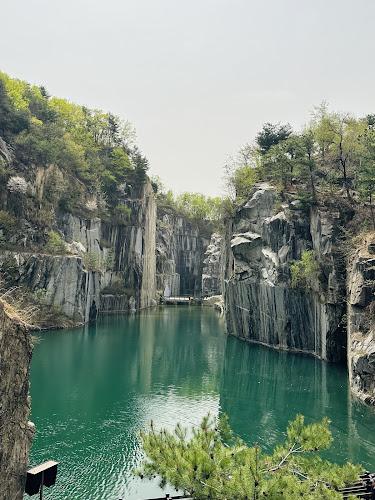
Pocheon Art Valley is one of those places that surprises you, even if you thought you’d done your research. It began life as a granite quarry, the kind of industrial scar most cities try to hide. Instead of burying it, Pocheon leaned into the drama. The result is a park-meets-art-meets-nature space that feels raw in the best way. Sheer rock walls rise around a jade-colored lake, sculptures pop up where machinery once roared, and quiet walking paths wind through the whole thing. It’s not polished in a glossy way. It’s honest, sometimes uneven, and that’s exactly why it works.
The first time I visited, I expected a quick stroll and a few photos. Three hours later, I was still there, sitting by the lake with a convenience-store coffee, watching kids chase pigeons and couples argue gently over which sculpture “meant something.” That’s Pocheon Art Valley in a nutshell. It invites you to slow down, to linger, and to form your own opinions about what art and nature are doing together in this giant stone bowl.
The complex is large but not overwhelming. Wide paths make it easy to wander without feeling lost, and there’s a monorail for those days when your legs just aren’t in the mood. Art installations are scattered outdoors, some subtle, some bold, and all framed by the quarry’s dramatic cliffs. There’s also a planetarium on-site, which sounds random until you’re standing there at dusk, looking up from the valley and realizing how much sky you can actually see.
Families come here to picnic, hikers come for the trails, and photographers come for the light. And yes, there are moments when it feels busy or a little chaotic, especially on weekends. But then you turn a corner, find a quiet bench, and suddenly it’s just you, stone, water, and wind. That contrast is kind of the point.
Key Features
- Former granite quarry transformed into an outdoor art and nature park
- Striking lake surrounded by towering rock walls
- Outdoor sculptures integrated into the landscape
- Monorail offering elevated views of the valley
- Planetarium for stargazing and educational shows
- Concert stage used for seasonal performances and events
- Walking and hiking paths suitable for different fitness levels
- Picnic tables and open green spaces for relaxed meals
- Playground and swings for younger visitors
- Wheelchair-accessible paths, entrances, and parking
- Dog-friendly areas, with plenty of space to roam
Best Time to Visit
Spring and autumn are the sweet spots, no question. In spring, the surrounding trees soften the hard lines of the quarry, and the air still has that cool snap that makes walking pleasant. Autumn, though, might be my favorite. The rock walls pick up warm tones as leaves change color, and the whole place feels calmer somehow, like it’s exhaling before winter.
Summer is doable, but be prepared. The stone reflects heat, and midday can feel a bit intense. If summer is your only option, aim for early morning or late afternoon. I once went on a July afternoon and learned, the hard way, that granite does not care about your comfort. On the flip side, evenings can be lovely, especially if there’s a concert or event on the stage.
Winter visits are quieter and a little stark. Some people love that stripped-down look, others find it too cold and bare. Paths can be icy, so footwear matters. But if you enjoy solitude and dramatic scenery, winter has its own moody charm.
Weekdays are best if you want space to yourself. Weekends bring families, tour groups, and lots of energy. Neither is wrong, it just depends on your mood and patience level.
How to Get There
Pocheon Art Valley is a bit of a journey from central Seoul, which is probably why it still feels special. Most travelers start by heading toward Pocheon City using public transportation or a rental car. Buses run regularly from major hubs, and while the ride takes time, it’s straightforward. Just don’t expect express-train efficiency. This is more of a settle-in, watch-the-city-fade kind of trip.
Driving offers more flexibility, especially if you’re traveling with kids, a dog, or picnic gear. Parking is available and generally well-organized, even on busier days. If you’re relying on taxis for the final stretch, build in extra time. Not all drivers are familiar with the exact entrance, and explaining a former quarry turned art park can be… interesting.
Once you arrive, getting around inside the park is easy. Paths are well-marked, and the monorail helps you cover ground without wearing yourself out. Honestly, half the fun is just wandering without a strict plan.
Tips for Visiting
Wear comfortable shoes. This sounds obvious, but I’ve seen people attempt this place in fashion sneakers and regret it deeply. The paths are mostly smooth, but there are inclines and longer walks than you might expect.
Bring snacks or a picnic. There are places to buy food, but having your own gives you freedom to sit wherever the mood strikes. One of my favorite memories here is sharing kimbap on a stone ledge while a random sculpture stared back at us. Art judging your lunch choices, basically.
If you’re traveling with kids, make time for the playground and swings. They’re not an afterthought. And the kid-friendly hikes are genuinely manageable, not the “kid-friendly” that secretly means steep and miserable.
Dogs are welcome, which is a big plus. Just keep them leashed and be mindful around crowded areas. The wide open spaces are great for a long, satisfying walk.
Check the weather before you go. The quarry setting amplifies conditions. Wind can whip through, sun can bounce off rock, and rain changes the mood entirely. Sometimes that’s magical, sometimes it’s just inconvenient.
Don’t rush the planetarium. Even if you think you’re “not really into space stuff,” give it a chance. It adds an unexpected layer to the visit, connecting the grounded weight of stone with the vastness above. I didn’t expect to enjoy it as much as I did, but there I was, leaning back, thinking about stars after staring at rocks all day.
And finally, let the place be a little imperfect. Some sculptures won’t speak to you. Some areas might feel crowded or oddly empty. That’s part of the experience. Pocheon Art Valley isn’t trying to impress you with perfection. It’s offering a conversation between nature, art, and human intervention, and it’s okay if you walk away still thinking about it. In fact, that’s kind of the goal.
Key Features
- Former granite quarry transformed into an outdoor art and nature park
- Striking lake surrounded by towering rock walls
- Outdoor sculptures integrated into the landscape
- Monorail offering elevated views of the valley
- Planetarium for stargazing and educational shows
- Concert stage used for seasonal performances and events
- Walking and hiking paths suitable for different fitness levels
- Picnic tables and open green spaces for relaxed meals
More Details
Updated January 1, 2026
Table of Contents
Description
Pocheon Art Valley is one of those places that surprises you, even if you thought you’d done your research. It began life as a granite quarry, the kind of industrial scar most cities try to hide. Instead of burying it, Pocheon leaned into the drama. The result is a park-meets-art-meets-nature space that feels raw in the best way. Sheer rock walls rise around a jade-colored lake, sculptures pop up where machinery once roared, and quiet walking paths wind through the whole thing. It’s not polished in a glossy way. It’s honest, sometimes uneven, and that’s exactly why it works.
The first time I visited, I expected a quick stroll and a few photos. Three hours later, I was still there, sitting by the lake with a convenience-store coffee, watching kids chase pigeons and couples argue gently over which sculpture “meant something.” That’s Pocheon Art Valley in a nutshell. It invites you to slow down, to linger, and to form your own opinions about what art and nature are doing together in this giant stone bowl.
The complex is large but not overwhelming. Wide paths make it easy to wander without feeling lost, and there’s a monorail for those days when your legs just aren’t in the mood. Art installations are scattered outdoors, some subtle, some bold, and all framed by the quarry’s dramatic cliffs. There’s also a planetarium on-site, which sounds random until you’re standing there at dusk, looking up from the valley and realizing how much sky you can actually see.
Families come here to picnic, hikers come for the trails, and photographers come for the light. And yes, there are moments when it feels busy or a little chaotic, especially on weekends. But then you turn a corner, find a quiet bench, and suddenly it’s just you, stone, water, and wind. That contrast is kind of the point.
Key Features
- Former granite quarry transformed into an outdoor art and nature park
- Striking lake surrounded by towering rock walls
- Outdoor sculptures integrated into the landscape
- Monorail offering elevated views of the valley
- Planetarium for stargazing and educational shows
- Concert stage used for seasonal performances and events
- Walking and hiking paths suitable for different fitness levels
- Picnic tables and open green spaces for relaxed meals
- Playground and swings for younger visitors
- Wheelchair-accessible paths, entrances, and parking
- Dog-friendly areas, with plenty of space to roam
Best Time to Visit
Spring and autumn are the sweet spots, no question. In spring, the surrounding trees soften the hard lines of the quarry, and the air still has that cool snap that makes walking pleasant. Autumn, though, might be my favorite. The rock walls pick up warm tones as leaves change color, and the whole place feels calmer somehow, like it’s exhaling before winter.
Summer is doable, but be prepared. The stone reflects heat, and midday can feel a bit intense. If summer is your only option, aim for early morning or late afternoon. I once went on a July afternoon and learned, the hard way, that granite does not care about your comfort. On the flip side, evenings can be lovely, especially if there’s a concert or event on the stage.
Winter visits are quieter and a little stark. Some people love that stripped-down look, others find it too cold and bare. Paths can be icy, so footwear matters. But if you enjoy solitude and dramatic scenery, winter has its own moody charm.
Weekdays are best if you want space to yourself. Weekends bring families, tour groups, and lots of energy. Neither is wrong, it just depends on your mood and patience level.
How to Get There
Pocheon Art Valley is a bit of a journey from central Seoul, which is probably why it still feels special. Most travelers start by heading toward Pocheon City using public transportation or a rental car. Buses run regularly from major hubs, and while the ride takes time, it’s straightforward. Just don’t expect express-train efficiency. This is more of a settle-in, watch-the-city-fade kind of trip.
Driving offers more flexibility, especially if you’re traveling with kids, a dog, or picnic gear. Parking is available and generally well-organized, even on busier days. If you’re relying on taxis for the final stretch, build in extra time. Not all drivers are familiar with the exact entrance, and explaining a former quarry turned art park can be… interesting.
Once you arrive, getting around inside the park is easy. Paths are well-marked, and the monorail helps you cover ground without wearing yourself out. Honestly, half the fun is just wandering without a strict plan.
Tips for Visiting
Wear comfortable shoes. This sounds obvious, but I’ve seen people attempt this place in fashion sneakers and regret it deeply. The paths are mostly smooth, but there are inclines and longer walks than you might expect.
Bring snacks or a picnic. There are places to buy food, but having your own gives you freedom to sit wherever the mood strikes. One of my favorite memories here is sharing kimbap on a stone ledge while a random sculpture stared back at us. Art judging your lunch choices, basically.
If you’re traveling with kids, make time for the playground and swings. They’re not an afterthought. And the kid-friendly hikes are genuinely manageable, not the “kid-friendly” that secretly means steep and miserable.
Dogs are welcome, which is a big plus. Just keep them leashed and be mindful around crowded areas. The wide open spaces are great for a long, satisfying walk.
Check the weather before you go. The quarry setting amplifies conditions. Wind can whip through, sun can bounce off rock, and rain changes the mood entirely. Sometimes that’s magical, sometimes it’s just inconvenient.
Don’t rush the planetarium. Even if you think you’re “not really into space stuff,” give it a chance. It adds an unexpected layer to the visit, connecting the grounded weight of stone with the vastness above. I didn’t expect to enjoy it as much as I did, but there I was, leaning back, thinking about stars after staring at rocks all day.
And finally, let the place be a little imperfect. Some sculptures won’t speak to you. Some areas might feel crowded or oddly empty. That’s part of the experience. Pocheon Art Valley isn’t trying to impress you with perfection. It’s offering a conversation between nature, art, and human intervention, and it’s okay if you walk away still thinking about it. In fact, that’s kind of the goal.
Key Highlights
- Former granite quarry transformed into an outdoor art and nature park
- Striking lake surrounded by towering rock walls
- Outdoor sculptures integrated into the landscape
- Monorail offering elevated views of the valley
- Planetarium for stargazing and educational shows
- Concert stage used for seasonal performances and events
- Walking and hiking paths suitable for different fitness levels
- Picnic tables and open green spaces for relaxed meals
Location
Places to Stay Near Pocheon Art Valley
Find and Book a Tour
Explore More Travel Guides
No reviews found! Be the first to review!
Traveler Reviews for Pocheon Art Valley
There are no reviews yet. Be the first one to write one.
Have you visited Pocheon Art Valley? Help other travelers by sharing your review.
You Might Also Like
Korea National Arboretum

Amazing Park

Pocheon Art Valley Astronomical Science Museum
Find Accommodations Nearby
Recommended Tours & Activities
Visitor Reviews
There are no reviews yet. Be the first one to write one.
Share Your Experience
Have you visited Pocheon Art Valley? Help other travelers by leaving a review.