
西安碑林
About 西安碑林
西安碑林 is a well-regarded tourist attraction located in Xi'an, China. With a rating of 4.4 out of 5, it stands out as one of the top-rated tourist attractions in the area.
Location
You can find 西安碑林 at 15 Sanxue St, Beilin, Xi'An, Shaanxi, China, 710001.
Visiting 西安碑林
Located in Xi'an, China, 西安碑林 is a tourist attraction that visitors to the area may find worth exploring.
Planning Your Visit
The tourist attraction is located at 15 Sanxue St, Beilin, Xi'An, Shaanxi, China, 710001. GPS coordinates: 34.252459, 108.952809. Check locally for current opening hours and any admission fees before visiting.
More Details
Updated April 6, 2026
西安碑林 is a well-regarded tourist attraction located in Xi'an, China. With a rating of 4.4 out of 5, it stands out as one of the top-rated tourist attractions in the area.
Table of Contents
- Location
- Visiting 西安碑林
- Planning Your Visit
- Location
- Places to Stay Near 西安碑林
- Find and Book a Tour
- Explore More Travel Guides
- Key Takeaways
- About 西安碑林
- History and Significance
- What Makes It Special
- What to See and Do
- Main Attractions and Highlights
- Best Time to Visit
- Visitor Information
- Location and How to Get There
- Tips for Visitors
- Nearby Places You Might Like
- Traveler Reviews for 西安碑林
- Share Your Experience
Location
You can find 西安碑林 at 15 Sanxue St, Beilin, Xi'An, Shaanxi, China, 710001.
Visiting 西安碑林
Located in Xi'an, China, 西安碑林 is a tourist attraction that visitors to the area may find worth exploring.
Planning Your Visit
The tourist attraction is located at 15 Sanxue St, Beilin, Xi'An, Shaanxi, China, 710001. GPS coordinates: 34.252459, 108.952809. Check locally for current opening hours and any admission fees before visiting.
Location
Places to Stay Near 西安碑林
Find and Book a Tour
Explore More Travel Guides
No reviews found! Be the first to review!
The Forest of Stone Steles Museum in Xi’an is honestly one of the most fascinating places I’ve wandered through in China. It’s home to a jaw-dropping collection of ancient inscriptions and stone carvings that you really can’t see anywhere else.
We’re talking over 4,000 stone tablets—some more than 900 years old, all crammed into this one spot. The place started as an 11th-century Confucian temple, but now it’s a treasure trove where you can literally touch Chinese history carved in stone.
Step into the museum’s seven exhibition halls and you’re suddenly surrounded by ancient philosophical texts, poetry, and calligraphy—each one chiseled into stone. The complex sprawls across 31,900 square meters in downtown Xi’an, blending old temple architecture with gallery spaces full of stone sculptures and tomb inscriptions.
Most people breeze through and don’t realize just how many of China’s most prized stone rubbings actually come from these very tablets. It’s kind of wild to think about.
Your visit here is way more than a standard museum stroll. It’s a chance to see how Chinese scholars, for centuries, preserved their culture—sometimes literally at the tip of a chisel.
Guided tours are available, and they’re pretty good at helping you decode the calligraphy and stories behind these ancient stones. Suddenly, what looks like a pile of rocks starts to feel like a time machine.
Key Takeaways
- Over 4,000 ancient stone tablets, nearly a millennium of history, all under one roof
- Seven exhibition halls plus the original Confucian temple buildings to explore
- Book in advance via the official website or WeChat; tickets are just 10 yuan per person
About 西安碑林
This isn’t just any museum—it’s China’s oldest and biggest collection of ancient stone tablets and inscriptions. More than 4,000 pieces, stretching across 2,000 years of stories and secrets.
You’ll spot everything from Tang Dynasty classics to insanely detailed carvings that most people just walk past without a second glance.
History and Significance
The whole thing kicked off in the Tang Dynasty, when officials placed the Stone Classics of the Kaicheng Era and the Stone Platform Classic of Filial Piety at the Imperial Academy in Chang’an (which is old-school Xi’an).
But things got real in 904 AD. Civil war was raging, so authorities moved these priceless tablets to the Confucian Temple for safekeeping.
The museum as we know it started in 1087, during the Northern Song Dynasty. They built it specifically for the Kaicheng Stone Classics, preserving Confucian texts carved back in Tang times.
Everything shifted to the current spot on Sanxue Street in 1103, and the collection just kept growing.
Through the Jin, Yuan, Ming, and Qing dynasties, each era added more stones and more space. The official museum wasn’t set up until 1944, but locals had already been treating this place as a cultural landmark for ages.
What Makes It Special
This is the largest collection of its kind in China, hands down. The museum covers about 32,000 square meters, including the ancient Confucian Temple, seven main exhibition halls, and special galleries for stone art.
What really sets it apart is the quality. You’ll spot original calligraphy from legends like Yan Zhenqing and Liu Zongyuan, carved right into the rock.
The name “Forest of Steles” makes sense once you see the halls packed with upright stone tablets. It’s almost overwhelming.
There are rare Han Dynasty inscriptions, Buddhist carvings, and tomb epitaphs that give you a peek into everyday life centuries ago. Some pieces here? You won’t find them anywhere else.
And unlike other museums that show you replicas, these are the real stones—created by scholars and artists hundreds or even thousands of years ago.
What to See and Do
The museum’s got over 1,000 stone steles from all sorts of dynasties, along with Buddhist sculptures and bits of the original Confucius temple. There are Tang Dynasty calligraphy masterpieces, plus some unexpected finds—like Nestorian Christian tablets that hint at Xi’an’s Silk Road connections.
Main Attractions and Highlights
Seven exhibition halls lay it all out chronologically, starting with Han Dynasty works. Hall One is where you’ll find the “Classic of Filial Piety” stele, inscribed by Emperor Xuanzong in 745 AD.
Don’t skip Hall Two. That’s where the famous Nestorian Stele from 781 AD sits—one of the earliest records of Christianity in East Asia, written in both Chinese and Syriac. It’s a bit surreal to see.
The calligraphy collection is stacked with works from Wang Xizhi and other masters whose brushwork became the gold standard for generations. If you wander to the back courtyard, there’s a stone sculpture gallery with Buddhist figures and mythical beasts rescued from crumbling temples around Shaanxi.
The ancient Confucius temple buildings themselves are worth a slow walk. Their courtyards are peaceful, and the architectural details are easy to miss if you rush. Some steles still have traces of ink rubbings—scholars have been making those for nearly a thousand years.
Best Time to Visit
If you want the place to yourself, show up right at 9:00 AM on a weekday. The crowds roll in by late morning and stick around until about 3:00 PM.
Spring (April-May) and autumn (September-October) are the sweet spots for weather. The courtyards are lovely then, and you won’t melt in the un-air-conditioned halls.
Guided tours in English aren’t always available, so check ahead. Honestly, booking a private guide through your hotel can be a lifesaver—they’ll point out details you’d never notice on your own.
Admission is just 10 yuan, which is a steal compared to most Xi’an attractions. No matter when you go, it’s easy on your wallet and usually not packed with tourists.
Visitor Information
The museum is at 15 Sanxue Street, Beilin District, just south of Xi’an’s city center and super close to the historic city wall. It’s pretty straightforward to get there, but a few tips will make your visit smoother.
Location and How to Get There
You’ll find the Xi’an Beilin Museum tucked near Wenchang Gate, just a few blocks from the southern stretch of the ancient city wall. Easiest route? Take subway line 2 to Yongning Gate station, then it’s a 600-meter walk northeast.
If the bus is more your style, lines 14, 23, 40, 208, 216, 221, 222, 258, 309, 402, and 800 all stop at Wenchang Gate. From there, it’s just 400 meters north on foot.
If you’ve got a bit of time, stroll over from Shuyuanmen Street—it’s a lively walk past street artists selling calligraphy, paper cuttings, and traditional paintings. Always worth a detour.
Oh, and the museum connects directly to the nearby Guanzhong Academy. That spot’s got its own history—General Peng Dehuai once gave a rousing speech there. If you’re already in the area, it’s easy to check out both.
Tips for Visitors
Give yourself at least two hours here—trust me, you’ll want the time. There are over 4,000 steles and inscriptions to wander through, and it’s easy to get lost in the details.
Tickets are 65 yuan during peak season (March 1 to November 30), then drop to 50 yuan in the winter months. Kids ages 6 to 18 get in for about half price, and if you’re under 6 or shorter than 1.2 meters, you’re in for free.
If you’re over 65, admission doesn’t cost a thing. Not bad, right?
There’s a combo ticket with the Xi’an City Wall for 100 yuan, which is worth considering if both are on your list. The museum itself houses a staggering 13,568 items, and 2,281 of those are officially labeled as precious cultural relics.
Here’s a little secret: a few of the steles are actually okay to touch. There’s something surreal about feeling the grooves and lines carved by hands from centuries ago.
And if you’re lucky, you’ll spot the orange cat that roams around Guanzhong Academy. Locals say it’s the unofficial mascot—honestly, it adds a bit of unexpected charm to the whole experience.
Traveler Reviews for 西安碑林
There are no reviews yet. Be the first one to write one.
Have you visited 西安碑林? Help other travelers by sharing your review.
You Might Also Like

Weiyang
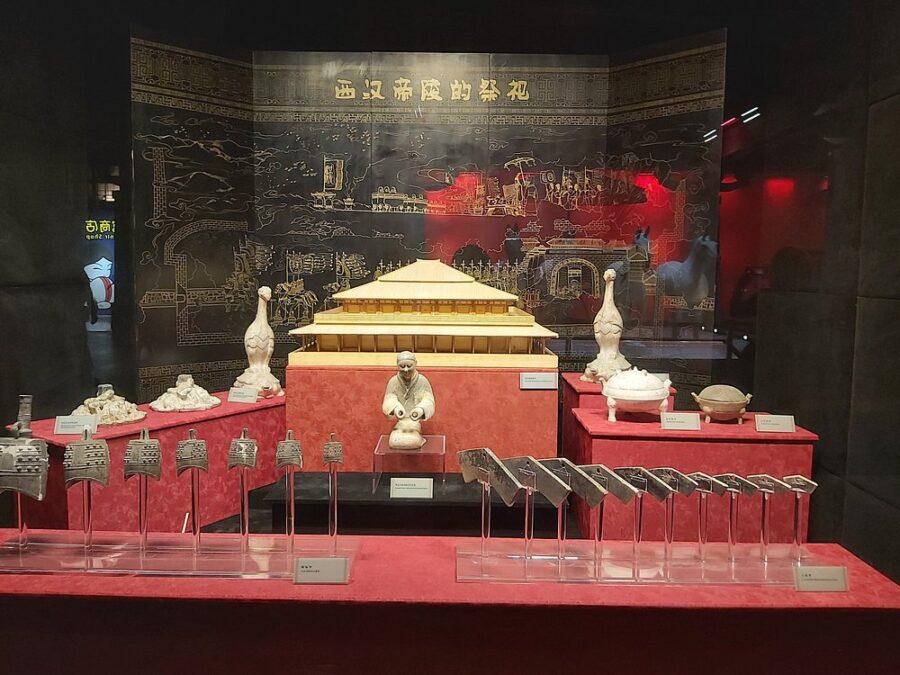
Han Yang Ling
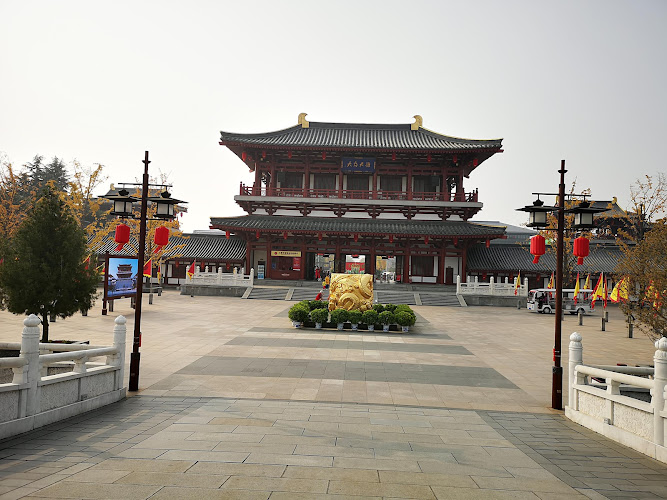
Tang Paradise
Find Accommodations Nearby
Recommended Tours & Activities
Visitor Reviews
There are no reviews yet. Be the first one to write one.
Share Your Experience
Have you visited 西安碑林? Help other travelers by leaving a review.