
Han Yang Ling
About Han Yang Ling
History and Significance
If you’re planning a visit to Xi’an and want to dive deeper into the illustrious Western Han Dynasty, a stop at Han Yang Ling is a truly unforgettable experience. More than just a mausoleum, it’s an immense archaeological site and museum complex dedicated to Emperor Jingdi (Liu Qi), the fourth emperor of the Western Han Dynasty, who ruled from 157 to 141 BCE. His reign is noted for fostering the peaceful and prosperous era that shaped much of ancient Chinese culture.
Located about 20 kilometers north of central Xi’an, Han Yang Ling serves as one of the most intact and vast Western Han tomb complexes remaining today. The site covers approximately 20 square kilometers, including the emperor and empress’s tombs, burial pits of officials and troops, and even a graveyard for criminals and servants. Excavations have revealed over 50,000 miniature terracotta figures—much smaller than the life-sized Terracotta Warriors familiar from Qin Shi Huang’s mausoleum—but these delicate figurines provide a deeper look into the daily lives, clothing, tools, and rituals of the Han imperial court.
What makes Han Yang Ling significant is its well-preserved layout and the rich finds that give you insights into China’s burial customs, cosmology, and imperial culture of the time. Unlike many royal tombs, much of the underground necropolis remains untouched, ensuring that the mausoleum complex is a priceless cultural and archaeological treasure. When you visit Han Yang Ling, you’re not just looking at artifacts; you’re walking among the echoes of over two millennia of Chinese history.
Main Attractions and Activities
Once you set foot in Han Yang Ling, the site’s vastness and historical depth become evident. Here’s what to explore:
-
Underground Burial Pits: These excavated pits house the terracotta figurines of soldiers, dancers, servants, animals, and everyday objects. Unlike the military focus of the Terracotta Army, Han Yang Ling’s figures reveal the softer aspects of court life—musicians, acrobats, officials, and domestic animals, offering a fuller picture of the past.
-
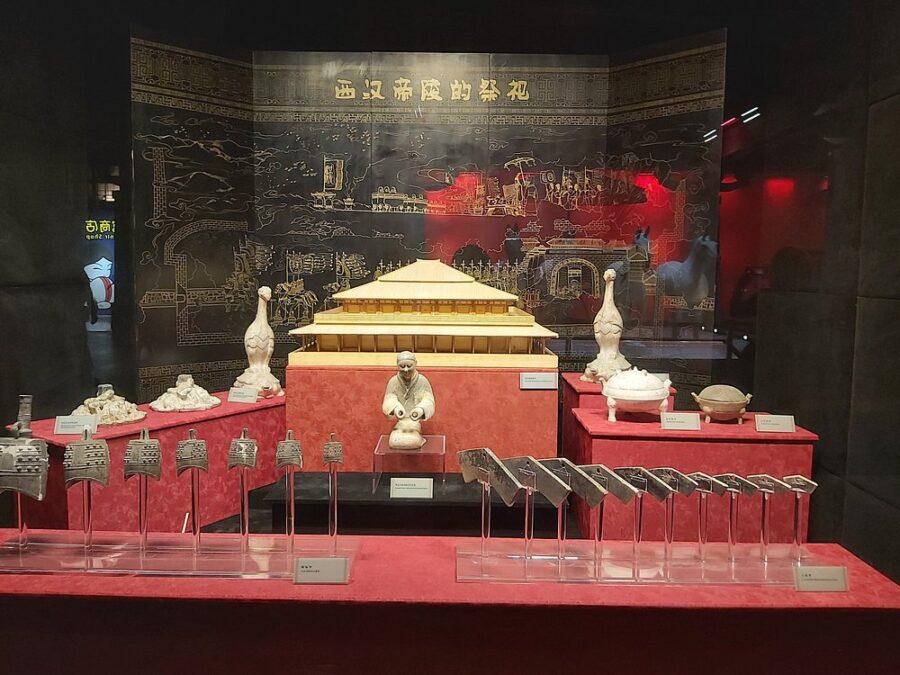
Protection Hall: The first underground museum of its kind in China covers some burial pits with glass walls and walkways that allow unparalleled views just inches above these precious archaeological layers. Walking inside feels like a step into an ancient world frozen in time.
-
The Emperor’s and Empress’s Tomb Mounds: These large burial mounds rise above the site containing the underground chambers, surrounded by smaller sepulchers.
-
Stone Archways and Tomb Roads: The ceremonial entrance known as the "Spirit Way" beneath a preserved stone arch evokes the grandeur and ritual importance of the site, designed to escort the emperor’s soul into the afterlife.
-
Informative Museum Halls: These halls house artifacts like bronze vessels, chariots, jade ornaments, and pottery, complemented by modern multimedia presentations providing rich historical context.
-
Exhibitions on Han Culture and Burial Customs: Learn about ancient beliefs in immortality, cosmology, and how funerary practices reflected the socio-political order of Han China.
-
Tranquil Surrounding Landscapes: The site’s setting near the Qinling Mountains and the Wei River adds a layer of natural beauty to the historical spectacle.
Visitor Experience
Visiting Han Yang Ling is like entering a grand museum and an archaeological park combined. You feel the scale of imperial ambition coupled with a humbling connection to lives lived centuries ago.
I once wandered through the cool, dimly lit Protection Hall, peering down through glass floors at delicate terracotta figurines that still exhibit traces of colorful paints. The quiet, reverent atmosphere made it easy to imagine the ceremonies and daily routines of an emperor’s court.
Outside, the soft sunlight filtered through ancient pines, and the distant mountains framed the burial mounds, creating a contemplative environment. Walking the Spirit Road beneath monumental stones lined with carved beasts evoked a surreal experience—part history lesson, part spiritual journey.
Families, history enthusiasts, and tourists alike shared the space, many awestruck by the scale and detail preserved so thoroughly.
Tips for Visitors
Make your Han Yang Ling visit seamless and memorable with these insights:
-
Set aside at least two to three hours to explore the underground halls and outdoor burial mounds without rushing.
-
Arrive early to avoid the later tourist crowds and enjoy a more tranquil atmosphere.
-
Bring comfortable walking shoes and a light jacket as the underground areas can be cool.
-
Use a guide or audio tour if possible, to enrich your understanding of complex burial customs and artifact significance.
-
Photography is allowed only in designated areas, typically with no flash to protect relics.
-
Check opening hours and ticket requirements ahead of time to plan smoothly.
-
Combine your visit with other nearby sites like the Terracotta Warriors for a comprehensive dive into imperial history.
-
Bring water and light snacks if you plan to stay several hours, as the onsite options are limited.
Accessibility and Facilities
Han Yang Ling is designed to cater to diverse visitors, though some limitations apply due to the nature of the archaeological site:
-
Modern visitor centers feature accessible ramps and elevators to the Protection Hall.
-
Paths around the burial mounds are well-maintained but may be uneven due to terrain.
-
Clean restroom facilities and refreshment kiosks are available near entrances.
-
Information is presented in Chinese and English, enhancing accessibility.
-
Staff members assist, and security ensures safe visitor flow.
-
The site is about 20 km from Xi’an city center, with bus and taxi connections available.
-
Parking is limited but adequate for visitors arriving by car.
Unique Features
Han Yang Ling’s uniqueness stems from:
-
It is the only Western Han imperial mausoleum open for public viewing with intact, large-scale burial pits.
-
The profound insight it offers into daily life during the Western Han dynasty, contrasting with the more militarized figures of the Terracotta Army.
-
The innovative underground museum design allows visitors to literally walk over the preserved pits through glass floors.
-
The complex’s fusion of imperial grandeur and earthly human details, evident in the artifacts and site layout.
-
Its location, with natural mountain vistas and peaceful surroundings, enhances a reflective mood unlike busier archaeological sites.
-
The site has a continuous archaeological significance, with ongoing projects reinforcing its dynamic research profile.
Overall Impressions
Honestly, Han Yang Ling feels like a rare blend of artistry, history, and human storytelling encapsulated in earth and clay. While the excavation of life-size warriors might steal headlines, it is here that you witness the lived culture—the servants, musicians, animals, and everyday implements that populated the emperor’s life and afterlife.
Visiting feels contemplative and awe-inspiring, with moments of quiet discovery punctuated by striking displays of craftsmanship and symbolism. The site is both a sanctuary of the past and a gateway to understanding Chinese imperial life far deeper than what tourist crowds usually encounter.
For anyone even mildly intrigued by China’s golden dynasties, ancient rituals, or archaeological excellence, Han Yang Ling offers a moving and intellectually engaging pilgrimage.
Pros and Cons
| Pros | Cons |
|---|---|
| One of the most intact and largest Western Han mausoleums | Some underground areas may be challenging for visitors with mobility issues |
| Fascinating range of terracotta figures reflecting daily life | Limited dining and on-site amenities |
| Innovative glass viewing floors offer unique perspectives | Signage and guides are mostly in Chinese; English is less common |
| Beautiful natural surroundings enhance a contemplative experience | Visiting can feel technical/academic without a guide |
| Proximity to other Xi’an attractions for an easy itinerary | Some areas are closed for ongoing archaeological work |
| Quiet, less tourist-crowded compared to the Terracotta Army | Museum lighting is dimmed to protect artifacts—low light conditions |
Key Features
- Joint mausoleum of Emperor Jingdi (Liu Qi) and his empress from the Western Han Dynasty
- Thousands of small, lifelike pottery figurines representing daily life (farmers, musicians, servants)
- In-situ exhibition of burial pits with reconstructions and glass-covered displays
- Museum with contextual displays explaining Han funerary systems and burial customs
- Location close to Xi’an Xianyang International Airport and quieter, less touristy atmosphere
More Details
Updated August 25, 2025
Table of Contents
- History and Significance
- Main Attractions and Activities
- Visitor Experience
- Tips for Visitors
- Accessibility and Facilities
- Unique Features
- Overall Impressions
- Pros and Cons
- Key Highlights
- Location
- Places to Stay Near Han Yang Ling
- Find and Book a Tour
- Explore More Travel Guides
- Nearby Places You Might Like
- Traveler Reviews for Han Yang Ling
- Share Your Experience
History and Significance
If you’re planning a visit to Xi’an and want to dive deeper into the illustrious Western Han Dynasty, a stop at Han Yang Ling is a truly unforgettable experience. More than just a mausoleum, it’s an immense archaeological site and museum complex dedicated to Emperor Jingdi (Liu Qi), the fourth emperor of the Western Han Dynasty, who ruled from 157 to 141 BCE. His reign is noted for fostering the peaceful and prosperous era that shaped much of ancient Chinese culture.
Located about 20 kilometers north of central Xi’an, Han Yang Ling serves as one of the most intact and vast Western Han tomb complexes remaining today. The site covers approximately 20 square kilometers, including the emperor and empress’s tombs, burial pits of officials and troops, and even a graveyard for criminals and servants. Excavations have revealed over 50,000 miniature terracotta figures—much smaller than the life-sized Terracotta Warriors familiar from Qin Shi Huang’s mausoleum—but these delicate figurines provide a deeper look into the daily lives, clothing, tools, and rituals of the Han imperial court.
What makes Han Yang Ling significant is its well-preserved layout and the rich finds that give you insights into China’s burial customs, cosmology, and imperial culture of the time. Unlike many royal tombs, much of the underground necropolis remains untouched, ensuring that the mausoleum complex is a priceless cultural and archaeological treasure. When you visit Han Yang Ling, you’re not just looking at artifacts; you’re walking among the echoes of over two millennia of Chinese history.
Main Attractions and Activities
Once you set foot in Han Yang Ling, the site’s vastness and historical depth become evident. Here’s what to explore:
-
Underground Burial Pits: These excavated pits house the terracotta figurines of soldiers, dancers, servants, animals, and everyday objects. Unlike the military focus of the Terracotta Army, Han Yang Ling’s figures reveal the softer aspects of court life—musicians, acrobats, officials, and domestic animals, offering a fuller picture of the past.
-
Protection Hall: The first underground museum of its kind in China covers some burial pits with glass walls and walkways that allow unparalleled views just inches above these precious archaeological layers. Walking inside feels like a step into an ancient world frozen in time.
-
The Emperor’s and Empress’s Tomb Mounds: These large burial mounds rise above the site containing the underground chambers, surrounded by smaller sepulchers.
-
Stone Archways and Tomb Roads: The ceremonial entrance known as the “Spirit Way” beneath a preserved stone arch evokes the grandeur and ritual importance of the site, designed to escort the emperor’s soul into the afterlife.
-
Informative Museum Halls: These halls house artifacts like bronze vessels, chariots, jade ornaments, and pottery, complemented by modern multimedia presentations providing rich historical context.
-
Exhibitions on Han Culture and Burial Customs: Learn about ancient beliefs in immortality, cosmology, and how funerary practices reflected the socio-political order of Han China.
-
Tranquil Surrounding Landscapes: The site’s setting near the Qinling Mountains and the Wei River adds a layer of natural beauty to the historical spectacle.
Visitor Experience
Visiting Han Yang Ling is like entering a grand museum and an archaeological park combined. You feel the scale of imperial ambition coupled with a humbling connection to lives lived centuries ago.
I once wandered through the cool, dimly lit Protection Hall, peering down through glass floors at delicate terracotta figurines that still exhibit traces of colorful paints. The quiet, reverent atmosphere made it easy to imagine the ceremonies and daily routines of an emperor’s court.
Outside, the soft sunlight filtered through ancient pines, and the distant mountains framed the burial mounds, creating a contemplative environment. Walking the Spirit Road beneath monumental stones lined with carved beasts evoked a surreal experience—part history lesson, part spiritual journey.
Families, history enthusiasts, and tourists alike shared the space, many awestruck by the scale and detail preserved so thoroughly.
Tips for Visitors
Make your Han Yang Ling visit seamless and memorable with these insights:
-
Set aside at least two to three hours to explore the underground halls and outdoor burial mounds without rushing.
-
Arrive early to avoid the later tourist crowds and enjoy a more tranquil atmosphere.
-
Bring comfortable walking shoes and a light jacket as the underground areas can be cool.
-
Use a guide or audio tour if possible, to enrich your understanding of complex burial customs and artifact significance.
-
Photography is allowed only in designated areas, typically with no flash to protect relics.
-
Check opening hours and ticket requirements ahead of time to plan smoothly.
-
Combine your visit with other nearby sites like the Terracotta Warriors for a comprehensive dive into imperial history.
-
Bring water and light snacks if you plan to stay several hours, as the onsite options are limited.
Accessibility and Facilities
Han Yang Ling is designed to cater to diverse visitors, though some limitations apply due to the nature of the archaeological site:
-
Modern visitor centers feature accessible ramps and elevators to the Protection Hall.
-
Paths around the burial mounds are well-maintained but may be uneven due to terrain.
-
Clean restroom facilities and refreshment kiosks are available near entrances.
-
Information is presented in Chinese and English, enhancing accessibility.
-
Staff members assist, and security ensures safe visitor flow.
-
The site is about 20 km from Xi’an city center, with bus and taxi connections available.
-
Parking is limited but adequate for visitors arriving by car.
Unique Features
Han Yang Ling’s uniqueness stems from:
-
It is the only Western Han imperial mausoleum open for public viewing with intact, large-scale burial pits.
-
The profound insight it offers into daily life during the Western Han dynasty, contrasting with the more militarized figures of the Terracotta Army.
-
The innovative underground museum design allows visitors to literally walk over the preserved pits through glass floors.
-
The complex’s fusion of imperial grandeur and earthly human details, evident in the artifacts and site layout.
-
Its location, with natural mountain vistas and peaceful surroundings, enhances a reflective mood unlike busier archaeological sites.
-
The site has a continuous archaeological significance, with ongoing projects reinforcing its dynamic research profile.
Overall Impressions
Honestly, Han Yang Ling feels like a rare blend of artistry, history, and human storytelling encapsulated in earth and clay. While the excavation of life-size warriors might steal headlines, it is here that you witness the lived culture—the servants, musicians, animals, and everyday implements that populated the emperor’s life and afterlife.
Visiting feels contemplative and awe-inspiring, with moments of quiet discovery punctuated by striking displays of craftsmanship and symbolism. The site is both a sanctuary of the past and a gateway to understanding Chinese imperial life far deeper than what tourist crowds usually encounter.
For anyone even mildly intrigued by China’s golden dynasties, ancient rituals, or archaeological excellence, Han Yang Ling offers a moving and intellectually engaging pilgrimage.
Pros and Cons
| Pros | Cons |
|---|---|
| One of the most intact and largest Western Han mausoleums | Some underground areas may be challenging for visitors with mobility issues |
| Fascinating range of terracotta figures reflecting daily life | Limited dining and on-site amenities |
| Innovative glass viewing floors offer unique perspectives | Signage and guides are mostly in Chinese; English is less common |
| Beautiful natural surroundings enhance a contemplative experience | Visiting can feel technical/academic without a guide |
| Proximity to other Xi’an attractions for an easy itinerary | Some areas are closed for ongoing archaeological work |
| Quiet, less tourist-crowded compared to the Terracotta Army | Museum lighting is dimmed to protect artifacts—low light conditions |
Key Highlights
- Joint mausoleum of Emperor Jingdi (Liu Qi) and his empress from the Western Han Dynasty
- Thousands of small, lifelike pottery figurines representing daily life (farmers, musicians, servants)
- In-situ exhibition of burial pits with reconstructions and glass-covered displays
- Museum with contextual displays explaining Han funerary systems and burial customs
- Location close to Xi’an Xianyang International Airport and quieter, less touristy atmosphere
Location
Places to Stay Near Han Yang Ling
Find and Book a Tour
Explore More Travel Guides
No reviews found! Be the first to review!
Traveler Reviews for Han Yang Ling
There are no reviews yet. Be the first one to write one.
Have you visited Han Yang Ling? Help other travelers by sharing your review.
Nearby Attractions
You Might Also Like

Revolution Park

Giant Wild Goose Pagoda

Shuyuanmen
Find Accommodations Nearby
Recommended Tours & Activities
Visitor Reviews
There are no reviews yet. Be the first one to write one.
Share Your Experience
Have you visited Han Yang Ling? Help other travelers by leaving a review.