
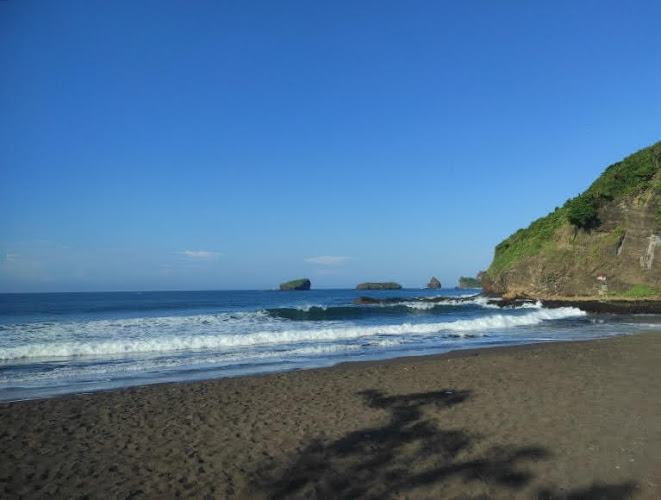
Pantai Watu Ulo
About Pantai Watu Ulo
Description
Pantai Watu Ulo is one of those places that feels like it’s been quietly waiting for you to find it. The beach, tucked away along the southern coastline of East Java, carries a mix of natural beauty, local legend, and a touch of mystery that keeps travelers coming back. The name “Watu Ulo” literally means “Snake Rock,” and once you see the long, scaly-like rock formation stretching into the sea, you’ll get why locals gave it that name. According to local folklore, the rock is said to be the body of a giant sea serpent that once lived there. Whether you believe the story or not, it’s hard not to feel a sense of awe standing in front of something so unique and ancient-looking.
The beach itself is a blend of rugged charm and calm simplicity. It’s not one of those perfectly polished tourist beaches — and that’s part of its appeal. The dark volcanic sand glistens under the sun, the waves crash with a rhythmic force, and the salty breeze carries a hint of adventure. Sometimes, you’ll see local fishermen hauling in their nets or kids playing near the shoreline, their laughter mixing with the sound of the ocean. And if you’re lucky, you might stumble upon a small local festival or a food stall serving grilled fish so fresh it practically melts in your mouth.
Now, it’s worth saying that not every visitor falls head over heels for Watu Ulo. Some people find the facilities a bit basic — and they’re not wrong. The place isn’t about luxury; it’s about authenticity. But for those who appreciate raw, unfiltered nature and a bit of local culture, this beach hits the sweet spot. It’s the kind of place that lets you slow down, breathe deeply, and remember what travel is really about — connection, curiosity, and a little bit of wonder.
Key Features
- Legendary Rock Formation: The signature “snake rock” formation that stretches into the sea, believed to be the body of a mythical serpent.
- Dark Volcanic Sand: Distinctive blackish sand that contrasts beautifully with the turquoise waves.
- Local Fishing Culture: Daily scenes of fishermen at work, offering a glimpse into the coastal life of East Java.
- Panoramic Ocean Views: Wide, unobstructed views of the Indian Ocean — perfect for sunrise or sunset photography.
- Nearby Attractions: Close to Payangan Beach and Papuma Beach, making it easy to plan a full day of coastal exploration.
- Local Cuisine: Small warungs (food stalls) serving grilled seafood, coconut drinks, and local snacks.
- Spiritual and Cultural Significance: The beach is tied to local myths and rituals, giving it a deeper, almost mystical vibe.
Best Time to Visit
If you ask the locals, they’ll tell you the best time to visit Pantai Watu Ulo is during the dry season, roughly from May to September. The skies are clearer, the sea is calmer, and the sunlight makes the rock formation look absolutely striking. I’ve been there in July once — the waves were lively but not too rough, and the air was filled with that warm, salty scent that makes you want to stay forever.
Avoid coming right in the middle of the rainy season (around December to February) unless you don’t mind unpredictable weather and muddy paths. The rain can make the beach a bit slippery, especially near the rocky areas. But if you’re into photography, the moody skies can make for some dramatic shots. Also, if you happen to visit during local holidays or cultural events, you might catch the “Larung Sesaji” ceremony — a traditional sea offering ritual that’s both fascinating and deeply spiritual.
How to Get There
Getting to Pantai Watu Ulo is part of the adventure itself. The beach sits about a short drive from the town of Jember, and the road leading there winds through small villages and lush green fields. If you’re coming from Surabaya or Banyuwangi, you can take a train or bus to Jember first, then rent a motorbike or hire a local driver for the final leg of the journey. The drive is scenic — you’ll pass rice paddies, coconut trees, and the occasional roadside stall selling fresh young coconuts (which, by the way, are the perfect travel drink).
There are signboards along the way, but they can be a bit faded, so using a GPS app helps. The last stretch of the road can feel a bit bumpy, but nothing too serious. And when you finally arrive and catch that first glimpse of the coastline, trust me — it’s worth every turn. Parking is available near the entrance, and there’s usually a small fee, which goes toward maintaining the area.
Tips for Visiting
Before you head out, let me share a few tips that might make your trip smoother — learned from personal experience (and a few mistakes along the way).
- Bring cash. Most of the stalls and parking attendants only accept cash, and there aren’t any ATMs nearby.
- Wear comfortable shoes. The rocky parts can be slippery, especially if you’re exploring near the “snake rock.” Flip-flops might not cut it.
- Stay hydrated. The sun can be intense, and shade is limited. Bring a bottle of water or grab a fresh coconut from a local vendor.
- Respect local customs. Some parts of the beach are considered sacred by locals, so it’s best to ask before wandering too far off the main path.
- Capture the sunrise. If you’re into photography, early morning light gives the beach a magical glow. It’s quiet, peaceful, and you’ll likely have the place almost to yourself.
- Keep it clean. Sadly, litter can sometimes be an issue here. Bring a small bag for your trash and help keep the beach beautiful.
- Try the seafood. Don’t skip the grilled fish or spicy sambal from the nearby warungs — it’s fresh, flavorful, and honestly, part of the whole experience.
One thing I’d say — don’t rush your visit. Pantai Watu Ulo isn’t the kind of place you tick off a list in an hour. It’s the kind of beach that grows on you the longer you stay. Sit by the rocks, listen to the waves, chat with the locals. You might even hear more versions of the snake legend — each one slightly different, each one told with a sparkle in the storyteller’s eyes.
And maybe that’s what makes Watu Ulo special. It’s not just a beach; it’s a living story shaped by time, tide, and tradition. Sure, it’s a bit rough around the edges, but that’s what keeps it real. Whether you’re a photographer chasing the perfect shot, a traveler hunting for hidden gems, or just someone who loves the sea, this place leaves a mark — subtle, but lasting.
So, if you ever find yourself wandering through East Java, make sure to stop by Pantai Watu Ulo. Bring an open heart, a curious mind, and maybe a camera — but mostly, bring your sense of wonder. Because here, between the waves and the whispers of legend, you’ll find a piece of Indonesia that still feels untouched, honest, and quietly unforgettable.
Key Features
- Key Features
- Best Time to Visit
- How to Get There
- Tips for Visiting
More Details
Updated November 9, 2025
Table of Contents
Description
Pantai Watu Ulo is one of those places that feels like it’s been quietly waiting for you to find it. The beach, tucked away along the southern coastline of East Java, carries a mix of natural beauty, local legend, and a touch of mystery that keeps travelers coming back. The name “Watu Ulo” literally means “Snake Rock,” and once you see the long, scaly-like rock formation stretching into the sea, you’ll get why locals gave it that name. According to local folklore, the rock is said to be the body of a giant sea serpent that once lived there. Whether you believe the story or not, it’s hard not to feel a sense of awe standing in front of something so unique and ancient-looking.
The beach itself is a blend of rugged charm and calm simplicity. It’s not one of those perfectly polished tourist beaches — and that’s part of its appeal. The dark volcanic sand glistens under the sun, the waves crash with a rhythmic force, and the salty breeze carries a hint of adventure. Sometimes, you’ll see local fishermen hauling in their nets or kids playing near the shoreline, their laughter mixing with the sound of the ocean. And if you’re lucky, you might stumble upon a small local festival or a food stall serving grilled fish so fresh it practically melts in your mouth.
Now, it’s worth saying that not every visitor falls head over heels for Watu Ulo. Some people find the facilities a bit basic — and they’re not wrong. The place isn’t about luxury; it’s about authenticity. But for those who appreciate raw, unfiltered nature and a bit of local culture, this beach hits the sweet spot. It’s the kind of place that lets you slow down, breathe deeply, and remember what travel is really about — connection, curiosity, and a little bit of wonder.
Key Features
- Legendary Rock Formation: The signature “snake rock” formation that stretches into the sea, believed to be the body of a mythical serpent.
- Dark Volcanic Sand: Distinctive blackish sand that contrasts beautifully with the turquoise waves.
- Local Fishing Culture: Daily scenes of fishermen at work, offering a glimpse into the coastal life of East Java.
- Panoramic Ocean Views: Wide, unobstructed views of the Indian Ocean — perfect for sunrise or sunset photography.
- Nearby Attractions: Close to Payangan Beach and Papuma Beach, making it easy to plan a full day of coastal exploration.
- Local Cuisine: Small warungs (food stalls) serving grilled seafood, coconut drinks, and local snacks.
- Spiritual and Cultural Significance: The beach is tied to local myths and rituals, giving it a deeper, almost mystical vibe.
Best Time to Visit
If you ask the locals, they’ll tell you the best time to visit Pantai Watu Ulo is during the dry season, roughly from May to September. The skies are clearer, the sea is calmer, and the sunlight makes the rock formation look absolutely striking. I’ve been there in July once — the waves were lively but not too rough, and the air was filled with that warm, salty scent that makes you want to stay forever.
Avoid coming right in the middle of the rainy season (around December to February) unless you don’t mind unpredictable weather and muddy paths. The rain can make the beach a bit slippery, especially near the rocky areas. But if you’re into photography, the moody skies can make for some dramatic shots. Also, if you happen to visit during local holidays or cultural events, you might catch the “Larung Sesaji” ceremony — a traditional sea offering ritual that’s both fascinating and deeply spiritual.
How to Get There
Getting to Pantai Watu Ulo is part of the adventure itself. The beach sits about a short drive from the town of Jember, and the road leading there winds through small villages and lush green fields. If you’re coming from Surabaya or Banyuwangi, you can take a train or bus to Jember first, then rent a motorbike or hire a local driver for the final leg of the journey. The drive is scenic — you’ll pass rice paddies, coconut trees, and the occasional roadside stall selling fresh young coconuts (which, by the way, are the perfect travel drink).
There are signboards along the way, but they can be a bit faded, so using a GPS app helps. The last stretch of the road can feel a bit bumpy, but nothing too serious. And when you finally arrive and catch that first glimpse of the coastline, trust me — it’s worth every turn. Parking is available near the entrance, and there’s usually a small fee, which goes toward maintaining the area.
Tips for Visiting
Before you head out, let me share a few tips that might make your trip smoother — learned from personal experience (and a few mistakes along the way).
- Bring cash. Most of the stalls and parking attendants only accept cash, and there aren’t any ATMs nearby.
- Wear comfortable shoes. The rocky parts can be slippery, especially if you’re exploring near the “snake rock.” Flip-flops might not cut it.
- Stay hydrated. The sun can be intense, and shade is limited. Bring a bottle of water or grab a fresh coconut from a local vendor.
- Respect local customs. Some parts of the beach are considered sacred by locals, so it’s best to ask before wandering too far off the main path.
- Capture the sunrise. If you’re into photography, early morning light gives the beach a magical glow. It’s quiet, peaceful, and you’ll likely have the place almost to yourself.
- Keep it clean. Sadly, litter can sometimes be an issue here. Bring a small bag for your trash and help keep the beach beautiful.
- Try the seafood. Don’t skip the grilled fish or spicy sambal from the nearby warungs — it’s fresh, flavorful, and honestly, part of the whole experience.
One thing I’d say — don’t rush your visit. Pantai Watu Ulo isn’t the kind of place you tick off a list in an hour. It’s the kind of beach that grows on you the longer you stay. Sit by the rocks, listen to the waves, chat with the locals. You might even hear more versions of the snake legend — each one slightly different, each one told with a sparkle in the storyteller’s eyes.
And maybe that’s what makes Watu Ulo special. It’s not just a beach; it’s a living story shaped by time, tide, and tradition. Sure, it’s a bit rough around the edges, but that’s what keeps it real. Whether you’re a photographer chasing the perfect shot, a traveler hunting for hidden gems, or just someone who loves the sea, this place leaves a mark — subtle, but lasting.
So, if you ever find yourself wandering through East Java, make sure to stop by Pantai Watu Ulo. Bring an open heart, a curious mind, and maybe a camera — but mostly, bring your sense of wonder. Because here, between the waves and the whispers of legend, you’ll find a piece of Indonesia that still feels untouched, honest, and quietly unforgettable.
Key Highlights
- Key Features
- Best Time to Visit
- How to Get There
- Tips for Visiting
Location
Places to Stay Near Pantai Watu Ulo
Find and Book a Tour
Explore More Travel Guides
No reviews found! Be the first to review!
Traveler Reviews for Pantai Watu Ulo
There are no reviews yet. Be the first one to write one.
Have you visited Pantai Watu Ulo? Help other travelers by sharing your review.
You Might Also Like

Obyek Wisata Alam Pantai Nanggelan

Rembangan Hotel
Air Terjun Watu Ondo
Find Accommodations Nearby
Recommended Tours & Activities
Visitor Reviews
There are no reviews yet. Be the first one to write one.
Share Your Experience
Have you visited Pantai Watu Ulo? Help other travelers by leaving a review.