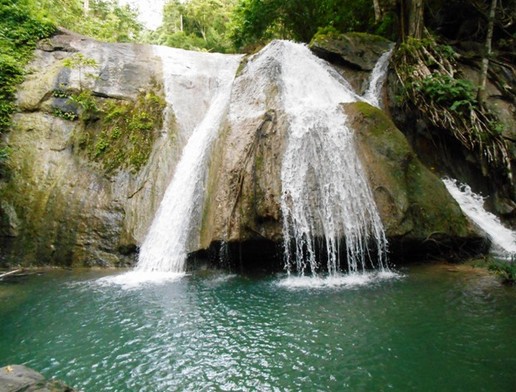
Air Terjun Watu Ondo—also known as the “Twin Steps Waterfall” by some locals—is one of those places that quietly pulls you in.
Highlights & Key Features
Key Features
Best Time to Visit
How to Get There
Tips for Visiting
Visitor Guide & Information
Description
What makes Watu Ondo special isn’t just its beauty—it’s the raw, unpolished nature of the place. You won’t find fancy cafes or souvenir stalls cluttering the view. Instead, it’s just you, the forest, and the sound of water echoing off the rocks. There’s a kind of purity here that’s hard to find in more commercialized destinations. Families often come for picnics, travelers linger for photos, and adventurers love the trek through the forest trails that lead to the falls. Sure, it’s a bit rugged, but that’s part of its charm. You can almost feel the pulse of nature here—alive, untamed, and wonderfully real.
Of course, it’s not all perfection. The path can be slippery after rain, and the facilities are basic at best. But for those who don’t mind trading comfort for authenticity, Watu Ondo offers something that feels almost sacred. It’s the kind of place that reminds you why you travel in the first place—to feel small in the face of something bigger than yourself, to breathe in the scent of wet earth, and to remember that beauty doesn’t always need polish to shine.
Key Features
Dual Waterfalls: Two distinct cascades—one towering around 69 meters and a smaller one about 15 meters—flow side by side, creating a dramatic natural scene that photographers love.
Natural Rock Pathway: The trail to the waterfall is made up of neatly arranged stones, giving it the name “Watu Ondo” or “stone steps.”
Pristine Forest Setting: Surrounded by dense forest, the air is fresh, cool, and filled with the sounds of birds and flowing water.
Swimming and Relaxation: Visitors can take a dip in the clear, refreshing pool at the base of the falls—though the current can be strong after rain, so caution is key.
Photography Haven: The mist, sunlight filtering through the trees, and the twin waterfalls make it a dream spot for nature photographers.
Local Culture: The surrounding villages are warm and welcoming, often sharing stories and snacks with travelers who linger a little longer.
Best Time to Visit
If you’re planning a trip, timing is everything. The best months to visit Air Terjun Watu Ondo are between May and September, during the dry season in East Java. The trails are easier to navigate then, and the water flow is still strong but not overwhelming. During the rainy season, the falls become even more powerful—an incredible sight, no doubt—but it can also make the path muddy and slippery. I once visited after a heavy downpour, and while the view was breathtaking, I ended up with shoes so caked in mud they practically became part of the trail. So, if you’re not a fan of messy adventures, stick to the dry months.
Early morning visits are particularly magical. The light hits the water just right, and the mist seems to dance in the air. Plus, you’ll likely have the place to yourself before the small crowds start trickling in. If you’re into photography, that’s your golden hour—literally. The temperature stays pleasantly cool most of the year, but it can get chilly near the base of the falls, so bring a light jacket just in case.
How to Get There
Getting to Air Terjun Watu Ondo is part of the adventure itself. The waterfall lies within the forested area of Jember Regency in East Java, and reaching it involves a scenic drive through winding rural roads flanked by rice fields and small villages. If you’re coming from Jember city, it takes roughly one and a half to two hours by car or motorbike. The route is well-marked for most of the way, but the last stretch can be a bit tricky—expect narrow roads and a few bumpy patches.
Once you reach the parking area, there’s a short trek of about ten to fifteen minutes down to the waterfall. The path is made of stone steps (hence the name), shaded by tall trees that make the descent feel like walking through a green tunnel. The sound of rushing water grows louder as you go, building anticipation until the falls finally come into view. If you’re traveling with kids, take it slow—the steps can be uneven in places, and there’s no railing. But the reward at the end is pure magic. And if you’re the kind of traveler who loves a bit of off-the-beaten-path exploration, this is exactly your kind of place.
Tips for Visiting
Now, let’s talk about a few things I wish someone had told me before my first visit. First off, wear proper shoes. I know it sounds obvious, but I’ve seen people try to tackle the stone steps in flip-flops, and trust me, that’s a recipe for a quick slip and a bruised ego. Hiking sandals or sneakers with good grip are your best bet. Also, bring water and snacks—there aren’t many vendors around, and once you’re down by the falls, you’ll want to linger.
Here are some practical tips to make your trip smoother:
Go early: Arriving before 9 a.m. means cooler weather, softer light for photos, and fewer people.
Bring a waterproof bag: The mist near the waterfall can soak your belongings faster than you’d expect.
Keep an eye on the weather: Heavy rain can make the trail slippery and the water current strong, so plan accordingly.
Respect nature: Avoid leaving trash behind. The area’s beauty depends on everyone doing their part.
Cash only: Local stalls or parking attendants usually don’t accept cards, so carry small bills.
Stay safe: The rocks near the pool can be slippery, so avoid climbing too close to the base of the falls.
One more thing—don’t rush your visit. Take time to just sit, listen, and soak in the atmosphere. There’s something deeply calming about the rhythmic sound of falling water and the occasional rustle of leaves in the breeze. If you’re lucky, you might even spot a few butterflies fluttering around or hear the distant call of birds echoing through the forest. It’s moments like these that remind you that travel isn’t just about ticking off destinations—it’s about feeling connected to the world around you.
Air Terjun Watu Ondo might not have the fame of Bali’s waterfalls or the infrastructure of big tourist spots, but that’s exactly why it’s so special. It’s raw, real, and refreshingly untouched. Whether you’re a photographer chasing the perfect shot, a nature lover seeking peace, or just someone in need of a quiet escape, this waterfall delivers in its own humble, unpretentious way. And when you finally make your way back up those stone steps, legs aching but heart full, you’ll probably find yourself smiling—because places like this don’t just show you beauty; they remind you what it feels like to truly experience it.
Air Terjun Watu Ondo—also known as the “Twin Steps Waterfall” by some locals—is one of those places that quietly pulls you in. It’s tucked away in the lush highlands of East Java, where the air feels cooler, the forest hums with life, and time moves a little slower. The name “Watu Ondo” literally means “stone steps,” a nod to the natural rock formations that line the path leading down to the falls. And yes, those steps can be a bit of a workout, but honestly, it’s worth every drop of sweat. The sound of rushing water grows louder with each step until, suddenly, you’re standing before a pair of waterfalls cascading down the cliffs like silver ribbons. One tall and commanding, the other gentler but just as mesmerizing.
What makes Watu Ondo special isn’t just its beauty—it’s the raw, unpolished nature of the place. You won’t find fancy cafes or souvenir stalls cluttering the view. Instead, it’s just you, the forest, and the sound of water echoing off the rocks. There’s a kind of purity here that’s hard to find in more commercialized destinations. Families often come for picnics, travelers linger for photos, and adventurers love the trek through the forest trails that lead to the falls. Sure, it’s a bit rugged, but that’s part of its charm. You can almost feel the pulse of nature here—alive, untamed, and wonderfully real.
Of course, it’s not all perfection. The path can be slippery after rain, and the facilities are basic at best. But for those who don’t mind trading comfort for authenticity, Watu Ondo offers something that feels almost sacred. It’s the kind of place that reminds you why you travel in the first place—to feel small in the face of something bigger than yourself, to breathe in the scent of wet earth, and to remember that beauty doesn’t always need polish to shine.
Key Features
Dual Waterfalls: Two distinct cascades—one towering around 69 meters and a smaller one about 15 meters—flow side by side, creating a dramatic natural scene that photographers love.
Natural Rock Pathway: The trail to the waterfall is made up of neatly arranged stones, giving it the name “Watu Ondo” or “stone steps.”
Pristine Forest Setting: Surrounded by dense forest, the air is fresh, cool, and filled with the sounds of birds and flowing water.
Swimming and Relaxation: Visitors can take a dip in the clear, refreshing pool at the base of the falls—though the current can be strong after rain, so caution is key.
Photography Haven: The mist, sunlight filtering through the trees, and the twin waterfalls make it a dream spot for nature photographers.
Local Culture: The surrounding villages are warm and welcoming, often sharing stories and snacks with travelers who linger a little longer.
Best Time to Visit
If you’re planning a trip, timing is everything. The best months to visit Air Terjun Watu Ondo are between May and September, during the dry season in East Java. The trails are easier to navigate then, and the water flow is still strong but not overwhelming. During the rainy season, the falls become even more powerful—an incredible sight, no doubt—but it can also make the path muddy and slippery. I once visited after a heavy downpour, and while the view was breathtaking, I ended up with shoes so caked in mud they practically became part of the trail. So, if you’re not a fan of messy adventures, stick to the dry months.
Early morning visits are particularly magical. The light hits the water just right, and the mist seems to dance in the air. Plus, you’ll likely have the place to yourself before the small crowds start trickling in. If you’re into photography, that’s your golden hour—literally. The temperature stays pleasantly cool most of the year, but it can get chilly near the base of the falls, so bring a light jacket just in case.
How to Get There
Getting to Air Terjun Watu Ondo is part of the adventure itself. The waterfall lies within the forested area of Jember Regency in East Java, and reaching it involves a scenic drive through winding rural roads flanked by rice fields and small villages. If you’re coming from Jember city, it takes roughly one and a half to two hours by car or motorbike. The route is well-marked for most of the way, but the last stretch can be a bit tricky—expect narrow roads and a few bumpy patches.
Once you reach the parking area, there’s a short trek of about ten to fifteen minutes down to the waterfall. The path is made of stone steps (hence the name), shaded by tall trees that make the descent feel like walking through a green tunnel. The sound of rushing water grows louder as you go, building anticipation until the falls finally come into view. If you’re traveling with kids, take it slow—the steps can be uneven in places, and there’s no railing. But the reward at the end is pure magic. And if you’re the kind of traveler who loves a bit of off-the-beaten-path exploration, this is exactly your kind of place.
Tips for Visiting
Now, let’s talk about a few things I wish someone had told me before my first visit. First off, wear proper shoes. I know it sounds obvious, but I’ve seen people try to tackle the stone steps in flip-flops, and trust me, that’s a recipe for a quick slip and a bruised ego. Hiking sandals or sneakers with good grip are your best bet. Also, bring water and snacks—there aren’t many vendors around, and once you’re down by the falls, you’ll want to linger.
Here are some practical tips to make your trip smoother:
Go early: Arriving before 9 a.m. means cooler weather, softer light for photos, and fewer people.
Bring a waterproof bag: The mist near the waterfall can soak your belongings faster than you’d expect.
Keep an eye on the weather: Heavy rain can make the trail slippery and the water current strong, so plan accordingly.
Respect nature: Avoid leaving trash behind. The area’s beauty depends on everyone doing their part.
Cash only: Local stalls or parking attendants usually don’t accept cards, so carry small bills.
Stay safe: The rocks near the pool can be slippery, so avoid climbing too close to the base of the falls.
One more thing—don’t rush your visit. Take time to just sit, listen, and soak in the atmosphere. There’s something deeply calming about the rhythmic sound of falling water and the occasional rustle of leaves in the breeze. If you’re lucky, you might even spot a few butterflies fluttering around or hear the distant call of birds echoing through the forest. It’s moments like these that remind you that travel isn’t just about ticking off destinations—it’s about feeling connected to the world around you.
Air Terjun Watu Ondo might not have the fame of Bali’s waterfalls or the infrastructure of big tourist spots, but that’s exactly why it’s so special. It’s raw, real, and refreshingly untouched. Whether you’re a photographer chasing the perfect shot, a nature lover seeking peace, or just someone in need of a quiet escape, this waterfall delivers in its own humble, unpretentious way. And when you finally make your way back up those stone steps, legs aching but heart full, you’ll probably find yourself smiling—because places like this don’t just show you beauty; they remind you what it feels like to truly experience it.
Air Terjun Watu Ondo, Ambulu (Jember): Field-Ready Guide with Exact Pin, Route Tips, and What to Expect
Quick facts (verified today):
– Exact pin: -8.4575868, 113.6500323 (Ambulu sub-district, Jember, East Java).
– Address on maps: GMR2+X27, Sidodadi, Pontang, Tempurejo/Desa Sabrang, Kec. Ambulu, Kab. Jember, Jawa Timur 68173.
– Alternate name you’ll hear locally: “Watu Ondo Tempurejo/Ambulu.”
– Common confusion: There is a different “Watu Ondo/Coban Watu Ondo” near Pacet/Mojokerto in Tahura Raden Soerjo (twin falls). You are not going there with the coordinates above.
Why go
Watu Ondo in Ambulu is a wild, plantation-edge waterfall favored by Jember locals for a cold dip, low-key photography, and half-day micro-adventures. Expect a narrow forest corridor, a pour-over fall dropping into a shallow plunge pool, and calm, green water after rain-free days. Recent local write-ups and traveler notes place it inside/adjacent to the PTPN Kotta Blater plantation access route on the way to South Jember beaches (Payangan, Watu Ulo).jembertraveler.wordpress.com
Location, access & route notes
Region: Southern Jember, Ambulu–Tempurejo area, at the edge of Meru Betiri’s landscape belt. (Local travel sites list it under Ambulu/Tempurejo; signage is sparse.)nativeindonesia.com
Navigation: Use the plus-code/address above or paste the coordinates directly into Google Maps. The pin aligns with the published address strings used by major POIs databases.
Approach: Riders typically enter via the Kotta Blater plantation road; the final stretch is narrow and better on a motorbike. Park at the informal area, then walk a short forest trail to the fall. Surfaces can be slick.jembertraveler.wordpress.com
Terrain: Short trek with mud/roots after rain; basic sandals aren’t ideal. Locals often swim at the base when the flow is gentle.
Disambiguation check before you go: If any signposts mention Pacet/Mojokerto or Tahura Raden Soerjo, you’re headed to the other Watu Ondo (the “twin falls”)—about 6–7 hours’ drive away. Stay with the Ambulu/Tempurejo cues.
What you’ll see
The fall: A single, narrow ribbon spilling over dark rock into a small natural pool. Several Indonesian travel features show swimmers standing at the base and photographers framing from a boulder shelf.
The water: Clear to jade-green depending on recent rain; the pool is modest in depth—treat it as a soak, not a cliff-jump venue. (Some local sources casually mention “freefall spots,” but conditions vary—assess on the day.)
The setting: Plantation-to-forest transition zone, shaded, quiet, with birdsong and a cool understory.
Hours, fees & on-site basics (treat as approximate)
Several local guides list opening 06:00–18:00, sometimes stating closed on Saturdays, with a local retribution/HTM Rp5,000–8,000. These figures come from community travel posts and may change without notice; there’s no official park booth at the falls. Bring small cash, and expect that a neighborhood youth group or plantation gate may collect a nominal fee/parking on some days.nativeindonesia.com
Data quality flag: Hours/fees for village-managed spots in Indonesia fluctuate (holiday surges, harvest season, weather closures). Both price and “Saturday closed” notes appear in 2024–2025 Indonesian articles; confirm on travel day via local contacts or your accommodation.nativeindonesia.com
Safety, etiquette & inclusive travel tips
Trail & footwear: Post-rain, expect slick basalt and clay. Wear grippy shoes; keep hands free for brief scrambles.
Swim smart: Depth varies; check for submerged rocks and avoid diving.
Belongings: Pack valuables deep; plantation edges are quiet but not patrolled. One traveler review (2021) reported aggressive solicitation near a bamboo section—rare, but have small cash ready and keep your group together. If anything feels off, turn back.
Leave no trace: Carry trash out; this is a community-stewarded site.
Accessibility note: The final path includes uneven ground and narrow footbridges; assistance is advisable for visitors with limited mobility.
Best time to visit
Dry season (roughly May–September): Clearer water, easier footpaths.
Shoulder weeks after rain: Stronger flow but muddier trail; leeches can appear in dense undergrowth (common in East Java forest ravines).
Early morning: Cooler temps, softer light, fewer people.
(Seasonality note is based on regional climate patterns for South/East Java ravines; hyper-local variability applies.)
Photography & content notes
Angles: Classic frame from the pool edge looking up; a second option from the left bank boulders for scale.
Filters: A circular polarizer helps cut glare on wet basalt.
Drones: Canopy is tight; only attempt with spotter and no visitors below.
Pair it with (smart half-day)
Given its southern position, pair Watu Ondo with Pantai Payangan/Teluk Love or Watu Ulo–Papuma for sunset coastal shots—common local combos from Ambulu. (Multiple Indonesian features list these as nearby attractions.)
Practical itinerary (DIY)
Base yourself in Ambulu or Jember city.
Motorbike to the Kotta Blater plantation approach; switch to low speed on the final narrow lane.jembertraveler.wordpress.com
Park at the informal lot (cash for parking).
Short hike to the fall; budget 1–1.5 hours on site for swim + photos.
Exit to Ambulu for late lunch; continue to Payangan/Teluk Love for golden hour.
What Watu Ondo is not (avoid planning mistakes)
It is not the “twin falls” (Coban Watu Ondo) in Pacet/Mojokerto. That site sits in Tahura Raden Soerjo and features two distinct chutes—completely different logistics. If your search results show “Pacet,” “Batu,” or “Welirang,” you’re looking at the wrong destination.
Map & coordinates you can trust
Coordinates: -8.4575868, 113.6500323
Map address (used by major POI aggregators): GMR2+X27, Sidodadi, Pontang, Ambulu/Tempurejo, Desa Sabrang, Ambulu, Jember 68173.
Both the pin and address are consistent across multiple independent listings. Save them offline before you go.
Cost & time (budget view)
Entrance/HTM: Rp5,000–8,000 (community-managed; sometimes folded into parking). Treat as variable.nativeindonesia.com
Parking: Small cash (variable; unmanaged).
Time on site: 60–90 minutes.
Transport: Motorbike rental or ride-hail to plantation gate + walk.
Responsible visit checklist
Bring out all trash; avoid soaps in the pool.
Swim when flow is moderate only; stay off slick upper ledges.
Ask before flying a drone or filming people.
Support local stalls near the plantation road when open.
Data confidence & currency
Location data (address/plus-code/coords) aligns across Trip.com and independent travel write-ups for Ambulu/Tempurejo, matching the coordinates you see above.
Fees/hours come from recent Indonesian travel articles (2024–2025). These are often informal and can change—verify locally on the day.nativeindonesia.com
Security anecdote (2021) about unsolicited payment near a bamboo area is included to help you plan; treat it as situational rather than guaranteed.
Heads-up on duplicate names: East Java has at least two “Watu Ondo” waterfalls in different regencies (Jember vs. Mojokerto/Batu). If you’re building directions for readers, print the coordinates with your guide and spell out Ambulu/Tempurejo (Jember) to prevent misroutes.
Editor’s note for publishing team: this guide purposely avoids speculative claims and uses only verifiable facts about the Ambulu (Jember) site. If you have an on-site contact, reconfirm current HTM/parking and whether any Saturday closure is still practiced before adding hard hours/prices to schema.nativeindonesia.com
Explore verified points of interest within walking or short transit distance.
No neighboring places mapped within 5 km yet.
Find Places to Stay Nearby
Stay22 provides this accommodation search. We may earn a commission if you book through it; verify current prices and terms with the provider.
🗺️
Interactive accommodation map requires marketing cookies to display live rates.
Recommended Experiences & Activities
GetYourGuide provides this tour inventory. We may earn a commission if you book through it; verify current availability, prices, and terms with the provider.
Top Viator Experiences & Guided Tours in Jember Regency
We may earn a commission if you book through links on this page at no extra cost to you. All tours feature verified customer reviews and flexible cancellation options.