

Panch Mahal
About Panch Mahal
Description
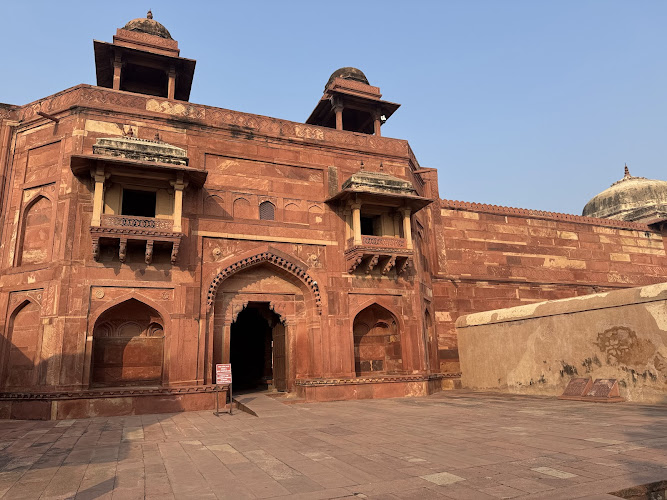
Panch Mahal in Fatehpur Sikri is one of those places that quietly takes your breath away. It’s not loud or flashy like some of the grand Mughal monuments, but it has this calm, poetic charm that grows on you the longer you stand before it. Built under the reign of Emperor Akbar, this five-tiered architectural wonder was designed as a pleasure palace — a space for relaxation, music, and the gentle breeze that sweeps through its open pavilions. You can almost imagine Akbar sitting here, listening to court musicians as the sun dipped below the horizon.
The first time I visited, I remember being struck by how airy it felt. The structure rises gracefully, with each level smaller than the one below, giving it a pyramidal silhouette. The columns — and there are nearly 176 of them — are all carved differently. You could spend an hour just admiring the craftsmanship, running your fingers along the cool red sandstone. The design cleverly allows natural ventilation, keeping the place surprisingly comfortable even in the heat of Uttar Pradesh. It’s easy to see why it was built near the royal harem — this was a place meant for leisure, laughter, and a bit of royal gossip, I suppose.
Of course, not every visitor falls head over heels for it. Some find it less impressive compared to the Taj Mahal or Agra Fort. But that’s the thing — Panch Mahal isn’t about grandeur; it’s about grace. It’s one of those spots that rewards you if you slow down and really look. The play of light and shadow through the latticework and pillars is mesmerizing, especially during late afternoon when the sandstone glows like embers.
If you’re into architecture or history, you’ll love how this structure blends Persian and Indian design influences. The openness of the layout reflects Akbar’s secular vision — a place where people of different faiths and cultures could gather. And honestly, even if you’re not a history buff, it’s just a lovely place to pause, breathe, and take in the serenity of Fatehpur Sikri.
Key Features
- Five distinct levels, each smaller than the one below, creating a unique pyramidal shape.
- Constructed entirely from red sandstone, typical of Mughal architecture.
- Supported by nearly 176 intricately carved columns, each with a unique design.
- Open pavilion style allows excellent natural ventilation and panoramic views.
- Located close to the royal zenana (women’s quarters), believed to have been used for entertainment and relaxation.
- Offers stunning sunset views over Fatehpur Sikri’s historical complex.
- Wheelchair accessible entrance and parking facilities available.
- Family-friendly environment, suitable for children and casual visitors.
Best Time to Visit
If you ask me, the best time to visit Panch Mahal is between October and March. The weather is pleasant, and the soft winter sunlight makes the red sandstone glow beautifully. Summers here can be brutal — Fatehpur Sikri sits on dry terrain, and the heat can drain your energy faster than you’d expect. Early mornings or late afternoons are ideal if you want to avoid the crowds and get those perfect photos without too many people wandering into your frame.
I once went in December, and it was just perfect. A light sweater, a cup of chai from a nearby stall, and the golden light spilling through the columns — it was pure magic. Monsoon season, on the other hand, has its own charm. The air feels cleaner, and the palace looks fresh after the rain, though the paths can get a bit slippery. So, if you’re the adventurous type, that’s not a bad time either.
How to Get There
Fatehpur Sikri is about 40 kilometers from Agra, and getting to Panch Mahal is pretty straightforward. You can take a taxi, hire a private car, or hop on one of the local buses that run between Agra and Fatehpur Sikri. The drive takes roughly an hour, depending on traffic. If you’re coming from Delhi, it’s around a four-hour journey by road, and there are trains that stop at Fatehpur Sikri station as well.
Once you reach the main complex, you’ll need to walk a short distance to get to the Panch Mahal. The path is well-marked and lined with small stalls selling souvenirs, postcards, and snacks. I always recommend carrying a bottle of water and wearing comfortable shoes — you’ll be doing a fair bit of walking, and the stone pathways can get a bit uneven in places.
There’s also a battery-operated shuttle service that takes visitors from the parking area to the monument entrance. It’s a small detail, but it makes the trip much easier, especially if you’re traveling with kids or elderly family members.
Tips for Visiting
Here’s the thing about Panch Mahal — it’s not a place you rush through. If you give it time, it rewards you with quiet moments and unexpected details. Here are a few tips from my own experience and from chatting with other travelers along the way:
- Arrive early: The morning light is soft and perfect for photos, plus you’ll avoid the mid-day tour groups.
- Bring water and sunscreen: There’s not much shade around the complex, and the sun can be relentless.
- Hire a local guide: A good guide can bring the palace to life with stories about Akbar’s court, architecture, and daily life in the 16th century.
- Take your time: Walk up each level slowly. The view from the top isn’t just scenic — it gives you a sense of how thoughtfully the entire city was planned.
- Photography tip: Visit during golden hour (just before sunset). The sandstone glows beautifully, and the shadows from the pillars create incredible depth in photos.
- Respect the site: It’s a protected monument, so avoid touching carvings or leaning on the pillars. They’ve stood for centuries — let’s help them last a few more.
- Accessibility: The lower levels are accessible for wheelchairs, though upper tiers may be challenging due to stairs.
- Combine your visit: Since Fatehpur Sikri houses several major attractions like Buland Darwaza and Diwan-i-Khas, plan a half-day trip to explore them all.
One more thing — don’t just look at the palace, listen to it. The wind whistles through the columns, birds dart in and out, and if you close your eyes, you can almost hear the echoes of music and laughter from Akbar’s time. That’s the real magic of Panch Mahal — it’s not just a building; it’s a story etched in stone and silence.
So, if you’re planning your next trip to northern India, make sure Panch Mahal is on your list. It might not have the fame of the Taj Mahal, but it has something rarer — a quiet dignity that lingers with you long after you’ve left. And honestly, that’s what great travel memories are made of.
Key Features
- Five distinct levels, each smaller than the one below, creating a unique pyramidal shape.
- Constructed entirely from red sandstone, typical of Mughal architecture.
- Supported by nearly 176 intricately carved columns, each with a unique design.
- Open pavilion style allows excellent natural ventilation and panoramic views.
- Located close to the royal zenana (women’s quarters), believed to have been used for entertainment and relaxation.
- Offers stunning sunset views over Fatehpur Sikri’s historical complex.
- Wheelchair accessible entrance and parking facilities available.
- Family-friendly environment, suitable for children and casual visitors.
More Details
Updated November 10, 2025
Table of Contents
Description
Panch Mahal in Fatehpur Sikri is one of those places that quietly takes your breath away. It’s not loud or flashy like some of the grand Mughal monuments, but it has this calm, poetic charm that grows on you the longer you stand before it. Built under the reign of Emperor Akbar, this five-tiered architectural wonder was designed as a pleasure palace — a space for relaxation, music, and the gentle breeze that sweeps through its open pavilions. You can almost imagine Akbar sitting here, listening to court musicians as the sun dipped below the horizon.
The first time I visited, I remember being struck by how airy it felt. The structure rises gracefully, with each level smaller than the one below, giving it a pyramidal silhouette. The columns — and there are nearly 176 of them — are all carved differently. You could spend an hour just admiring the craftsmanship, running your fingers along the cool red sandstone. The design cleverly allows natural ventilation, keeping the place surprisingly comfortable even in the heat of Uttar Pradesh. It’s easy to see why it was built near the royal harem — this was a place meant for leisure, laughter, and a bit of royal gossip, I suppose.
Of course, not every visitor falls head over heels for it. Some find it less impressive compared to the Taj Mahal or Agra Fort. But that’s the thing — Panch Mahal isn’t about grandeur; it’s about grace. It’s one of those spots that rewards you if you slow down and really look. The play of light and shadow through the latticework and pillars is mesmerizing, especially during late afternoon when the sandstone glows like embers.
If you’re into architecture or history, you’ll love how this structure blends Persian and Indian design influences. The openness of the layout reflects Akbar’s secular vision — a place where people of different faiths and cultures could gather. And honestly, even if you’re not a history buff, it’s just a lovely place to pause, breathe, and take in the serenity of Fatehpur Sikri.
Key Features
- Five distinct levels, each smaller than the one below, creating a unique pyramidal shape.
- Constructed entirely from red sandstone, typical of Mughal architecture.
- Supported by nearly 176 intricately carved columns, each with a unique design.
- Open pavilion style allows excellent natural ventilation and panoramic views.
- Located close to the royal zenana (women’s quarters), believed to have been used for entertainment and relaxation.
- Offers stunning sunset views over Fatehpur Sikri’s historical complex.
- Wheelchair accessible entrance and parking facilities available.
- Family-friendly environment, suitable for children and casual visitors.
Best Time to Visit
If you ask me, the best time to visit Panch Mahal is between October and March. The weather is pleasant, and the soft winter sunlight makes the red sandstone glow beautifully. Summers here can be brutal — Fatehpur Sikri sits on dry terrain, and the heat can drain your energy faster than you’d expect. Early mornings or late afternoons are ideal if you want to avoid the crowds and get those perfect photos without too many people wandering into your frame.
I once went in December, and it was just perfect. A light sweater, a cup of chai from a nearby stall, and the golden light spilling through the columns — it was pure magic. Monsoon season, on the other hand, has its own charm. The air feels cleaner, and the palace looks fresh after the rain, though the paths can get a bit slippery. So, if you’re the adventurous type, that’s not a bad time either.
How to Get There
Fatehpur Sikri is about 40 kilometers from Agra, and getting to Panch Mahal is pretty straightforward. You can take a taxi, hire a private car, or hop on one of the local buses that run between Agra and Fatehpur Sikri. The drive takes roughly an hour, depending on traffic. If you’re coming from Delhi, it’s around a four-hour journey by road, and there are trains that stop at Fatehpur Sikri station as well.
Once you reach the main complex, you’ll need to walk a short distance to get to the Panch Mahal. The path is well-marked and lined with small stalls selling souvenirs, postcards, and snacks. I always recommend carrying a bottle of water and wearing comfortable shoes — you’ll be doing a fair bit of walking, and the stone pathways can get a bit uneven in places.
There’s also a battery-operated shuttle service that takes visitors from the parking area to the monument entrance. It’s a small detail, but it makes the trip much easier, especially if you’re traveling with kids or elderly family members.
Tips for Visiting
Here’s the thing about Panch Mahal — it’s not a place you rush through. If you give it time, it rewards you with quiet moments and unexpected details. Here are a few tips from my own experience and from chatting with other travelers along the way:
- Arrive early: The morning light is soft and perfect for photos, plus you’ll avoid the mid-day tour groups.
- Bring water and sunscreen: There’s not much shade around the complex, and the sun can be relentless.
- Hire a local guide: A good guide can bring the palace to life with stories about Akbar’s court, architecture, and daily life in the 16th century.
- Take your time: Walk up each level slowly. The view from the top isn’t just scenic — it gives you a sense of how thoughtfully the entire city was planned.
- Photography tip: Visit during golden hour (just before sunset). The sandstone glows beautifully, and the shadows from the pillars create incredible depth in photos.
- Respect the site: It’s a protected monument, so avoid touching carvings or leaning on the pillars. They’ve stood for centuries — let’s help them last a few more.
- Accessibility: The lower levels are accessible for wheelchairs, though upper tiers may be challenging due to stairs.
- Combine your visit: Since Fatehpur Sikri houses several major attractions like Buland Darwaza and Diwan-i-Khas, plan a half-day trip to explore them all.
One more thing — don’t just look at the palace, listen to it. The wind whistles through the columns, birds dart in and out, and if you close your eyes, you can almost hear the echoes of music and laughter from Akbar’s time. That’s the real magic of Panch Mahal — it’s not just a building; it’s a story etched in stone and silence.
So, if you’re planning your next trip to northern India, make sure Panch Mahal is on your list. It might not have the fame of the Taj Mahal, but it has something rarer — a quiet dignity that lingers with you long after you’ve left. And honestly, that’s what great travel memories are made of.
Key Highlights
- Five distinct levels, each smaller than the one below, creating a unique pyramidal shape.
- Constructed entirely from red sandstone, typical of Mughal architecture.
- Supported by nearly 176 intricately carved columns, each with a unique design.
- Open pavilion style allows excellent natural ventilation and panoramic views.
- Located close to the royal zenana (women’s quarters), believed to have been used for entertainment and relaxation.
- Offers stunning sunset views over Fatehpur Sikri’s historical complex.
- Wheelchair accessible entrance and parking facilities available.
- Family-friendly environment, suitable for children and casual visitors.
Location
Places to Stay Near Panch Mahal
Find and Book a Tour
Explore More Travel Guides
No reviews found! Be the first to review!
Traveler Reviews for Panch Mahal
There are no reviews yet. Be the first one to write one.
Have you visited Panch Mahal? Help other travelers by sharing your review.
You Might Also Like
Find Accommodations Nearby
Recommended Tours & Activities
Visitor Reviews
There are no reviews yet. Be the first one to write one.
Share Your Experience
Have you visited Panch Mahal? Help other travelers by leaving a review.