
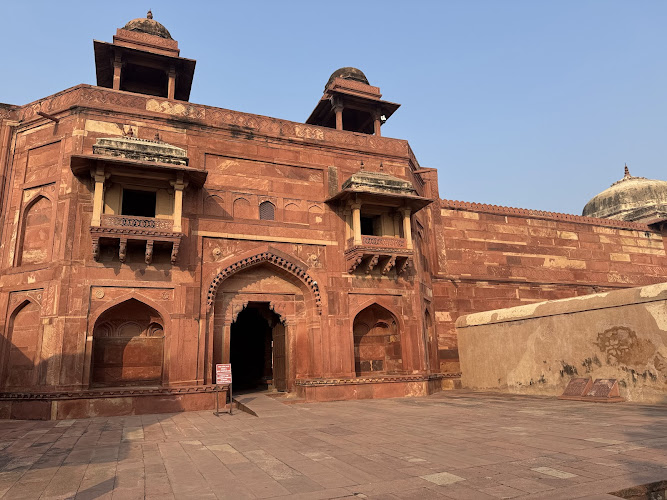
Jodha Bai’s Palace
About Jodha Bai’s Palace
Description
Jodha Bai’s Palace in Fatehpur Sikri is one of those places that quietly pulls you into its story. Built by Emperor Akbar around 1569, this red sandstone marvel was designed for his favorite queen, Mariam-uz-Zamani—often called Jodha Bai. The palace stands as a powerful reminder of the Mughal era’s architectural brilliance and Akbar’s open-mindedness toward cultural fusion. You can almost feel the centuries of history whispering through its carved walls.
What makes this palace so fascinating isn’t just its size—it’s the subtle blend of Hindu and Mughal elements that define every corner. The architecture feels both familiar and foreign at once. You’ll notice Hindu-style brackets and chhatris (domed pavilions) right alongside Mughal arches and geometric carvings. It’s this mix that gives the palace its unique character. And if you’re anything like me, you’ll probably find yourself lingering longer than planned, just trying to take it all in.
The palace complex was once part of Akbar’s grand vision for Fatehpur Sikri—a city meant to be the heart of his empire. Sadly, the city was abandoned just a few years later due to water shortages. But Jodha Bai’s Palace remains, standing strong against the test of time. When you walk through its courtyards, it’s easy to imagine royal footsteps echoing off the red stone. The air feels heavy with untold stories, and that’s what makes it so compelling.
Some visitors find the site slightly weathered, and yes, a few corners could use more restoration. But honestly, that’s part of its charm. There’s something authentic about seeing the wear and tear of centuries—it reminds you that this isn’t a movie set or a reconstruction. It’s real history, preserved in its raw form. And that’s rare. So, if you’re a traveler who loves places that feel alive with the past, Jodha Bai’s Palace will not disappoint.
Key Features
- Architectural Fusion: The palace beautifully combines Mughal symmetry with Rajput detailing, offering a fascinating study in cultural coexistence.
- Central Courtyard: A spacious courtyard that once served as the center of royal life—perfect for photography and quiet reflection.
- Intricate Carvings: Latticework, floral motifs, and geometric designs that showcase the craftsmanship of 16th-century artisans.
- Historic Significance: Built for Akbar’s queen, the palace symbolizes the emperor’s respect for different faiths and traditions.
- Peaceful Ambiance: Despite its popularity, certain corners of the palace remain surprisingly tranquil, especially during early mornings.
- Accessibility: The site offers wheelchair access and is generally easy to navigate, which is a thoughtful touch for a centuries-old structure.
- Family-Friendly: Kids often find the open courtyards and echoing halls fascinating, making it a great stop for families exploring Fatehpur Sikri.
Best Time to Visit
If you ask locals or seasoned travelers, they’ll tell you the best time to visit Jodha Bai’s Palace is between October and March. The weather during these months is pleasant enough to wander for hours without feeling drained by the sun. I once visited in late November, and the soft winter light made the red sandstone glow like embers—it was breathtaking.
Avoid the summer months if you can. The heat in Fatehpur Sikri can be relentless, and walking through the open courtyards under a blazing sun isn’t exactly fun. Monsoon season, on the other hand, can be hit or miss. The rains bring a certain freshness to the landscape, but the humidity can make exploring uncomfortable. So yes, winter is your best bet for a comfortable, photogenic experience.
If you’re into photography, aim for early morning or late afternoon. The golden light at these times brings out the warm tones of the sandstone and adds a magical touch to your shots. Plus, you’ll beat the crowds—always a bonus.
How to Get There
Fatehpur Sikri is well-connected by road and rail, making it fairly easy to reach from major cities like Agra or Delhi. If you’re coming from Agra, it’s about an hour’s drive—perfect for a day trip. Many travelers choose to hire a cab or join a guided tour that covers multiple sites within the Fatehpur Sikri complex, including Buland Darwaza and Panch Mahal.
The nearest railway station is Fatehpur Sikri itself, though trains are more frequent to Agra Cantt. From there, taxis and local buses are readily available. If you’re the adventurous type, you can even hop on a local bus—it’s cheap, a bit chaotic, but full of character. And honestly, that’s part of the fun.
For international travelers, the nearest airport is in Agra, which connects to major Indian cities. From the airport, you can easily find taxis or private transfers to Fatehpur Sikri. The roads are decent, and the drive through the rural countryside offers a glimpse of everyday life in Uttar Pradesh—fields, small villages, and the occasional camel cart. It’s a journey worth savoring.
Tips for Visiting
Before heading out, there are a few things that can make your visit smoother and more enjoyable. First, wear comfortable shoes. The palace grounds are extensive, and you’ll be doing a fair bit of walking over uneven surfaces. Trust me, I once wore sandals thinking it’d be fine—big mistake. My feet were covered in fine red dust by the end of the day.
Bring a hat or a scarf for sun protection, especially if you’re visiting in the warmer months. Water bottles are a must, though you’ll find vendors outside the main entrance selling refreshments. Inside, however, options are limited. If you’re traveling with kids, keep some snacks handy—they’ll get hungry faster than you expect.
Photography enthusiasts should carry extra batteries or a power bank. The intricate carvings and play of light inside the palace make for incredible shots. Just remember that tripods might not be allowed in certain areas, so check the local rules before you go.
Hiring a local guide can make a big difference. They bring the history alive with stories you won’t find on signboards. For instance, one guide told me about how Akbar supposedly built this palace to ensure his queen felt at home, blending Rajputana elements into the Mughal design. Whether that’s true or just folklore, it adds a layer of romance to the visit.
Try to arrive early in the morning. Not only will you avoid the crowds, but the soft light and calm atmosphere make the entire experience more immersive. Late afternoons work too, especially if you want to catch the sunset over the Fatehpur Sikri complex—it’s truly a sight to remember.
Lastly, take your time. Don’t rush through the palace like it’s a checklist item. Sit in the courtyard, look up at the ornate ceilings, and imagine what life might have been like centuries ago. That’s the real magic of Jodha Bai’s Palace—it invites you to slow down and listen to history.
Whether you’re a history buff, an architecture lover, or just someone who enjoys discovering places with soul, Jodha Bai’s Palace offers a glimpse into a world where art, culture, and love intertwined. It’s not just another stop on the tourist trail—it’s a story carved in stone, waiting for you to walk through it.
Key Features
- Key Features
- Best Time to Visit
- How to Get There
- Tips for Visiting
More Details
Updated November 10, 2025
Table of Contents
Description
Jodha Bai’s Palace in Fatehpur Sikri is one of those places that quietly pulls you into its story. Built by Emperor Akbar around 1569, this red sandstone marvel was designed for his favorite queen, Mariam-uz-Zamani—often called Jodha Bai. The palace stands as a powerful reminder of the Mughal era’s architectural brilliance and Akbar’s open-mindedness toward cultural fusion. You can almost feel the centuries of history whispering through its carved walls.
What makes this palace so fascinating isn’t just its size—it’s the subtle blend of Hindu and Mughal elements that define every corner. The architecture feels both familiar and foreign at once. You’ll notice Hindu-style brackets and chhatris (domed pavilions) right alongside Mughal arches and geometric carvings. It’s this mix that gives the palace its unique character. And if you’re anything like me, you’ll probably find yourself lingering longer than planned, just trying to take it all in.
The palace complex was once part of Akbar’s grand vision for Fatehpur Sikri—a city meant to be the heart of his empire. Sadly, the city was abandoned just a few years later due to water shortages. But Jodha Bai’s Palace remains, standing strong against the test of time. When you walk through its courtyards, it’s easy to imagine royal footsteps echoing off the red stone. The air feels heavy with untold stories, and that’s what makes it so compelling.
Some visitors find the site slightly weathered, and yes, a few corners could use more restoration. But honestly, that’s part of its charm. There’s something authentic about seeing the wear and tear of centuries—it reminds you that this isn’t a movie set or a reconstruction. It’s real history, preserved in its raw form. And that’s rare. So, if you’re a traveler who loves places that feel alive with the past, Jodha Bai’s Palace will not disappoint.
Key Features
- Architectural Fusion: The palace beautifully combines Mughal symmetry with Rajput detailing, offering a fascinating study in cultural coexistence.
- Central Courtyard: A spacious courtyard that once served as the center of royal life—perfect for photography and quiet reflection.
- Intricate Carvings: Latticework, floral motifs, and geometric designs that showcase the craftsmanship of 16th-century artisans.
- Historic Significance: Built for Akbar’s queen, the palace symbolizes the emperor’s respect for different faiths and traditions.
- Peaceful Ambiance: Despite its popularity, certain corners of the palace remain surprisingly tranquil, especially during early mornings.
- Accessibility: The site offers wheelchair access and is generally easy to navigate, which is a thoughtful touch for a centuries-old structure.
- Family-Friendly: Kids often find the open courtyards and echoing halls fascinating, making it a great stop for families exploring Fatehpur Sikri.
Best Time to Visit
If you ask locals or seasoned travelers, they’ll tell you the best time to visit Jodha Bai’s Palace is between October and March. The weather during these months is pleasant enough to wander for hours without feeling drained by the sun. I once visited in late November, and the soft winter light made the red sandstone glow like embers—it was breathtaking.
Avoid the summer months if you can. The heat in Fatehpur Sikri can be relentless, and walking through the open courtyards under a blazing sun isn’t exactly fun. Monsoon season, on the other hand, can be hit or miss. The rains bring a certain freshness to the landscape, but the humidity can make exploring uncomfortable. So yes, winter is your best bet for a comfortable, photogenic experience.
If you’re into photography, aim for early morning or late afternoon. The golden light at these times brings out the warm tones of the sandstone and adds a magical touch to your shots. Plus, you’ll beat the crowds—always a bonus.
How to Get There
Fatehpur Sikri is well-connected by road and rail, making it fairly easy to reach from major cities like Agra or Delhi. If you’re coming from Agra, it’s about an hour’s drive—perfect for a day trip. Many travelers choose to hire a cab or join a guided tour that covers multiple sites within the Fatehpur Sikri complex, including Buland Darwaza and Panch Mahal.
The nearest railway station is Fatehpur Sikri itself, though trains are more frequent to Agra Cantt. From there, taxis and local buses are readily available. If you’re the adventurous type, you can even hop on a local bus—it’s cheap, a bit chaotic, but full of character. And honestly, that’s part of the fun.
For international travelers, the nearest airport is in Agra, which connects to major Indian cities. From the airport, you can easily find taxis or private transfers to Fatehpur Sikri. The roads are decent, and the drive through the rural countryside offers a glimpse of everyday life in Uttar Pradesh—fields, small villages, and the occasional camel cart. It’s a journey worth savoring.
Tips for Visiting
Before heading out, there are a few things that can make your visit smoother and more enjoyable. First, wear comfortable shoes. The palace grounds are extensive, and you’ll be doing a fair bit of walking over uneven surfaces. Trust me, I once wore sandals thinking it’d be fine—big mistake. My feet were covered in fine red dust by the end of the day.
Bring a hat or a scarf for sun protection, especially if you’re visiting in the warmer months. Water bottles are a must, though you’ll find vendors outside the main entrance selling refreshments. Inside, however, options are limited. If you’re traveling with kids, keep some snacks handy—they’ll get hungry faster than you expect.
Photography enthusiasts should carry extra batteries or a power bank. The intricate carvings and play of light inside the palace make for incredible shots. Just remember that tripods might not be allowed in certain areas, so check the local rules before you go.
Hiring a local guide can make a big difference. They bring the history alive with stories you won’t find on signboards. For instance, one guide told me about how Akbar supposedly built this palace to ensure his queen felt at home, blending Rajputana elements into the Mughal design. Whether that’s true or just folklore, it adds a layer of romance to the visit.
Try to arrive early in the morning. Not only will you avoid the crowds, but the soft light and calm atmosphere make the entire experience more immersive. Late afternoons work too, especially if you want to catch the sunset over the Fatehpur Sikri complex—it’s truly a sight to remember.
Lastly, take your time. Don’t rush through the palace like it’s a checklist item. Sit in the courtyard, look up at the ornate ceilings, and imagine what life might have been like centuries ago. That’s the real magic of Jodha Bai’s Palace—it invites you to slow down and listen to history.
Whether you’re a history buff, an architecture lover, or just someone who enjoys discovering places with soul, Jodha Bai’s Palace offers a glimpse into a world where art, culture, and love intertwined. It’s not just another stop on the tourist trail—it’s a story carved in stone, waiting for you to walk through it.
Key Highlights
- Key Features
- Best Time to Visit
- How to Get There
- Tips for Visiting
Location
Places to Stay Near Jodha Bai's Palace
Find and Book a Tour
Explore More Travel Guides
No reviews found! Be the first to review!
Traveler Reviews for Jodha Bai’s Palace
There are no reviews yet. Be the first one to write one.
Have you visited Jodha Bai’s Palace? Help other travelers by sharing your review.
You Might Also Like

Find Accommodations Nearby
Recommended Tours & Activities
Visitor Reviews
There are no reviews yet. Be the first one to write one.
Share Your Experience
Have you visited Jodha Bai’s Palace? Help other travelers by leaving a review.