
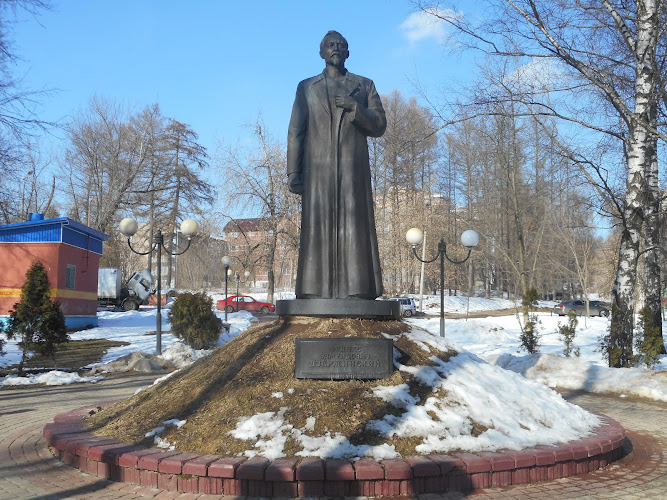
Pamyatnik Dzerzhinskomu
About Pamyatnik Dzerzhinskomu
Pamyatnik Dzerzhinskomu is a well-regarded tourist attraction located in Dzerzhinskiy. With a rating of 4.4 out of 5, it stands out as one of the top-rated tourist attractions in the area.
Location
You can find Pamyatnik Dzerzhinskomu at Ulitsa Dzerzhinskaya, 11, Dzerzhinsky, Moscow Oblast, Russia, 140090.
Visiting Pamyatnik Dzerzhinskomu
Located in Dzerzhinskiy, Pamyatnik Dzerzhinskomu is a tourist attraction that visitors to the area may find worth exploring.
Planning Your Visit
The tourist attraction is located at Ulitsa Dzerzhinskaya, 11, Dzerzhinsky, Moscow Oblast, Russia, 140090. GPS coordinates: 55.623320, 37.846147. Check locally for current opening hours and any admission fees before visiting.
More Details
Updated June 4, 2026
Pamyatnik Dzerzhinskomu is a well-regarded tourist attraction located in Dzerzhinskiy. With a rating of 4.4 out of 5, it stands out as one of the top-rated tourist attractions in the area.
Table of Contents
- Location
- Visiting Pamyatnik Dzerzhinskomu
- Planning Your Visit
- Location
- Places to Stay Near Pamyatnik Dzerzhinskomu
- Find and Book a Tour
- Explore More Travel Guides
- Historical Background and Significance
- Artistic and Cultural Context
- Park Setting and Community Space
- Educational and Historical Context
- Contemporary Relevance and Reflection
- Visitor Experience and Cultural Understanding
- Traveler Reviews for Pamyatnik Dzerzhinskomu
- Share Your Experience
Location
You can find Pamyatnik Dzerzhinskomu at Ulitsa Dzerzhinskaya, 11, Dzerzhinsky, Moscow Oblast, Russia, 140090.
Visiting Pamyatnik Dzerzhinskomu
Located in Dzerzhinskiy, Pamyatnik Dzerzhinskomu is a tourist attraction that visitors to the area may find worth exploring.
Planning Your Visit
The tourist attraction is located at Ulitsa Dzerzhinskaya, 11, Dzerzhinsky, Moscow Oblast, Russia, 140090. GPS coordinates: 55.623320, 37.846147. Check locally for current opening hours and any admission fees before visiting.
Location
Places to Stay Near Pamyatnik Dzerzhinskomu
Find and Book a Tour
Explore More Travel Guides
No reviews found! Be the first to review!
Standing in the town of Dzerzhinsky near Moscow, Russia, Pamyatnik Dzerzhinskomu (Monument to Dzerzhinsky) serves as a complex historical landmark that offers visitors insights into Soviet history and the controversial legacy of Felix Dzerzhinsky, the founder of the Soviet Union’s first secret police organization. This monument provides an opportunity to explore the complicated narratives of early Soviet history while experiencing the peaceful park setting that surrounds this significant historical marker.
Historical Background and Significance
Felix Dzerzhinsky, known as “Iron Felix,” played a crucial role in the early years of the Soviet Union as the founder and first director of the Cheka, the Soviet secret police that later evolved into the KGB. Born in Poland in 1877, Dzerzhinsky became a dedicated revolutionary who believed that harsh security measures were necessary to protect the fledgling Soviet state from internal and external enemies.
The town that bears his name was established in 1981, incorporating several smaller settlements in the Moscow region. The monument serves as the centerpiece of this planned Soviet-era community, reflecting the practice of naming places after prominent revolutionary figures as a way of honoring their contributions to the communist cause.
Understanding Dzerzhinsky’s complex legacy requires examining both his genuine commitment to revolutionary ideals and the harsh methods he employed to achieve them. Visitors can use the monument as a starting point for exploring these difficult historical questions while appreciating the artistic and cultural context in which such memorials were created.
Artistic and Cultural Context
The monument represents typical examples of Soviet monumental art, characterized by heroic scale, realistic style, and symbolic elements designed to inspire respect and admiration for revolutionary leaders. The artistic approach reflects the Soviet belief that public art should serve educational and ideological purposes while creating shared cultural references for citizens.
Soviet monument design often incorporated specific visual elements intended to convey particular messages about the subject’s character and contributions. In Dzerzhinsky’s case, artistic elements typically emphasize determination, vigilance, and unwavering commitment to the revolutionary cause, reflecting how Soviet society chose to remember and honor this controversial figure.
The monument’s placement within a park setting demonstrates the Soviet approach to integrating political memorials into spaces designed for community recreation and reflection. This design philosophy aimed to make historical and political education a natural part of daily life rather than confining it to formal museums or educational institutions.
Park Setting and Community Space
The park surrounding the monument provides a peaceful environment where visitors can reflect on the complex historical questions raised by Dzerzhinsky’s legacy. Well-maintained walking paths, mature trees, and seating areas create an atmosphere conducive to contemplation and discussion about the difficult balance between security and freedom that characterized the early Soviet period.
The park serves multiple functions for the local community, hosting various cultural events, providing recreational space for families, and offering a venue for both formal and informal gatherings. This multi-functional use demonstrates how historical monuments can be integrated into living community spaces rather than existing as isolated memorials.
Seasonal changes in the park setting provide different contexts for experiencing the monument, from spring blossoms that create a sense of renewal to winter snow that emphasizes the monument’s solitary and contemplative aspects. These natural cycles add layers of meaning to the historical reflection that the site encourages.
Educational and Historical Context
Visiting the monument provides opportunities to explore broader themes in Soviet and Russian history, including the evolution of state security services, the role of ideology in shaping public memory, and the ongoing debates about how societies should remember controversial historical figures. These discussions remain relevant in contemporary Russia and other post-Soviet societies.
The site encourages consideration of how different historical periods view the same events and personalities differently. Dzerzhinsky’s reputation has evolved significantly since the Soviet collapse, with some viewing him as a necessary defender of revolutionary gains while others emphasize the human costs of the security apparatus he created.
Educational value extends beyond the specific historical figure to broader questions about the relationship between security and liberty, the role of state power in times of crisis, and how societies balance competing values when facing existential threats. These themes resonate across different historical periods and geographical contexts.
Contemporary Relevance and Reflection
The monument’s continued existence in post-Soviet Russia raises important questions about how contemporary society engages with difficult aspects of its history. Unlike some Soviet-era monuments that have been removed or relocated, this memorial remains in place, providing opportunities for ongoing dialogue about historical memory and the complexity of revolutionary legacies.
Modern visitors often bring different perspectives to historical monuments than those for whom they were originally intended, creating opportunities for multi-layered interpretation and discussion. The site can serve as a starting point for conversations about how historical understanding evolves and how different generations interpret the same events.
The peaceful park setting contrasts with the often violent history associated with Dzerzhinsky’s work, creating space for nuanced reflection on the contradictions and complexities that characterize many historical figures and periods. This contrast encourages thoughtful consideration rather than simple judgment.
Visitor Experience and Cultural Understanding
For international visitors, the monument provides insights into how Soviet society commemorated its heroes and how contemporary Russian society continues to grapple with this complex heritage. Understanding these memorialization practices offers broader insights into Russian culture, history, and ongoing political development.
The site encourages visitors to consider how different societies remember and honor controversial figures from their past, providing comparative perspectives on collective memory, historical interpretation, and the role of monuments in shaping public understanding of history.
Whether viewed as a historical artifact, an artistic creation, or a catalyst for difficult conversations about the past, Pamyatnik Dzerzhinskomu offers visitors opportunities to engage with complex historical questions in a thoughtful and reflective environment. The monument serves as a reminder that history is rarely simple and that understanding the past requires careful consideration of multiple perspectives and competing values.
Traveler Reviews for Pamyatnik Dzerzhinskomu
There are no reviews yet. Be the first one to write one.
Have you visited Pamyatnik Dzerzhinskomu? Help other travelers by sharing your review.
Nearby Attractions
Find Accommodations Nearby
Recommended Tours & Activities
Visitor Reviews
There are no reviews yet. Be the first one to write one.
Share Your Experience
Have you visited Pamyatnik Dzerzhinskomu? Help other travelers by leaving a review.