
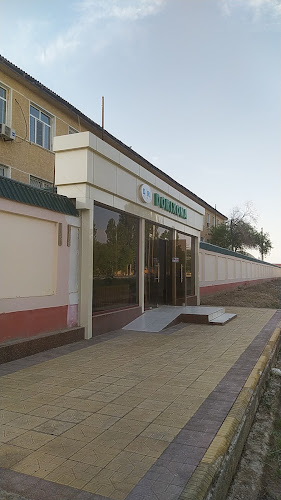
Nukus District
About Nukus District
Description
Nukus District, known locally as Nókis district, sits quietly in the Republic of Karakalpakstan in northwestern Uzbekistan. It’s one of those places that doesn’t shout for attention but rewards those who take the time to explore it. With a population hovering around 41,890 and covering roughly 940 square kilometers, it’s small enough to feel intimate yet large enough to hold a surprising mix of landscapes, stories, and traditions. The district’s administrative center is the town of Aqmańģıt, a place that feels more like a community than a city—people still greet you on the street, and the rhythm of life moves at its own pace.
Though the city of Nukus itself isn’t part of the district, it’s impossible to talk about the area without mentioning it. The district surrounds the city like a quiet guardian, sharing in its cultural pulse and history. Travelers who’ve spent time here often describe a sense of authenticity—there’s a raw, unpolished beauty that hasn’t yet been diluted by mass tourism. You’ll find vast open plains, a horizon that seems to stretch forever, and skies so wide they make you feel small in the best possible way.
What I personally love about this region is its sense of endurance. Life here isn’t always easy—the climate can be harsh, summers are hot, winters are biting—but the people carry on with a kind of quiet pride. They’ve built a life around the land, the Amu Darya River, and their traditions. You can still see traces of ancient cultures, Soviet-era relics, and modern Uzbek influences blending together in unexpected ways. It’s a place that makes you think about time—how it passes, what it changes, and what it leaves behind.
Key Features
- Located in the Republic of Karakalpakstan, northwest Uzbekistan, known for its unique cultural identity and semi-autonomous status.
- Administrative center: Aqmańģıt, a small town with local markets, traditional homes, and friendly residents.
- Close proximity to the city of Nukus, home of the famous Savitsky Museum of Art and a gateway to the Aral Sea region.
- Landscape characterized by wide steppes, desert plains, and patches of irrigated farmland along the Amu Darya River.
- Population of approximately 41,890 residents, offering a genuine glimpse into rural Karakalpak life.
- Area of 940 km², making it a manageable region to explore by car or with a local guide.
- Rich in Karakalpak traditions, crafts, and oral storytelling culture that has been passed down for generations.
- Opportunities for cultural immersion, photography, and off-the-beaten-path travel experiences.
Best Time to Visit
If you ask locals, they’ll tell you that spring and autumn are the best times to be in Nukus District—and they’re right. From April to early June, the weather is pleasantly mild, the fields are green, and the air carries that earthy smell of new life. Autumn, from September to early November, brings cooler temperatures and golden hues across the plains. Summer can be tough unless you’re used to heat; it’s dry and can soar above 40°C. Winter, on the other hand, has its own charm—quiet, crisp, and peaceful—but you’ll need warm layers and a willingness to embrace simplicity.
I once visited in late October, and it was perfect. The sun was gentle, the locals were harvesting, and the evenings were cool enough for tea outside under a blanket of stars. If you enjoy photography, this time of year is a dream—the light is soft, the colors pop, and the landscapes have that cinematic glow that no filter can truly capture.
How to Get There
Most travelers reach Nukus District via the city of Nukus, which has both a small airport and train connections to Tashkent and other major Uzbek cities. From Nukus, it’s a short drive to Aqmańģıt and the surrounding villages. Shared taxis are common, though if you prefer a bit more freedom, renting a car is a great option. The roads are generally decent, though you’ll hit the occasional bump or dusty stretch—nothing too dramatic, but it adds to the adventure.
If you’re traveling from Khiva or Urgench, expect a scenic route that cuts through the desert landscape, dotted with small settlements and herds of livestock. It’s one of those drives where you’ll want to stop often, not because you have to, but because the horizon keeps changing and you can’t help but take it all in.
For the more adventurous, there are also bus routes and local marshrutkas (minibuses). They’re slower, sure, but they give you a real sense of local life—music playing softly, people chatting, the occasional stop for tea or bread. It’s not luxury travel, but it’s genuine.
Tips for Visiting
Before you head out, it’s worth knowing that Nukus District is still relatively undeveloped for tourism, which is part of its charm. Here are a few tips based on experience and a few lessons learned the hard way:
- Bring cash. ATMs can be unreliable outside of Nukus city, and smaller shops often don’t take cards.
- Learn a few local phrases. A simple “rahmat” (thank you) goes a long way. People appreciate the effort, and you’ll find smiles come easily.
- Dress modestly and comfortably. The climate can shift quickly, so light layers are your best friend. Also, sun protection is essential—trust me, that desert sun doesn’t play around.
- Try local food. Plov, fresh bread, and fish from the Amu Darya are staples. Don’t be shy about accepting tea invitations—hospitality here is genuine and heartfelt.
- Respect traditions. Karakalpak culture is proud and deeply rooted. Always ask before taking photos of people or private homes.
- Stay connected. Mobile coverage can be patchy in rural areas, so download maps and translation apps before you go.
- Take your time. This isn’t a place to rush through. Spend a night or two in Aqmańģıt, wander the villages, talk to people. That’s where the real memories are made.
One thing I always tell people—don’t expect polished tourist attractions here. Expect authenticity. Expect dust on your shoes, laughter with strangers, and moments where you just stop and think, “Wow, this is real.” There’s something grounding about that. You’ll leave with more than just photos—you’ll leave with stories.
For travelers who crave genuine experiences, Nukus District offers a quiet kind of magic. It’s not flashy, but it’s deeply human. The landscapes, the people, the rhythm of life—they all remind you that beauty doesn’t have to be loud to be unforgettable. And if you’re anything like me, you’ll find yourself wanting to come back, not because there’s more to see, but because there’s more to feel.
Key Features
- Located in the Republic of Karakalpakstan, northwest Uzbekistan, known for its unique cultural identity and semi-autonomous status.
- Administrative center: Aqmańģıt, a small town with local markets, traditional homes, and friendly residents.
- Close proximity to the city of Nukus, home of the famous Savitsky Museum of Art and a gateway to the Aral Sea region.
- Landscape characterized by wide steppes, desert plains, and patches of irrigated farmland along the Amu Darya River.
- Population of approximately 41,890 residents, offering a genuine glimpse into rural Karakalpak life.
- Area of 940 km², making it a manageable region to explore by car or with a local guide.
- Rich in Karakalpak traditions, crafts, and oral storytelling culture that has been passed down for generations.
- Opportunities for cultural immersion, photography, and off-the-beaten-path travel experiences.
More Details
Updated November 30, 2025
Table of Contents
Description
Nukus District, known locally as Nókis district, sits quietly in the Republic of Karakalpakstan in northwestern Uzbekistan. It’s one of those places that doesn’t shout for attention but rewards those who take the time to explore it. With a population hovering around 41,890 and covering roughly 940 square kilometers, it’s small enough to feel intimate yet large enough to hold a surprising mix of landscapes, stories, and traditions. The district’s administrative center is the town of Aqmańģıt, a place that feels more like a community than a city—people still greet you on the street, and the rhythm of life moves at its own pace.
Though the city of Nukus itself isn’t part of the district, it’s impossible to talk about the area without mentioning it. The district surrounds the city like a quiet guardian, sharing in its cultural pulse and history. Travelers who’ve spent time here often describe a sense of authenticity—there’s a raw, unpolished beauty that hasn’t yet been diluted by mass tourism. You’ll find vast open plains, a horizon that seems to stretch forever, and skies so wide they make you feel small in the best possible way.
What I personally love about this region is its sense of endurance. Life here isn’t always easy—the climate can be harsh, summers are hot, winters are biting—but the people carry on with a kind of quiet pride. They’ve built a life around the land, the Amu Darya River, and their traditions. You can still see traces of ancient cultures, Soviet-era relics, and modern Uzbek influences blending together in unexpected ways. It’s a place that makes you think about time—how it passes, what it changes, and what it leaves behind.
Key Features
- Located in the Republic of Karakalpakstan, northwest Uzbekistan, known for its unique cultural identity and semi-autonomous status.
- Administrative center: Aqmańģıt, a small town with local markets, traditional homes, and friendly residents.
- Close proximity to the city of Nukus, home of the famous Savitsky Museum of Art and a gateway to the Aral Sea region.
- Landscape characterized by wide steppes, desert plains, and patches of irrigated farmland along the Amu Darya River.
- Population of approximately 41,890 residents, offering a genuine glimpse into rural Karakalpak life.
- Area of 940 km², making it a manageable region to explore by car or with a local guide.
- Rich in Karakalpak traditions, crafts, and oral storytelling culture that has been passed down for generations.
- Opportunities for cultural immersion, photography, and off-the-beaten-path travel experiences.
Best Time to Visit
If you ask locals, they’ll tell you that spring and autumn are the best times to be in Nukus District—and they’re right. From April to early June, the weather is pleasantly mild, the fields are green, and the air carries that earthy smell of new life. Autumn, from September to early November, brings cooler temperatures and golden hues across the plains. Summer can be tough unless you’re used to heat; it’s dry and can soar above 40°C. Winter, on the other hand, has its own charm—quiet, crisp, and peaceful—but you’ll need warm layers and a willingness to embrace simplicity.
I once visited in late October, and it was perfect. The sun was gentle, the locals were harvesting, and the evenings were cool enough for tea outside under a blanket of stars. If you enjoy photography, this time of year is a dream—the light is soft, the colors pop, and the landscapes have that cinematic glow that no filter can truly capture.
How to Get There
Most travelers reach Nukus District via the city of Nukus, which has both a small airport and train connections to Tashkent and other major Uzbek cities. From Nukus, it’s a short drive to Aqmańģıt and the surrounding villages. Shared taxis are common, though if you prefer a bit more freedom, renting a car is a great option. The roads are generally decent, though you’ll hit the occasional bump or dusty stretch—nothing too dramatic, but it adds to the adventure.
If you’re traveling from Khiva or Urgench, expect a scenic route that cuts through the desert landscape, dotted with small settlements and herds of livestock. It’s one of those drives where you’ll want to stop often, not because you have to, but because the horizon keeps changing and you can’t help but take it all in.
For the more adventurous, there are also bus routes and local marshrutkas (minibuses). They’re slower, sure, but they give you a real sense of local life—music playing softly, people chatting, the occasional stop for tea or bread. It’s not luxury travel, but it’s genuine.
Tips for Visiting
Before you head out, it’s worth knowing that Nukus District is still relatively undeveloped for tourism, which is part of its charm. Here are a few tips based on experience and a few lessons learned the hard way:
- Bring cash. ATMs can be unreliable outside of Nukus city, and smaller shops often don’t take cards.
- Learn a few local phrases. A simple “rahmat” (thank you) goes a long way. People appreciate the effort, and you’ll find smiles come easily.
- Dress modestly and comfortably. The climate can shift quickly, so light layers are your best friend. Also, sun protection is essential—trust me, that desert sun doesn’t play around.
- Try local food. Plov, fresh bread, and fish from the Amu Darya are staples. Don’t be shy about accepting tea invitations—hospitality here is genuine and heartfelt.
- Respect traditions. Karakalpak culture is proud and deeply rooted. Always ask before taking photos of people or private homes.
- Stay connected. Mobile coverage can be patchy in rural areas, so download maps and translation apps before you go.
- Take your time. This isn’t a place to rush through. Spend a night or two in Aqmańģıt, wander the villages, talk to people. That’s where the real memories are made.
One thing I always tell people—don’t expect polished tourist attractions here. Expect authenticity. Expect dust on your shoes, laughter with strangers, and moments where you just stop and think, “Wow, this is real.” There’s something grounding about that. You’ll leave with more than just photos—you’ll leave with stories.
For travelers who crave genuine experiences, Nukus District offers a quiet kind of magic. It’s not flashy, but it’s deeply human. The landscapes, the people, the rhythm of life—they all remind you that beauty doesn’t have to be loud to be unforgettable. And if you’re anything like me, you’ll find yourself wanting to come back, not because there’s more to see, but because there’s more to feel.
Key Highlights
- Located in the Republic of Karakalpakstan, northwest Uzbekistan, known for its unique cultural identity and semi-autonomous status.
- Administrative center: Aqmańģıt, a small town with local markets, traditional homes, and friendly residents.
- Close proximity to the city of Nukus, home of the famous Savitsky Museum of Art and a gateway to the Aral Sea region.
- Landscape characterized by wide steppes, desert plains, and patches of irrigated farmland along the Amu Darya River.
- Population of approximately 41,890 residents, offering a genuine glimpse into rural Karakalpak life.
- Area of 940 km², making it a manageable region to explore by car or with a local guide.
- Rich in Karakalpak traditions, crafts, and oral storytelling culture that has been passed down for generations.
- Opportunities for cultural immersion, photography, and off-the-beaten-path travel experiences.
Location
Places to Stay Near Nukus District
Find and Book a Tour
Explore More Travel Guides
No reviews found! Be the first to review!
Traveler Reviews for Nukus District
There are no reviews yet. Be the first one to write one.
Have you visited Nukus District? Help other travelers by sharing your review.
You Might Also Like
Andijan region
Ugam-Chatkal National Park
Ayaz-kala 1
Find Accommodations Nearby
Recommended Tours & Activities
Visitor Reviews
There are no reviews yet. Be the first one to write one.
Share Your Experience
Have you visited Nukus District? Help other travelers by leaving a review.