
North East Land, Sea and Air Museums
About North East Land, Sea and Air Museums
Description
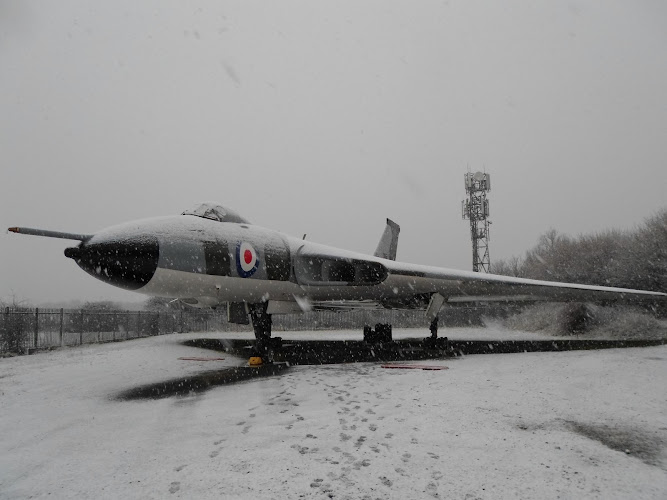
The North East Land, Sea and Air Museums in Sunderland is the kind of place that sneaks up on you. From the moment you step onto the site — part of a former RAF base — the scale of what’s been collected here becomes obvious: hulking aircraft parked outdoors, restored military vehicles, and hangars full of displays that trace northeast England’s military and aviation story. It feels oddly intimate and very proud at the same time, like a local grandad telling tall tales with photographs laid out on the kitchen table. And yes, sometimes the grandad gets a detail wrong, but the warmth and passion are impossible to miss.
If you like machines and the stories behind them, this museum rewards patience. The aviation collection ranges from early piston-engined types to Cold War-era jets; there are dials, engines, cockpit sections you can peer into, and placards that explain not just what a plane is, but what it meant to the people who flew and maintained it. Some of the aircraft are big, some are small, but nearly all of them have personality — a scar here, a patch of re-painting there — and for me that’s the real attraction. The past feels lived-in, not sterilised.
On the land side there are military vehicles and armoured displays that give a solid sense of how mobility and logistics evolved through the 20th century. Tanks, transport trucks, utility vehicles — they’re not just parked behind ropes; in many cases volunteers and curators will happily talk you through a vehicle’s role, where it served, and why it matters. Those conversations are gold. I once spent half an hour listening to a volunteer explain how a particular radio set changed frontline communications — I didn’t plan to nerd out that long but I was hooked.
Sea history appears through related artefacts and exhibits that highlight the region’s connection to maritime defence and shipbuilding. Sunderland and the surrounding Tyne and Wear area have deep ties to naval history, and the museum pulls threads between shipyards, coastal patrols, and the aircraft that supported those missions. It’s a good reminder that land, sea and air operations were often an interconnected web rather than isolated chapters.
One thing visitors often underestimate: the volunteer engine of this place. A lot of museums have salaried staff, sure, but here volunteers do so much — restoration, guided talks, even live demonstrations. That human element shows in the way exhibits are presented: not always museum-speak, but honest, sometimes opinionated, often humorous. Expect to find folks who’ll happily indulge a twenty-minute question spree about a plane’s engine, or who’ll tell you where to get the best chip shop down the road. They know their stuff and they love sharing it. That makes the experience richer than the static displays alone.
Accessibility is a genuine plus. There’s a wheelchair-accessible entrance, parking and restrooms, which makes exploring the larger indoor and outdoor displays far less stressful for visitors who need those facilities. Families are welcomed — it’s absolutely child-friendly, with hands-on bits for younger kids and changing tables in restrooms. If you’ve got small explorers with you, plan for shorter bursts of concentrated viewing and some time in the open-air areas where you can stretch legs between huts and hangars.
The museum doesn’t have a full restaurant, so bring snacks or enjoy a picnic in the car park area if the weather cooperates. There is an on-site shop though, and it’s the kind of place where you can pick up books, memorabilia, scale models and a surprise or two. I’ve bought more postcards here than at any other museum; something about hand-scrawled notes from visitors and battered planes on postcards feels just right.
For those who enjoy live events, the museum throws up occasional performances and demonstrations — think engine runs, living history encampments, or guided talks that include veterans or people who actually worked on these machines. These are often the highlights for many visitors and the kind of moving, personal history you can’t get from photos alone. If you time your visit to coincide with an event day you’ll get that extra layer of story and spectacle. But if it’s a quiet weekday, the slower pace makes browsing the collection pleasantly contemplative.
Practicalities matter here: free parking is a relief if you’re driving from Newcastle, Durham or the surrounding North East towns; the site is large, so leave time to wander. A typical first-time visit can easily take two to three hours if you read most panels and pop into each hangar. If you’re the sort who hunts down every plaque and reads every caption, allocate half a day. Personally, I like to break a visit into two parts — first, a general sweep to get the lay of the land, then a coffee, then a return with focus on a few favourite exhibits.
There’s also a local flavour to the storytelling that feels refreshing. This isn’t just national-level history rehashed. The museum highlights North East England’s contribution to military and aviation efforts: the engineers, factory workers, ground crew and pilots from the region. It feels like a community museum elevated by national significance — you come for the machines, and you leave with an appreciation of the people whose hands shaped them.
Not everything is perfect. Some of the indoor displays are housed in older buildings and the lighting or signage could be better in places. A little more interpretation for casual visitors would help — not everyone wants a deep technical dive and a few more big-picture panels would make the narrative even more accessible. Still, these are minor quibbles when compared to the depth of the collection and the enthusiasm of the staff and volunteers.
If you’re a history buff, an aviation nerd, or simply someone looking for a memorable day out in the North East, this museum will reward you. If you’re travelling from further afield — say, the greater United Kingdom — it’s a solid detour that pairs well with coastal drives, Sunderland city explorations, or a stop in nearby Newcastle. For local visitors, it’s a place worth repeat trips; new restorations and rotating exhibits mean there’s often something different on a subsequent visit.
One last thing: go with curiosity and a little patience. Talk to the volunteers, ask for recommendations on which exhibits to prioritise, and don’t rush the outdoor displays — they’re meant to be walked around and admired from different angles. I remember being surprised by how moving a quiet moment by a restored cockpit could be; you could almost imagine the sky beyond it. Museums like this keep history breathing, and they do it with soul rather than slick marketing. That counts for a lot in my book.
So whether you’re planning a focused aircraft-spotting mission, a family day out, or a nostalgic trip to the heart of the North East’s military past, give the North East Land, Sea and Air Museums a solid block of time and an open mind. You might leave with a new appreciation for a particular engine type, a story about a local hero, or just a few great photos. And if you do, promise me one thing: write a postcard from the shop. It’s oddly satisfying.
Key Features
More Details
Updated August 29, 2025
Table of Contents
Description
The North East Land, Sea and Air Museums in Sunderland is the kind of place that sneaks up on you. From the moment you step onto the site — part of a former RAF base — the scale of what’s been collected here becomes obvious: hulking aircraft parked outdoors, restored military vehicles, and hangars full of displays that trace northeast England’s military and aviation story. It feels oddly intimate and very proud at the same time, like a local grandad telling tall tales with photographs laid out on the kitchen table. And yes, sometimes the grandad gets a detail wrong, but the warmth and passion are impossible to miss.
If you like machines and the stories behind them, this museum rewards patience. The aviation collection ranges from early piston-engined types to Cold War-era jets; there are dials, engines, cockpit sections you can peer into, and placards that explain not just what a plane is, but what it meant to the people who flew and maintained it. Some of the aircraft are big, some are small, but nearly all of them have personality — a scar here, a patch of re-painting there — and for me that’s the real attraction. The past feels lived-in, not sterilised.
On the land side there are military vehicles and armoured displays that give a solid sense of how mobility and logistics evolved through the 20th century. Tanks, transport trucks, utility vehicles — they’re not just parked behind ropes; in many cases volunteers and curators will happily talk you through a vehicle’s role, where it served, and why it matters. Those conversations are gold. I once spent half an hour listening to a volunteer explain how a particular radio set changed frontline communications — I didn’t plan to nerd out that long but I was hooked.
Sea history appears through related artefacts and exhibits that highlight the region’s connection to maritime defence and shipbuilding. Sunderland and the surrounding Tyne and Wear area have deep ties to naval history, and the museum pulls threads between shipyards, coastal patrols, and the aircraft that supported those missions. It’s a good reminder that land, sea and air operations were often an interconnected web rather than isolated chapters.
One thing visitors often underestimate: the volunteer engine of this place. A lot of museums have salaried staff, sure, but here volunteers do so much — restoration, guided talks, even live demonstrations. That human element shows in the way exhibits are presented: not always museum-speak, but honest, sometimes opinionated, often humorous. Expect to find folks who’ll happily indulge a twenty-minute question spree about a plane’s engine, or who’ll tell you where to get the best chip shop down the road. They know their stuff and they love sharing it. That makes the experience richer than the static displays alone.
Accessibility is a genuine plus. There’s a wheelchair-accessible entrance, parking and restrooms, which makes exploring the larger indoor and outdoor displays far less stressful for visitors who need those facilities. Families are welcomed — it’s absolutely child-friendly, with hands-on bits for younger kids and changing tables in restrooms. If you’ve got small explorers with you, plan for shorter bursts of concentrated viewing and some time in the open-air areas where you can stretch legs between huts and hangars.
The museum doesn’t have a full restaurant, so bring snacks or enjoy a picnic in the car park area if the weather cooperates. There is an on-site shop though, and it’s the kind of place where you can pick up books, memorabilia, scale models and a surprise or two. I’ve bought more postcards here than at any other museum; something about hand-scrawled notes from visitors and battered planes on postcards feels just right.
For those who enjoy live events, the museum throws up occasional performances and demonstrations — think engine runs, living history encampments, or guided talks that include veterans or people who actually worked on these machines. These are often the highlights for many visitors and the kind of moving, personal history you can’t get from photos alone. If you time your visit to coincide with an event day you’ll get that extra layer of story and spectacle. But if it’s a quiet weekday, the slower pace makes browsing the collection pleasantly contemplative.
Practicalities matter here: free parking is a relief if you’re driving from Newcastle, Durham or the surrounding North East towns; the site is large, so leave time to wander. A typical first-time visit can easily take two to three hours if you read most panels and pop into each hangar. If you’re the sort who hunts down every plaque and reads every caption, allocate half a day. Personally, I like to break a visit into two parts — first, a general sweep to get the lay of the land, then a coffee, then a return with focus on a few favourite exhibits.
There’s also a local flavour to the storytelling that feels refreshing. This isn’t just national-level history rehashed. The museum highlights North East England’s contribution to military and aviation efforts: the engineers, factory workers, ground crew and pilots from the region. It feels like a community museum elevated by national significance — you come for the machines, and you leave with an appreciation of the people whose hands shaped them.
Not everything is perfect. Some of the indoor displays are housed in older buildings and the lighting or signage could be better in places. A little more interpretation for casual visitors would help — not everyone wants a deep technical dive and a few more big-picture panels would make the narrative even more accessible. Still, these are minor quibbles when compared to the depth of the collection and the enthusiasm of the staff and volunteers.
If you’re a history buff, an aviation nerd, or simply someone looking for a memorable day out in the North East, this museum will reward you. If you’re travelling from further afield — say, the greater United Kingdom — it’s a solid detour that pairs well with coastal drives, Sunderland city explorations, or a stop in nearby Newcastle. For local visitors, it’s a place worth repeat trips; new restorations and rotating exhibits mean there’s often something different on a subsequent visit.
One last thing: go with curiosity and a little patience. Talk to the volunteers, ask for recommendations on which exhibits to prioritise, and don’t rush the outdoor displays — they’re meant to be walked around and admired from different angles. I remember being surprised by how moving a quiet moment by a restored cockpit could be; you could almost imagine the sky beyond it. Museums like this keep history breathing, and they do it with soul rather than slick marketing. That counts for a lot in my book.
So whether you’re planning a focused aircraft-spotting mission, a family day out, or a nostalgic trip to the heart of the North East’s military past, give the North East Land, Sea and Air Museums a solid block of time and an open mind. You might leave with a new appreciation for a particular engine type, a story about a local hero, or just a few great photos. And if you do, promise me one thing: write a postcard from the shop. It’s oddly satisfying.
Key Highlights
North East Land, Sea and Air Museums
Location
Places to Stay Near North East Land, Sea and Air Museums
Find and Book a Tour
Explore More Travel Guides
No reviews found! Be the first to review!
Traveler Reviews for North East Land, Sea and Air Museums
There are no reviews yet. Be the first one to write one.
Have you visited North East Land, Sea and Air Museums? Help other travelers by sharing your review.
You Might Also Like

Minster Park
Karting North East
Sunderland Museum, Winter Gardens
Find Accommodations Nearby
Recommended Tours & Activities
Visitor Reviews
There are no reviews yet. Be the first one to write one.
Share Your Experience
Have you visited North East Land, Sea and Air Museums? Help other travelers by leaving a review.