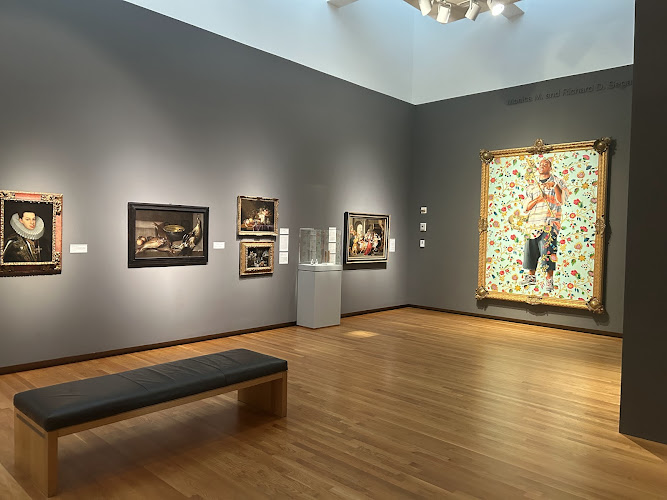
Nasher Museum of Art at Duke University
About Nasher Museum of Art at Duke University
Description
The Nasher Museum of Art at Duke University is one of those places that quietly sneaks up on you. You walk in expecting a pleasant college museum, maybe an hour’s worth of wandering, and suddenly it’s two and a half hours later and you’re still arguing with yourself about whether to grab coffee first or see one more gallery. That’s the kind of museum this is. It holds more than 10,000 artworks, which honestly sounds abstract until you’re standing there realizing the collection spans ancient pieces, contemporary installations, African art, American works, and things that don’t quite fit into neat labels. And I like that. It feels less like a checklist museum and more like a place where ideas bump into each other.
The building itself matters here. At roughly 65,000 square feet, the Nasher doesn’t overwhelm, but it gives the art room to breathe. Light pours in through carefully planned windows, and even if you’re not usually a “museum architecture” person, you’ll notice how calm the space feels. I remember visiting on a rainy afternoon once, soaked shoes and all, and the galleries felt like a reset button for my brain. That’s not marketing copy, that’s just what happened.
For travelers, especially those passing through Durham or exploring Duke University, the Nasher Museum of Art works well because it’s approachable. You don’t need an art history degree to enjoy it. Wall text is readable, not snooty. Exhibitions rotate regularly, so repeat visits actually make sense. And yes, there is a permanent collection anchoring everything, but the traveling exhibits often steal the show. Some are bold and challenging, others are quiet and reflective. It’s a mix, which mirrors the crowd you’ll see: students, families, serious art folks, and tourists who wandered in on a whim.
The vibe is mostly positive, and you can feel that in the way people move through the space. Still, it’s not flawless. Some galleries can feel sparse depending on what’s on view, and if you’re expecting blockbuster-style exhibits every time, you might be mildly underwhelmed. But that’s also kind of the point. The Nasher leans thoughtful over flashy. And if you ask me, that’s refreshing.
Key Features
- Permanent collection with over 10,000 works spanning global and historical perspectives
- Rotating traveling exhibitions that change the feel of the museum several times a year
- Modern, light-filled building designed to enhance how art is experienced
- On-site café and restaurant for mid-visit breaks or post-gallery decompression
- Gift shop with art books, unique souvenirs, and Duke-related items
- Free on-site parking, which is a small miracle for a university campus
- Family-friendly layout with space for kids to explore without feeling shushed constantly
- Wheelchair accessible entrances, restrooms, and parking areas
- Guided tours available for visitors who want deeper context
Best Time to Visit
If you ask me, weekday mornings are the sweet spot. Especially if Duke is in session. Students are in class, tour buses haven’t rolled in yet, and the galleries feel almost meditative. I once visited right when they opened, coffee still in hand, and had an entire room to myself for a good ten minutes. That doesn’t sound dramatic, but standing alone with a piece of art changes how you see it.
Weekends are busier, no surprise there. Families come through, which adds energy but also noise. If you’re traveling with kids, that might actually be a plus. The museum handles families well, and no one gives you the side-eye if a child asks loud questions. Late afternoons on weekends tend to thin out again, especially close to closing time.
Seasonally, spring and fall are ideal. Durham weather cooperates, and you can pair your museum visit with a walk around Duke’s campus. Summer can be hot, sure, but the museum’s climate-controlled galleries are a relief. Winter visits feel quieter, more introspective. There’s something nice about stepping inside from the cold and letting art slow you down a bit.
How to Get There
Getting to the Nasher Museum of Art is pretty straightforward, even if you’re not familiar with Duke University. If you’re driving, on-site parking makes life easier. And yes, it’s free, which still feels slightly unreal for a major university museum. The lot is close enough that you’re not trekking across campus, juggling bags and umbrellas.
If you’re staying in downtown Durham, a short drive or rideshare gets you there without fuss. Public transportation is an option too, though depending on where you’re coming from, it might take a bit longer. Personally, I’ve always driven or used a rideshare, and both were painless. Just give yourself an extra few minutes in case campus traffic is doing its thing. College campuses have their own rhythms, and they don’t always care about your schedule.
Tips for Visiting
First tip: don’t rush it. This isn’t a museum you speed-walk through just to say you went. Plan at least 90 minutes, more if you like to read wall text or sit and stare at a piece until it starts talking back to you. And yes, that happens sometimes.
Second, check what exhibitions are on view before you go. The rotating shows are a big draw, and knowing what’s currently installed helps you decide how much time to budget. I once went specifically for a traveling exhibition and ended up spending most of my time there, barely touching the permanent collection. No regrets.
Wear comfortable shoes. This sounds obvious, but the galleries encourage wandering, backtracking, and standing still for long stretches. Style can wait. Your feet will thank you.
If you’re traveling with kids, talk to them before you go. Not about rules, necessarily, but about what they might see. The Nasher doesn’t shy away from challenging themes, and that can actually be a great conversation starter. I’ve overheard some genuinely thoughtful kid questions in these galleries, and honestly, they’re often better than the adults’.
Don’t skip the café or restaurant. Even if you just grab a drink, it’s a nice way to pause and process what you’ve seen. Some of my favorite museum memories involve sitting quietly afterward, replaying images in my head while pretending not to eavesdrop on nearby conversations.
Finally, let yourself have opinions. You don’t have to like everything. Some works will click, others won’t, and that’s fine. The Nasher Museum of Art invites that kind of engagement. It’s not about passive admiration; it’s about thinking, questioning, and sometimes walking out slightly unsettled. And for a travel experience, that’s not a bad thing at all.
For travelers exploring Durham or Duke University, the Nasher Museum of Art offers more than a quick cultural stop. It’s a place to slow down, look closely, and maybe see the world—or at least a small piece of it—a little differently. And if you leave with one artwork stuck in your head for the rest of the day, well, that’s kind of the point.

Key Features
- Permanent collection with over 10,000 works spanning global and historical perspectives
- Rotating traveling exhibitions that change the feel of the museum several times a year
- Modern, light-filled building designed to enhance how art is experienced
- On-site café and restaurant for mid-visit breaks or post-gallery decompression
- Gift shop with art books, unique souvenirs, and Duke-related items
- Free on-site parking, which is a small miracle for a university campus
- Family-friendly layout with space for kids to explore without feeling shushed constantly
- Wheelchair accessible entrances, restrooms, and parking areas
More Details
Updated January 1, 2026
Table of Contents
- Description
- Key Features
- Best Time to Visit
- How to Get There
- Tips for Visiting
- Key Highlights
- Location
- Places to Stay Near Nasher Museum of Art at Duke University
- Find and Book a Tour
- Explore More Travel Guides
- Nearby Places You Might Like
- Traveler Reviews for Nasher Museum of Art at Duke University
- Share Your Experience
Description
The Nasher Museum of Art at Duke University is one of those places that quietly sneaks up on you. You walk in expecting a pleasant college museum, maybe an hour’s worth of wandering, and suddenly it’s two and a half hours later and you’re still arguing with yourself about whether to grab coffee first or see one more gallery. That’s the kind of museum this is. It holds more than 10,000 artworks, which honestly sounds abstract until you’re standing there realizing the collection spans ancient pieces, contemporary installations, African art, American works, and things that don’t quite fit into neat labels. And I like that. It feels less like a checklist museum and more like a place where ideas bump into each other.
The building itself matters here. At roughly 65,000 square feet, the Nasher doesn’t overwhelm, but it gives the art room to breathe. Light pours in through carefully planned windows, and even if you’re not usually a “museum architecture” person, you’ll notice how calm the space feels. I remember visiting on a rainy afternoon once, soaked shoes and all, and the galleries felt like a reset button for my brain. That’s not marketing copy, that’s just what happened.
For travelers, especially those passing through Durham or exploring Duke University, the Nasher Museum of Art works well because it’s approachable. You don’t need an art history degree to enjoy it. Wall text is readable, not snooty. Exhibitions rotate regularly, so repeat visits actually make sense. And yes, there is a permanent collection anchoring everything, but the traveling exhibits often steal the show. Some are bold and challenging, others are quiet and reflective. It’s a mix, which mirrors the crowd you’ll see: students, families, serious art folks, and tourists who wandered in on a whim.
The vibe is mostly positive, and you can feel that in the way people move through the space. Still, it’s not flawless. Some galleries can feel sparse depending on what’s on view, and if you’re expecting blockbuster-style exhibits every time, you might be mildly underwhelmed. But that’s also kind of the point. The Nasher leans thoughtful over flashy. And if you ask me, that’s refreshing.
Key Features
- Permanent collection with over 10,000 works spanning global and historical perspectives
- Rotating traveling exhibitions that change the feel of the museum several times a year
- Modern, light-filled building designed to enhance how art is experienced
- On-site café and restaurant for mid-visit breaks or post-gallery decompression
- Gift shop with art books, unique souvenirs, and Duke-related items
- Free on-site parking, which is a small miracle for a university campus
- Family-friendly layout with space for kids to explore without feeling shushed constantly
- Wheelchair accessible entrances, restrooms, and parking areas
- Guided tours available for visitors who want deeper context
Best Time to Visit
If you ask me, weekday mornings are the sweet spot. Especially if Duke is in session. Students are in class, tour buses haven’t rolled in yet, and the galleries feel almost meditative. I once visited right when they opened, coffee still in hand, and had an entire room to myself for a good ten minutes. That doesn’t sound dramatic, but standing alone with a piece of art changes how you see it.
Weekends are busier, no surprise there. Families come through, which adds energy but also noise. If you’re traveling with kids, that might actually be a plus. The museum handles families well, and no one gives you the side-eye if a child asks loud questions. Late afternoons on weekends tend to thin out again, especially close to closing time.
Seasonally, spring and fall are ideal. Durham weather cooperates, and you can pair your museum visit with a walk around Duke’s campus. Summer can be hot, sure, but the museum’s climate-controlled galleries are a relief. Winter visits feel quieter, more introspective. There’s something nice about stepping inside from the cold and letting art slow you down a bit.
How to Get There
Getting to the Nasher Museum of Art is pretty straightforward, even if you’re not familiar with Duke University. If you’re driving, on-site parking makes life easier. And yes, it’s free, which still feels slightly unreal for a major university museum. The lot is close enough that you’re not trekking across campus, juggling bags and umbrellas.
If you’re staying in downtown Durham, a short drive or rideshare gets you there without fuss. Public transportation is an option too, though depending on where you’re coming from, it might take a bit longer. Personally, I’ve always driven or used a rideshare, and both were painless. Just give yourself an extra few minutes in case campus traffic is doing its thing. College campuses have their own rhythms, and they don’t always care about your schedule.
Tips for Visiting
First tip: don’t rush it. This isn’t a museum you speed-walk through just to say you went. Plan at least 90 minutes, more if you like to read wall text or sit and stare at a piece until it starts talking back to you. And yes, that happens sometimes.
Second, check what exhibitions are on view before you go. The rotating shows are a big draw, and knowing what’s currently installed helps you decide how much time to budget. I once went specifically for a traveling exhibition and ended up spending most of my time there, barely touching the permanent collection. No regrets.
Wear comfortable shoes. This sounds obvious, but the galleries encourage wandering, backtracking, and standing still for long stretches. Style can wait. Your feet will thank you.
If you’re traveling with kids, talk to them before you go. Not about rules, necessarily, but about what they might see. The Nasher doesn’t shy away from challenging themes, and that can actually be a great conversation starter. I’ve overheard some genuinely thoughtful kid questions in these galleries, and honestly, they’re often better than the adults’.
Don’t skip the café or restaurant. Even if you just grab a drink, it’s a nice way to pause and process what you’ve seen. Some of my favorite museum memories involve sitting quietly afterward, replaying images in my head while pretending not to eavesdrop on nearby conversations.
Finally, let yourself have opinions. You don’t have to like everything. Some works will click, others won’t, and that’s fine. The Nasher Museum of Art invites that kind of engagement. It’s not about passive admiration; it’s about thinking, questioning, and sometimes walking out slightly unsettled. And for a travel experience, that’s not a bad thing at all.
For travelers exploring Durham or Duke University, the Nasher Museum of Art offers more than a quick cultural stop. It’s a place to slow down, look closely, and maybe see the world—or at least a small piece of it—a little differently. And if you leave with one artwork stuck in your head for the rest of the day, well, that’s kind of the point.
Key Highlights
- Permanent collection with over 10,000 works spanning global and historical perspectives
- Rotating traveling exhibitions that change the feel of the museum several times a year
- Modern, light-filled building designed to enhance how art is experienced
- On-site café and restaurant for mid-visit breaks or post-gallery decompression
- Gift shop with art books, unique souvenirs, and Duke-related items
- Free on-site parking, which is a small miracle for a university campus
- Family-friendly layout with space for kids to explore without feeling shushed constantly
- Wheelchair accessible entrances, restrooms, and parking areas
Location
Places to Stay Near Nasher Museum of Art at Duke University
Find and Book a Tour
Explore More Travel Guides
No reviews found! Be the first to review!
Traveler Reviews for Nasher Museum of Art at Duke University
There are no reviews yet. Be the first one to write one.
Have you visited Nasher Museum of Art at Duke University? Help other travelers by sharing your review.
Find Accommodations Nearby
Recommended Tours & Activities
Visitor Reviews
There are no reviews yet. Be the first one to write one.
Share Your Experience
Have you visited Nasher Museum of Art at Duke University? Help other travelers by leaving a review.