
Museum of Glass
About Museum of Glass
Description
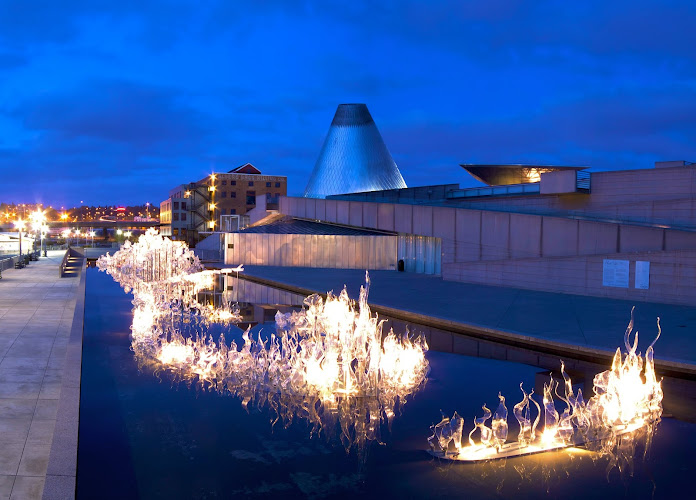
The Museum of Glass in Tacoma is presented as a dedicated showcase of glass art that both honors the medium's history and pushes its boundaries. Housed in a striking building beside the water, the museum centers around a cone-shaped hot shop where visitors can watch skilled teams and visiting artists heat, shape, and blow molten glass into forms that sometimes seem impossible. This live glassmaking element is not a side-show; it is the pulsating heart of the place, and it changes the visitor experience from passive viewing to lively, sensory engagement.
Exhibits rotate between contemporary commissions, historical pieces, and site-specific installations that take advantage of light, reflection, and the unique behaviors of glass. Indoor galleries present carefully curated work — studio art, sculptural forms, and experimental pieces — while the outdoor plazas display larger-scale public artworks that interact with the Pacific Northwest sky and the nearby waterway. The museum’s collection balances local Northwest voices with artists from around the world, so visitors often find unexpected juxtapositions: a fragile, jewel-like vessel beside a monumental, architectural glass installation that plays off sunlight in surprising ways.
What sets this museum apart from many other art institutions is the transparency of process. The cone-shaped studio is deliberately visible; visitors can see teams in action, often accompanied by short talks or demonstrations. Those hot shop sessions can be equal parts theater and workshop: the heat, the speed, the choreography of tools and tongs create a kind of improvised performance that’s mesmerizing even for the person who thinks they don’t care about craft. There’s a theater adjacent to the working studio for scheduled performances and discussions, which helps frame the making process as both craft and contemporary art practice.
Accessibility and visitor amenities have been considered in practical ways. There are wheelchair-accessible entrances, parking, and restrooms, and family-friendly facilities including changing tables. Practical touches like a cafe, restaurant options nearby, and a well-stocked gift shop mean a visit can stretch from a quick one-gallery stop to a relaxed half-day outing. The museum runs guided tours and offers onsite educational programs — some hands-on and kid-friendly — that explain techniques like glassblowing, kiln-forming, and cold-working. Those educational touchpoints help demystify the medium: after a short tour, even a first-time visitor often leaves with a clearer sense of how scale, temperature, and time shape what glass becomes.
The Museum of Glass also acts as an artist hub. A residency program invites visiting artists to work on-site, often producing pieces that are later shown in temporary exhibitions. That connection to working artists is visible: the roster of temporary shows usually includes contemporary voices testing fresh approaches to glass, plus occasional retrospectives that map an artist’s evolution. The result is a program that feels alive and current. It’s different each season; if someone loved a previous visit, there’s a good chance the next trip will reveal something entirely new.
A notable aspect — and something that tends to surprise first-time visitors — is how much the museum encourages observation. Benches and vantage points are placed strategically so one can linger and watch glassmaking teams in the hot shop, or stand quietly in a gallery to watch light move across an installation over time. That sense of invited patience is not accidental. Glass often reveals itself slowly: an angle changes, the light warms, and suddenly a piece reads differently. People who rush through may miss the subtle shifts that make the medium magical.
On the practical side, admission is charged, and special exhibitions or performances may carry additional fees. The museum provides several service options onsite, including guided tours and live performances in the hot shop amphitheater. Some programming requires advance booking, especially for popular demonstrations or workshop experiences during weekends and holiday periods. Visitors who like to plan ahead will appreciate this; those who prefer spontaneity can often find last-minute demonstrations or open studio viewing on site, but it's a bit of a gamble.
There’s also an often-overlooked logistical detail that matters to modern travelers: EV charging. The site supports a small number of slow J1772 charging connectors. They are useful, but they are limited in number; during busy afternoons those chargers can be occupied. That’s the kind of thing a practical traveler will want to note (and maybe build into their day: plan a longer lunch or gallery time if topping up a vehicle is part of the plan).
Visitors with young children will find the museum surprisingly welcoming. Kid-focused tours and workshops occasionally run, and many families report that children are genuinely captivated by the heat and motion of the hot shop. The museum provides changing tables and family-friendly restrooms, and the gift shop carries items suitable for a wide range of ages. That said, the hot shop area can be loud and bright; families with very small children or infants might prefer to keep a safe distance during peak demonstration times.
The museum sits in a wider waterfront context, which enhances the overall visit. Outdoor sculptures and installations sometimes reference the nearby waterway and industrial history of the area, creating an interplay between site and artwork that rewards people who take a moment to step outside the galleries. The surrounding walkways make for pleasant circulation before or after a visit, and they often feature additional public art that expands the story of glass as a medium that interacts with the environment as well as with light.
Staff and volunteers typically provide a warm, knowledgeable presence. Gallery attendants will happily explain technique, and docents (when available) often share behind-the-scenes anecdotes about the hot shop teams or the provenance of a major work. Those small talks can transform a technical demonstration into a personal story — how a visiting artist wrestled with a commission, or how a community project came together. Such stories resonate longer than the memory of a single piece; they’re what make repeat visits feel rewarding.
As with any public institution, reactions are mixed sometimes. Some visitors rave about the theatrical quality of live glassblowing and the boldness of certain installations; others wish for more space in galleries or more frequent rotations of the permanent collection. The museum clearly listens and adapts, though: programming changes, educational offerings expand, and temporary exhibitions often respond to contemporary conversations about material, craft, and place. In short, expect variety. Expect a few things that delight and a few that provoke opinions. That’s part of the museum’s character — it aims to spark conversation rather than provide tidy answers.
Photography policies usually allow non-flash images in galleries, but special exhibitions or performances sometimes restrict photography. The hot shop area is a popular place for photos, and visitors who want good images should plan to visit during daylight hours when natural light complements interior lighting. The interplay of natural and artificial light can make photographs sing, but it can also be tricky; glass photographs often require patience and a little experimentation with angles.
Finally, there’s an intangible quality to the Museum of Glass that is hard to summarize in a bullet list but easy to feel once inside: a sense that glass is not just an object but a conversation between maker, material, and viewer. The museum frames that conversation clearly. It shows process, it places objects in conversation with architecture and light, and it offers programs that invite further participation. For travelers interested in craft, contemporary art, or simply in seeing something made live before their eyes, the museum offers an experience that lingers. And for someone who once watched a demonstration and walked away thinking, I had no idea glassmaking could be like that, well — that reaction happens a lot here.
Key Features
More Details
Updated August 30, 2025
Table of Contents
Description
The Museum of Glass in Tacoma is presented as a dedicated showcase of glass art that both honors the medium’s history and pushes its boundaries. Housed in a striking building beside the water, the museum centers around a cone-shaped hot shop where visitors can watch skilled teams and visiting artists heat, shape, and blow molten glass into forms that sometimes seem impossible. This live glassmaking element is not a side-show; it is the pulsating heart of the place, and it changes the visitor experience from passive viewing to lively, sensory engagement.
Exhibits rotate between contemporary commissions, historical pieces, and site-specific installations that take advantage of light, reflection, and the unique behaviors of glass. Indoor galleries present carefully curated work — studio art, sculptural forms, and experimental pieces — while the outdoor plazas display larger-scale public artworks that interact with the Pacific Northwest sky and the nearby waterway. The museum’s collection balances local Northwest voices with artists from around the world, so visitors often find unexpected juxtapositions: a fragile, jewel-like vessel beside a monumental, architectural glass installation that plays off sunlight in surprising ways.
What sets this museum apart from many other art institutions is the transparency of process. The cone-shaped studio is deliberately visible; visitors can see teams in action, often accompanied by short talks or demonstrations. Those hot shop sessions can be equal parts theater and workshop: the heat, the speed, the choreography of tools and tongs create a kind of improvised performance that’s mesmerizing even for the person who thinks they don’t care about craft. There’s a theater adjacent to the working studio for scheduled performances and discussions, which helps frame the making process as both craft and contemporary art practice.
Accessibility and visitor amenities have been considered in practical ways. There are wheelchair-accessible entrances, parking, and restrooms, and family-friendly facilities including changing tables. Practical touches like a cafe, restaurant options nearby, and a well-stocked gift shop mean a visit can stretch from a quick one-gallery stop to a relaxed half-day outing. The museum runs guided tours and offers onsite educational programs — some hands-on and kid-friendly — that explain techniques like glassblowing, kiln-forming, and cold-working. Those educational touchpoints help demystify the medium: after a short tour, even a first-time visitor often leaves with a clearer sense of how scale, temperature, and time shape what glass becomes.
The Museum of Glass also acts as an artist hub. A residency program invites visiting artists to work on-site, often producing pieces that are later shown in temporary exhibitions. That connection to working artists is visible: the roster of temporary shows usually includes contemporary voices testing fresh approaches to glass, plus occasional retrospectives that map an artist’s evolution. The result is a program that feels alive and current. It’s different each season; if someone loved a previous visit, there’s a good chance the next trip will reveal something entirely new.
A notable aspect — and something that tends to surprise first-time visitors — is how much the museum encourages observation. Benches and vantage points are placed strategically so one can linger and watch glassmaking teams in the hot shop, or stand quietly in a gallery to watch light move across an installation over time. That sense of invited patience is not accidental. Glass often reveals itself slowly: an angle changes, the light warms, and suddenly a piece reads differently. People who rush through may miss the subtle shifts that make the medium magical.
On the practical side, admission is charged, and special exhibitions or performances may carry additional fees. The museum provides several service options onsite, including guided tours and live performances in the hot shop amphitheater. Some programming requires advance booking, especially for popular demonstrations or workshop experiences during weekends and holiday periods. Visitors who like to plan ahead will appreciate this; those who prefer spontaneity can often find last-minute demonstrations or open studio viewing on site, but it’s a bit of a gamble.
There’s also an often-overlooked logistical detail that matters to modern travelers: EV charging. The site supports a small number of slow J1772 charging connectors. They are useful, but they are limited in number; during busy afternoons those chargers can be occupied. That’s the kind of thing a practical traveler will want to note (and maybe build into their day: plan a longer lunch or gallery time if topping up a vehicle is part of the plan).
Visitors with young children will find the museum surprisingly welcoming. Kid-focused tours and workshops occasionally run, and many families report that children are genuinely captivated by the heat and motion of the hot shop. The museum provides changing tables and family-friendly restrooms, and the gift shop carries items suitable for a wide range of ages. That said, the hot shop area can be loud and bright; families with very small children or infants might prefer to keep a safe distance during peak demonstration times.
The museum sits in a wider waterfront context, which enhances the overall visit. Outdoor sculptures and installations sometimes reference the nearby waterway and industrial history of the area, creating an interplay between site and artwork that rewards people who take a moment to step outside the galleries. The surrounding walkways make for pleasant circulation before or after a visit, and they often feature additional public art that expands the story of glass as a medium that interacts with the environment as well as with light.
Staff and volunteers typically provide a warm, knowledgeable presence. Gallery attendants will happily explain technique, and docents (when available) often share behind-the-scenes anecdotes about the hot shop teams or the provenance of a major work. Those small talks can transform a technical demonstration into a personal story — how a visiting artist wrestled with a commission, or how a community project came together. Such stories resonate longer than the memory of a single piece; they’re what make repeat visits feel rewarding.
As with any public institution, reactions are mixed sometimes. Some visitors rave about the theatrical quality of live glassblowing and the boldness of certain installations; others wish for more space in galleries or more frequent rotations of the permanent collection. The museum clearly listens and adapts, though: programming changes, educational offerings expand, and temporary exhibitions often respond to contemporary conversations about material, craft, and place. In short, expect variety. Expect a few things that delight and a few that provoke opinions. That’s part of the museum’s character — it aims to spark conversation rather than provide tidy answers.
Photography policies usually allow non-flash images in galleries, but special exhibitions or performances sometimes restrict photography. The hot shop area is a popular place for photos, and visitors who want good images should plan to visit during daylight hours when natural light complements interior lighting. The interplay of natural and artificial light can make photographs sing, but it can also be tricky; glass photographs often require patience and a little experimentation with angles.
Finally, there’s an intangible quality to the Museum of Glass that is hard to summarize in a bullet list but easy to feel once inside: a sense that glass is not just an object but a conversation between maker, material, and viewer. The museum frames that conversation clearly. It shows process, it places objects in conversation with architecture and light, and it offers programs that invite further participation. For travelers interested in craft, contemporary art, or simply in seeing something made live before their eyes, the museum offers an experience that lingers. And for someone who once watched a demonstration and walked away thinking, I had no idea glassmaking could be like that, well — that reaction happens a lot here.
Key Highlights
Museum of Glass
Location
Places to Stay Near Museum of Glass
Find and Book a Tour
Explore More Travel Guides
No reviews found! Be the first to review!
Traveler Reviews for Museum of Glass
There are no reviews yet. Be the first one to write one.
Have you visited Museum of Glass? Help other travelers by sharing your review.
You Might Also Like

Cummings Park
Point Defiance Park
Children's Museum of Tacoma
Find Accommodations Nearby
Recommended Tours & Activities
Visitor Reviews
There are no reviews yet. Be the first one to write one.
Share Your Experience
Have you visited Museum of Glass? Help other travelers by leaving a review.