
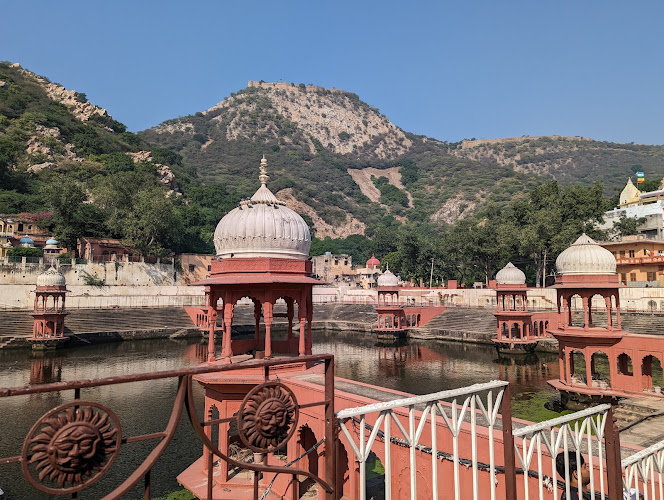
Moti Doongri
About Moti Doongri
Description
Moti Doongri is one of those places in Jaipur that quietly steals your heart before you even realize it. Perched on a small hill right in the middle of the city, this fort-and-temple complex feels like a slice of old-world charm tucked into the chaos of modern life. The fort itself, built in the 18th century, was once the royal residence of Maharaja Madho Singh’s son and later home to the beloved Maharani Gayatri Devi. Its design—an unusual blend of Rajput architecture and a Scottish castle—makes it stand out among Rajasthan’s many forts. You can’t go inside the fort since it’s privately owned, but even from the outside, it’s a sight worth pausing for. The intricate stonework, the symmetry, and the way it sits elegantly above the city—it’s all rather magical, especially when the golden light of dusk hits those old stones just right.
At the base of the hill lies the famous Moti Doongri Ganesh Temple, which draws devotees and travelers alike. The temple is always buzzing with life—bells ringing, incense wafting through the air, and locals stopping by for a quick prayer before heading to work. I remember visiting early one morning, and there was this calm energy about the place. The priest offered me a sweet laddu, and I sat quietly watching the sunrise over Jaipur. It’s moments like that which make traveling in Rajasthan feel deeply personal.
While the fort and temple take center stage, the area around Moti Doongri also offers some of the best panoramic views of the Pink City. From certain angles, you can see the grand Birla Mandir below, with its white marble glowing in the sunlight. It’s a photographer’s dream, honestly. And even if you’re not into photography, you’ll probably find yourself reaching for your phone to capture the view anyway.
Key Features
- Architectural Fusion: The fort combines Rajput and Scottish castle designs, giving it a distinctive European flair that’s rare in Rajasthan.
- Historical Significance: Once home to Jaipur’s royal family, including Maharani Gayatri Devi, this fort carries centuries of royal legacy.
- Moti Doongri Ganesh Temple: A revered temple at the base of the hill, attracting both devotees and curious travelers year-round.
- Private Ownership: The fort is not open to the public, preserving its exclusivity and mystique.
- Scenic Views: Offers sweeping views of Jaipur, including the nearby Birla Mandir and city skyline.
- Cultural Connection: The temple is a hub of local faith, with daily rituals and festivals that reflect the spiritual rhythm of Jaipur.
Best Time to Visit
If you ask me, winter is hands down the best time to visit Moti Doongri. Between November and February, the weather is pleasantly cool, and the skies are clear—perfect for exploring the temple or just strolling around the fort’s base. Summers in Jaipur can be brutally hot (we’re talking 40°C and above), so unless you’re used to the desert heat, it’s best to avoid the midday hours.
Early mornings and evenings are particularly lovely. The temple opens early, and if you catch the first aarti, you’ll experience a peaceful side of Jaipur that most tourists miss. During festivals like Ganesh Chaturthi, the place transforms completely—crowds, lights, music, and a sense of shared devotion that’s hard to put into words. Even if you’re not religious, witnessing that kind of energy is something special.
How to Get There
Getting to Moti Doongri is pretty straightforward. If you’re staying anywhere in central Jaipur, it’s just a short drive away. Auto-rickshaws and taxis are easy to find, and most drivers know the spot well—it’s one of the city’s landmarks. For those who like walking, it’s about 2 kilometers from the city center, and the route takes you past some interesting local scenes.
If you’re coming from Jaipur Railway Station or the airport, it’s roughly a 20–30 minute drive depending on traffic. Personally, I like taking a tuk-tuk—it’s more fun, and you get to feel the pulse of the city as you zip through the streets. Just make sure to agree on the fare before you hop in.
Tips for Visiting
Here’s the thing about Moti Doongri—it’s not a place you rush through. It’s better experienced slowly, with time to breathe in the atmosphere. Here are a few tips that might help make your visit smoother and more enjoyable:
- Respect the Temple Space: The Ganesh Temple is an active place of worship. Dress modestly, remove your shoes, and be mindful of those praying.
- No Entry to the Fort: The fort itself is privately owned, so while you can admire it from the outside, don’t expect to go inside. Still, the exterior is absolutely worth photographing.
- Visit Early Morning: If you can, go around sunrise. The light is soft, the crowd is thinner, and the air feels fresh. Plus, the chants from the temple create an almost meditative vibe.
- Combine with Nearby Attractions: Birla Mandir and Albert Hall Museum are close by—perfect for making a half-day itinerary.
- Carry Water and Sun Protection: Jaipur’s sun can be harsh, even in winter. A hat, sunglasses, and a bottle of water go a long way.
- Photography Etiquette: While photography is allowed outside, avoid taking pictures inside the temple unless permitted. Always ask first—it’s just good manners.
- Local Snacks: Don’t miss trying street food nearby. There’s usually a vendor selling fresh kachoris or masala chai near the temple gate. I still remember the crispy onion kachori I had there—it was divine!
Moti Doongri isn’t the kind of attraction where you check off boxes and move on. It’s more about soaking in the atmosphere—the sound of bells, the sight of the fort above, the chatter of locals, and the quiet moments of reflection that sneak up on you. Whether you’re a history buff, a photographer, or just someone who enjoys discovering the soul of a place, Moti Doongri has a way of leaving a quiet mark on your memory.
And maybe that’s what makes it special. It’s not loud or flashy. It doesn’t demand attention. It just sits there, timeless and graceful, watching over Jaipur as it has for centuries. And if you’re lucky enough to spend a few moments there, you’ll understand why locals hold it so close to their hearts.
Key Features
- Key Features
- Best Time to Visit
- How to Get There
- Tips for Visiting
More Details
Updated December 1, 2025
Table of Contents
Description
Moti Doongri is one of those places in Jaipur that quietly steals your heart before you even realize it. Perched on a small hill right in the middle of the city, this fort-and-temple complex feels like a slice of old-world charm tucked into the chaos of modern life. The fort itself, built in the 18th century, was once the royal residence of Maharaja Madho Singh’s son and later home to the beloved Maharani Gayatri Devi. Its design—an unusual blend of Rajput architecture and a Scottish castle—makes it stand out among Rajasthan’s many forts. You can’t go inside the fort since it’s privately owned, but even from the outside, it’s a sight worth pausing for. The intricate stonework, the symmetry, and the way it sits elegantly above the city—it’s all rather magical, especially when the golden light of dusk hits those old stones just right.
At the base of the hill lies the famous Moti Doongri Ganesh Temple, which draws devotees and travelers alike. The temple is always buzzing with life—bells ringing, incense wafting through the air, and locals stopping by for a quick prayer before heading to work. I remember visiting early one morning, and there was this calm energy about the place. The priest offered me a sweet laddu, and I sat quietly watching the sunrise over Jaipur. It’s moments like that which make traveling in Rajasthan feel deeply personal.
While the fort and temple take center stage, the area around Moti Doongri also offers some of the best panoramic views of the Pink City. From certain angles, you can see the grand Birla Mandir below, with its white marble glowing in the sunlight. It’s a photographer’s dream, honestly. And even if you’re not into photography, you’ll probably find yourself reaching for your phone to capture the view anyway.
Key Features
- Architectural Fusion: The fort combines Rajput and Scottish castle designs, giving it a distinctive European flair that’s rare in Rajasthan.
- Historical Significance: Once home to Jaipur’s royal family, including Maharani Gayatri Devi, this fort carries centuries of royal legacy.
- Moti Doongri Ganesh Temple: A revered temple at the base of the hill, attracting both devotees and curious travelers year-round.
- Private Ownership: The fort is not open to the public, preserving its exclusivity and mystique.
- Scenic Views: Offers sweeping views of Jaipur, including the nearby Birla Mandir and city skyline.
- Cultural Connection: The temple is a hub of local faith, with daily rituals and festivals that reflect the spiritual rhythm of Jaipur.
Best Time to Visit
If you ask me, winter is hands down the best time to visit Moti Doongri. Between November and February, the weather is pleasantly cool, and the skies are clear—perfect for exploring the temple or just strolling around the fort’s base. Summers in Jaipur can be brutally hot (we’re talking 40°C and above), so unless you’re used to the desert heat, it’s best to avoid the midday hours.
Early mornings and evenings are particularly lovely. The temple opens early, and if you catch the first aarti, you’ll experience a peaceful side of Jaipur that most tourists miss. During festivals like Ganesh Chaturthi, the place transforms completely—crowds, lights, music, and a sense of shared devotion that’s hard to put into words. Even if you’re not religious, witnessing that kind of energy is something special.
How to Get There
Getting to Moti Doongri is pretty straightforward. If you’re staying anywhere in central Jaipur, it’s just a short drive away. Auto-rickshaws and taxis are easy to find, and most drivers know the spot well—it’s one of the city’s landmarks. For those who like walking, it’s about 2 kilometers from the city center, and the route takes you past some interesting local scenes.
If you’re coming from Jaipur Railway Station or the airport, it’s roughly a 20–30 minute drive depending on traffic. Personally, I like taking a tuk-tuk—it’s more fun, and you get to feel the pulse of the city as you zip through the streets. Just make sure to agree on the fare before you hop in.
Tips for Visiting
Here’s the thing about Moti Doongri—it’s not a place you rush through. It’s better experienced slowly, with time to breathe in the atmosphere. Here are a few tips that might help make your visit smoother and more enjoyable:
- Respect the Temple Space: The Ganesh Temple is an active place of worship. Dress modestly, remove your shoes, and be mindful of those praying.
- No Entry to the Fort: The fort itself is privately owned, so while you can admire it from the outside, don’t expect to go inside. Still, the exterior is absolutely worth photographing.
- Visit Early Morning: If you can, go around sunrise. The light is soft, the crowd is thinner, and the air feels fresh. Plus, the chants from the temple create an almost meditative vibe.
- Combine with Nearby Attractions: Birla Mandir and Albert Hall Museum are close by—perfect for making a half-day itinerary.
- Carry Water and Sun Protection: Jaipur’s sun can be harsh, even in winter. A hat, sunglasses, and a bottle of water go a long way.
- Photography Etiquette: While photography is allowed outside, avoid taking pictures inside the temple unless permitted. Always ask first—it’s just good manners.
- Local Snacks: Don’t miss trying street food nearby. There’s usually a vendor selling fresh kachoris or masala chai near the temple gate. I still remember the crispy onion kachori I had there—it was divine!
Moti Doongri isn’t the kind of attraction where you check off boxes and move on. It’s more about soaking in the atmosphere—the sound of bells, the sight of the fort above, the chatter of locals, and the quiet moments of reflection that sneak up on you. Whether you’re a history buff, a photographer, or just someone who enjoys discovering the soul of a place, Moti Doongri has a way of leaving a quiet mark on your memory.
And maybe that’s what makes it special. It’s not loud or flashy. It doesn’t demand attention. It just sits there, timeless and graceful, watching over Jaipur as it has for centuries. And if you’re lucky enough to spend a few moments there, you’ll understand why locals hold it so close to their hearts.
Key Highlights
- Key Features
- Best Time to Visit
- How to Get There
- Tips for Visiting
Location
Places to Stay Near Moti Doongri
Find and Book a Tour
Explore More Travel Guides
No reviews found! Be the first to review!
Traveler Reviews for Moti Doongri
There are no reviews yet. Be the first one to write one.
Have you visited Moti Doongri? Help other travelers by sharing your review.
You Might Also Like

Nehru Children Park
4 K Park
Moosi Maharani Ki Chhatri
Find Accommodations Nearby
Recommended Tours & Activities
Visitor Reviews
There are no reviews yet. Be the first one to write one.
Share Your Experience
Have you visited Moti Doongri? Help other travelers by leaving a review.