
Monument de l’Unité
About Monument de l’Unité
Description
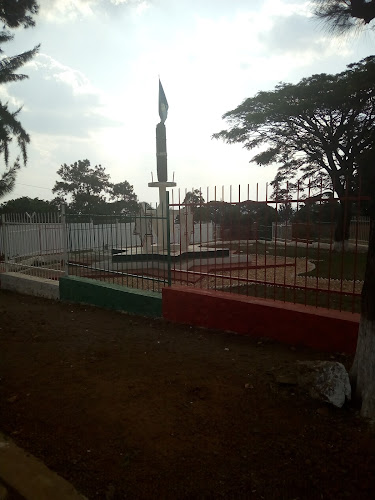
The Monument de l’Unité in Gitega, Burundi, stands as a strong symbol of national identity and peace. It’s one of those places that doesn’t just look impressive—it feels significant. Built during a time when the country was striving to heal and move forward, this monument captures the essence of unity that Burundians hold dear. You can almost sense the weight of history in the air when standing before it. I remember a local guide once saying, “This isn’t just stone—it’s our story.” And honestly, that stuck with me.
Surrounded by Gitega’s rolling hills and lush greenery, the monument offers a calm, almost meditative atmosphere. There’s something poetic about how quiet it gets here, even though it’s in the heart of the city. The structure itself rises with clean, elegant lines, topped by the blue flag of unity that flutters against the sky. It’s not overly ornate, but that’s part of its charm—it’s simple, strong, and meaningful. Visitors often describe feeling a mix of awe and reflection, as if the monument invites you to pause and think about what unity really means, not just for Burundi but for humanity as a whole.
Families often visit together, and yes, it’s a good spot for kids too. Children seem to love running around the open plaza, while parents take photos or read the plaques that tell the story behind the monument’s creation. The educational part is subtle but powerful—there’s a sense that every visitor leaves knowing a little more about the country’s journey toward peace. And if you’re into photography, the Monument de l’Unité is pure gold. The way the sunlight hits the stone, especially in the late afternoon, makes for some truly stunning shots.
Now, it’s not a flashy tourist attraction with souvenir stands or cafes nearby, and that’s actually refreshing. It’s a place to slow down, breathe, and just take it all in. You might see a few locals sitting quietly, some even praying or reflecting. It’s that kind of place—humble yet deeply meaningful. Some travelers mention being asked for a small fee to get closer for photos, which is fairly common in Burundi, so it’s best to carry a bit of local currency just in case. But honestly, the experience is worth every franc.
Key Features
- Symbol of National Unity: Represents Burundi’s commitment to peace and reconciliation after years of division.
- Architectural Simplicity: A tall, slender column crowned by the blue flag of unity, surrounded by circular steps that invite reflection.
- Educational Plaques: Informative displays explain the monument’s history and cultural significance.
- Scenic Setting: Offers panoramic views of Gitega’s green hills and serene landscapes.
- Family-Friendly Atmosphere: Safe and spacious area suitable for children and group visits.
- Photography Opportunities: Ideal lighting during early morning and late afternoon for dramatic photos.
- Peaceful Ambiance: A quiet environment perfect for contemplation and relaxation.
What I personally love most about the Monument de l’Unité is that it’s not trying to impress you with grandeur—it’s trying to connect with you emotionally. It’s one of those places where simplicity carries more power than extravagance. And that’s something you don’t find everywhere.
Best Time to Visit
If you ask me, the best time to visit the Monument de l’Unité is either early in the morning or just before sunset. The light during those hours hits the monument in the most beautiful way, casting long shadows and giving the stone a warm, golden glow. Plus, it’s quieter then—you’ll likely have the place almost to yourself, which makes the experience even more special.
Weather-wise, Gitega has a mild climate for most of the year, but the dry season (from June to September) is particularly pleasant for sightseeing. The skies are clearer, and the surrounding hills look extra vibrant after the rains. If you visit during the rainy season, bring a light jacket or umbrella—the showers can come out of nowhere, but they usually don’t last long. And honestly, the monument looks quite dramatic against a cloudy sky, so even that can be a good photo opportunity.
Weekdays tend to be quieter, while weekends might see more local visitors, especially families. If you enjoy meeting locals and hearing their stories, weekends can be a good time to go. But if you prefer peace and solitude, stick to weekday mornings. Either way, you’ll find the monument welcoming and peaceful.
How to Get There
Reaching the Monument de l’Unité is fairly straightforward once you’re in Gitega. The city itself is well-connected by road from Bujumbura, Burundi’s largest city, with the drive taking roughly two to three hours depending on traffic and road conditions. The journey is quite scenic—you’ll pass through rolling hills, small villages, and patches of farmland that give you a real sense of Burundian countryside life.
Most travelers hire a local driver or take a taxi from the city center. Public transport options like minibuses are available, but they can be a bit unpredictable. If you’re the adventurous type, renting a motorbike can be a fun way to explore the area at your own pace. Just be sure to check your fuel before setting off—gas stations aren’t always easy to find outside the main roads.
Once you arrive, you’ll find parking nearby, and the monument is easy to spot. It’s tall enough to serve as a landmark, visible from several points in the city. There’s no official visitor center, but locals are usually happy to point you in the right direction or share a bit of history if you ask. That’s one of the things I love about traveling in Burundi—people are genuinely friendly and curious about visitors.
Tips for Visiting
Here are a few practical (and slightly personal) tips that might help you make the most of your visit:
- Bring Cash: A small entrance or photography fee may be requested, so having local currency on hand is useful. ATMs aren’t always reliable in Gitega.
- Dress Respectfully: It’s a national monument, so modest clothing is appreciated. Lightweight, breathable fabrics work best for the climate.
- Take Your Time: Don’t rush your visit. Sit for a while, watch the flag move in the breeze, and let the place sink in. There’s something peaceful about just being still here.
- Talk to Locals: If you get the chance, chat with people nearby. Many have personal stories about what unity means to them, and those conversations can be deeply moving.
- Photography: The monument photographs beautifully, but try to capture more than just the structure—include the surrounding hills or the people visiting. It tells a richer story.
- Combine with Nearby Attractions: Gitega has other interesting sites, including the National Museum of Burundi. Visiting both gives you a fuller picture of the country’s culture and history.
- Stay Hydrated: It can get warm, especially around midday, so bring water. There aren’t many vendors nearby.
One thing I’ll say—don’t expect a bustling tourist scene here. And that’s the beauty of it. The Monument de l’Unité feels authentic, untouched by commercialization. It’s a place where you can connect with the heart of Burundi, reflect on its history, and maybe even reflect on your own sense of unity and peace. I remember sitting on one of the circular steps one afternoon, just watching the flag ripple in the wind, and thinking how powerful quiet places can be. It’s not about grandeur—it’s about meaning. And this monument has plenty of that.
So if you ever find yourself in Gitega, make time for the Monument de l’Unité. Go not just to see it, but to feel it. Because sometimes, the simplest places leave the deepest impressions.
Key Features
- Key Features
- Best Time to Visit
- How to Get There
- Tips for Visiting
More Details
Updated October 8, 2025
Description
The Monument de l’Unité in Gitega, Burundi, stands as a strong symbol of national identity and peace. It’s one of those places that doesn’t just look impressive—it feels significant. Built during a time when the country was striving to heal and move forward, this monument captures the essence of unity that Burundians hold dear. You can almost sense the weight of history in the air when standing before it. I remember a local guide once saying, “This isn’t just stone—it’s our story.” And honestly, that stuck with me.
Surrounded by Gitega’s rolling hills and lush greenery, the monument offers a calm, almost meditative atmosphere. There’s something poetic about how quiet it gets here, even though it’s in the heart of the city. The structure itself rises with clean, elegant lines, topped by the blue flag of unity that flutters against the sky. It’s not overly ornate, but that’s part of its charm—it’s simple, strong, and meaningful. Visitors often describe feeling a mix of awe and reflection, as if the monument invites you to pause and think about what unity really means, not just for Burundi but for humanity as a whole.
Families often visit together, and yes, it’s a good spot for kids too. Children seem to love running around the open plaza, while parents take photos or read the plaques that tell the story behind the monument’s creation. The educational part is subtle but powerful—there’s a sense that every visitor leaves knowing a little more about the country’s journey toward peace. And if you’re into photography, the Monument de l’Unité is pure gold. The way the sunlight hits the stone, especially in the late afternoon, makes for some truly stunning shots.
Now, it’s not a flashy tourist attraction with souvenir stands or cafes nearby, and that’s actually refreshing. It’s a place to slow down, breathe, and just take it all in. You might see a few locals sitting quietly, some even praying or reflecting. It’s that kind of place—humble yet deeply meaningful. Some travelers mention being asked for a small fee to get closer for photos, which is fairly common in Burundi, so it’s best to carry a bit of local currency just in case. But honestly, the experience is worth every franc.
Key Features
- Symbol of National Unity: Represents Burundi’s commitment to peace and reconciliation after years of division.
- Architectural Simplicity: A tall, slender column crowned by the blue flag of unity, surrounded by circular steps that invite reflection.
- Educational Plaques: Informative displays explain the monument’s history and cultural significance.
- Scenic Setting: Offers panoramic views of Gitega’s green hills and serene landscapes.
- Family-Friendly Atmosphere: Safe and spacious area suitable for children and group visits.
- Photography Opportunities: Ideal lighting during early morning and late afternoon for dramatic photos.
- Peaceful Ambiance: A quiet environment perfect for contemplation and relaxation.
What I personally love most about the Monument de l’Unité is that it’s not trying to impress you with grandeur—it’s trying to connect with you emotionally. It’s one of those places where simplicity carries more power than extravagance. And that’s something you don’t find everywhere.
Best Time to Visit
If you ask me, the best time to visit the Monument de l’Unité is either early in the morning or just before sunset. The light during those hours hits the monument in the most beautiful way, casting long shadows and giving the stone a warm, golden glow. Plus, it’s quieter then—you’ll likely have the place almost to yourself, which makes the experience even more special.
Weather-wise, Gitega has a mild climate for most of the year, but the dry season (from June to September) is particularly pleasant for sightseeing. The skies are clearer, and the surrounding hills look extra vibrant after the rains. If you visit during the rainy season, bring a light jacket or umbrella—the showers can come out of nowhere, but they usually don’t last long. And honestly, the monument looks quite dramatic against a cloudy sky, so even that can be a good photo opportunity.
Weekdays tend to be quieter, while weekends might see more local visitors, especially families. If you enjoy meeting locals and hearing their stories, weekends can be a good time to go. But if you prefer peace and solitude, stick to weekday mornings. Either way, you’ll find the monument welcoming and peaceful.
How to Get There
Reaching the Monument de l’Unité is fairly straightforward once you’re in Gitega. The city itself is well-connected by road from Bujumbura, Burundi’s largest city, with the drive taking roughly two to three hours depending on traffic and road conditions. The journey is quite scenic—you’ll pass through rolling hills, small villages, and patches of farmland that give you a real sense of Burundian countryside life.
Most travelers hire a local driver or take a taxi from the city center. Public transport options like minibuses are available, but they can be a bit unpredictable. If you’re the adventurous type, renting a motorbike can be a fun way to explore the area at your own pace. Just be sure to check your fuel before setting off—gas stations aren’t always easy to find outside the main roads.
Once you arrive, you’ll find parking nearby, and the monument is easy to spot. It’s tall enough to serve as a landmark, visible from several points in the city. There’s no official visitor center, but locals are usually happy to point you in the right direction or share a bit of history if you ask. That’s one of the things I love about traveling in Burundi—people are genuinely friendly and curious about visitors.
Tips for Visiting
Here are a few practical (and slightly personal) tips that might help you make the most of your visit:
- Bring Cash: A small entrance or photography fee may be requested, so having local currency on hand is useful. ATMs aren’t always reliable in Gitega.
- Dress Respectfully: It’s a national monument, so modest clothing is appreciated. Lightweight, breathable fabrics work best for the climate.
- Take Your Time: Don’t rush your visit. Sit for a while, watch the flag move in the breeze, and let the place sink in. There’s something peaceful about just being still here.
- Talk to Locals: If you get the chance, chat with people nearby. Many have personal stories about what unity means to them, and those conversations can be deeply moving.
- Photography: The monument photographs beautifully, but try to capture more than just the structure—include the surrounding hills or the people visiting. It tells a richer story.
- Combine with Nearby Attractions: Gitega has other interesting sites, including the National Museum of Burundi. Visiting both gives you a fuller picture of the country’s culture and history.
- Stay Hydrated: It can get warm, especially around midday, so bring water. There aren’t many vendors nearby.
One thing I’ll say—don’t expect a bustling tourist scene here. And that’s the beauty of it. The Monument de l’Unité feels authentic, untouched by commercialization. It’s a place where you can connect with the heart of Burundi, reflect on its history, and maybe even reflect on your own sense of unity and peace. I remember sitting on one of the circular steps one afternoon, just watching the flag ripple in the wind, and thinking how powerful quiet places can be. It’s not about grandeur—it’s about meaning. And this monument has plenty of that.
So if you ever find yourself in Gitega, make time for the Monument de l’Unité. Go not just to see it, but to feel it. Because sometimes, the simplest places leave the deepest impressions.
Key Highlights
- Key Features
- Best Time to Visit
- How to Get There
- Tips for Visiting
Location
Places to Stay Near Monument de l'Unité
Find and Book a Tour
Explore More Travel Guides
No reviews found! Be the first to review!
Traveler Reviews for Monument de l’Unité
There are no reviews yet. Be the first one to write one.
Have you visited Monument de l’Unité? Help other travelers by sharing your review.
You Might Also Like
Ingenieur
Gitega

Ruvubu National Park
Find Accommodations Nearby
Recommended Tours & Activities
Visitor Reviews
There are no reviews yet. Be the first one to write one.
Share Your Experience
Have you visited Monument de l’Unité? Help other travelers by leaving a review.