
Monumen Kediri-Syu (PETA) Kediri
About Monumen Kediri-Syu (PETA) Kediri
Description
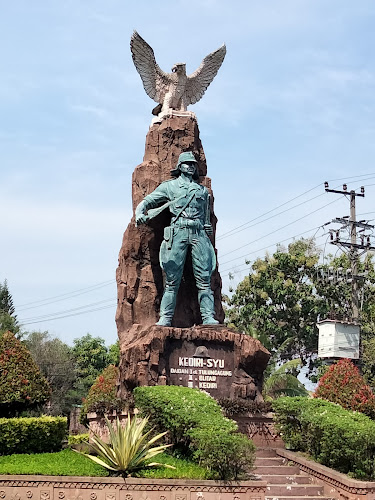
Monumen Kediri-Syu (PETA) Kediri stands as one of the most meaningful historical landmarks in Kota Kediri, East Java. Built to honor the spirit of the Pembela Tanah Air (Defenders of the Homeland), this memorial park quietly tells the story of courage and struggle during Indonesia’s fight for independence. For travelers drawn to history and reflection, this place isn’t just another sightseeing spot—it’s a reminder of unity, sacrifice, and patriotism that once fueled the heart of the nation.
The monument is situated in a rather tranquil corner of the city, away from the constant bustle but close enough that you can hear the hum of local life around it. It’s not a glamorous attraction like a mountain viewpoint or a modern city park, but what it lacks in flashiness, it makes up for with raw emotion and authenticity. Every detail—from the sculptures to the stone inscriptions—seems to whisper fragments of the past. The air here somehow feels a bit heavier, yet comforting, as if time slows down for a moment of gratitude.
This memorial was built to commemorate the local branch of PETA (Pembela Tanah Air), a volunteer army formed during the Japanese occupation in the 1940s. That era wasn’t easy, of course. PETA soldiers were trained by the Japanese but eventually turned those skills toward achieving independence for Indonesia. The Kediri-Syu division was among the most active in this region, making this monument a vital piece in the broader puzzle of Indonesian history.
The central feature is a strong, resolute sculpture—a patung pria (male statue)—that represents the spirit of a PETA soldier. His pose, proud and defiant, is striking even from afar. You can almost imagine the tension and determination in his face as if he’s guarding the memory of all who served before him. Around the base of the monument are smaller reliefs that depict scenes from the training camps, interactions with Japanese officers, and moments of rebellion that led to freedom. It’s a powerful narrative rendered in stone.
As someone who’s wandered through countless memorial parks across Java, this monument feels different. Maybe because Kediri itself is such an unpretentious city—humble, historical, and yet full of unexpected layers. Visiting this site gives you a quiet space to absorb the essence of the city, its people, and its long struggle toward sovereignty. You feel more connected to the land, to the tanah air itself.
Although it isn’t equipped with accessibility features for wheelchairs or designated parking lots, the area’s open layout makes it fairly easy to navigate on foot. Families often stop by here too—kids running across the lawn while parents pay their respects or take a breather under the shady trees. There’s something grounding about that; seeing life continue around a place built to honor sacrifice. It gives you perspective.
One important note: the monument doesn’t always get the attention it deserves. Some visitors might find that the surrounding garden could use a bit more care, or that the signage feels outdated. But honestly, that’s also part of its charm. It’s real, not overly commercialized like some tourist sites. You’re face-to-face with history, not a curated version of it.
Key Features
- Historical monument: Built to commemorate the PETA soldiers of Kediri-Syu who fought for Indonesia’s independence during the Japanese occupation.
- Patung Pria centerpiece: The central statue depicts a PETA warrior standing tall, embodying courage, patriotism, and honor for the tanah air.
- Memorial atmosphere: Surrounded by greenery and quiet pathways, the monument offers a contemplative environment ideal for reflection or photography.
- Educational value: This is an important spot for both students and history enthusiasts seeking to understand Kediri’s role in national resistance movements.
- Local pride: For the people of Kota Kediri, this monument is more than just a landmark—it’s a symbol of identity and resilience.
- Family-friendly area: Although simple, the open park layout allows children to explore safely while adults reflect on the historical context.
Best Time to Visit
If you’re planning to explore Monumen Kediri-Syu (PETA) Kediri, mornings and late afternoons are undeniably the best times. The soft golden light makes the statues glow, and the temperature is pleasantly mild. Midday visits can get quite hot—typical East Java weather—so unless you’re the adventurous type who doesn’t mind the sun baking your shoulders, go early. I usually bring a drink from a nearby warung and sit quietly for a few minutes, watching the light filter through the trees.
The dry season, roughly from May to October, gives you clearer skies and better photo conditions. If you visit during the rainy months, expect occasional puddles and damp benches—though honestly, there’s something poetic about standing before a monument under a light drizzle. It kind of amplifies the solemnity of the place. And if you happen to come around Indonesian Independence Day in August, the site often gets spruced up with flags and decorations, adding a celebratory touch to your visit.
How to Get There
Reaching this memorial in the heart of Kota Kediri is straightforward. Whether you’re coming from other parts of East Java or staying within the city, there are convenient routes. If you’re traveling from Surabaya or Malang, you can hop on a bus or train heading toward Kediri City. From the central terminal or the railway station, local transportation options—like angkot, motorcycle taxis, or even car rentals—can take you directly to the vicinity of the monument.
For those familiar with traveling around Java, the roads leading to this site are decently maintained, though expect some traffic downtown, especially on weekends or around school dismissal hours. The monument sits along a main road that connects various civic landmarks, which makes it easy to slot into your city exploration route. Parking for cars or motorcycles is available nearby, though limited. Personally, I like walking there from nearby attractions—it gives you a better feel of Kediri’s daily rhythm. You’ll pass small shops, street vendors, and maybe spot a few locals stopping by to pay respects before heading home.
Tips for Visiting
To make your trip to Monumen Kediri-Syu (PETA) Kediri more rewarding, here are a few lessons learned over multiple visits:
- Visit during quiet hours: Early mornings tend to be serene, perfect for contemplation. Later in the day, you might run into local students on school visits or families out for a walk.
- Respect the monument’s purpose: This is a memorial park dedicated to historical heroes. Keep noise levels low and avoid climbing or sitting on any structures.
- Bring essentials: There aren’t many amenities—so have your water, sunscreen, or a hat handy. The East Java sun is no joke.
- Mind accessibility: The area lacks wheelchairs ramps and designated accessible parking, so visitors with mobility challenges should plan accordingly.
- Combine it with nearby sites: You can make a half-day itinerary that includes other Kediri landmarks like churches, museums, or local parks.
- Take a local guide: If you’re genuinely curious about Kediri’s military history or the role of the Japanese occupation, a local guide can give you insightful stories not found in most guidebooks.
- Photography advice: For the best photos, visit during golden hour. The light enhances the relief carvings and brings out details that you’ll miss under harsh midday sunlight.
At the end of the day, Monumen Kediri-Syu (PETA) Kediri is more than stone and bronze—it’s a slice of history frozen in time, a tribute to people who dared to dream of freedom when the odds were stacked against them. Every time I come here, I catch myself pausing for a bit longer than planned. It’s humbling and grounding in that quiet way only historical places can be. If you’re exploring Kota Kediri, set aside time for this spot. You’ll walk away with a deeper understanding of what this city—and Indonesia—once fought for.
Key Features
- Key Features
- Best Time to Visit
- How to Get There
- Tips for Visiting
More Details
Updated October 21, 2025
Description
Monumen Kediri-Syu (PETA) Kediri stands as one of the most meaningful historical landmarks in Kota Kediri, East Java. Built to honor the spirit of the Pembela Tanah Air (Defenders of the Homeland), this memorial park quietly tells the story of courage and struggle during Indonesia’s fight for independence. For travelers drawn to history and reflection, this place isn’t just another sightseeing spot—it’s a reminder of unity, sacrifice, and patriotism that once fueled the heart of the nation.
The monument is situated in a rather tranquil corner of the city, away from the constant bustle but close enough that you can hear the hum of local life around it. It’s not a glamorous attraction like a mountain viewpoint or a modern city park, but what it lacks in flashiness, it makes up for with raw emotion and authenticity. Every detail—from the sculptures to the stone inscriptions—seems to whisper fragments of the past. The air here somehow feels a bit heavier, yet comforting, as if time slows down for a moment of gratitude.
This memorial was built to commemorate the local branch of PETA (Pembela Tanah Air), a volunteer army formed during the Japanese occupation in the 1940s. That era wasn’t easy, of course. PETA soldiers were trained by the Japanese but eventually turned those skills toward achieving independence for Indonesia. The Kediri-Syu division was among the most active in this region, making this monument a vital piece in the broader puzzle of Indonesian history.
The central feature is a strong, resolute sculpture—a patung pria (male statue)—that represents the spirit of a PETA soldier. His pose, proud and defiant, is striking even from afar. You can almost imagine the tension and determination in his face as if he’s guarding the memory of all who served before him. Around the base of the monument are smaller reliefs that depict scenes from the training camps, interactions with Japanese officers, and moments of rebellion that led to freedom. It’s a powerful narrative rendered in stone.
As someone who’s wandered through countless memorial parks across Java, this monument feels different. Maybe because Kediri itself is such an unpretentious city—humble, historical, and yet full of unexpected layers. Visiting this site gives you a quiet space to absorb the essence of the city, its people, and its long struggle toward sovereignty. You feel more connected to the land, to the tanah air itself.
Although it isn’t equipped with accessibility features for wheelchairs or designated parking lots, the area’s open layout makes it fairly easy to navigate on foot. Families often stop by here too—kids running across the lawn while parents pay their respects or take a breather under the shady trees. There’s something grounding about that; seeing life continue around a place built to honor sacrifice. It gives you perspective.
One important note: the monument doesn’t always get the attention it deserves. Some visitors might find that the surrounding garden could use a bit more care, or that the signage feels outdated. But honestly, that’s also part of its charm. It’s real, not overly commercialized like some tourist sites. You’re face-to-face with history, not a curated version of it.
Key Features
- Historical monument: Built to commemorate the PETA soldiers of Kediri-Syu who fought for Indonesia’s independence during the Japanese occupation.
- Patung Pria centerpiece: The central statue depicts a PETA warrior standing tall, embodying courage, patriotism, and honor for the tanah air.
- Memorial atmosphere: Surrounded by greenery and quiet pathways, the monument offers a contemplative environment ideal for reflection or photography.
- Educational value: This is an important spot for both students and history enthusiasts seeking to understand Kediri’s role in national resistance movements.
- Local pride: For the people of Kota Kediri, this monument is more than just a landmark—it’s a symbol of identity and resilience.
- Family-friendly area: Although simple, the open park layout allows children to explore safely while adults reflect on the historical context.
Best Time to Visit
If you’re planning to explore Monumen Kediri-Syu (PETA) Kediri, mornings and late afternoons are undeniably the best times. The soft golden light makes the statues glow, and the temperature is pleasantly mild. Midday visits can get quite hot—typical East Java weather—so unless you’re the adventurous type who doesn’t mind the sun baking your shoulders, go early. I usually bring a drink from a nearby warung and sit quietly for a few minutes, watching the light filter through the trees.
The dry season, roughly from May to October, gives you clearer skies and better photo conditions. If you visit during the rainy months, expect occasional puddles and damp benches—though honestly, there’s something poetic about standing before a monument under a light drizzle. It kind of amplifies the solemnity of the place. And if you happen to come around Indonesian Independence Day in August, the site often gets spruced up with flags and decorations, adding a celebratory touch to your visit.
How to Get There
Reaching this memorial in the heart of Kota Kediri is straightforward. Whether you’re coming from other parts of East Java or staying within the city, there are convenient routes. If you’re traveling from Surabaya or Malang, you can hop on a bus or train heading toward Kediri City. From the central terminal or the railway station, local transportation options—like angkot, motorcycle taxis, or even car rentals—can take you directly to the vicinity of the monument.
For those familiar with traveling around Java, the roads leading to this site are decently maintained, though expect some traffic downtown, especially on weekends or around school dismissal hours. The monument sits along a main road that connects various civic landmarks, which makes it easy to slot into your city exploration route. Parking for cars or motorcycles is available nearby, though limited. Personally, I like walking there from nearby attractions—it gives you a better feel of Kediri’s daily rhythm. You’ll pass small shops, street vendors, and maybe spot a few locals stopping by to pay respects before heading home.
Tips for Visiting
To make your trip to Monumen Kediri-Syu (PETA) Kediri more rewarding, here are a few lessons learned over multiple visits:
- Visit during quiet hours: Early mornings tend to be serene, perfect for contemplation. Later in the day, you might run into local students on school visits or families out for a walk.
- Respect the monument’s purpose: This is a memorial park dedicated to historical heroes. Keep noise levels low and avoid climbing or sitting on any structures.
- Bring essentials: There aren’t many amenities—so have your water, sunscreen, or a hat handy. The East Java sun is no joke.
- Mind accessibility: The area lacks wheelchairs ramps and designated accessible parking, so visitors with mobility challenges should plan accordingly.
- Combine it with nearby sites: You can make a half-day itinerary that includes other Kediri landmarks like churches, museums, or local parks.
- Take a local guide: If you’re genuinely curious about Kediri’s military history or the role of the Japanese occupation, a local guide can give you insightful stories not found in most guidebooks.
- Photography advice: For the best photos, visit during golden hour. The light enhances the relief carvings and brings out details that you’ll miss under harsh midday sunlight.
At the end of the day, Monumen Kediri-Syu (PETA) Kediri is more than stone and bronze—it’s a slice of history frozen in time, a tribute to people who dared to dream of freedom when the odds were stacked against them. Every time I come here, I catch myself pausing for a bit longer than planned. It’s humbling and grounding in that quiet way only historical places can be. If you’re exploring Kota Kediri, set aside time for this spot. You’ll walk away with a deeper understanding of what this city—and Indonesia—once fought for.
Key Highlights
- Key Features
- Best Time to Visit
- How to Get There
- Tips for Visiting
Location
Places to Stay Near Monumen Kediri-Syu (PETA) Kediri
Find and Book a Tour
Explore More Travel Guides
No reviews found! Be the first to review!
Traveler Reviews for Monumen Kediri-Syu (PETA) Kediri
There are no reviews yet. Be the first one to write one.
Have you visited Monumen Kediri-Syu (PETA) Kediri? Help other travelers by sharing your review.
You Might Also Like
Tenun Ikat Bandar
Gereja Merah, Kediri
Kelenteng Tjoe Hwie Kiong
Find Accommodations Nearby
Recommended Tours & Activities
Visitor Reviews
There are no reviews yet. Be the first one to write one.
Share Your Experience
Have you visited Monumen Kediri-Syu (PETA) Kediri? Help other travelers by leaving a review.