
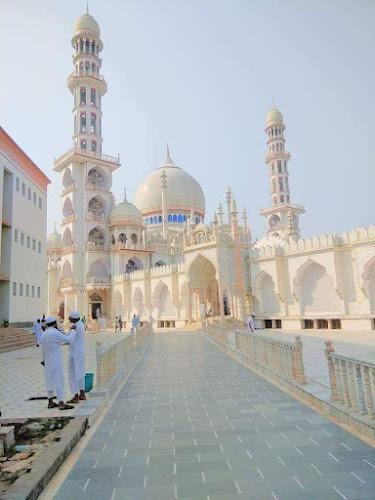
Mohalla Qureshi
About Mohalla Qureshi
Description
Mohalla Qureshi is one of those neighborhoods that doesn’t announce itself loudly. You don’t arrive and think, wow, tourist spot. Instead, it slowly works on you. One narrow lane at a time. One shopkeeper nodding hello. One smell of frying snacks that makes you hungry even if you swore you just ate. This is a lived-in mohalla, not a curated one, and that’s exactly why travelers who care about real places end up remembering it long after they leave.
The area is traditionally associated with the Qureshi community, historically known for meat trading, leather work, and small-scale commerce. That legacy still shapes daily life here. You’ll notice butcher shops that have been in the same family for generations, old signboards with faded paint, and houses built so close together you could almost shake hands from opposite balconies. It feels intimate, sometimes chaotic, but rarely dull.
I remember wandering into Mohalla Qureshi on a lazy afternoon, mostly by accident. Google Maps glitched, as it does, and suddenly I was in a lane barely wide enough for a motorbike. A man was sharpening knives outside his shop, sparks flying. He looked up, smiled, and asked where I was from. Five minutes later I had directions, unsolicited life advice, and a recommendation for the best kebabs nearby. That kind of thing happens here more than you’d expect.
Travelers should know that Mohalla Qureshi isn’t polished. You’ll see uneven roads, open drains in some stretches, and buildings that clearly need repairs. But there’s also honesty in that. Life unfolds here in real time. Kids run errands. Women chat from doorways. The call to prayer floats through the air and resets the rhythm of the day. And if you slow down, just a bit, you’ll notice how the mohalla breathes together like one big, imperfect organism.
From a cultural standpoint, this area offers insight into urban community life that guidebooks often skip. It’s not about monuments or museums. It’s about routines, trades, food habits, and social bonds. And yes, opinions about Mohalla Qureshi can be mixed. Some visitors find it overwhelming or noisy. Others, myself included, appreciate the rawness. It depends on what kind of traveler you are. If you like places that feel staged, maybe look elsewhere. But if you enjoy places that talk back to you, you’ll be fine.
Key Features
- Traditional butcher shops and food vendors that reflect generations of local trade and culinary practice.
- Narrow lanes and dense housing that show how communities adapt to limited urban space.
- Strong neighborhood interactions, where strangers are noticed and often engaged in conversation.
- Local mosques and informal gathering points that structure daily routines and social life.
- Street food aromas, especially meat-based snacks, that dominate evenings and weekends.
- Old-style architecture mixed with newer concrete additions, telling a story of gradual change.
- Affordable local markets selling everyday goods, not souvenirs made for tourists.
One thing I personally love is how functional everything is. Nothing feels decorative for the sake of it. A bench exists because someone needs to sit. A shade cloth is tied up because the sun hits hard at 3 pm. It’s practical urban living, and there’s a quiet beauty in that, even if it’s not Instagram-perfect.
Best Time to Visit
Timing matters in Mohalla Qureshi. Visit too early in the morning and the area feels half-asleep, shops shuttered, streets oddly quiet. Visit too late at night and, depending on where you’re from, you might feel a bit out of place. Personally, I think the sweet spot is late afternoon to early evening.
Around 4 pm onward, the mohalla starts waking up. Shops open fully, food stalls fire up their grills, and the streets fill with movement. The light softens, which makes walking easier and more pleasant. In warmer months, evenings are especially popular because the heat finally eases off. Winter afternoons are lovely too, when the sun is gentle and people linger outside longer.
Seasonally, cooler months tend to be more comfortable for travelers who aren’t used to dense urban neighborhoods. Summers can be intense, both in temperature and smell, since food preparation ramps up. But if you’re the kind of traveler who doesn’t mind a bit of sweat and sensory overload, summer visits can feel more alive. Just carry water. Trust me on this one. I once thought I could tough it out without a bottle and regretted it within twenty minutes.
How to Get There
Reaching Mohalla Qureshi usually involves a mix of main roads and smaller internal lanes. Public transport can get you close, but not always right to the heart of the neighborhood. Auto-rickshaws and taxis are common choices, though you may need to walk the last stretch. And honestly, walking is part of the experience.
If you’re navigating on foot, be prepared to ask for directions. Maps aren’t always accurate in tightly packed areas like this. The good news is that locals are generally helpful. Sometimes overly so. You might get three different directions from three people, all given with complete confidence. Smile, thank them, and treat it like a mini-adventure.
For travelers who prefer guided experiences, visiting as part of a local walk or cultural tour can add context. But going solo has its own rewards. You notice small things. You stop when something smells good. You turn corners just because you’re curious. That’s how I ended up watching a group of men debate cricket scores for half an hour, even though none of them agreed on the actual numbers.
Tips for Visiting
Dress modestly. Mohalla Qureshi is conservative in parts. Covering shoulders and knees isn’t just respectful, it also helps you blend in and feel more comfortable.
Ask before taking photos. This is someone’s home, not a backdrop. Most people don’t mind if you ask politely, but snapping pictures without permission can make folks uneasy.
Follow your nose, but be selective. Street food here can be excellent, but hygiene varies. Choose busy stalls with high turnover. If locals are lining up, that’s usually a good sign.
Mind the timing of prayers. During prayer times, certain shops may close briefly and foot traffic patterns change. It’s not an inconvenience, just something to be aware of.
Carry small change. Many vendors don’t deal in large bills, and you’ll avoid awkward moments fumbling for change.
Be patient. Things move at their own pace. Transactions take time. Conversations wander. If you’re in a rush, this might frustrate you. If you’re not, it’s part of the charm.
Trust your instincts. Like any dense urban area, stay aware of your surroundings. If a lane feels uncomfortable, just turn back. There’s always another route.
I’ll be honest: Mohalla Qureshi isn’t for every traveler. But if you’re the kind who values stories over selfies, who’d rather talk to a shopkeeper than tick off a landmark, this place has a lot to give. It shows you a slice of urban life that’s often ignored or misunderstood. And long after you leave, you might find yourself remembering small moments. The sound of knives being sharpened. The warmth of a stranger’s advice. The feeling that, for a short while, you were part of the rhythm, not just passing through.
Key Features
- Traditional butcher shops and food vendors that reflect generations of local trade and culinary practice.
- Narrow lanes and dense housing that show how communities adapt to limited urban space.
- Strong neighborhood interactions, where strangers are noticed and often engaged in conversation.
- Local mosques and informal gathering points that structure daily routines and social life.
- Street food aromas, especially meat-based snacks, that dominate evenings and weekends.
- Old-style architecture mixed with newer concrete additions, telling a story of gradual change.
- Affordable local markets selling everyday goods, not souvenirs made for tourists.
More Details
Updated December 31, 2025
Table of Contents
Description
Mohalla Qureshi is one of those neighborhoods that doesn’t announce itself loudly. You don’t arrive and think, wow, tourist spot. Instead, it slowly works on you. One narrow lane at a time. One shopkeeper nodding hello. One smell of frying snacks that makes you hungry even if you swore you just ate. This is a lived-in mohalla, not a curated one, and that’s exactly why travelers who care about real places end up remembering it long after they leave.
The area is traditionally associated with the Qureshi community, historically known for meat trading, leather work, and small-scale commerce. That legacy still shapes daily life here. You’ll notice butcher shops that have been in the same family for generations, old signboards with faded paint, and houses built so close together you could almost shake hands from opposite balconies. It feels intimate, sometimes chaotic, but rarely dull.
I remember wandering into Mohalla Qureshi on a lazy afternoon, mostly by accident. Google Maps glitched, as it does, and suddenly I was in a lane barely wide enough for a motorbike. A man was sharpening knives outside his shop, sparks flying. He looked up, smiled, and asked where I was from. Five minutes later I had directions, unsolicited life advice, and a recommendation for the best kebabs nearby. That kind of thing happens here more than you’d expect.
Travelers should know that Mohalla Qureshi isn’t polished. You’ll see uneven roads, open drains in some stretches, and buildings that clearly need repairs. But there’s also honesty in that. Life unfolds here in real time. Kids run errands. Women chat from doorways. The call to prayer floats through the air and resets the rhythm of the day. And if you slow down, just a bit, you’ll notice how the mohalla breathes together like one big, imperfect organism.
From a cultural standpoint, this area offers insight into urban community life that guidebooks often skip. It’s not about monuments or museums. It’s about routines, trades, food habits, and social bonds. And yes, opinions about Mohalla Qureshi can be mixed. Some visitors find it overwhelming or noisy. Others, myself included, appreciate the rawness. It depends on what kind of traveler you are. If you like places that feel staged, maybe look elsewhere. But if you enjoy places that talk back to you, you’ll be fine.
Key Features
- Traditional butcher shops and food vendors that reflect generations of local trade and culinary practice.
- Narrow lanes and dense housing that show how communities adapt to limited urban space.
- Strong neighborhood interactions, where strangers are noticed and often engaged in conversation.
- Local mosques and informal gathering points that structure daily routines and social life.
- Street food aromas, especially meat-based snacks, that dominate evenings and weekends.
- Old-style architecture mixed with newer concrete additions, telling a story of gradual change.
- Affordable local markets selling everyday goods, not souvenirs made for tourists.
One thing I personally love is how functional everything is. Nothing feels decorative for the sake of it. A bench exists because someone needs to sit. A shade cloth is tied up because the sun hits hard at 3 pm. It’s practical urban living, and there’s a quiet beauty in that, even if it’s not Instagram-perfect.
Best Time to Visit
Timing matters in Mohalla Qureshi. Visit too early in the morning and the area feels half-asleep, shops shuttered, streets oddly quiet. Visit too late at night and, depending on where you’re from, you might feel a bit out of place. Personally, I think the sweet spot is late afternoon to early evening.
Around 4 pm onward, the mohalla starts waking up. Shops open fully, food stalls fire up their grills, and the streets fill with movement. The light softens, which makes walking easier and more pleasant. In warmer months, evenings are especially popular because the heat finally eases off. Winter afternoons are lovely too, when the sun is gentle and people linger outside longer.
Seasonally, cooler months tend to be more comfortable for travelers who aren’t used to dense urban neighborhoods. Summers can be intense, both in temperature and smell, since food preparation ramps up. But if you’re the kind of traveler who doesn’t mind a bit of sweat and sensory overload, summer visits can feel more alive. Just carry water. Trust me on this one. I once thought I could tough it out without a bottle and regretted it within twenty minutes.
How to Get There
Reaching Mohalla Qureshi usually involves a mix of main roads and smaller internal lanes. Public transport can get you close, but not always right to the heart of the neighborhood. Auto-rickshaws and taxis are common choices, though you may need to walk the last stretch. And honestly, walking is part of the experience.
If you’re navigating on foot, be prepared to ask for directions. Maps aren’t always accurate in tightly packed areas like this. The good news is that locals are generally helpful. Sometimes overly so. You might get three different directions from three people, all given with complete confidence. Smile, thank them, and treat it like a mini-adventure.
For travelers who prefer guided experiences, visiting as part of a local walk or cultural tour can add context. But going solo has its own rewards. You notice small things. You stop when something smells good. You turn corners just because you’re curious. That’s how I ended up watching a group of men debate cricket scores for half an hour, even though none of them agreed on the actual numbers.
Tips for Visiting
Dress modestly. Mohalla Qureshi is conservative in parts. Covering shoulders and knees isn’t just respectful, it also helps you blend in and feel more comfortable.
Ask before taking photos. This is someone’s home, not a backdrop. Most people don’t mind if you ask politely, but snapping pictures without permission can make folks uneasy.
Follow your nose, but be selective. Street food here can be excellent, but hygiene varies. Choose busy stalls with high turnover. If locals are lining up, that’s usually a good sign.
Mind the timing of prayers. During prayer times, certain shops may close briefly and foot traffic patterns change. It’s not an inconvenience, just something to be aware of.
Carry small change. Many vendors don’t deal in large bills, and you’ll avoid awkward moments fumbling for change.
Be patient. Things move at their own pace. Transactions take time. Conversations wander. If you’re in a rush, this might frustrate you. If you’re not, it’s part of the charm.
Trust your instincts. Like any dense urban area, stay aware of your surroundings. If a lane feels uncomfortable, just turn back. There’s always another route.
I’ll be honest: Mohalla Qureshi isn’t for every traveler. But if you’re the kind who values stories over selfies, who’d rather talk to a shopkeeper than tick off a landmark, this place has a lot to give. It shows you a slice of urban life that’s often ignored or misunderstood. And long after you leave, you might find yourself remembering small moments. The sound of knives being sharpened. The warmth of a stranger’s advice. The feeling that, for a short while, you were part of the rhythm, not just passing through.
Key Highlights
- Traditional butcher shops and food vendors that reflect generations of local trade and culinary practice.
- Narrow lanes and dense housing that show how communities adapt to limited urban space.
- Strong neighborhood interactions, where strangers are noticed and often engaged in conversation.
- Local mosques and informal gathering points that structure daily routines and social life.
- Street food aromas, especially meat-based snacks, that dominate evenings and weekends.
- Old-style architecture mixed with newer concrete additions, telling a story of gradual change.
- Affordable local markets selling everyday goods, not souvenirs made for tourists.
Location
Places to Stay Near Mohalla Qureshi
Find and Book a Tour
Explore More Travel Guides
No reviews found! Be the first to review!
Traveler Reviews for Mohalla Qureshi
There are no reviews yet. Be the first one to write one.
Have you visited Mohalla Qureshi? Help other travelers by sharing your review.
You Might Also Like
Police Lines

State Bank of India RIICO MOD IND. AREA SIKAR
श्री इच्छा पूर्ण बालाजी मंदिर ग्राउंड
Find Accommodations Nearby
Recommended Tours & Activities
Visitor Reviews
There are no reviews yet. Be the first one to write one.
Share Your Experience
Have you visited Mohalla Qureshi? Help other travelers by leaving a review.