
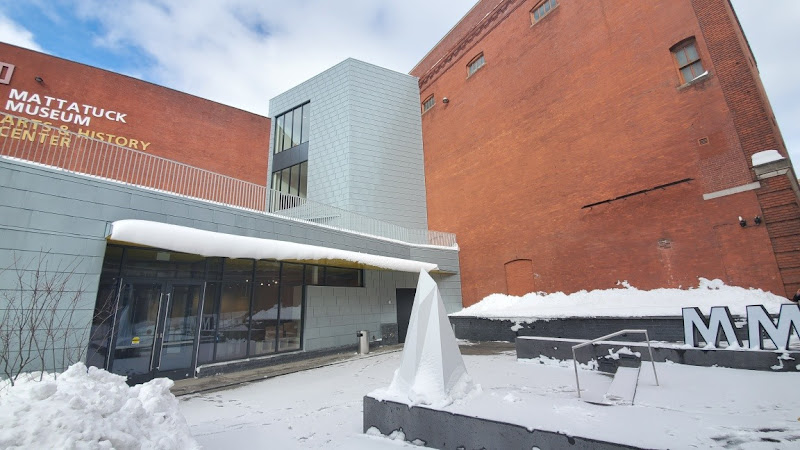
Mattatuck Museum
About Mattatuck Museum
Description
The Mattatuck Museum is a compact but spirited museum of American art and local history in Connecticut. It focuses on the cultural heritage of the region, showcasing a mix of 19th- and 20th-century American paintings, decorative arts, photographs, and rotating contemporary exhibits that keep the program lively. It also houses a research library and archive that quietly serves historians, students, and curious families who want to dig a little deeper into Connecticut stories. The museum wears its local focus proudly — not in a shouty way, but in the way the displays connect objects to everyday life here: industry, community, craft, and the small personal histories that add up to something meaningful.
Visitors will notice right away that this is not a vast, overwhelming institution. Instead, it’s the kind of place that rewards slow looking. Galleries are arranged so that one exhibit flows into the next, and the museum’s staff seems to prefer conversation over spectacle. There is a café on site, which means it’s easy to linger with a sandwich or coffee after a favorite painting has been circled twice. A modest gift shop offers thoughtful souvenirs — local prints, books, small handcrafted items — useful for finding a memento without the usual touristy clutter.
Accessibility is practical here: the museum provides a wheelchair-accessible entrance, parking, and restrooms, and general amenities include Wi-Fi, gender-neutral facilities, and on-site parking that is free. Families often find it a welcoming stop — exhibits include kid-friendly labels and occasional hands-on programs — and the size of the museum makes it less intimidating for parents trying to keep little ones engaged. The museum also runs tours and occasional public programs: artist talks, workshops, and history evenings that appeal to residents and travelers alike.
This museum is not trying to be everything for everyone. Instead, it does several things really well: interpreting regional art with context, connecting history to place, and providing a comfortable visitor experience with a cafe and helpful staff. For those who like museums where stories and objects are linked rather than just displayed, this one feels honest and grounded.
Key Features
- Collections spanning American art and Connecticut history with rotating contemporary exhibitions that spotlight local and regional artists
- On-site cafe and restaurant options for a relaxed break between galleries
- Research library and archives that support local history projects and student research
- Family-friendly programming and exhibits suitable for children
- Wheelchair-accessible entrance, parking lot, and restroom facilities
- Gender-neutral restrooms and accessible amenities for inclusive visiting
- Free on-site parking, with convenient access for day-trippers
- Four medium J1772 EV charging connectors (12 kW) for electric vehicles, useful on longer trips
- Gift shop offering locally oriented books, prints, and small artisan items
- Guided tours available — check the front desk for schedules and special programs
Best Time to Visit
The best time to visit the Mattatuck Museum depends on what a visitor wants out of the day. For quieter galleries and an unhurried experience, mid-morning on a weekday is ideal. Weekends and late afternoons tend to be busier, especially when a special exhibit opens or there’s a family program. If visitors want a livelier scene with talks or events, checking the museum’s calendar before arrival is a good idea. Those who can swing a weekday will likely enjoy more staff interaction and fewer crowds in front of popular works.
Seasonally, spring through early fall offers a bonus: the surrounding city area is friendlier for walking, and nearby parks or dining options are more enjoyable after a gallery visit. Winter visits, though colder outside, can be cozy inside — especially when the café has a warm drink and the galleries feel intimate. A rainy afternoon can be the museum’s best time, actually; there’s something satisfying about ducking into a museum after a downpour and wandering through quiet galleries.
For travelers who plan a longer Connecticut itinerary, consider pairing the museum with nearby historical sites and artisan studios. Timing a visit to coincide with a temporary exhibition or a public program can make the trip feel more special — but if spontaneity is the goal, the museum’s core collection is worth the visit any time it’s open.
How to Get There
Getting to the Mattatuck Museum is straightforward by car — its free on-site parking makes driving an attractive option for day-trippers. The museum is situated in an urban area, so driving in usually involves straightforward city streets; parking is on-site which is a relief after circling for meters or garages. For electric vehicle drivers, there are four J1772 medium connectors (12 kW), a small but convenient amenity if charging is needed while touring.
Public transit options vary depending on where a visitor starts. Local buses serve the city, and many visitors use a combination of regional rail or bus services plus a short taxi or rideshare trip to reach the museum. Rideshare is often a painless choice if public transit connections are inconvenient. For those who prefer walking, the museum’s location within the city center makes it a reasonable stroll from nearby neighborhoods and dining districts.
Once there, the museum’s entrance is wheelchair accessible and signage guides visitors from the lot. The staff are used to helping travelers with directions and can suggest places to eat or other nearby cultural stops to round out the day.
Tips for Visiting
Plan ahead but leave room for discovery. Checking the museum’s program schedule before arrival will help travelers catch talks, tours, or special events. But don’t over-plan; some of the best museum moments happen when someone lingers in front of an unexpected painting or discovers a small object in the decorative arts gallery that sparks curiosity.
Bring time. The museum can be seen in an hour if a visitor is in a hurry, but to absorb the exhibits, read some labels, and enjoy the café, two to three hours is a nicer pace. The café is a wonderful spot to regroup and reflect on what was seen — and it’s right there so, practical tip: allow time for coffee.
Families should ask at the front desk about child-friendly materials and activities. The museum is generally good with kids, but a little preparation — like downloading a scavenger-hunt list from home or bringing a small sketchbook — can help children engage more deeply. And yes, sometimes a little bribery with snacks helps keep a family visit pleasant; the cafe helps on that front.
Accessibility matters here in a practical way. The museum provides a wheelchair-accessible entrance, parking, and restrooms, and staff are helpful if additional accommodations are needed. Visitors with mobility concerns should call ahead if they anticipate needing specific assistance or if they want to reserve accessible parking spots (when available).
Photographers: photography policies may vary by exhibition. Non-flash photography is often allowed in permanent galleries but restricted during temporary shows or for certain loaned works. It’s always polite to ask at the desk if unsure, and to be mindful of other visitors when composing shots.
Use the museum as a hub. The Mattatuck Museum’s location makes it a good starting point for exploring local history, nearby dining, and other cultural stops. The gift shop offers useful guidebooks and local art items that make thoughtful souvenirs. If a traveler wants to bring home a book or print, the shop’s selection tends to reflect the museum’s focus on regional artists and history, which is nicer than generic merch and often more meaningful.
Finally, take advantage of staff knowledge. The docents and curators at smaller museums often have fascinating stories and are surprisingly accessible. If someone on staff mentions a favorite piece, take them up on it. The museum’s strength is in those contextual stories that link objects to the lives of people who lived and worked in Connecticut. Those little narratives are what make a visit memorable, not just the objects themselves.
In short, the Mattatuck Museum serves travelers who like museums with personality — approachable collections, clear ties to place, comfortable amenities, and staff who are more likely to chat than to hover. It’s a solid stop for anyone touring Connecticut art and history, or for a thoughtful afternoon when the goal is to learn something new and leave feeling a bit more connected to a place and its past.
Key Features
- Collections spanning American art and Connecticut history with rotating contemporary exhibitions that spotlight local and regional artists
- On-site cafe and restaurant options for a relaxed break between galleries
- Research library and archives that support local history projects and student research
- Family-friendly programming and exhibits suitable for children
- Wheelchair-accessible entrance, parking lot, and restroom facilities
- Gender-neutral restrooms and accessible amenities for inclusive visiting
- Free on-site parking, with convenient access for day-trippers
- Four medium J1772 EV charging connectors (12 kW) for electric vehicles, useful on longer trips
More Details
Updated August 30, 2025
Table of Contents
Description
The Mattatuck Museum is a compact but spirited museum of American art and local history in Connecticut. It focuses on the cultural heritage of the region, showcasing a mix of 19th- and 20th-century American paintings, decorative arts, photographs, and rotating contemporary exhibits that keep the program lively. It also houses a research library and archive that quietly serves historians, students, and curious families who want to dig a little deeper into Connecticut stories. The museum wears its local focus proudly — not in a shouty way, but in the way the displays connect objects to everyday life here: industry, community, craft, and the small personal histories that add up to something meaningful.
Visitors will notice right away that this is not a vast, overwhelming institution. Instead, it’s the kind of place that rewards slow looking. Galleries are arranged so that one exhibit flows into the next, and the museum’s staff seems to prefer conversation over spectacle. There is a café on site, which means it’s easy to linger with a sandwich or coffee after a favorite painting has been circled twice. A modest gift shop offers thoughtful souvenirs — local prints, books, small handcrafted items — useful for finding a memento without the usual touristy clutter.
Accessibility is practical here: the museum provides a wheelchair-accessible entrance, parking, and restrooms, and general amenities include Wi-Fi, gender-neutral facilities, and on-site parking that is free. Families often find it a welcoming stop — exhibits include kid-friendly labels and occasional hands-on programs — and the size of the museum makes it less intimidating for parents trying to keep little ones engaged. The museum also runs tours and occasional public programs: artist talks, workshops, and history evenings that appeal to residents and travelers alike.
This museum is not trying to be everything for everyone. Instead, it does several things really well: interpreting regional art with context, connecting history to place, and providing a comfortable visitor experience with a cafe and helpful staff. For those who like museums where stories and objects are linked rather than just displayed, this one feels honest and grounded.
Key Features
- Collections spanning American art and Connecticut history with rotating contemporary exhibitions that spotlight local and regional artists
- On-site cafe and restaurant options for a relaxed break between galleries
- Research library and archives that support local history projects and student research
- Family-friendly programming and exhibits suitable for children
- Wheelchair-accessible entrance, parking lot, and restroom facilities
- Gender-neutral restrooms and accessible amenities for inclusive visiting
- Free on-site parking, with convenient access for day-trippers
- Four medium J1772 EV charging connectors (12 kW) for electric vehicles, useful on longer trips
- Gift shop offering locally oriented books, prints, and small artisan items
- Guided tours available — check the front desk for schedules and special programs
Best Time to Visit
The best time to visit the Mattatuck Museum depends on what a visitor wants out of the day. For quieter galleries and an unhurried experience, mid-morning on a weekday is ideal. Weekends and late afternoons tend to be busier, especially when a special exhibit opens or there’s a family program. If visitors want a livelier scene with talks or events, checking the museum’s calendar before arrival is a good idea. Those who can swing a weekday will likely enjoy more staff interaction and fewer crowds in front of popular works.
Seasonally, spring through early fall offers a bonus: the surrounding city area is friendlier for walking, and nearby parks or dining options are more enjoyable after a gallery visit. Winter visits, though colder outside, can be cozy inside — especially when the café has a warm drink and the galleries feel intimate. A rainy afternoon can be the museum’s best time, actually; there’s something satisfying about ducking into a museum after a downpour and wandering through quiet galleries.
For travelers who plan a longer Connecticut itinerary, consider pairing the museum with nearby historical sites and artisan studios. Timing a visit to coincide with a temporary exhibition or a public program can make the trip feel more special — but if spontaneity is the goal, the museum’s core collection is worth the visit any time it’s open.
How to Get There
Getting to the Mattatuck Museum is straightforward by car — its free on-site parking makes driving an attractive option for day-trippers. The museum is situated in an urban area, so driving in usually involves straightforward city streets; parking is on-site which is a relief after circling for meters or garages. For electric vehicle drivers, there are four J1772 medium connectors (12 kW), a small but convenient amenity if charging is needed while touring.
Public transit options vary depending on where a visitor starts. Local buses serve the city, and many visitors use a combination of regional rail or bus services plus a short taxi or rideshare trip to reach the museum. Rideshare is often a painless choice if public transit connections are inconvenient. For those who prefer walking, the museum’s location within the city center makes it a reasonable stroll from nearby neighborhoods and dining districts.
Once there, the museum’s entrance is wheelchair accessible and signage guides visitors from the lot. The staff are used to helping travelers with directions and can suggest places to eat or other nearby cultural stops to round out the day.
Tips for Visiting
Plan ahead but leave room for discovery. Checking the museum’s program schedule before arrival will help travelers catch talks, tours, or special events. But don’t over-plan; some of the best museum moments happen when someone lingers in front of an unexpected painting or discovers a small object in the decorative arts gallery that sparks curiosity.
Bring time. The museum can be seen in an hour if a visitor is in a hurry, but to absorb the exhibits, read some labels, and enjoy the café, two to three hours is a nicer pace. The café is a wonderful spot to regroup and reflect on what was seen — and it’s right there so, practical tip: allow time for coffee.
Families should ask at the front desk about child-friendly materials and activities. The museum is generally good with kids, but a little preparation — like downloading a scavenger-hunt list from home or bringing a small sketchbook — can help children engage more deeply. And yes, sometimes a little bribery with snacks helps keep a family visit pleasant; the cafe helps on that front.
Accessibility matters here in a practical way. The museum provides a wheelchair-accessible entrance, parking, and restrooms, and staff are helpful if additional accommodations are needed. Visitors with mobility concerns should call ahead if they anticipate needing specific assistance or if they want to reserve accessible parking spots (when available).
Photographers: photography policies may vary by exhibition. Non-flash photography is often allowed in permanent galleries but restricted during temporary shows or for certain loaned works. It’s always polite to ask at the desk if unsure, and to be mindful of other visitors when composing shots.
Use the museum as a hub. The Mattatuck Museum’s location makes it a good starting point for exploring local history, nearby dining, and other cultural stops. The gift shop offers useful guidebooks and local art items that make thoughtful souvenirs. If a traveler wants to bring home a book or print, the shop’s selection tends to reflect the museum’s focus on regional artists and history, which is nicer than generic merch and often more meaningful.
Finally, take advantage of staff knowledge. The docents and curators at smaller museums often have fascinating stories and are surprisingly accessible. If someone on staff mentions a favorite piece, take them up on it. The museum’s strength is in those contextual stories that link objects to the lives of people who lived and worked in Connecticut. Those little narratives are what make a visit memorable, not just the objects themselves.
In short, the Mattatuck Museum serves travelers who like museums with personality — approachable collections, clear ties to place, comfortable amenities, and staff who are more likely to chat than to hover. It’s a solid stop for anyone touring Connecticut art and history, or for a thoughtful afternoon when the goal is to learn something new and leave feeling a bit more connected to a place and its past.
Key Highlights
- Collections spanning American art and Connecticut history with rotating contemporary exhibitions that spotlight local and regional artists
- On-site cafe and restaurant options for a relaxed break between galleries
- Research library and archives that support local history projects and student research
- Family-friendly programming and exhibits suitable for children
- Wheelchair-accessible entrance, parking lot, and restroom facilities
- Gender-neutral restrooms and accessible amenities for inclusive visiting
- Free on-site parking, with convenient access for day-trippers
- Four medium J1772 EV charging connectors (12 kW) for electric vehicles, useful on longer trips
Location
Places to Stay Near Mattatuck Museum
Find and Book a Tour
Explore More Travel Guides
No reviews found! Be the first to review!
Traveler Reviews for Mattatuck Museum
There are no reviews yet. Be the first one to write one.
Have you visited Mattatuck Museum? Help other travelers by sharing your review.
Find Accommodations Nearby
Recommended Tours & Activities
Visitor Reviews
There are no reviews yet. Be the first one to write one.
Share Your Experience
Have you visited Mattatuck Museum? Help other travelers by leaving a review.