About Maputo

Description

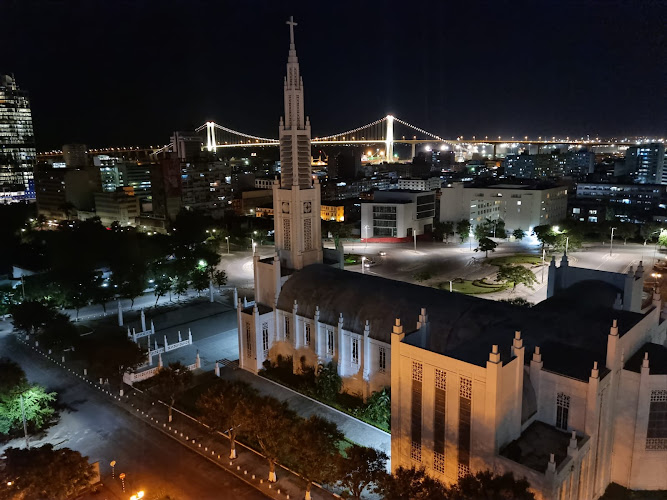
Maputo, the capital of Mozambique, is a city that somehow manages to feel both relaxed and alive at the same time. It’s perched right on the edge of the Indian Ocean, and you can almost taste the salt in the air as you wander down its wide, tree-lined streets. The Portuguese influence is everywhere—sometimes subtle, sometimes bold. You’ll see it in the old colonial buildings that still stand proudly, their pastel facades fading gracefully under the African sun. One of the most striking is the CFM Railway Station, a bronze-domed beauty that’s been watching over the city since 1916. I remember standing there once, just staring at the intricate ironwork and thinking how it looked more like an art museum than a train station.

Downtown Maputo, especially the Baixa district, feels like a living museum. The jacaranda trees bloom in bursts of purple that make the streets look like they’ve been painted by hand. There’s this mix of old and new—markets buzzing with chatter, street vendors selling cashews and fresh coconuts, and then, just around the corner, modern cafes where locals sip strong Mozambican coffee. The Municipal Market is one of those places where you can lose track of time. It’s noisy, colorful, and full of life. You’ll find everything from handwoven baskets to the freshest prawns you’ve ever tasted. And when you step outside, the neoclassical City Hall stands tall at Praça da Independência, as if reminding everyone of the city’s layered history.

Maputo isn’t perfect—few cities are—but that’s part of its charm. Some streets are uneven, and the rhythm of daily life can feel unpredictable. But if you’re open to it, that unpredictability becomes part of the adventure. The city has this magnetic pull; it’s not the kind of place you just pass through. It’s a place that invites you to slow down, to listen to the music drifting from a nearby bar, to chat with locals who’ll insist you try matapa (a delicious dish made with cassava leaves and peanuts). Maputo doesn’t put on a show—it just is, and that’s what makes it so special.

Key Features

  • Portuguese colonial architecture that tells stories from centuries past.
  • Baixa neighborhood with jacaranda-lined streets and lively markets.
  • CFM Railway Station – a 1916 architectural gem with a bronze dome.
  • Praça da Independência and the grand City Hall, central to the city’s history.
  • Indian Ocean coastline offering scenic views and fresh seafood.
  • Rich local culture expressed through music, art, and traditional cuisine.
  • Easy access to nearby islands and beaches for day trips.
  • Thriving art scene with galleries and street murals reflecting modern Mozambique.

Best Time to Visit

If you ask me, the best time to visit Maputo is during the dry season—from May to October. The weather is warm but not too humid, and the skies are usually clear. I went in June once, and it was just perfect for walking around without melting in the sun. You can actually enjoy the open-air cafes and stroll along the waterfront without constantly looking for shade. During the wet season (November to April), the city gets heavy rains, and while that brings out the lush greenery, it can make exploring a bit tricky. Still, if you don’t mind a few afternoon showers, it’s a quieter time to experience Maputo’s charm without the usual crowds.

There’s something magical about visiting around September too—right before the rains start. The jacarandas are in full bloom, painting the city purple. It’s one of those sights that sticks with you long after you’ve left. And if you’re into festivals, check out local events celebrating Mozambican music and dance around that time. The energy is infectious, and you’ll probably find yourself moving to the beat before you even realize it.

How to Get There

Getting to Maputo is surprisingly straightforward. The city’s main gateway is Maputo International Airport, which connects to major African hubs like Johannesburg, Nairobi, and Addis Ababa, as well as some European cities. If you’re already in southern Africa, flying from Johannesburg takes less than an hour—it’s practically a hop across the border. I once took a bus from South Africa, and while it wasn’t the fastest option, it gave me a real sense of the landscape changing as we approached the coast. The border crossing at Komatipoort can be busy, so patience is key, but it’s all part of the experience.

Once you’re in the city, taxis and ride-hailing apps are easy to find. But honestly, walking is the best way to get a feel for Maputo. The streets are full of surprises—tiny art galleries tucked between buildings, old bookstores that smell like history, and locals who are always up for a chat. If you plan to explore beyond the city, renting a car is a good idea, especially for visiting nearby beaches or heading to Maputo Special Reserve, where elephants roam freely.

Tips for Visiting

Maputo is a place where slowing down pays off. Don’t rush through it like it’s just another stop on your itinerary. Take time to sit at a café and people-watch—you’ll learn more about the city that way than from any guidebook. Here are a few tips that might make your trip smoother (and more fun):

  • Currency: The local currency is the Mozambican metical. Some places accept South African rand or US dollars, but it’s best to have local cash for smaller shops and markets.
  • Language: Portuguese is the official language, but many people also speak English, especially in hotels and tourist areas. A friendly “Bom dia” (good morning) goes a long way, though.
  • Safety: Like any big city, keep an eye on your belongings, especially in crowded areas. I’ve always felt safe walking around during the day, but I tend to take taxis after dark.
  • Food: Don’t leave without trying prawns from the local seafood market. They’re famous for a reason. And if you see matapa on the menu, order it—you can thank me later.
  • Transportation: The city’s minibuses, called “chapas,” are cheap and adventurous, but they can be confusing at first. If you’re not feeling brave, taxis are still affordable.
  • Shopping: For souvenirs, check out the FEIMA craft market. You’ll find handmade jewelry, carvings, and textiles that tell stories of Mozambican culture.
  • Local Etiquette: Mozambicans are warm and polite. A smile and a greeting go a long way. Don’t be surprised if strangers strike up a conversation—it’s part of the charm.

And one last thing—don’t forget to look up. The sunsets in Maputo are something else. The sky turns this deep orange that slowly fades into pink, and for a few minutes, everything feels still. I remember standing by the waterfront one evening, watching fishermen pull in their nets while kids played nearby. It wasn’t a postcard moment—it was better. It was real. That’s the thing about Maputo—it doesn’t need to try hard to impress you. It just does.

So, if you’re looking for a destination that’s rich in history, full of character, and still feels a bit undiscovered, Maputo deserves a spot on your list. It’s the kind of place that stays with you—not because of flashy attractions, but because of how it makes you feel. And once you’ve been, you’ll probably find yourself daydreaming about it long after you’ve gone home.

Key Features

  • Portuguese colonial architecture that tells stories from centuries past.
  • Baixa neighborhood with jacaranda-lined streets and lively markets.
  • CFM Railway Station – a 1916 architectural gem with a bronze dome.
  • Praça da Independência and the grand City Hall, central to the city’s history.
  • Indian Ocean coastline offering scenic views and fresh seafood.
  • Rich local culture expressed through music, art, and traditional cuisine.
  • Easy access to nearby islands and beaches for day trips.
  • Thriving art scene with galleries and street murals reflecting modern Mozambique.

More Details

Updated October 11, 2025

Description

Maputo, the capital of Mozambique, is a city that somehow manages to feel both relaxed and alive at the same time. It’s perched right on the edge of the Indian Ocean, and you can almost taste the salt in the air as you wander down its wide, tree-lined streets. The Portuguese influence is everywhere—sometimes subtle, sometimes bold. You’ll see it in the old colonial buildings that still stand proudly, their pastel facades fading gracefully under the African sun. One of the most striking is the CFM Railway Station, a bronze-domed beauty that’s been watching over the city since 1916. I remember standing there once, just staring at the intricate ironwork and thinking how it looked more like an art museum than a train station.

Downtown Maputo, especially the Baixa district, feels like a living museum. The jacaranda trees bloom in bursts of purple that make the streets look like they’ve been painted by hand. There’s this mix of old and new—markets buzzing with chatter, street vendors selling cashews and fresh coconuts, and then, just around the corner, modern cafes where locals sip strong Mozambican coffee. The Municipal Market is one of those places where you can lose track of time. It’s noisy, colorful, and full of life. You’ll find everything from handwoven baskets to the freshest prawns you’ve ever tasted. And when you step outside, the neoclassical City Hall stands tall at Praça da Independência, as if reminding everyone of the city’s layered history.

Maputo isn’t perfect—few cities are—but that’s part of its charm. Some streets are uneven, and the rhythm of daily life can feel unpredictable. But if you’re open to it, that unpredictability becomes part of the adventure. The city has this magnetic pull; it’s not the kind of place you just pass through. It’s a place that invites you to slow down, to listen to the music drifting from a nearby bar, to chat with locals who’ll insist you try matapa (a delicious dish made with cassava leaves and peanuts). Maputo doesn’t put on a show—it just is, and that’s what makes it so special.

Key Features

  • Portuguese colonial architecture that tells stories from centuries past.
  • Baixa neighborhood with jacaranda-lined streets and lively markets.
  • CFM Railway Station – a 1916 architectural gem with a bronze dome.
  • Praça da Independência and the grand City Hall, central to the city’s history.
  • Indian Ocean coastline offering scenic views and fresh seafood.
  • Rich local culture expressed through music, art, and traditional cuisine.
  • Easy access to nearby islands and beaches for day trips.
  • Thriving art scene with galleries and street murals reflecting modern Mozambique.

Best Time to Visit

If you ask me, the best time to visit Maputo is during the dry season—from May to October. The weather is warm but not too humid, and the skies are usually clear. I went in June once, and it was just perfect for walking around without melting in the sun. You can actually enjoy the open-air cafes and stroll along the waterfront without constantly looking for shade. During the wet season (November to April), the city gets heavy rains, and while that brings out the lush greenery, it can make exploring a bit tricky. Still, if you don’t mind a few afternoon showers, it’s a quieter time to experience Maputo’s charm without the usual crowds.

There’s something magical about visiting around September too—right before the rains start. The jacarandas are in full bloom, painting the city purple. It’s one of those sights that sticks with you long after you’ve left. And if you’re into festivals, check out local events celebrating Mozambican music and dance around that time. The energy is infectious, and you’ll probably find yourself moving to the beat before you even realize it.

How to Get There

Getting to Maputo is surprisingly straightforward. The city’s main gateway is Maputo International Airport, which connects to major African hubs like Johannesburg, Nairobi, and Addis Ababa, as well as some European cities. If you’re already in southern Africa, flying from Johannesburg takes less than an hour—it’s practically a hop across the border. I once took a bus from South Africa, and while it wasn’t the fastest option, it gave me a real sense of the landscape changing as we approached the coast. The border crossing at Komatipoort can be busy, so patience is key, but it’s all part of the experience.

Once you’re in the city, taxis and ride-hailing apps are easy to find. But honestly, walking is the best way to get a feel for Maputo. The streets are full of surprises—tiny art galleries tucked between buildings, old bookstores that smell like history, and locals who are always up for a chat. If you plan to explore beyond the city, renting a car is a good idea, especially for visiting nearby beaches or heading to Maputo Special Reserve, where elephants roam freely.

Tips for Visiting

Maputo is a place where slowing down pays off. Don’t rush through it like it’s just another stop on your itinerary. Take time to sit at a café and people-watch—you’ll learn more about the city that way than from any guidebook. Here are a few tips that might make your trip smoother (and more fun):

  • Currency: The local currency is the Mozambican metical. Some places accept South African rand or US dollars, but it’s best to have local cash for smaller shops and markets.
  • Language: Portuguese is the official language, but many people also speak English, especially in hotels and tourist areas. A friendly “Bom dia” (good morning) goes a long way, though.
  • Safety: Like any big city, keep an eye on your belongings, especially in crowded areas. I’ve always felt safe walking around during the day, but I tend to take taxis after dark.
  • Food: Don’t leave without trying prawns from the local seafood market. They’re famous for a reason. And if you see matapa on the menu, order it—you can thank me later.
  • Transportation: The city’s minibuses, called “chapas,” are cheap and adventurous, but they can be confusing at first. If you’re not feeling brave, taxis are still affordable.
  • Shopping: For souvenirs, check out the FEIMA craft market. You’ll find handmade jewelry, carvings, and textiles that tell stories of Mozambican culture.
  • Local Etiquette: Mozambicans are warm and polite. A smile and a greeting go a long way. Don’t be surprised if strangers strike up a conversation—it’s part of the charm.

And one last thing—don’t forget to look up. The sunsets in Maputo are something else. The sky turns this deep orange that slowly fades into pink, and for a few minutes, everything feels still. I remember standing by the waterfront one evening, watching fishermen pull in their nets while kids played nearby. It wasn’t a postcard moment—it was better. It was real. That’s the thing about Maputo—it doesn’t need to try hard to impress you. It just does.

So, if you’re looking for a destination that’s rich in history, full of character, and still feels a bit undiscovered, Maputo deserves a spot on your list. It’s the kind of place that stays with you—not because of flashy attractions, but because of how it makes you feel. And once you’ve been, you’ll probably find yourself daydreaming about it long after you’ve gone home.

Key Highlights

  • Portuguese colonial architecture that tells stories from centuries past.
  • Baixa neighborhood with jacaranda-lined streets and lively markets.
  • CFM Railway Station – a 1916 architectural gem with a bronze dome.
  • Praça da Independência and the grand City Hall, central to the city’s history.
  • Indian Ocean coastline offering scenic views and fresh seafood.
  • Rich local culture expressed through music, art, and traditional cuisine.
  • Easy access to nearby islands and beaches for day trips.
  • Thriving art scene with galleries and street murals reflecting modern Mozambique.

Location

Places to Stay Near Maputo

Find and Book a Tour

Explore More Travel Guides

No reviews found! Be the first to review!

Traveler Reviews for Maputo

There are no reviews yet. Be the first one to write one.

Share Your Experience

Have you visited Maputo? Help other travelers by sharing your review.

Find Accommodations Nearby

Recommended Tours & Activities

Visitor Reviews

There are no reviews yet. Be the first one to write one.

Share Your Experience

Have you visited Maputo? Help other travelers by leaving a review.