Long Son Pagoda
About Long Son Pagoda
Description
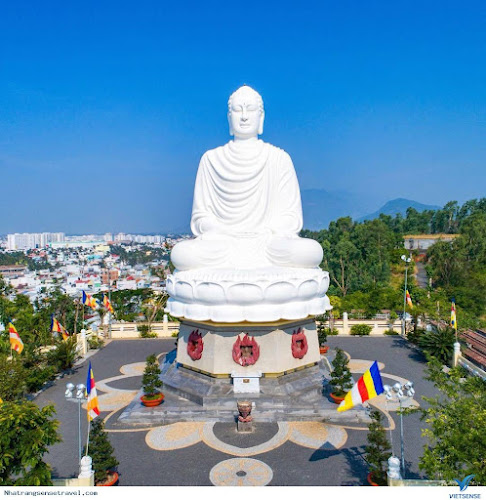
Long Son Pagoda is one of those places that travelers talk about long after the trip is over. Not always because it’s perfect, but because it sticks with you. This modern Buddhist pagoda sits on a hill above the city, crowned by a massive white concrete Buddha that you can see from all sorts of unexpected angles. The first time I spotted it, honestly, I thought it was a cloud trick or some hotel rooftop sculpture. Turns out, it’s neither. It’s very real, very solid, and very much a focal point of the city’s spiritual and cultural life.
The pagoda itself dates back to the late 19th century, though what you see today is the result of several rebuilds and expansions. And yes, you can tell. Some travelers love that mix of old and new, while others feel it lacks the aged, mossy charm of older temples. Personally, I like that it doesn’t pretend to be something it’s not. Long Son Pagoda is alive, used, and evolving. Monks still live here. Locals still pray here. And tourists… well, they wander, sweat a bit on the stairs, and snap photos.
What makes the place special isn’t just the architecture or the statue, but the atmosphere. There’s a strange balance between calm and activity. One minute you’re standing in silence listening to incense crackle, the next you’re stepping aside so a group of schoolkids can race up the steps. And that contrast feels honest. Real life doesn’t stop just because a place is sacred.
The giant Buddha statue at the top is the star of the show, no argument there. Seated serenely, it looks out over the city like it’s keeping an eye on things. Climbing up to it involves a fair number of steps, but they’re manageable, and there are shaded spots to catch your breath. I stopped more than once, partly to rest, partly to look back at the city slowly unfolding behind me. If you rush it, you miss half the point.
Inside the main hall, the decor is colorful without being overwhelming. You’ll notice intricate dragon motifs, floral patterns, and traditional Buddhist imagery. It’s not a museum-style silence inside, though. You might hear chanting, whispered prayers, or the soft shuffle of visitors removing their shoes. And that’s okay. It feels welcoming, not intimidating.
One thing worth mentioning is accessibility. Long Son Pagoda does make an effort here, with wheelchair-accessible parking and restrooms available. Not every part of the complex is easy to navigate for everyone, especially the climb to the Buddha statue, but compared to many temples in the region, it’s more accommodating than most.
Visitors tend to leave with mixed feelings, and I say that in a good way. Some come expecting a purely ancient temple and are surprised by the modern touches. Others are blown away by the statue and views but feel the crowds take away from the serenity. Both reactions make sense. Long Son Pagoda isn’t trying to please one type of traveler. It just exists, doing its thing.
Key Features
- A towering white Buddha statue perched on a hill, visible from much of the city
- Panoramic city views that reward anyone willing to climb the steps
- An active Buddhist temple with resident monks and daily rituals
- Colorful main hall featuring traditional Buddhist art and symbolism
- Spacious grounds that allow wandering, reflection, and people-watching
- Wheelchair-accessible parking and restrooms, which isn’t always a given
- A blend of historical roots and modern reconstruction that sparks conversation
Best Time to Visit
If you ask me, early morning is the sweet spot. And not just because it’s cooler, though that’s a big bonus. In the morning, the pagoda feels more like a living religious site than a tourist attraction. You’ll see locals lighting incense, monks moving quietly between buildings, and fewer selfie sticks blocking your view. The light is softer too, which makes the white Buddha glow instead of glare.
Late afternoon is another solid option. The heat starts to ease, and the city views from the top take on a warmer, more forgiving tone. Sunset isn’t officially a thing here like at some viewpoints, but the changing sky adds drama. Just keep in mind that more visitors tend to arrive around this time, especially tour groups.
Midday visits are doable, but be prepared. The sun can be intense, and the climb up the hill feels longer than it actually is. I made the mistake once of visiting around noon, thinking, how bad could it be? Answer: sweaty, very sweaty. Bring water. You’ll thank yourself.
As for seasons, drier months are generally more comfortable. Rainy periods can make the steps slippery, and the views sometimes vanish behind clouds. Still, there’s something oddly peaceful about the pagoda in light rain, when fewer people bother to climb up. So if you don’t mind getting a bit damp, it has its own charm.
How to Get There
Getting to Long Son Pagoda is fairly straightforward, even if you’re not a seasoned traveler. It’s close enough to the city center that taxis and ride-hailing services are the easiest option. Most drivers know it by name, or at least recognize the description once you mention the big Buddha on the hill.
If you’re feeling adventurous, renting a scooter is an option. I did that once, and while it was fun, navigating local traffic isn’t for everyone. If you’re confident and comfortable, it gives you flexibility and a sense of freedom. If not, there’s no shame in letting someone else handle the road.
Some travelers choose to walk from nearby areas. It’s possible, but it’s a bit of a trek, especially in the heat. The final stretch uphill can feel endless if you’re already tired. I’d only recommend walking if you genuinely enjoy it and have plenty of time.
Once you arrive at the entrance, signs guide you through the complex. From there, it’s mostly intuitive. Follow the path, take the stairs when you’re ready, and don’t rush. This isn’t a place meant to be ticked off a list in ten minutes.
Tips for Visiting
Dress modestly. This seems obvious, but it’s worth repeating. Covered shoulders and knees are appreciated, and sometimes required, especially inside the main hall. I’ve seen visitors turned away or handed cover-ups, which is awkward for everyone involved.
Bring water and wear decent shoes. The steps up to the Buddha aren’t extreme, but flip-flops and dehydration make everything harder. Trust me on this one. I learned the hard way.
Be patient with crowds. Long Son Pagoda attracts a mix of pilgrims, tourists, and school groups. It can feel busy, even chaotic at times. Instead of fighting it, find a quieter corner or wait a few minutes. The flow changes constantly.
Respect the religious aspects. Even if you’re not Buddhist, this is a working temple. Avoid loud conversations inside halls, don’t touch statues unnecessarily, and ask before photographing monks or worshippers. A little awareness goes a long way.
Take time to look back. Seriously. On the climb up, stop and turn around. The city views are part of the experience, not just a bonus at the top. Some of my favorite moments here happened halfway up, catching my breath and watching daily life unfold below.
Lastly, manage expectations. Long Son Pagoda isn’t a hidden secret or untouched relic. It’s popular, visible, and sometimes messy in that human way. But if you go in open-minded, willing to see it for what it is, you’ll likely leave with a deeper appreciation. And maybe, like me, you’ll find yourself thinking about that calm Buddha face long after you’ve gone.
Key Features
- A towering white Buddha statue perched on a hill, visible from much of the city
- Panoramic city views that reward anyone willing to climb the steps
- An active Buddhist temple with resident monks and daily rituals
- Colorful main hall featuring traditional Buddhist art and symbolism
- Spacious grounds that allow wandering, reflection, and people-watching
- Wheelchair-accessible parking and restrooms, which isn’t always a given
- A blend of historical roots and modern reconstruction that sparks conversation
More Details
Updated December 31, 2025
Table of Contents
Description
Long Son Pagoda is one of those places that travelers talk about long after the trip is over. Not always because it’s perfect, but because it sticks with you. This modern Buddhist pagoda sits on a hill above the city, crowned by a massive white concrete Buddha that you can see from all sorts of unexpected angles. The first time I spotted it, honestly, I thought it was a cloud trick or some hotel rooftop sculpture. Turns out, it’s neither. It’s very real, very solid, and very much a focal point of the city’s spiritual and cultural life.
The pagoda itself dates back to the late 19th century, though what you see today is the result of several rebuilds and expansions. And yes, you can tell. Some travelers love that mix of old and new, while others feel it lacks the aged, mossy charm of older temples. Personally, I like that it doesn’t pretend to be something it’s not. Long Son Pagoda is alive, used, and evolving. Monks still live here. Locals still pray here. And tourists… well, they wander, sweat a bit on the stairs, and snap photos.
What makes the place special isn’t just the architecture or the statue, but the atmosphere. There’s a strange balance between calm and activity. One minute you’re standing in silence listening to incense crackle, the next you’re stepping aside so a group of schoolkids can race up the steps. And that contrast feels honest. Real life doesn’t stop just because a place is sacred.
The giant Buddha statue at the top is the star of the show, no argument there. Seated serenely, it looks out over the city like it’s keeping an eye on things. Climbing up to it involves a fair number of steps, but they’re manageable, and there are shaded spots to catch your breath. I stopped more than once, partly to rest, partly to look back at the city slowly unfolding behind me. If you rush it, you miss half the point.
Inside the main hall, the decor is colorful without being overwhelming. You’ll notice intricate dragon motifs, floral patterns, and traditional Buddhist imagery. It’s not a museum-style silence inside, though. You might hear chanting, whispered prayers, or the soft shuffle of visitors removing their shoes. And that’s okay. It feels welcoming, not intimidating.
One thing worth mentioning is accessibility. Long Son Pagoda does make an effort here, with wheelchair-accessible parking and restrooms available. Not every part of the complex is easy to navigate for everyone, especially the climb to the Buddha statue, but compared to many temples in the region, it’s more accommodating than most.
Visitors tend to leave with mixed feelings, and I say that in a good way. Some come expecting a purely ancient temple and are surprised by the modern touches. Others are blown away by the statue and views but feel the crowds take away from the serenity. Both reactions make sense. Long Son Pagoda isn’t trying to please one type of traveler. It just exists, doing its thing.
Key Features
- A towering white Buddha statue perched on a hill, visible from much of the city
- Panoramic city views that reward anyone willing to climb the steps
- An active Buddhist temple with resident monks and daily rituals
- Colorful main hall featuring traditional Buddhist art and symbolism
- Spacious grounds that allow wandering, reflection, and people-watching
- Wheelchair-accessible parking and restrooms, which isn’t always a given
- A blend of historical roots and modern reconstruction that sparks conversation
Best Time to Visit
If you ask me, early morning is the sweet spot. And not just because it’s cooler, though that’s a big bonus. In the morning, the pagoda feels more like a living religious site than a tourist attraction. You’ll see locals lighting incense, monks moving quietly between buildings, and fewer selfie sticks blocking your view. The light is softer too, which makes the white Buddha glow instead of glare.
Late afternoon is another solid option. The heat starts to ease, and the city views from the top take on a warmer, more forgiving tone. Sunset isn’t officially a thing here like at some viewpoints, but the changing sky adds drama. Just keep in mind that more visitors tend to arrive around this time, especially tour groups.
Midday visits are doable, but be prepared. The sun can be intense, and the climb up the hill feels longer than it actually is. I made the mistake once of visiting around noon, thinking, how bad could it be? Answer: sweaty, very sweaty. Bring water. You’ll thank yourself.
As for seasons, drier months are generally more comfortable. Rainy periods can make the steps slippery, and the views sometimes vanish behind clouds. Still, there’s something oddly peaceful about the pagoda in light rain, when fewer people bother to climb up. So if you don’t mind getting a bit damp, it has its own charm.
How to Get There
Getting to Long Son Pagoda is fairly straightforward, even if you’re not a seasoned traveler. It’s close enough to the city center that taxis and ride-hailing services are the easiest option. Most drivers know it by name, or at least recognize the description once you mention the big Buddha on the hill.
If you’re feeling adventurous, renting a scooter is an option. I did that once, and while it was fun, navigating local traffic isn’t for everyone. If you’re confident and comfortable, it gives you flexibility and a sense of freedom. If not, there’s no shame in letting someone else handle the road.
Some travelers choose to walk from nearby areas. It’s possible, but it’s a bit of a trek, especially in the heat. The final stretch uphill can feel endless if you’re already tired. I’d only recommend walking if you genuinely enjoy it and have plenty of time.
Once you arrive at the entrance, signs guide you through the complex. From there, it’s mostly intuitive. Follow the path, take the stairs when you’re ready, and don’t rush. This isn’t a place meant to be ticked off a list in ten minutes.
Tips for Visiting
Dress modestly. This seems obvious, but it’s worth repeating. Covered shoulders and knees are appreciated, and sometimes required, especially inside the main hall. I’ve seen visitors turned away or handed cover-ups, which is awkward for everyone involved.
Bring water and wear decent shoes. The steps up to the Buddha aren’t extreme, but flip-flops and dehydration make everything harder. Trust me on this one. I learned the hard way.
Be patient with crowds. Long Son Pagoda attracts a mix of pilgrims, tourists, and school groups. It can feel busy, even chaotic at times. Instead of fighting it, find a quieter corner or wait a few minutes. The flow changes constantly.
Respect the religious aspects. Even if you’re not Buddhist, this is a working temple. Avoid loud conversations inside halls, don’t touch statues unnecessarily, and ask before photographing monks or worshippers. A little awareness goes a long way.
Take time to look back. Seriously. On the climb up, stop and turn around. The city views are part of the experience, not just a bonus at the top. Some of my favorite moments here happened halfway up, catching my breath and watching daily life unfold below.
Lastly, manage expectations. Long Son Pagoda isn’t a hidden secret or untouched relic. It’s popular, visible, and sometimes messy in that human way. But if you go in open-minded, willing to see it for what it is, you’ll likely leave with a deeper appreciation. And maybe, like me, you’ll find yourself thinking about that calm Buddha face long after you’ve gone.

Key Highlights
- A towering white Buddha statue perched on a hill, visible from much of the city
- Panoramic city views that reward anyone willing to climb the steps
- An active Buddhist temple with resident monks and daily rituals
- Colorful main hall featuring traditional Buddhist art and symbolism
- Spacious grounds that allow wandering, reflection, and people-watching
- Wheelchair-accessible parking and restrooms, which isn’t always a given
- A blend of historical roots and modern reconstruction that sparks conversation
Location
Places to Stay Near Long Son Pagoda
Find and Book a Tour
Explore More Travel Guides
No reviews found! Be the first to review!
Traveler Reviews for Long Son Pagoda
There are no reviews yet. Be the first one to write one.
Have you visited Long Son Pagoda? Help other travelers by sharing your review.
Find Accommodations Nearby
Recommended Tours & Activities
Visitor Reviews
There are no reviews yet. Be the first one to write one.
Share Your Experience
Have you visited Long Son Pagoda? Help other travelers by leaving a review.