
Limbe Botanic Garden
About Limbe Botanic Garden
Key Features
More Details
Updated June 11, 2025
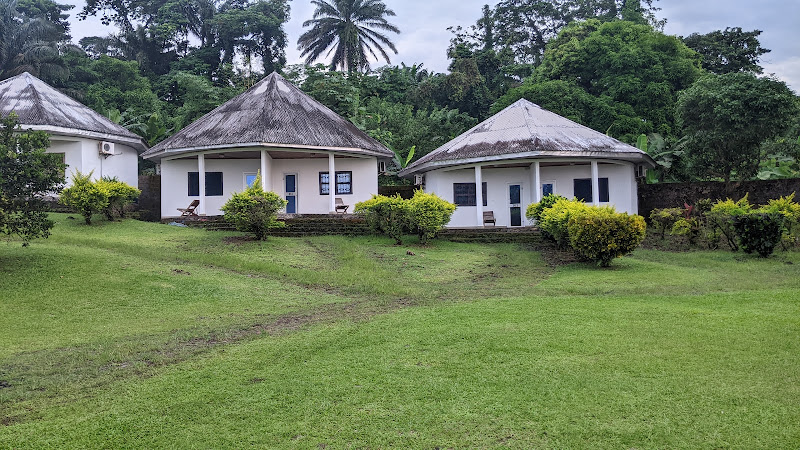
The Limbe Botanic Garden | AfricaTravelAssociation | Flickr
## Limbe Botanic Garden (Cameroon): What It Is, Why It Matters, and How to Visit Responsibly
If you’re building a Cameroon itinerary around nature, history, and living collections (not just viewpoints), Limbe Botanic Garden is one of the country’s most important stopovers—because it’s both a botanical site and a piece of colonial-era agricultural history that later shifted toward conservation and public education.
### Quick facts (confirmed)
– Name: Limbe Botanic Garden (also written “Limbe Botanical Gardens”)
– Location: Limbe, South-West Region, Cameroon (your coordinates: 4.0135295, 9.1997184)
– Founded: 1892
– Founder/early leadership: Established under a German colonial team led by Paul Rudolph Preuss
– Institutional oversight (documented listing): Listed by Botanic Gardens Conservation International (BGCI) with Ministry of Forestry and Wildlife (MINFOF) contact details
That’s the bedrock. Anything beyond this—like exact entrance fees, daily opening hours, or current guided-tour availability—changes frequently and should be verified locally or via official channels when you’re on the ground.
—
## A garden that began as an “economic experiment”
Limbe Botanic Garden was created in 1892, during the German colonial period, when Limbe was known as Victoria. It began as a trial/experimental garden for acclimatising and testing tropical crops with economic value—sources consistently describe species such as rubber, coffee, cocoa, oil palm, banana, teak, and sugar cane as part of that early agronomic focus.
This matters for two reasons:
1. You’re not just walking in a “pretty park.” You’re seeing a site built to support plantation and colonial agricultural systems—an uncomfortable but real layer of history that still shapes land use and plant movement across the tropics.
2. The garden later changed mission. Modern references describe a shift away from purely agricultural experimentation toward conservation, education, science, tourism, and leisure.
If you’re the type of traveler who likes understanding why a place exists—not just what it looks like—Limbe pays off.
—
## Where it sits (and why the setting is special)
Multiple references place the garden in Limbe between the Atlantic coast and the Mount Cameroon area, tying it to a high-rainfall, humid coastal ecology where tropical species thrive.
### What that means for your visit
– Expect lush growth and fast-changing light under canopy.
– Conditions can be hot and humid even when the sky is overcast.
– Footing can be slippery after rain—plan footwear accordingly (closed-toe shoes with grip beat sandals here).
These are practicalities, not marketing. A garden can be “easy,” but tropical gardens often punish flimsy shoes.
—
## What to look for once you’re inside
Because Limbe’s origin story is tied to plant introduction and acclimatisation, it’s a good place to visit with a “collection mindset.” Instead of trying to see everything, pick themes:
### 1) Evidence of the original trial-garden purpose
Many older tropical botanical gardens have remnants of their production or experimentation era—layout logic, older specimen trees, and sections that feel more like stations than ornamental beds. Limbe is historically described in exactly that “trial garden” frame.
### 2) Conservation and education orientation (later mission)
Later descriptions emphasise conservation and education as part of the garden’s modern identity. Even if interpretive signage is uneven, you can still approach the site as a living classroom: plant families, habitat mimicry, introduced vs. native species, and how tropical botanic gardens balance public access with preservation.
### 3) The “size question” (and why you should be skeptical)
You’ll see different numbers quoted for the garden’s area across sources and time periods—some references discuss much larger historical land coverage, while other descriptions cite a much smaller present footprint. For example, one widely cited overview says the garden originally covered a far larger area and is now significantly reduced.
Flag: these figures are often historical, and land-use changes can be complex; treat any single number you see online as potentially outdated unless you confirm with an official or on-site source.
—
## Safety and planning: what official advisories say right now
Limbe is in Cameroon’s South-West Region, and multiple government advisories highlight elevated security risks in the broader region.
– The U.S. State Department warns that some areas of Cameroon have increased risk, and explicitly lists Northwest and Southwest Regions under “Do Not Travel” due to armed violence/crime/kidnapping. State
– The UK FCDO advises against all but essential travel to Limbé, and provides region-specific guidance for the South-West.
### Practical, non-alarmist take
This doesn’t automatically mean “don’t go.” It means: if you go, plan like a grown-up.
– Check advisories close to departure (they change).
– Move in daylight where possible.
– Avoid drifting into areas you “just want to see” because a taxi driver suggests it.
– Keep plans flexible—if the local read is “not today,” believe it.
—
## Health requirements you should not wing
– The UK government notes that proof of yellow fever vaccination is required to enter Cameroon.
– The CDC traveler guidance highlights Cameroon as a place where travelers may be at increased risk of exposure to poliovirus, with vaccine recommendations depending on your immunization status.
That’s not “extra cautious” advice—that’s baseline travel competence for the region.
—
## How to visit respectfully (and get more out of it)
A botanical garden in a post-colonial context is never just scenery. A few ways to visit with more awareness:
– Ask about local names and uses of plants when staff are available—many “botanical” species are also food, medicine, fiber, or building materials in daily life.
– Don’t treat the garden like a prop. Keep off planted areas, don’t break or collect anything, and don’t pressure staff for “special access.”
– Photography: avoid photographing individuals closely without consent—especially staff and families.
—
## What I’m intentionally not stating (because it’s often outdated)
You’ll find websites claiming specific:
– entrance fees,
– opening hours,
– precise hectares/acres,
– exact number of plant species.
Those details shift and often circulate as copy-pasted fragments across low-quality travel pages. If you want, I can look up the most current versions and cross-check them against official listings or recent, high-signal traveler reports—but I won’t present them as “facts” without reliable confirmation.
—
If you tell me when you’re visiting (month) and what your risk tolerance is (low/medium/high), I can tailor a tighter “Limbe day-plan” that stays inside what can be verified from current official advisories and reputable sources.
Table of Contents
Key Highlights
Limbe Botanic Garden
Location
Places to Stay Near Limbe Botanic Garden"C'est devenu l'une des principales attractions touristiques et ..."
Find and Book a Tour
Explore More Travel Guides
No reviews found! Be the first to review!
Traveler Reviews for Limbe Botanic Garden
There are no reviews yet. Be the first one to write one.
Have you visited Limbe Botanic Garden? Help other travelers by sharing your review.
You Might Also Like
Tsaben Beach Hotel
Bimbia

Down Beach
Find Accommodations Nearby
Recommended Tours & Activities
Visitor Reviews
There are no reviews yet. Be the first one to write one.
Share Your Experience
Have you visited Limbe Botanic Garden? Help other travelers by leaving a review.