
Le site
About Le site
Key Features
More Details
Updated April 15, 2024
## Le site (QCMR+Q5), Yaoundé: A Practical Stop for Plants, Gardening Supplies, and Local Green Know-How
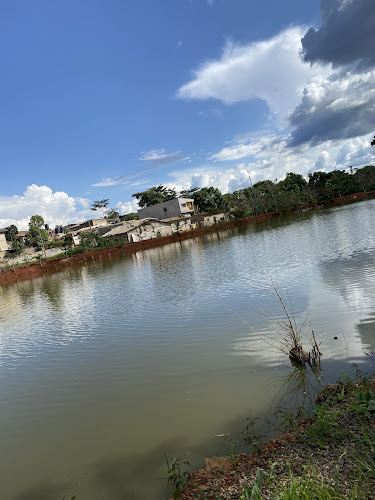
If you’re trying to track down “Le site” in Yaoundé using the address you’ve got—QCMR+Q5, Yaoundé, Cameroon—the most reliable public footprint I can confirm is that it appears in business directories under nurseries / garden supplies (a garden-store type listing), not as a public botanical garden or landscaped city park.
That distinction matters for planning: you should think plant nursery + gardening inputs (seedlings, soil amendments, tools, pots, basic horticulture support) rather than a “walkable garden attraction.” Anything beyond that (opening hours, exact inventory, pricing, entry fees, guided tours) would be speculation unless you verify directly on the ground.
### Quick facts you can rely on
– Name: Le site
– Address / locator: QCMR+Q5, Yaoundé, Cameroon
– Your provided coordinates: 3.7844165, 11.440465 (useful for GPS pinning even when street addressing is inconsistent)
– City context: Yaoundé is the capital of Cameroon.
—
## What “Le site” likely is—and how to use it well
Because “Le site” is listed alongside other nursery and garden-supply businesses in Yaoundé, the most accurate way to position it in travel content is as a local procurement point for anyone who needs to buy plants or garden materials in the city.
That means it’s relevant for:
– People relocating to Yaoundé short-term (apartment balcony plants, indoor greenery, small container gardens)
– Travelers staying in villas or guesthouses with outdoor space
– Diaspora visitors helping family upgrade home gardens
– Anyone sourcing plants for shade, privacy screening, or erosion control around a property
What you should not promise in copy: that it’s scenic, landscaped, designed for visitors, or “one of the top things to do.” None of that is confirmed in the sources available.
—
## Yaoundé conditions that shape what you buy (and how you keep it alive)
Even a great nursery is only half the story; Yaoundé’s environment determines what thrives after purchase.
Verified, broadly useful context:
– Yaoundé sits at roughly ~726 m elevation (sources phrase it as “about 750 m,” but 726 m is explicitly stated).
– The area has a tropical climate with wet and dry seasons; travel-planning sources commonly describe a drier stretch roughly Dec–Feb and a longer rainy stretch roughly Mar–Nov. to Travel
Why this matters when you shop:
– Wet-season buying: prioritize drainage (pots with real holes, saucers you can empty, chunky substrate). Root rot is the silent killer in humid months.
– Dry-season buying: prioritize mulch, watering cans, and drought-tolerant ornamentals if the plant will be neglected or water access is inconsistent.
– Year-round reality: indoor plants in tropical cities can still suffer if air flow is poor—fungal issues show up fast. Look for sturdier foliage types and avoid anything already showing spotting or soft stems.
—
## How to get there when the address is a Plus Code
Your address is a Plus Code (QCMR+Q5), which is common in places where street-numbering is uneven or where locals navigate by landmarks.
Practical navigation steps that don’t rely on guessing:
1. Use the coordinates you already have (3.7844165, 11.440465) to drop a pin in your maps app.
2. Save the location offline before heading out, especially if you’re moving through areas with variable data coverage.
3. Build a fallback: take a screenshot of the pin and the plus code so you can show it to a driver.
(I’m not claiming specific transit routes, ride costs, or neighborhood boundaries here—those would require direct, verifiable local mapping data.)
—
## What to look for once you arrive (quality checks that save money)
These are universal nursery checks that apply anywhere—and they’re especially valuable if you’re buying plants to survive a full season.
### Plant health checks
– Leaves: avoid heavy spotting, sticky residue, or curling tips (often pest or stress indicators).
– Stems: should be firm; soft stems can mean rot.
– Root zone: if you can peek—avoid dense circling roots or sour smells.
– New growth: a small amount of fresh growth is a good sign; overly lush growth can mean it was pushed with heavy nitrogen and may crash later.
### Soil + inputs checks
– If you’re buying potting media, look for:
– Coarse structure (better drainage)
– No strong ammonia smell
– Bags stored out of heavy rain (waterlogged media can go anaerobic)
### Tools + containers checks
– Choose pots that match Yaoundé’s wet-season risk:
– Real drainage holes
– Stable bases (storms + saturated soil = tipping risk)
—
## Who this stop is best for
Le site makes the most sense for travelers or residents who want practical outcomes, not a sightseeing loop:
– Home-cooks staying weeks/months: start a small herb container setup (fast payoff, low complexity).
– Villa / guesthouse managers: source hardy plants for curb appeal that don’t demand daily attention.
– Families visiting relatives: quick upgrades—shade plants, basic landscaping inputs, soil improvement materials.
If your travel audience is more “experiences-first,” you can still include Le site—but frame it honestly as a local errand that improves your stay (cooler balcony, privacy screening, less glare, nicer outdoor meals).
—
## Inclusivity and accuracy notes (what may be outdated or unclear)
– Category mismatch risk: some listings label businesses broadly (e.g., “garden,” “nursery,” “garden store”). Public directories show Le site as a GardenStore-type nursery/supplies listing, but that doesn’t guarantee the on-the-ground setup or whether it also has a walkable garden area.
– Operating details: hours, phone number, accessibility features, languages spoken, accepted payments, and current stock are not confirmed in the sources surfaced here. Treat any older directory snippet as a lead, not truth.
—
## Internal links (only if your site already has these pages)
I can’t responsibly invent RealJourneyTravels.com URLs. If you already have relevant guides, these are the two most contextual internal-link placements to add:
– Link from the first third of the article to your Yaoundé city guide (anchor idea: “Yaoundé travel tips and neighborhoods”).
– Link from the “what to buy” section to a Cameroon packing / essentials or West Africa travel logistics guide (anchor idea: “Cameroon travel essentials for longer stays”).
If those pages don’t exist yet, skip the links rather than guessing.
—
### Source-backed reference block (for your CMS fields)
– post_title: Le site
– post_name: le-site
– location: Le site
– address / full_address: QCMR+Q5, Yaoundé, Cameroon
– city: Yaoundé
– coordinates: 3.7844165, 11.440465 (as provided)
– location_type (verified public listing type): nursery / garden supplies (directory category)
Table of Contents
Key Highlights
Le site
Location
Places to Stay Near Le site
Find and Book a Tour
Explore More Travel Guides
No reviews found! Be the first to review!
Traveler Reviews for Le site
There are no reviews yet. Be the first one to write one.
Have you visited Le site? Help other travelers by sharing your review.
You Might Also Like
Place de Djoungolo
Eco Park
Museu Etnográfico dos Povos da Floresta
Find Accommodations Nearby
Recommended Tours & Activities
Visitor Reviews
There are no reviews yet. Be the first one to write one.
Share Your Experience
Have you visited Le site? Help other travelers by leaving a review.