About Lama Temple

Description

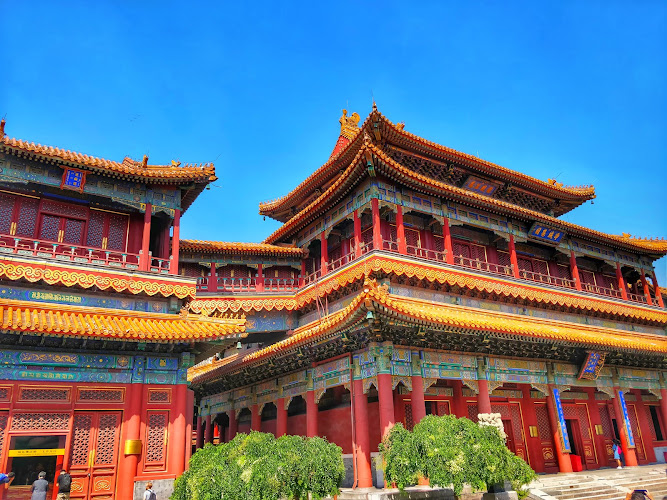
The Lama Temple, known locally as Yonghe Temple or Yonghegong, stands as one of Beijing's most spectacular religious sites and honestly, it's one of those places that catches you off guard with its sheer beauty. Built back in 1694 during the Qing Dynasty, this wasn't always a temple – it actually started as the residence of Emperor Yongzheng before his ascension to the throne. And here's where it gets interesting: after he became emperor, the complex was converted into a lamasery, becoming one of the most important centers of Tibetan Buddhism outside of Tibet itself. Walking through these grounds feels different from other tourist spots in Beijing. There's this unmistakable spiritual energy that permeates the air, mixing with the thick smoke from incense burners that visitors and worshippers light throughout the day. The temple complex sprawls across about 66,400 square meters, and trust me, you'll want to give yourself at least a couple hours to really take it all in. What makes this place genuinely special is that it's still an active monastery and place of worship. You'll see actual monks going about their daily routines, prayer wheels spinning, and devoted practitioners performing prostrations. This isn't just some preserved historical site – it's a living, breathing center of faith that's been continuously operating for over three centuries. The architecture itself is this fascinating blend of Han Chinese and Tibetan styles, with yellow tiles adorning the roofs (a color reserved for imperial buildings) and traditional Tibetan decorative elements throughout. I remember my first visit there, probably wasn't expecting much beyond another temple tour, but the scale of everything just stopped me in my tracks. The courtyards flow one into another, each revealing new treasures and architectural marvels that make you wonder how craftsmen accomplished such intricate work without modern tools.

Key Features

The Lama Temple houses some truly remarkable features that you won't find replicated anywhere else:
  • The Giant Maitreya Buddha – This is the showstopper that everyone comes to see. Standing at an impressive 18 meters (about 60 feet) tall, with an additional 8 meters buried underground for support, this sandalwood statue is carved from a single piece of Tibetan white sandalwood. It's recognized in the Guinness Book of World Records and dominates the Wanfu Pavilion. Looking up at it from the ground floor is pretty humbling.
  • Five Main Halls – The temple complex follows traditional Buddhist temple layout with five principle halls arranged along a central north-south axis. Each hall serves different purposes and houses different deities, creating this journey of discovery as you move through the space.
  • Ornate Bronze Statues – Throughout the complex you'll encounter hundreds of bronze statues depicting various Buddhist deities, arhats, and historical figures. The craftsmanship on these pieces is extraordinary, with details so fine you could spend hours examining just one statue.
  • Massive Incense Burners – Several enormous bronze incense burners sit in the courtyards, constantly filled with burning incense sticks placed by visitors. The larger ones are actual works of art themselves, decorated with dragons and other traditional motifs.
  • Tibetan Buddhist Art Collection – The temple houses an impressive collection of Tibetan Buddhist artifacts including thangkas (religious paintings on silk), ceremonial objects, and ancient texts. Some of these pieces date back centuries and offer glimpses into religious practices from different eras.
  • Prayer Wheels – Multiple prayer wheels line certain walkways, and you'll often see devoted practitioners spinning them clockwise while reciting mantras. Each rotation is believed to have the same effect as orally reciting the prayers inscribed on them.
  • Architectural Details – From the elaborate roof decorations to the hand-painted beams and columns, virtually every surface contains some form of artistic expression. The color combinations – reds, golds, greens, and blues – create this visual feast that photographers absolutely love.
  • Active Monastery Quarters – While not all areas are accessible to tourists, you can observe parts of the working monastery where monks study and practice.

Best Time to Visit

Figuring out when to visit the Lama Temple can really make or break your experience. The temple is open year-round, but timing matters more than you might think. Weather-wise, spring (April to May) and autumn (September to October) are your best bets. Beijing's weather during these months is genuinely pleasant – not too hot, not freezing cold, and you won't be battling the summer humidity or winter winds. I'd personally lean toward autumn because the air quality tends to be better, and there's something about that crisp fall air mixing with incense smoke that just works. But here's the thing about visiting Buddhist temples in China – you really need to pay attention to the Chinese calendar. During major Buddhist festivals, particularly Chinese New Year and the Lunar New Year period, the Lama Temple becomes absolutely packed. We're talking shoulder-to-shoulder crowds of worshippers coming to pray for good fortune in the coming year. If you're interested in witnessing authentic religious fervor and don't mind crowds, this could be fascinating. But if you want a more contemplative experience where you can actually move around and take photos without people in every shot, avoid these periods. Weekdays are significantly quieter than weekends. And if you can swing it, arriving right when the temple opens in the morning (usually around 9 AM, though this can vary by season) gives you a window of relative calm before tour groups descend. There's something pretty magical about experiencing the morning prayer sessions if you're there early enough. Summer (June through August) isn't terrible, but Beijing heat combined with crowds and incense smoke can get overwhelming. Winter visits have their own charm though – fewer tourists, and if you're lucky enough to visit after a snowfall, the white temple roofs against clear blue skies create stunning photographs. Just bundle up because Beijing winters don't mess around.

How to Get There

Getting to the Lama Temple is refreshingly straightforward, which is saying something for Beijing navigation. The city's metro system has a station literally called Yonghegong Lama Temple on Line 2 and Line 5. Seriously, it doesn't get much easier than that. Take Exit C and you'll spot the temple entrance within a couple minutes' walk. Line 2 is the loop line that circles central Beijing, so you can catch it from pretty much anywhere in the city center. If you're staying near major tourist areas like Wangfujing, Tiananmen Square, or the Forbidden City, you're probably already near a Line 2 station. The ride itself gives you a nice cross-section of Beijing life – you'll share the subway car with everyone from business people to students to elderly folks heading to morning exercises. Taxis work too, of course. Just show the driver the Chinese characters for Yonghegong (雍和宫) and you should be fine. However, Beijing traffic can be unpredictable, and you might spend more time and money sitting in gridlock than you'd like. The metro really is your friend here. If you're feeling adventurous and the weather's decent, renting a bike through one of Beijing's bike-sharing apps could work. The area around the temple is relatively flat, and there's something satisfying about arriving under your own power. Just be prepared for Beijing traffic, which can be intimidating if you're not used to it. Tour buses include the Lama Temple on many Beijing itineraries, often pairing it with the nearby Confucius Temple and Imperial Academy. These can be convenient if you prefer structured experiences, though you'll be on someone else's schedule. One thing I learned the hard way – don't rely solely on ride-sharing apps during peak hours. Traffic restrictions in central Beijing can mean longer wait times and weird routing. The metro stays consistent regardless of surface traffic conditions.

Tips for Visiting

Alright, let me share some practical wisdom that'll make your visit smoother. First off, dress respectfully. This is an active place of worship, not just a tourist attraction. That means covering your shoulders and knees. You'll see some visitors in shorts and tank tops, but it's honestly disrespectful to the monks and worshippers. Plus, you might be asked to cover up or denied entry to certain halls. The entrance fee is remarkably reasonable – last I checked it was around 25 RMB (roughly $3-4 USD), though prices can change. They don't accept credit cards at the ticket counter, so bring cash. And yes, there's a proper ticket office despite what might look like unofficial sellers outside trying to charge you more. Photography is allowed in most areas, but not inside the main halls where the principal Buddha statues are housed. You'll see signs indicating where photography is prohibited. Respect these rules – I've seen security guards get pretty firm with people who ignore the signs. The courtyards and exteriors offer plenty of photo opportunities anyway. Here's something most guidebooks don't tell you: grab some free incense at the entrance after you buy your ticket. It's included in your admission, and participating in this ritual adds to the experience even if you're not Buddhist. There are designated incense burners in each courtyard – watch what others do if you're unsure of the proper way to offer it. The temple provides wheelchair accessibility with ramps at the entrance and throughout most of the complex, though some smaller halls might be challenging. Restrooms are available and generally well-maintained, located near the entrance area. Bring water, especially in summer. While there are vendors outside, you won't find much inside the complex. And wear comfortable shoes – you'll be doing a fair bit of walking on stone courtyards. Audio guides are available for rent and honestly worth it if you want deeper understanding of what you're seeing. The English version provides context about the symbolism, history, and religious significance that you'd otherwise miss. Alternatively, hiring a guide outside can work, but make sure you agree on the price beforehand. Avoid touching the religious artifacts and statues. It might seem obvious, but I've seen people reach out to touch things without thinking. Everything here is sacred to practitioners and many items are genuinely ancient. If you're interested in Buddhism or meditation, some areas have information about teachings and practices. You might even encounter English-speaking monks willing to chat, though don't expect it or interrupt anyone who's clearly engaged in religious practice. The gift shop near the exit sells Buddhist items, books, and souvenirs. Prices are generally reasonable compared to vendors outside. If you're interested in prayer beads or small Buddha statues, this is probably your best bet for authentic items rather than cheap knockoffs. One last thing – take your time. I see too many visitors rushing through in 45 minutes because they're trying to hit five attractions in one day. The Lama Temple rewards slower, more contemplative visiting. Find a quiet corner, sit for a bit, and just absorb the atmosphere. That's when this place really gets under your skin in the best possible way.

Key Features

  • Key Features
  • Best Time to Visit
  • How to Get There
  • Tips for Visiting

More Details

Updated March 30, 2026

Description

The Lama Temple, known locally as Yonghe Temple or Yonghegong, stands as one of Beijing’s most spectacular religious sites and honestly, it’s one of those places that catches you off guard with its sheer beauty. Built back in 1694 during the Qing Dynasty, this wasn’t always a temple – it actually started as the residence of Emperor Yongzheng before his ascension to the throne. And here’s where it gets interesting: after he became emperor, the complex was converted into a lamasery, becoming one of the most important centers of Tibetan Buddhism outside of Tibet itself.

Walking through these grounds feels different from other tourist spots in Beijing. There’s this unmistakable spiritual energy that permeates the air, mixing with the thick smoke from incense burners that visitors and worshippers light throughout the day. The temple complex sprawls across about 66,400 square meters, and trust me, you’ll want to give yourself at least a couple hours to really take it all in.

What makes this place genuinely special is that it’s still an active monastery and place of worship. You’ll see actual monks going about their daily routines, prayer wheels spinning, and devoted practitioners performing prostrations. This isn’t just some preserved historical site – it’s a living, breathing center of faith that’s been continuously operating for over three centuries. The architecture itself is this fascinating blend of Han Chinese and Tibetan styles, with yellow tiles adorning the roofs (a color reserved for imperial buildings) and traditional Tibetan decorative elements throughout.

I remember my first visit there, probably wasn’t expecting much beyond another temple tour, but the scale of everything just stopped me in my tracks. The courtyards flow one into another, each revealing new treasures and architectural marvels that make you wonder how craftsmen accomplished such intricate work without modern tools.

Key Features

The Lama Temple houses some truly remarkable features that you won’t find replicated anywhere else:

  • The Giant Maitreya Buddha – This is the showstopper that everyone comes to see. Standing at an impressive 18 meters (about 60 feet) tall, with an additional 8 meters buried underground for support, this sandalwood statue is carved from a single piece of Tibetan white sandalwood. It’s recognized in the Guinness Book of World Records and dominates the Wanfu Pavilion. Looking up at it from the ground floor is pretty humbling.
  • Five Main Halls – The temple complex follows traditional Buddhist temple layout with five principle halls arranged along a central north-south axis. Each hall serves different purposes and houses different deities, creating this journey of discovery as you move through the space.
  • Ornate Bronze Statues – Throughout the complex you’ll encounter hundreds of bronze statues depicting various Buddhist deities, arhats, and historical figures. The craftsmanship on these pieces is extraordinary, with details so fine you could spend hours examining just one statue.
  • Massive Incense Burners – Several enormous bronze incense burners sit in the courtyards, constantly filled with burning incense sticks placed by visitors. The larger ones are actual works of art themselves, decorated with dragons and other traditional motifs.
  • Tibetan Buddhist Art Collection – The temple houses an impressive collection of Tibetan Buddhist artifacts including thangkas (religious paintings on silk), ceremonial objects, and ancient texts. Some of these pieces date back centuries and offer glimpses into religious practices from different eras.
  • Prayer Wheels – Multiple prayer wheels line certain walkways, and you’ll often see devoted practitioners spinning them clockwise while reciting mantras. Each rotation is believed to have the same effect as orally reciting the prayers inscribed on them.
  • Architectural Details – From the elaborate roof decorations to the hand-painted beams and columns, virtually every surface contains some form of artistic expression. The color combinations – reds, golds, greens, and blues – create this visual feast that photographers absolutely love.
  • Active Monastery Quarters – While not all areas are accessible to tourists, you can observe parts of the working monastery where monks study and practice.

Best Time to Visit

Figuring out when to visit the Lama Temple can really make or break your experience. The temple is open year-round, but timing matters more than you might think.

Weather-wise, spring (April to May) and autumn (September to October) are your best bets. Beijing’s weather during these months is genuinely pleasant – not too hot, not freezing cold, and you won’t be battling the summer humidity or winter winds. I’d personally lean toward autumn because the air quality tends to be better, and there’s something about that crisp fall air mixing with incense smoke that just works.

But here’s the thing about visiting Buddhist temples in China – you really need to pay attention to the Chinese calendar. During major Buddhist festivals, particularly Chinese New Year and the Lunar New Year period, the Lama Temple becomes absolutely packed. We’re talking shoulder-to-shoulder crowds of worshippers coming to pray for good fortune in the coming year. If you’re interested in witnessing authentic religious fervor and don’t mind crowds, this could be fascinating. But if you want a more contemplative experience where you can actually move around and take photos without people in every shot, avoid these periods.

Weekdays are significantly quieter than weekends. And if you can swing it, arriving right when the temple opens in the morning (usually around 9 AM, though this can vary by season) gives you a window of relative calm before tour groups descend. There’s something pretty magical about experiencing the morning prayer sessions if you’re there early enough.

Summer (June through August) isn’t terrible, but Beijing heat combined with crowds and incense smoke can get overwhelming. Winter visits have their own charm though – fewer tourists, and if you’re lucky enough to visit after a snowfall, the white temple roofs against clear blue skies create stunning photographs. Just bundle up because Beijing winters don’t mess around.

How to Get There

Getting to the Lama Temple is refreshingly straightforward, which is saying something for Beijing navigation. The city’s metro system has a station literally called Yonghegong Lama Temple on Line 2 and Line 5. Seriously, it doesn’t get much easier than that. Take Exit C and you’ll spot the temple entrance within a couple minutes’ walk.

Line 2 is the loop line that circles central Beijing, so you can catch it from pretty much anywhere in the city center. If you’re staying near major tourist areas like Wangfujing, Tiananmen Square, or the Forbidden City, you’re probably already near a Line 2 station. The ride itself gives you a nice cross-section of Beijing life – you’ll share the subway car with everyone from business people to students to elderly folks heading to morning exercises.

Taxis work too, of course. Just show the driver the Chinese characters for Yonghegong (雍和宫) and you should be fine. However, Beijing traffic can be unpredictable, and you might spend more time and money sitting in gridlock than you’d like. The metro really is your friend here.

If you’re feeling adventurous and the weather’s decent, renting a bike through one of Beijing’s bike-sharing apps could work. The area around the temple is relatively flat, and there’s something satisfying about arriving under your own power. Just be prepared for Beijing traffic, which can be intimidating if you’re not used to it.

Tour buses include the Lama Temple on many Beijing itineraries, often pairing it with the nearby Confucius Temple and Imperial Academy. These can be convenient if you prefer structured experiences, though you’ll be on someone else’s schedule.

One thing I learned the hard way – don’t rely solely on ride-sharing apps during peak hours. Traffic restrictions in central Beijing can mean longer wait times and weird routing. The metro stays consistent regardless of surface traffic conditions.

Tips for Visiting

Alright, let me share some practical wisdom that’ll make your visit smoother. First off, dress respectfully. This is an active place of worship, not just a tourist attraction. That means covering your shoulders and knees. You’ll see some visitors in shorts and tank tops, but it’s honestly disrespectful to the monks and worshippers. Plus, you might be asked to cover up or denied entry to certain halls.

The entrance fee is remarkably reasonable – last I checked it was around 25 RMB (roughly $3-4 USD), though prices can change. They don’t accept credit cards at the ticket counter, so bring cash. And yes, there’s a proper ticket office despite what might look like unofficial sellers outside trying to charge you more.

Photography is allowed in most areas, but not inside the main halls where the principal Buddha statues are housed. You’ll see signs indicating where photography is prohibited. Respect these rules – I’ve seen security guards get pretty firm with people who ignore the signs. The courtyards and exteriors offer plenty of photo opportunities anyway.

Here’s something most guidebooks don’t tell you: grab some free incense at the entrance after you buy your ticket. It’s included in your admission, and participating in this ritual adds to the experience even if you’re not Buddhist. There are designated incense burners in each courtyard – watch what others do if you’re unsure of the proper way to offer it.

The temple provides wheelchair accessibility with ramps at the entrance and throughout most of the complex, though some smaller halls might be challenging. Restrooms are available and generally well-maintained, located near the entrance area.

Bring water, especially in summer. While there are vendors outside, you won’t find much inside the complex. And wear comfortable shoes – you’ll be doing a fair bit of walking on stone courtyards.

Audio guides are available for rent and honestly worth it if you want deeper understanding of what you’re seeing. The English version provides context about the symbolism, history, and religious significance that you’d otherwise miss. Alternatively, hiring a guide outside can work, but make sure you agree on the price beforehand.

Avoid touching the religious artifacts and statues. It might seem obvious, but I’ve seen people reach out to touch things without thinking. Everything here is sacred to practitioners and many items are genuinely ancient.

If you’re interested in Buddhism or meditation, some areas have information about teachings and practices. You might even encounter English-speaking monks willing to chat, though don’t expect it or interrupt anyone who’s clearly engaged in religious practice.

The gift shop near the exit sells Buddhist items, books, and souvenirs. Prices are generally reasonable compared to vendors outside. If you’re interested in prayer beads or small Buddha statues, this is probably your best bet for authentic items rather than cheap knockoffs.

One last thing – take your time. I see too many visitors rushing through in 45 minutes because they’re trying to hit five attractions in one day. The Lama Temple rewards slower, more contemplative visiting. Find a quiet corner, sit for a bit, and just absorb the atmosphere. That’s when this place really gets under your skin in the best possible way.

Key Highlights

  • Key Features
  • Best Time to Visit
  • How to Get There
  • Tips for Visiting

Location

Places to Stay Near Lama Temple

Find and Book a Tour

Explore More Travel Guides

No reviews found! Be the first to review!

Lama Temple is a prominent attractions located in Dongcheng.

Visit us at: 12 Yonghegong Ave, 国子监 Dongcheng, Kina, 100007.

Traveler Reviews for Lama Temple

There are no reviews yet. Be the first one to write one.

Share Your Experience

Have you visited Lama Temple? Help other travelers by sharing your review.

Find Accommodations Nearby

Recommended Tours & Activities

Visitor Reviews

There are no reviews yet. Be the first one to write one.

Share Your Experience

Have you visited Lama Temple? Help other travelers by leaving a review.