
Lady Godiva
About Lady Godiva
Description
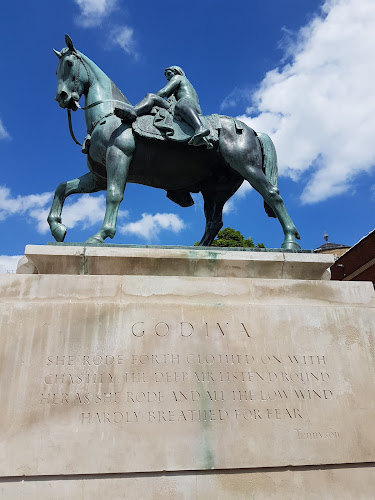
The Lady Godiva statue stands right in the middle of a pedestrianized city-center plaza, commanding attention in a way that’s both bold and oddly gentle at the same time. It depicts one of England’s most talked-about local legends: Lady Godiva, the noblewoman said to have ridden naked through the streets to protest unfair taxes. Whether you believe the story as literal truth or medieval myth with a good PR team, the sculpture doesn’t really care. It’s there. Solid. Unapologetic.
This monument isn’t tucked away or hidden behind gates. It lives among everyday city life—shoppers passing with coffee cups, buskers playing off-key guitars, kids weaving through pigeons. And honestly, that’s part of the charm. The statue isn’t treated like a fragile relic. It’s treated like a local neighbor everyone knows. You’ll see people meeting under it, leaning on the base, snapping photos from every angle imaginable.
The sculpture shows Lady Godiva on horseback, her long hair cascading in a way that’s symbolic rather than scandalous. It’s tasteful, strong, and quietly defiant. The sculptor clearly wanted her to look determined, not embarrassed. And I appreciate that. Too many monuments flatten women into ideas; this one gives her weight and presence. The horse, too, looks alert and grounded, as if it knows it’s part of something historic.
From a traveler’s perspective, this attraction works because it doesn’t demand much from you. You don’t need a ticket. You don’t need an hour. You just show up, look, think a bit, maybe argue in your head about whether the story could’ve really happened. And then you move on, slightly more aware of the place you’re standing in.
I remember the first time I saw it, years ago, on a grey afternoon. I wasn’t expecting to feel anything. But there I was, oddly moved, standing in the drizzle, watching people walk past without looking up. That’s the thing about Lady Godiva. She waits. If you rush, you’ll miss her. If you slow down, she has a way of sticking with you.
Key Features
- Life-sized bronze statue depicting Lady Godiva on horseback, centrally placed and impossible to ignore
- Located in a fully pedestrianized plaza, making it easy and safe to explore on foot
- Wheelchair accessible approach with smooth paving and open space around the monument
- Onsite services nearby, including seating areas and public amenities
- A popular photo spot that changes character depending on time of day and weather
- Strong ties to local identity and folklore, not just decorative public art
- Free to visit, no queues, no pressure, no schedules to keep
Best Time to Visit
Technically, you can visit the Lady Godiva statue any time of year, day or night. But if timing matters to you—and it probably does—there are sweet spots. Early morning is surprisingly good. The plaza is quieter, the shops are still waking up, and the statue feels almost private. You can walk around it without dodging selfie sticks, which is a gift.
Late afternoon brings a different energy. The area fills up with locals finishing work, street performers testing their luck, and travelers checking things off their list. This is when the statue feels most alive, part of a living city rather than a historical footnote.
Season-wise, spring and early autumn are the most comfortable. Mild weather, decent light, and fewer soggy socks. Summer can be busy, especially during school holidays, but it also brings longer daylight hours. Winter? Cold, yes. But there’s something striking about the statue against a darker sky, especially if there’s a hint of fog or frost. Just bring gloves. Trust me.
And if you’re into photography, overcast days are actually your friend here. The bronze picks up texture better without harsh sunlight. I learned that the hard way after squinting through a camera on a blazing July afternoon.
How to Get There
Getting to the Lady Godiva statue is refreshingly straightforward. It sits right in the city center, so if you’re already exploring on foot, chances are you’ll stumble upon it without even trying. The plaza is well-connected to public transport routes, and nearby streets funnel foot traffic naturally toward it.
For those arriving by train or bus, the walk is short and clearly signposted. And even if you’re terrible with directions—no judgement, I once walked the wrong way for twenty minutes while holding a map upside down—you’ll notice people gravitating toward the same open space. Follow the crowd. It works more often than not.
If you’re driving, you’ll need to park in one of the surrounding facilities and walk in. The area itself is pedestrian-only, which honestly makes the experience better. No engines, no honking, just footsteps and city noise. Wheelchair users and travelers with strollers will find the routes manageable, with ramps and wide paths leading into the plaza.
Tips for Visiting
First tip: don’t rush it. This isn’t a check-the-box attraction. Give yourself ten minutes. Walk around the statue. Look at it from the front, the side, the back. Each angle tells a slightly different story.
Second, read up a little on the legend beforehand, but not too much. Part of the fun is letting your own interpretation fill in the gaps. Was she brave? Was it a symbolic gesture exaggerated over time? You’ll probably change your mind twice while standing there.
Third, watch the people as much as the statue. Locals treat it differently than visitors. Some barely glance. Others still stop, even after years. That contrast says a lot about how history settles into daily life.
If you’re traveling with kids, use the story as a conversation starter. It’s a gateway into discussions about fairness, protest, and how stories survive. I once overheard a child ask why she didn’t just write a letter instead. Fair question, honestly.
Bring a camera, but also put it away for a moment. Not everything needs proof you were there. Sometimes it’s enough to stand, look, and think, yeah, I get why this matters.
And lastly, don’t be thrown off if your feelings are mixed. Some travelers are deeply impressed. Others shrug. Most land somewhere in between. That’s okay. The Lady Godiva statue isn’t here to perform for you. It’s here because it belongs. And if you let it, it’ll quietly become part of your memory of the city.
In a world packed with flashy attractions and overhyped landmarks, this sculpture does something rare. It asks you to pause. And these days, that’s worth more than you’d think.
Key Features
- Life-sized bronze statue depicting Lady Godiva on horseback, centrally placed and impossible to ignore
- Located in a fully pedestrianized plaza, making it easy and safe to explore on foot
- Wheelchair accessible approach with smooth paving and open space around the monument
- Onsite services nearby, including seating areas and public amenities
- A popular photo spot that changes character depending on time of day and weather
- Strong ties to local identity and folklore, not just decorative public art
- Free to visit, no queues, no pressure, no schedules to keep
More Details
Updated December 31, 2025
Table of Contents
Description
The Lady Godiva statue stands right in the middle of a pedestrianized city-center plaza, commanding attention in a way that’s both bold and oddly gentle at the same time. It depicts one of England’s most talked-about local legends: Lady Godiva, the noblewoman said to have ridden naked through the streets to protest unfair taxes. Whether you believe the story as literal truth or medieval myth with a good PR team, the sculpture doesn’t really care. It’s there. Solid. Unapologetic.
This monument isn’t tucked away or hidden behind gates. It lives among everyday city life—shoppers passing with coffee cups, buskers playing off-key guitars, kids weaving through pigeons. And honestly, that’s part of the charm. The statue isn’t treated like a fragile relic. It’s treated like a local neighbor everyone knows. You’ll see people meeting under it, leaning on the base, snapping photos from every angle imaginable.
The sculpture shows Lady Godiva on horseback, her long hair cascading in a way that’s symbolic rather than scandalous. It’s tasteful, strong, and quietly defiant. The sculptor clearly wanted her to look determined, not embarrassed. And I appreciate that. Too many monuments flatten women into ideas; this one gives her weight and presence. The horse, too, looks alert and grounded, as if it knows it’s part of something historic.
From a traveler’s perspective, this attraction works because it doesn’t demand much from you. You don’t need a ticket. You don’t need an hour. You just show up, look, think a bit, maybe argue in your head about whether the story could’ve really happened. And then you move on, slightly more aware of the place you’re standing in.
I remember the first time I saw it, years ago, on a grey afternoon. I wasn’t expecting to feel anything. But there I was, oddly moved, standing in the drizzle, watching people walk past without looking up. That’s the thing about Lady Godiva. She waits. If you rush, you’ll miss her. If you slow down, she has a way of sticking with you.
Key Features
- Life-sized bronze statue depicting Lady Godiva on horseback, centrally placed and impossible to ignore
- Located in a fully pedestrianized plaza, making it easy and safe to explore on foot
- Wheelchair accessible approach with smooth paving and open space around the monument
- Onsite services nearby, including seating areas and public amenities
- A popular photo spot that changes character depending on time of day and weather
- Strong ties to local identity and folklore, not just decorative public art
- Free to visit, no queues, no pressure, no schedules to keep
Best Time to Visit
Technically, you can visit the Lady Godiva statue any time of year, day or night. But if timing matters to you—and it probably does—there are sweet spots. Early morning is surprisingly good. The plaza is quieter, the shops are still waking up, and the statue feels almost private. You can walk around it without dodging selfie sticks, which is a gift.
Late afternoon brings a different energy. The area fills up with locals finishing work, street performers testing their luck, and travelers checking things off their list. This is when the statue feels most alive, part of a living city rather than a historical footnote.
Season-wise, spring and early autumn are the most comfortable. Mild weather, decent light, and fewer soggy socks. Summer can be busy, especially during school holidays, but it also brings longer daylight hours. Winter? Cold, yes. But there’s something striking about the statue against a darker sky, especially if there’s a hint of fog or frost. Just bring gloves. Trust me.
And if you’re into photography, overcast days are actually your friend here. The bronze picks up texture better without harsh sunlight. I learned that the hard way after squinting through a camera on a blazing July afternoon.
How to Get There
Getting to the Lady Godiva statue is refreshingly straightforward. It sits right in the city center, so if you’re already exploring on foot, chances are you’ll stumble upon it without even trying. The plaza is well-connected to public transport routes, and nearby streets funnel foot traffic naturally toward it.
For those arriving by train or bus, the walk is short and clearly signposted. And even if you’re terrible with directions—no judgement, I once walked the wrong way for twenty minutes while holding a map upside down—you’ll notice people gravitating toward the same open space. Follow the crowd. It works more often than not.
If you’re driving, you’ll need to park in one of the surrounding facilities and walk in. The area itself is pedestrian-only, which honestly makes the experience better. No engines, no honking, just footsteps and city noise. Wheelchair users and travelers with strollers will find the routes manageable, with ramps and wide paths leading into the plaza.
Tips for Visiting
First tip: don’t rush it. This isn’t a check-the-box attraction. Give yourself ten minutes. Walk around the statue. Look at it from the front, the side, the back. Each angle tells a slightly different story.
Second, read up a little on the legend beforehand, but not too much. Part of the fun is letting your own interpretation fill in the gaps. Was she brave? Was it a symbolic gesture exaggerated over time? You’ll probably change your mind twice while standing there.
Third, watch the people as much as the statue. Locals treat it differently than visitors. Some barely glance. Others still stop, even after years. That contrast says a lot about how history settles into daily life.
If you’re traveling with kids, use the story as a conversation starter. It’s a gateway into discussions about fairness, protest, and how stories survive. I once overheard a child ask why she didn’t just write a letter instead. Fair question, honestly.
Bring a camera, but also put it away for a moment. Not everything needs proof you were there. Sometimes it’s enough to stand, look, and think, yeah, I get why this matters.
And lastly, don’t be thrown off if your feelings are mixed. Some travelers are deeply impressed. Others shrug. Most land somewhere in between. That’s okay. The Lady Godiva statue isn’t here to perform for you. It’s here because it belongs. And if you let it, it’ll quietly become part of your memory of the city.
In a world packed with flashy attractions and overhyped landmarks, this sculpture does something rare. It asks you to pause. And these days, that’s worth more than you’d think.
Key Highlights
- Life-sized bronze statue depicting Lady Godiva on horseback, centrally placed and impossible to ignore
- Located in a fully pedestrianized plaza, making it easy and safe to explore on foot
- Wheelchair accessible approach with smooth paving and open space around the monument
- Onsite services nearby, including seating areas and public amenities
- A popular photo spot that changes character depending on time of day and weather
- Strong ties to local identity and folklore, not just decorative public art
- Free to visit, no queues, no pressure, no schedules to keep
Location
Places to Stay Near Lady Godiva
Find and Book a Tour
Explore More Travel Guides
No reviews found! Be the first to review!
Traveler Reviews for Lady Godiva
There are no reviews yet. Be the first one to write one.
Have you visited Lady Godiva? Help other travelers by sharing your review.
You Might Also Like
FarGo Village
Coundon Hall Park
Wyken Slough
Find Accommodations Nearby
Recommended Tours & Activities
Visitor Reviews
There are no reviews yet. Be the first one to write one.
Share Your Experience
Have you visited Lady Godiva? Help other travelers by leaving a review.