
La Tour du Diable
About La Tour du Diable
Key Features
More Details
Updated April 16, 2024
## La Tour du Diable (Mulhouse): what it is, why it matters, and how to visit smart
If you like small, “blink-and-you-miss-it” remnants that explain a city’s deeper story, La Tour du Diable is exactly that. It’s not a museum with ticket lines—it’s a surviving piece of Mulhouse’s old defensive system, still standing inside the modern street grid.
### Quick facts (from your dataset)
– Name: La Tour du Diable
– Location (listed): 18 Rue Gay Lussac, 68100 Mulhouse, France
– Coordinates: 47.7434675, 7.3307033
– Rating: 3.5
– Type: Tourist attraction
> Data flag (address mismatch): Authoritative heritage references place the tower on rue de la Tour-du-Diable (and related “ville haute”/old fortifications context), while many map listings surface 18 Rue Gay-Lussac. Treat Gay-Lussac as a navigation pin, and confirm on arrival by looking for signage referencing “Tour du Diable / rue de la Tour-du-Diable.”
—
## Why this tower is worth your time
Mulhouse often gets summarized through its big-name museums (especially transport/industry), but the Tour du Diable is a different lens: it’s urban archaeology in plain sight. Heritage documentation describes it as a vestige of a fortified enclosure established in the early 13th century, later reinforced in the 14th, and rebuilt in the early 15th—a timeline that matches Mulhouse’s long run as a defended, strategically positioned town.
The tower’s nickname isn’t just marketing. During the witch-hunt period, it was used to imprison people accused of witchcraft, which is explicitly cited as the origin of the “Devil” name in standard references.
And then—like many defensive buildings across Europe—it adapted. Sources note that by the 20th century, it even held workers’ housing, a reminder that “historic monument” status often comes after centuries of practical reuse.
—
## A short, factual history you can “read” from the structure
### 1) Medieval origins (defense first)
The tower is tied to the broader fortifications of Mulhouse, which protected the city from the Middle Ages into the early modern period. The fortifications article notes the tower as one of the few surviving elements and situates it in a larger defensive network (gates, walls, and water defenses).
### 2) Major change in the early 1900s
Heritage records describe the tower as restored and heightened in 1906, and also mention that the nearby Tour Nessel underwent similar work (while not being protected in the same way).
This matters practically: what you’re looking at is not a perfectly “untouched” medieval object. It’s a historic structure with a documented early-20th-century intervention—common in France at the time, when towns were formalizing preservation and sometimes reshaping silhouettes.
### 3) Official protection status
The tower is recorded as inscribed as a Monument historique in 1929 (a formal French heritage designation).
—
## What to look for on-site (without inventing details)
Because access rules can change and I’m not going to guess what’s open/closed today, here’s what you can reliably do from the outside:
– Study the masonry transitions. The tower’s mixed phases are part of its story—especially if you compare it mentally to nearby civic buildings in the old center. (You’re looking for “different eras stitched together,” not decorative perfection.)
– Use it as a fortifications “anchor.” The tower makes more sense when you treat it as a surviving coordinate from a wider wall-and-gates system, not a standalone attraction.
– Pair it with the old town core. Mulhouse’s historic center is compact enough that you can connect the tower to the city’s central squares and landmark buildings in one walk. (No need to over-plan—just keep your route pedestrian-friendly.) Mulhouse
—
## A practical micro-itinerary around the tower (low-risk, high-payoff)
### 30–45 minutes: “Old defenses to old town”
1. Start at the Tour du Diable (use your coordinates/pin; confirm name signage on arrival).
2. Walk toward Mulhouse’s historic core and pay attention to how quickly the scene changes from fragmentary medieval survival to structured civic architecture. Moments
3. If you’re the type who likes context, open Mulhouse’s official tourism site before you walk and pull one additional stop nearby (church/square/museum) rather than trying to cram five. Mulhouse
—
## Photography notes (that don’t depend on special access)
– Best mental model: You’re shooting a “survivor object” in a modern city, so include street lines/buildings for contrast rather than trying to isolate the tower completely.
– Look for clean angles: Step back enough to square the verticals (phone “level” guides help), and shoot one frame that shows how the tower sits in today’s neighborhood fabric.
—
## Accessibility and inclusivity notes
– If you’re traveling with someone who has limited mobility, plan on enjoying the tower as an exterior stop unless you’ve verified interior access in real time (which can vary for historic structures). I’m not making claims about current entry conditions.
– Mulhouse is multilingual by feel (Alsace borderland reality). Don’t hesitate to ask for directions using “Tour du Diable” and the street name “rue de la Tour-du-Diable.”
—
## Two contextual internal links (only if they exist on your site)
Use these as editorial placements inside RealJourneyTravels.com if you have matching pages:
– Learn the broader context of the city: Mulhouse travel guide
– Build the regional frame: Alsace / Grand Est travel guide
(If those exact slugs don’t exist, swap in your real URLs—don’t publish broken links.)
—
## What might be outdated (and how to avoid publishing errors)
– Opening hours / entry rules: Don’t publish “open 24/7” or “free entry” claims unless you confirm via an official channel the same day you publish. Crowd-sourced travel aggregators change often and can be wrong.
– Exact street address: Expect inconsistencies between rue de la Tour-du-Diable (heritage references) and Rue Gay-Lussac (some map pins). Use coordinates + on-site signage as your truth.
—
## Bottom line
La Tour du Diable is a high-context stop, not a high-entertainment attraction. It’s most rewarding when you treat it as a surviving data point from Mulhouse’s medieval defenses, then connect it on foot to the old town’s civic heart. The payoff is understanding—fast.
Table of Contents
Key Highlights
La Tour du Diable
Location
Places to Stay Near La Tour du Diable
Find and Book a Tour
Explore More Travel Guides
No reviews found! Be the first to review!
Traveler Reviews for La Tour du Diable
There are no reviews yet. Be the first one to write one.
Have you visited La Tour du Diable? Help other travelers by sharing your review.
You Might Also Like
La Kunsthalle Mulhouse
Le Nouveau Bassin
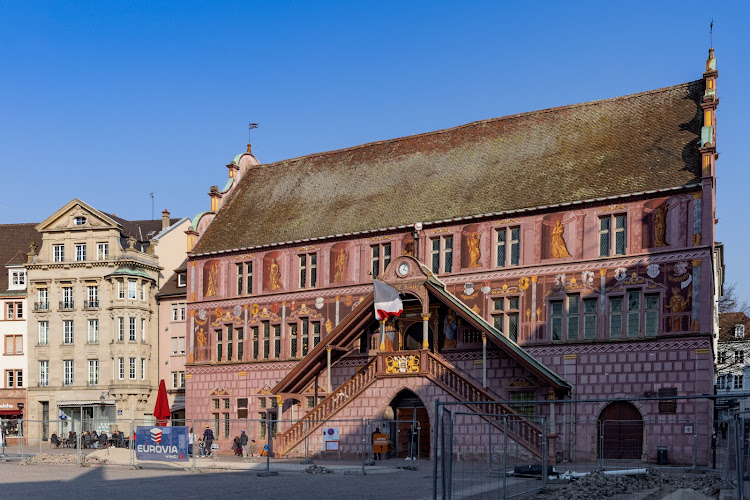
City Hall - History Museum
Find Accommodations Nearby
Recommended Tours & Activities
Visitor Reviews
There are no reviews yet. Be the first one to write one.
Share Your Experience
Have you visited La Tour du Diable? Help other travelers by leaving a review.