
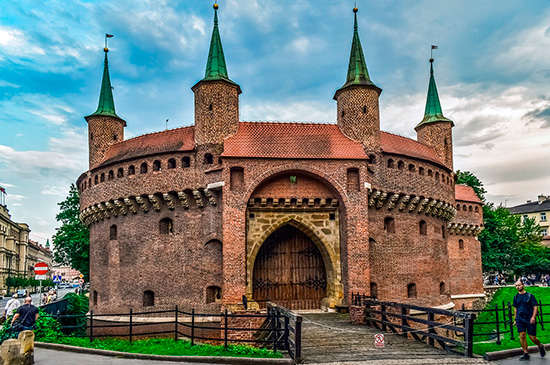
Kraków Barbican
About Kraków Barbican
Description
The Kraków Barbican is one of those places that immediately makes you feel like you’ve stepped back into another century. Built in the late 15th century, this circular fortress once guarded the main entrance to the historic city walls of Kraków. Today, it stands proudly as part of the city’s Historical Museum, offering travelers a chance to wander through medieval architecture that has somehow survived wars, sieges, and the passage of time. Some visitors fall in love with its fairytale-like towers and brickwork at first glance, while others might feel it’s smaller or less interactive than expected. But that’s part of its charm—it’s not a flashy attraction, it’s a piece of living history.
Walking through the Barbican, you can almost hear the echoes of soldiers who once patrolled its walls, keeping watch over the city gates. The structure is surprisingly well-preserved for its age, and its rounded design makes it stand out compared to the more angular fortifications you might see elsewhere in Europe. Personally, I think what makes it special is how it feels both imposing and approachable at the same time. You don’t need to be a history buff to appreciate it; just standing under its arches gives you a sense of how important Kraków once was as a medieval stronghold.
Key Features
- Medieval circular fortress built in the 1490s as part of Kraków’s defense system
- Connected historically to the city walls and the Florian Gate
- Seven watchtowers and a 30-meter-wide moat (now dry) once protected the city
- Part of the Historical Museum of Kraków, hosting exhibitions and cultural events
- Wheelchair accessible entrance for easier access
- Family-friendly atmosphere, good for kids who enjoy castles and knights
- No on-site restaurant, but plenty of cafés and street food options nearby
- Paid parking available close to the site
Best Time to Visit
If you’re planning a trip, spring and early autumn are the sweet spots. The weather is mild, the crowds aren’t overwhelming, and you still get that golden light that makes the red brick glow beautifully in the late afternoon. In summer, it can get busy, especially with school groups and tour buses rolling in, but the lively atmosphere has its own appeal. Winter brings fewer visitors, and while the cold can be biting, there’s something magical about seeing the Barbican dusted with snow—it looks like a fortress straight out of a storybook. Personally, I’d avoid the peak midday hours if you want to take photos without dozens of people in your frame.
How to Get There
The Barbican is located right at the edge of Kraków’s Old Town, so it’s hard to miss if you’re exploring on foot. Most travelers will naturally pass by it when walking between the main train station and the Market Square. If you’re staying further out, trams and buses stop nearby, making it very convenient to reach. Taxis and rideshares are also an option, but honestly, part of the fun is approaching it on foot, just like people did centuries ago. There’s paid parking close by, though driving into the Old Town area can be more hassle than it’s worth. My personal tip: take the scenic route through Planty Park and let the greenery frame your first view of the fortress—it’s a great way to build anticipation.
Tips for Visiting
First, give yourself time to actually walk around the structure, inside and out. Many people just snap a quick photo and move on, but the details in the brickwork and the design of the towers are worth a closer look. If exhibitions are running inside, check them out—they add context and often include artifacts that make the history feel more real. There aren’t restrooms on-site, so plan ahead before you enter. Families with kids will appreciate that the place feels like a castle adventure, though you might want to bring snacks since there’s no café inside.
Photography lovers should aim for early morning or late afternoon when the light plays beautifully on the walls. If you’re traveling with limited mobility, the accessible entrance makes it easier, though some areas inside might still feel a bit uneven underfoot. And don’t be surprised if you find yourself lingering longer than expected—it’s one of those places that rewards a slower pace. I remember sitting on a nearby bench, just people-watching and imagining what life must have been like when the Barbican was the city’s first line of defense. That mix of history and imagination is what makes a visit here feel so memorable.
Key Features
- Medieval circular fortress built in the 1490s as part of Kraków’s defense system
- Connected historically to the city walls and the Florian Gate
- Seven watchtowers and a 30-meter-wide moat (now dry) once protected the city
- Part of the Historical Museum of Kraków, hosting exhibitions and cultural events
- Wheelchair accessible entrance for easier access
- Family-friendly atmosphere, good for kids who enjoy castles and knights
- No on-site restaurant, but plenty of cafés and street food options nearby
- Paid parking available close to the site
More Details
Updated September 23, 2025
Table of Contents
Description
The Kraków Barbican is one of those places that immediately makes you feel like you’ve stepped back into another century. Built in the late 15th century, this circular fortress once guarded the main entrance to the historic city walls of Kraków. Today, it stands proudly as part of the city’s Historical Museum, offering travelers a chance to wander through medieval architecture that has somehow survived wars, sieges, and the passage of time. Some visitors fall in love with its fairytale-like towers and brickwork at first glance, while others might feel it’s smaller or less interactive than expected. But that’s part of its charm—it’s not a flashy attraction, it’s a piece of living history.
Walking through the Barbican, you can almost hear the echoes of soldiers who once patrolled its walls, keeping watch over the city gates. The structure is surprisingly well-preserved for its age, and its rounded design makes it stand out compared to the more angular fortifications you might see elsewhere in Europe. Personally, I think what makes it special is how it feels both imposing and approachable at the same time. You don’t need to be a history buff to appreciate it; just standing under its arches gives you a sense of how important Kraków once was as a medieval stronghold.
Key Features
- Medieval circular fortress built in the 1490s as part of Kraków’s defense system
- Connected historically to the city walls and the Florian Gate
- Seven watchtowers and a 30-meter-wide moat (now dry) once protected the city
- Part of the Historical Museum of Kraków, hosting exhibitions and cultural events
- Wheelchair accessible entrance for easier access
- Family-friendly atmosphere, good for kids who enjoy castles and knights
- No on-site restaurant, but plenty of cafés and street food options nearby
- Paid parking available close to the site
Best Time to Visit
If you’re planning a trip, spring and early autumn are the sweet spots. The weather is mild, the crowds aren’t overwhelming, and you still get that golden light that makes the red brick glow beautifully in the late afternoon. In summer, it can get busy, especially with school groups and tour buses rolling in, but the lively atmosphere has its own appeal. Winter brings fewer visitors, and while the cold can be biting, there’s something magical about seeing the Barbican dusted with snow—it looks like a fortress straight out of a storybook. Personally, I’d avoid the peak midday hours if you want to take photos without dozens of people in your frame.
How to Get There
The Barbican is located right at the edge of Kraków’s Old Town, so it’s hard to miss if you’re exploring on foot. Most travelers will naturally pass by it when walking between the main train station and the Market Square. If you’re staying further out, trams and buses stop nearby, making it very convenient to reach. Taxis and rideshares are also an option, but honestly, part of the fun is approaching it on foot, just like people did centuries ago. There’s paid parking close by, though driving into the Old Town area can be more hassle than it’s worth. My personal tip: take the scenic route through Planty Park and let the greenery frame your first view of the fortress—it’s a great way to build anticipation.
Tips for Visiting
First, give yourself time to actually walk around the structure, inside and out. Many people just snap a quick photo and move on, but the details in the brickwork and the design of the towers are worth a closer look. If exhibitions are running inside, check them out—they add context and often include artifacts that make the history feel more real. There aren’t restrooms on-site, so plan ahead before you enter. Families with kids will appreciate that the place feels like a castle adventure, though you might want to bring snacks since there’s no café inside.
Photography lovers should aim for early morning or late afternoon when the light plays beautifully on the walls. If you’re traveling with limited mobility, the accessible entrance makes it easier, though some areas inside might still feel a bit uneven underfoot. And don’t be surprised if you find yourself lingering longer than expected—it’s one of those places that rewards a slower pace. I remember sitting on a nearby bench, just people-watching and imagining what life must have been like when the Barbican was the city’s first line of defense. That mix of history and imagination is what makes a visit here feel so memorable.
Key Highlights
- Medieval circular fortress built in the 1490s as part of Kraków’s defense system
- Connected historically to the city walls and the Florian Gate
- Seven watchtowers and a 30-meter-wide moat (now dry) once protected the city
- Part of the Historical Museum of Kraków, hosting exhibitions and cultural events
- Wheelchair accessible entrance for easier access
- Family-friendly atmosphere, good for kids who enjoy castles and knights
- No on-site restaurant, but plenty of cafés and street food options nearby
- Paid parking available close to the site
Location
Places to Stay Near Kraków Barbican
Find and Book a Tour
Explore More Travel Guides
No reviews found! Be the first to review!
Traveler Reviews for Kraków Barbican
There are no reviews yet. Be the first one to write one.
Have you visited Kraków Barbican? Help other travelers by sharing your review.
You Might Also Like

Museum of Contemporary Art in Krakow MOCAK

Lustrzany Labirynt

Lost Souls Alley
Find Accommodations Nearby
Recommended Tours & Activities
Visitor Reviews
There are no reviews yet. Be the first one to write one.
Share Your Experience
Have you visited Kraków Barbican? Help other travelers by leaving a review.