
Keyuan
About Keyuan
Key Features
More Details
Updated April 15, 2024
Dongguan︱Keyuan Garden – GreaterGo
## Keyuan (Ke Yuan Garden), Dongguan: a compact Lingnan garden worth slowing down for
Keyuan (often rendered in English as Keyuan Garden or Ke Yuan) is a historic Lingnan-style garden in Dongguan, Guangdong, widely described as one of the four famous Lingnan gardens from the Qing dynasty era in Guangdong. China Guide
If you’re in Dongguan for work, a factory visit, or a quick stop between Guangzhou and Shenzhen, Keyuan is one of the city’s most time-efficient cultural sights: a small footprint, dense architectural detail, and the kind of designed “micro-landscape” that makes Southern Chinese garden design feel intimate rather than monumental.
—
## Fast facts (only what’s supported by sources)
– Name: Keyuan / Keyuan Garden (可园 / Ke Yuan) China Guide
– Where: Guancheng District, Dongguan, Guangdong, China (address commonly shown as 32 Keyuan Road)
– Why it’s notable: cited as one of four famous Lingnan gardens in Guangdong during the Qing period (with Qinghui Garden, Yuyin Garden, and Liang’s Garden often listed alongside it).
– Origin (as stated by a travel reference): built in 1850 by Zhang Jingxiu (a “deposed military officer,” per that same source). China Guide
– Size (as stated by a travel reference): about 2,200 m² (0.54 acres), triangular in shape. China Guide
– Protection status (as stated by a travel reference): “since 2001” under state protection as a national cultural treasure (wording varies by source). China Guide
—
## What “Lingnan garden” means here (and what to look for on-site)
Keyuan is routinely framed as a Lingnan-style garden—Southern Chinese design shaped by Guangdong’s climate and urban fabric. On the ground, that typically translates to:
– Architecture-forward spaces (halls, pavilions, corridors) rather than vast open lawns.
– Water + stone + plants used to create layered views at close range.
– Winding routes that reveal scenes in sequence, so the experience is more “edited” than panoramic.
A useful way to visit: treat Keyuan like a series of framed compositions. Pause at doorways, round “moon gates,” corridor turns, and pavilion thresholds—those are the places the garden is engineered to “click.”
—
## A practical, low-stress visit plan (60–120 minutes)
### 1) Start with the architecture, not the pond
Even if your instinct is to head straight for water views, you’ll get more out of Keyuan by first walking the built core—halls, corridors, and second-level viewpoints (if accessible that day). The garden’s key effect is how structures choreograph what you see.
### 2) Then do a slow loop that prioritizes “view changes”
In a garden this compact, the value comes from micro-transitions:
– light to shade (corridor → courtyard),
– compressed space to open water,
– low angle views to elevated viewpoints.
### 3) End at any exhibition/museum area if it’s open
Some listings present Keyuan as paired with a “museum area” or “Keyuan Museum.”
Because these pages don’t fully agree on details (see the “Outdated / conflicting data” section), treat any indoor exhibits as a bonus rather than the trip’s main point.
—
## Tickets & hours: what the internet says (and why you should verify on the day)
Multiple travel platforms publish operating hours and ticketing, but they don’t fully match:
– One Trip.com page states Daily 09:00–17:30 and “Closed on Mondays,” plus mentions 8 RMB ticketing for an “ancient architecture area” and “free entry” to a “museum area.”
– Another Trip.com-linked page/moments content mentions 9:00–17:30, plus additional notes like last entry time and a different closure day.
– A Trip.com “tickets” page snippet shows Weekdays 9:30–5:30 (not identical to the above).
What’s safe to say: online sources list roughly daytime opening until late afternoon and very low-cost admission (commonly ~8 RMB in these listings), but closure day and exact hours vary by source. Verify locally (official signage at the entrance, or an official listing) before planning around a specific time window.
—
## Getting there: what you can plan without guessing
Because you already have the address (32 Keyuan Rd), the most reliable approach in Dongguan is simply navigating to that point and confirming the correct gate on arrival.
If you’re coming from Shenzhen/Guangzhou, don’t over-optimize the route in advance unless you’re pressed for time—Dongguan’s exact rail/metro/taxi combos can change, and platforms frequently publish “how-to-get-there” steps that age quickly.
—
## On-the-ground tips that matter in a Lingnan garden
### Go early for cleaner sightlines
Gardens reward quiet. If you want photos with minimal crowding and more consistent light, arrive near opening (whatever the posted time is that day).
### Bring a “small garden kit”
– Water (humid days can feel heavier than the temperature suggests)
– A microfiber cloth (condensation + humid air + lenses)
– Comfortable shoes (you’ll stop-start a lot; slippery stone can happen after rain)
### Be mindful of shared space
Keyuan is small; it can feel crowded quickly. Give people time at the prime photo frames—doorways and corridor corners are bottlenecks.
### Accessibility note (what we can’t confirm)
I don’t have a reliable, source-backed statement on step-free access, elevator availability, or wheelchair-friendly routing inside Keyuan. If accessibility is a priority, the best move is checking current reviews that mention mobility access or contacting the site directly.
—
## How Keyuan compares to “bigger name” gardens in China
A quick expectation-setter: Keyuan is not a sprawling Suzhou-style garden complex. Its appeal is the tight density of Lingnan architecture and the way the garden delivers high design-per-square-meter. Sources explicitly position it as a Qing-era Lingnan “famous garden,” which is the right lens to bring. China Guide
—
## Suggested internal links (insert if these pages exist on your site)
– If you have a city hub: Things to do in Dongguan
– If you have a province hub: Guangdong travel guide
(These are suggested placements only; I can’t confirm your site has these exact URLs.)
—
## Outdated / conflicting data flags (so you don’t publish something brittle)
– Opening hours / closure day conflict across Trip.com pages and related snippets. Publish hours only if you can verify from an official listing or your own on-the-ground confirmation.
– Size, build year, and builder are given by a single travel reference (TravelChinaGuide). Treat them as attributed facts unless you cross-check with an official museum/gov source. China Guide
– User-provided metadata lists city = Dongguan and coordinates; I did not independently verify the coordinates beyond what you supplied, so I’m not making claims about exact geospatial placement beyond the cited address and district references.
—
## Bottom line
If you want one cultural stop in Dongguan that isn’t a mega-museum or a generic mall day, Keyuan is a strong pick: a historically framed Lingnan garden, compact enough for a short visit, but detailed enough to reward patience. The only “watch-out” is practical: verify hours and closure on the day you go, because popular travel listings disagree.
Table of Contents
Key Highlights
Keyuan
Location
Places to Stay Near Keyuan
Find and Book a Tour
Explore More Travel Guides
No reviews found! Be the first to review!
Traveler Reviews for Keyuan
There are no reviews yet. Be the first one to write one.
Have you visited Keyuan? Help other travelers by sharing your review.
You Might Also Like
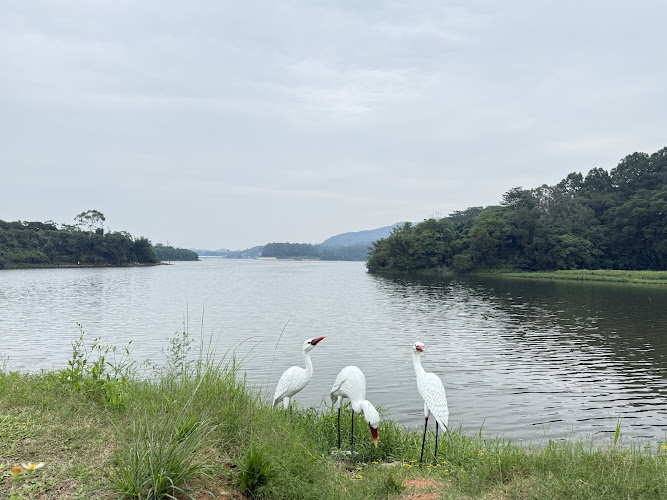
Tongsha Ecological Park
Yinxian Resort Happy Valley Paradise (Northeast Gate)
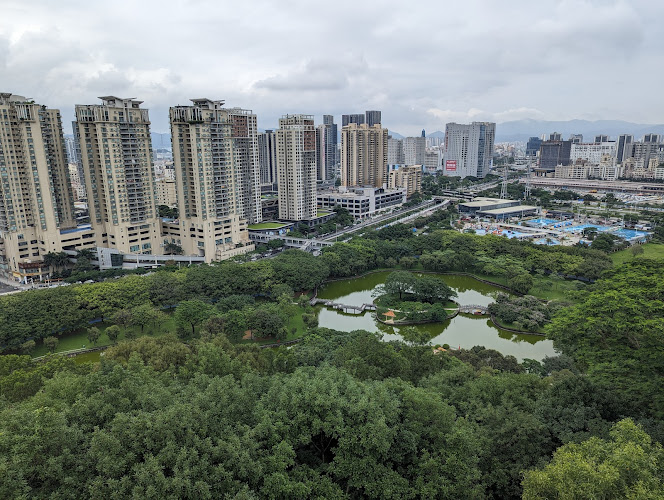
Humen Park
Find Accommodations Nearby
Recommended Tours & Activities
Visitor Reviews
There are no reviews yet. Be the first one to write one.
Share Your Experience
Have you visited Keyuan? Help other travelers by leaving a review.