
Kebun Raya Jompie Kota Parepare
About Kebun Raya Jompie Kota Parepare
Key Features
More Details
Updated April 16, 2024
## Kebun Raya Jompie Kota Parepare: a city-scale botanical garden focused on Wallacea coastal plants
Kebun Raya Jompie (often written “KR Jompie”) is a botanical garden in Parepare, South Sulawesi, Indonesia, managed by the City Government of Parepare and positioned as a combined ex-situ conservation site, environmental education space, and urban nature escape. Raya Jompie Pare Pare
If you like destinations where you can walk under mature shade trees, learn plant stories quickly, and get a high-value outdoor break without committing to a full-day trek, this is a strong pick—especially because the garden explicitly frames its collection around tumbuhan pesisir Wallacea (coastal Wallacea plants), plus medicinal plants, local/“adat” plants, and ethnobotany themes. Raya Jompie Pare Pare
—
## Fast facts (from the most direct sources)
– Name: Kebun Raya Jompie Kota Parepare (Kebun Raya Jompie / KR Jompie) Raya Jompie Pare Pare
– Address: Jl. Industri Kecil, Bukit Harapan, Kec. Soreang, Kota Parepare, Sulawesi Selatan 91100, Indonesia Raya Jompie Pare Pare
– Coordinates: -3.996984, 119.6423786 (provided in your dataset)
– Stated operating hours (official site): 09.00–17.00 WIB Raya Jompie Pare Pare
– Area: 13.5 hectares Raya Jompie Pare Pare
– Collection claim on official site: 90 plant species across 81 genera (as stated on the site) Raya Jompie Pare Pare
– Facilities mentioned on official site: garden areas, a freshwater habitat pond (kolam habitat air tawar), a meeting room, and an observation tower (menara pandang) Raya Jompie Pare Pare
– Contact (official site): phone 081338617680, email [email protected] Raya Jompie Pare Pare
—
## What makes Kebun Raya Jompie different from “just a park”
### 1) It’s positioned as conservation + education, not only recreation
A 2025 academic case study describes Kebun Raya Jompie as an ex-situ conservation site that also serves educational and recreational functions, and discusses how community participation affects those goals. Publishing
That framing matters as a visitor: you’re not only walking through greenery—you’re in a curated space with a stated mission, where signage, tours, and plant lists (when available) are meant to do real interpretive work.
### 2) The collection theme is explicitly Wallacea coastal flora + ethnobotany
The official site highlights conservation of coastal Wallacea plants, and emphasizes medicinal plants, adat plants, and ethnobotany—useful context if you care about biodiversity zones, human–plant relationships, or practical plant uses beyond “pretty landscaping.” Raya Jompie Pare Pare
### 3) It’s designed to include viewpoints and “stay awhile” infrastructure
Not every botanical garden in Indonesia advertises an observation tower as a feature. KR Jompie does—explicitly mentioning you can view Parepare’s coastline from the tower. Raya Jompie Pare Pare
Add the freshwater habitat pond and meeting space, and it reads like a site built for school programs, small community events, and repeat local visits, not only one-off sightseeing. Raya Jompie Pare Pare
—
## A practical way to visit: the “90-minute loop” plan
If you want a visit that feels complete without rushing:
### Start with orientation + easy shade
– Enter, scan for any plant label clusters and interpretive boards first (that’s where you’ll get the biggest learning-per-minute payoff).
– Keep your pace slow early—botanical gardens reward observation more than distance.
### Pick one theme to focus on (so it sticks)
Use the garden’s own framing and choose one:
– Coastal Wallacea plants (biodiversity + conservation angle) Raya Jompie Pare Pare
– Medicinal/ethnobotany (use-cases, local knowledge, and cultural context) Raya Jompie Pare Pare
A single theme turns the visit from “walked around” into “learned something I can repeat later.”
### Finish at the observation tower for “context”
– If the tower is open, end there. Seeing the city/shoreline after walking among curated plantings helps you connect urban heat / green space / coastal ecology in one mental picture. Raya Jompie Pare Pare
—
## Photos and what to look for (without guessing what’s on-site today)
Because plantings and displays change seasonally—and because I’m sticking to what is directly supported—here are photo prompts tied to verified features:
– Observation tower: shoot wide, then a tighter crop that frames coastline/city through railings or structure lines. Raya Jompie Pare Pare
– Freshwater habitat pond: reflections + macro details (leaf textures, water surface patterns). Raya Jompie Pare Pare
– Plant labels/signage: take at least 3–5 crisp label shots; they’re useful later for building your own mini plant list.
LSI/semantic keywords you’ll naturally hit in captions: Parepare, South Sulawesi, botanical garden, eco-education, ex-situ conservation, Wallacea, ethnobotany, urban green space.
—
## Tickets, fees, and what might be outdated
I found conflicting third-party claims about entry fees (some say free; others list small ticket prices). Because these sources disagree, I’m not going to state a definitive entrance fee as fact.
What you can do reliably:
– Check the official channels (official site/social) or message/call the published contact before you go. Raya Jompie Pare Pare
– Treat opening hours as subject to change for events/maintenance; the official site currently states 09.00–17.00 WIB. Raya Jompie Pare Pare
—
## Getting there (grounded, no guesswork)
Your dataset already provides the precise location markers:
– Address: 2J3R+6X2, Jl. Industri Kecil, Bukit Harapan, Kec. Soreang, Kota Parepare, Sulawesi Selatan 91100, Indonesia
– Coordinates: -3.996984, 119.6423786
Use the coordinates in your mapping app if you want maximum accuracy (helpful in Indonesia when similar street names repeat).
—
## Inclusivity and accessibility notes (what we can responsibly say)
I can’t verify detailed accessibility infrastructure (ramps, surface types, wheelchair routes) from the sources above. The responsible move is:
– If you have mobility, sensory, or other access needs, contact staff directly via the published phone/email and ask about path surfaces, steep sections, and accessible restrooms. Raya Jompie Pare Pare
—
## Two contextual internal link opportunities (drop-in ideas)
If these pages exist on RealJourneyTravels, link them in-line where relevant:
– Internal link #1 (context): Parepare travel guide: what to do, where to eat, and how to get around
– Internal link #2 (trip-building): South Sulawesi itinerary: coastal towns, cultural stops, and nature breaks
(These are link-placement suggestions, not claims that the pages already exist.)
—
## Bottom line
Kebun Raya Jompie is best approached as a mission-driven botanical garden—a 13.5-hectare urban green space built around ex-situ conservation and eco-education, with visitor-friendly features like an observation tower and learning-oriented plant content. Raya Jompie Pare Pare
If you publish this for RealJourneyTravels, the highest-value angle isn’t “pretty garden.” It’s Wallacea-focused conservation meets an easy, high-signal visit—the kind of stop that works for families, solo travelers, and anyone who wants nature without logistics overhead.
Table of Contents
Key Highlights
Kebun Raya Jompie Kota Parepare
Location
Places to Stay Near Kebun Raya Jompie Kota Parepare
Find and Book a Tour
Explore More Travel Guides
No reviews found! Be the first to review!
Traveler Reviews for Kebun Raya Jompie Kota Parepare
There are no reviews yet. Be the first one to write one.
Have you visited Kebun Raya Jompie Kota Parepare? Help other travelers by sharing your review.
You Might Also Like
Hotel Denpasar Parepare
Anjungan Cempae
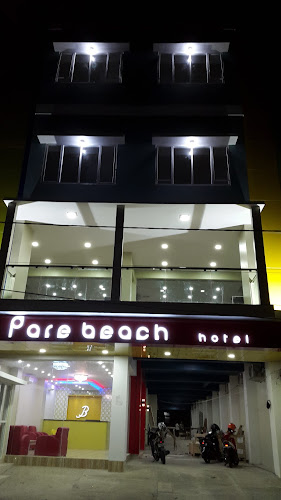
Pare Beach Hotel
Find Accommodations Nearby
Recommended Tours & Activities
Visitor Reviews
There are no reviews yet. Be the first one to write one.
Share Your Experience
Have you visited Kebun Raya Jompie Kota Parepare? Help other travelers by leaving a review.