
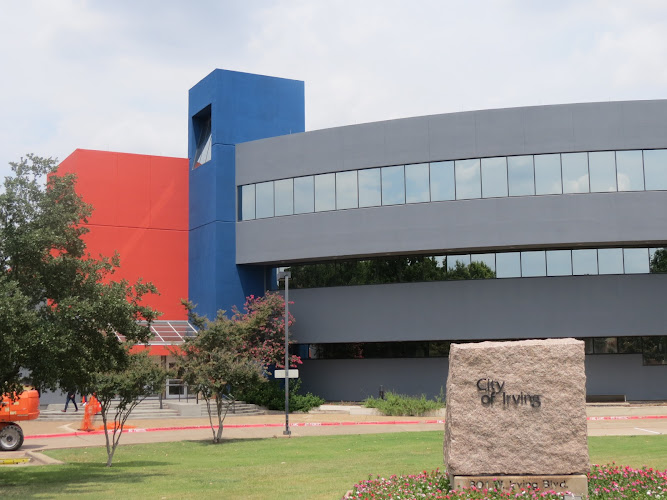
Irving Archives and Museum
About Irving Archives and Museum
Description
The Irving Archives and Museum offers travelers a thoughtful, quietly educational stop in Irving, Texas, where local history meets material culture in a way that feels lived-in rather than staged. It is a compact institution with a clear mission: to preserve the stories, photographs, documents and artifacts that trace the evolution of Irving and the surrounding communities. The museum and archives combine traditional displays with curated archival materials, so visitors will often find themselves moving from a glass case of century-old tools to a wall of photographs that make the past look startlingly immediate. It sounds simple, but that ebb and flow between object and story is exactly what makes this place memorable.
Unlike larger metropolitan museums that can overwhelm with scale, the Irving Archives and Museum rewards curiosity. It is the sort of place where small discoveries accumulate into a richer understanding: a handwritten ledger that hints at a family business, a weathered homestead photograph that explains a neighborhood name, a map sketch that reveals development patterns across decades. Because of its archival component, there’s an unusual depth to some exhibits. Researchers and casual visitors alike can appreciate the context provided by primary documents—deeds, letters, school yearbooks—displayed alongside artifacts. For travelers who enjoy history that connects to real people and everyday life, this approach feels honest and often moving.
The collection emphasizes local heritage over sweeping national narratives. Expect exhibits that highlight early settlement and development, community institutions, and cultural snapshots that document how people lived, worked and socialized in different eras. That focus makes the Irving Archives and Museum indispensable for anyone who wants to go beyond postcards and public art to understand the city’s identity. It’s a place to learn about neighborhood histories, transportation changes, schools, civic organizations, and the smaller events that shape a city across decades.
Accessibility and family orientation are baked into the visitor experience. The building includes a wheelchair-accessible entrance and restroom facilities, and parking is available on site—details that travelers appreciate, especially families or visitors with mobility needs. There’s no on-site restaurant, so plan accordingly, but the museum does offer restrooms and a gift shop with locally themed mementos and publications. Guided tours are available and often recommended; docents tend to be knowledgeable and eager to share anecdotes that don’t make it into label copy. These tours can be a good way to get context quickly, especially for short-stay travelers who want to maximize time.
Tourists who enjoy exhibitions that change will find the Irving Archives and Museum pleasantly balanced between permanent displays and rotating projects. Special exhibits often focus on particular themes—photography, local businesses, immigrant stories, or specific decades—so repeat visits can feel fresh. Photographs are a frequent highlight: contact prints, family portraits, and archival images bring an immediacy that text alone cannot. Artifact displays include household items, tools, signage, and other tangible traces of past daily life. Many exhibits are curated with panels that explain the relevance of items to broader local themes, making the material accessible even to visitors unfamiliar with Irving’s history.
The atmosphere is relaxed rather than formal. Staff and volunteers usually approach visitors in a friendly, low-pressure way; they’ll answer questions and often share oral histories or recollections that add color to exhibits. On weekends, families with kids exploring interactive corners can be seen flipping through reproductions of documents or pointing to photos of school days gone by. Conversely, weekday afternoons sometimes draw researchers or genealogists using the archival holdings for deeper work. That mix of audiences creates a pleasant hum rather than the hush of a sterile gallery.
Practical details matter here. The museum offers guided tours and supports onsite services for researchers and visitors who want more than a passive stroll. It is straightforward to navigate, though some archival rooms require appointments or supervision for handling materials. Visitors who enjoy behind-the-scenes experiences should ask about tour options that touch on the archives themselves; seeing how documents are stored and preserved can be unexpectedly fascinating. Staff sometimes arrange small-group talks that illuminate lesser-known facets of Irving’s past—these are the kinds of programs where a single anecdote will stick with a visitor for years.
There is also a community angle. The museum plays a role in local storytelling and civic memory, hosting events and collaborating with schools or neighborhood groups. Travelers who happen to be in town during a lecture or special opening can witness a lively exchange between residents and curators—often those moments reveal how living history still matters. For visitors interested in cultural context, the museum’s programming provides a window into how Irving’s residents view their own past and future.
One of the more charming aspects is how the museum frames small, local stories with clarity and respect. Rather than trying to present every significant national event through a local lens, curators highlight how everyday life and regional developments intersected with broader trends. Visitors come away with a layered perspective: the architecture of a street, the evolution of local schools and churches, and the ways immigrant communities and industries left visible traces. Those elements can help a traveler make sense of what they see walking around town after leaving the museum.
It should be said that the Irving Archives and Museum does not pretend to be a sprawling, blockbuster institution. Its strengths are specificity and care. The exhibition spaces are modest but well-maintained, and interpretive panels do their job without jargon. Visitors who expect flashy multimedia or huge galleries will be pleasantly surprised by the quiet intensity of the displays; those who want intimate, researched storytelling will find the experience rewarding. And yes, because it’s rooted in archival practice, there are moments of quiet surprise—an unexpected photograph, a fragment of a speech, a rusted tool—that linger in the mind long after the visit.
Several traveler-oriented features increase its value as a stop on a regional itinerary. The presence of on-site parking removes a logistical headache many city museums can't avoid. The gift shop provides easy takeaways: books, prints, and replicas that expand on topics covered in the galleries. For families, exhibits often include kid-friendly label language and hands-on moments; children respond well to simple, tactile displays and the photographic timelines. The museum’s restroom facilities and wheelchair-friendly routes make it practical as part of a larger day of sightseeing.
Anecdotally, visitors often mention the warmth of interactions with staff and volunteers. One frequent visitor—someone who grew up in the area—recounts how a single visit reconnected them to a cousin’s story after spotting a person’s name in a school roster. Another traveler, passing through town on a long road trip, wrote in a review that what started as a quick stop became a two-hour exploration because each exhibit suggested another question. Those small human moments are an undercurrent at the museum; they demonstrate why archives matter beyond dusty papers: they reconnect people to place, memory and community.
From an SEO perspective, the Irving Archives and Museum stands out as a key cultural resource in Irving, North Texas. Travelers searching for local history, heritage exhibits, or community archives will find it relevant because it consistently emphasizes primary materials and grounded storytelling. Keywords that resonate here include Irving archives, museum exhibits, local history, heritage center, archival photographs, and family-friendly museum. The museum naturally aligns with visitors looking to understand the city’s story rather than locate entertainment attractions. In short, it is where the past is presented with intention and where context matters.
There are a few realistic caveats worth mentioning for travelers planning a visit. The museum’s modest scale means that a single visit usually fits into an hour or two, depending on how deep visitors dive into archival displays or guided tours. Because there is no in-house dining, planning for snacks or a nearby meal is sensible. And while the museum is well-suited for families, those seeking highly interactive children’s programs or large-format installations might prefer supplementing the visit with other stops in the area. Still, for thoughtful travelers and history-minded visitors, the Irving Archives and Museum is a satisfying, worthwhile destination.
Overall, the Irving Archives and Museum delivers a thoughtful, approachable presentation of local heritage that travelers can easily include in an Irving itinerary. It marries archival depth with accessible exhibits, and it respects the nuance of local stories in a way that often surprises visitors. The staff’s willingness to share insights, the practicality of on-site parking and accessibility features, and the museum’s close ties to community memory all help make a visit feel both educational and warmly human. If a traveler wants to leave town with a clearer sense of Irving’s past—who lived here, what mattered to them, and how the city evolved—this museum is a smart, quietly rewarding place to begin.
Key Features
More Details
Updated August 30, 2025
Table of Contents
Description
The Irving Archives and Museum offers travelers a thoughtful, quietly educational stop in Irving, Texas, where local history meets material culture in a way that feels lived-in rather than staged. It is a compact institution with a clear mission: to preserve the stories, photographs, documents and artifacts that trace the evolution of Irving and the surrounding communities. The museum and archives combine traditional displays with curated archival materials, so visitors will often find themselves moving from a glass case of century-old tools to a wall of photographs that make the past look startlingly immediate. It sounds simple, but that ebb and flow between object and story is exactly what makes this place memorable.
Unlike larger metropolitan museums that can overwhelm with scale, the Irving Archives and Museum rewards curiosity. It is the sort of place where small discoveries accumulate into a richer understanding: a handwritten ledger that hints at a family business, a weathered homestead photograph that explains a neighborhood name, a map sketch that reveals development patterns across decades. Because of its archival component, there’s an unusual depth to some exhibits. Researchers and casual visitors alike can appreciate the context provided by primary documents—deeds, letters, school yearbooks—displayed alongside artifacts. For travelers who enjoy history that connects to real people and everyday life, this approach feels honest and often moving.
The collection emphasizes local heritage over sweeping national narratives. Expect exhibits that highlight early settlement and development, community institutions, and cultural snapshots that document how people lived, worked and socialized in different eras. That focus makes the Irving Archives and Museum indispensable for anyone who wants to go beyond postcards and public art to understand the city’s identity. It’s a place to learn about neighborhood histories, transportation changes, schools, civic organizations, and the smaller events that shape a city across decades.
Accessibility and family orientation are baked into the visitor experience. The building includes a wheelchair-accessible entrance and restroom facilities, and parking is available on site—details that travelers appreciate, especially families or visitors with mobility needs. There’s no on-site restaurant, so plan accordingly, but the museum does offer restrooms and a gift shop with locally themed mementos and publications. Guided tours are available and often recommended; docents tend to be knowledgeable and eager to share anecdotes that don’t make it into label copy. These tours can be a good way to get context quickly, especially for short-stay travelers who want to maximize time.
Tourists who enjoy exhibitions that change will find the Irving Archives and Museum pleasantly balanced between permanent displays and rotating projects. Special exhibits often focus on particular themes—photography, local businesses, immigrant stories, or specific decades—so repeat visits can feel fresh. Photographs are a frequent highlight: contact prints, family portraits, and archival images bring an immediacy that text alone cannot. Artifact displays include household items, tools, signage, and other tangible traces of past daily life. Many exhibits are curated with panels that explain the relevance of items to broader local themes, making the material accessible even to visitors unfamiliar with Irving’s history.
The atmosphere is relaxed rather than formal. Staff and volunteers usually approach visitors in a friendly, low-pressure way; they’ll answer questions and often share oral histories or recollections that add color to exhibits. On weekends, families with kids exploring interactive corners can be seen flipping through reproductions of documents or pointing to photos of school days gone by. Conversely, weekday afternoons sometimes draw researchers or genealogists using the archival holdings for deeper work. That mix of audiences creates a pleasant hum rather than the hush of a sterile gallery.
Practical details matter here. The museum offers guided tours and supports onsite services for researchers and visitors who want more than a passive stroll. It is straightforward to navigate, though some archival rooms require appointments or supervision for handling materials. Visitors who enjoy behind-the-scenes experiences should ask about tour options that touch on the archives themselves; seeing how documents are stored and preserved can be unexpectedly fascinating. Staff sometimes arrange small-group talks that illuminate lesser-known facets of Irving’s past—these are the kinds of programs where a single anecdote will stick with a visitor for years.
There is also a community angle. The museum plays a role in local storytelling and civic memory, hosting events and collaborating with schools or neighborhood groups. Travelers who happen to be in town during a lecture or special opening can witness a lively exchange between residents and curators—often those moments reveal how living history still matters. For visitors interested in cultural context, the museum’s programming provides a window into how Irving’s residents view their own past and future.
One of the more charming aspects is how the museum frames small, local stories with clarity and respect. Rather than trying to present every significant national event through a local lens, curators highlight how everyday life and regional developments intersected with broader trends. Visitors come away with a layered perspective: the architecture of a street, the evolution of local schools and churches, and the ways immigrant communities and industries left visible traces. Those elements can help a traveler make sense of what they see walking around town after leaving the museum.
It should be said that the Irving Archives and Museum does not pretend to be a sprawling, blockbuster institution. Its strengths are specificity and care. The exhibition spaces are modest but well-maintained, and interpretive panels do their job without jargon. Visitors who expect flashy multimedia or huge galleries will be pleasantly surprised by the quiet intensity of the displays; those who want intimate, researched storytelling will find the experience rewarding. And yes, because it’s rooted in archival practice, there are moments of quiet surprise—an unexpected photograph, a fragment of a speech, a rusted tool—that linger in the mind long after the visit.
Several traveler-oriented features increase its value as a stop on a regional itinerary. The presence of on-site parking removes a logistical headache many city museums can’t avoid. The gift shop provides easy takeaways: books, prints, and replicas that expand on topics covered in the galleries. For families, exhibits often include kid-friendly label language and hands-on moments; children respond well to simple, tactile displays and the photographic timelines. The museum’s restroom facilities and wheelchair-friendly routes make it practical as part of a larger day of sightseeing.
Anecdotally, visitors often mention the warmth of interactions with staff and volunteers. One frequent visitor—someone who grew up in the area—recounts how a single visit reconnected them to a cousin’s story after spotting a person’s name in a school roster. Another traveler, passing through town on a long road trip, wrote in a review that what started as a quick stop became a two-hour exploration because each exhibit suggested another question. Those small human moments are an undercurrent at the museum; they demonstrate why archives matter beyond dusty papers: they reconnect people to place, memory and community.
From an SEO perspective, the Irving Archives and Museum stands out as a key cultural resource in Irving, North Texas. Travelers searching for local history, heritage exhibits, or community archives will find it relevant because it consistently emphasizes primary materials and grounded storytelling. Keywords that resonate here include Irving archives, museum exhibits, local history, heritage center, archival photographs, and family-friendly museum. The museum naturally aligns with visitors looking to understand the city’s story rather than locate entertainment attractions. In short, it is where the past is presented with intention and where context matters.
There are a few realistic caveats worth mentioning for travelers planning a visit. The museum’s modest scale means that a single visit usually fits into an hour or two, depending on how deep visitors dive into archival displays or guided tours. Because there is no in-house dining, planning for snacks or a nearby meal is sensible. And while the museum is well-suited for families, those seeking highly interactive children’s programs or large-format installations might prefer supplementing the visit with other stops in the area. Still, for thoughtful travelers and history-minded visitors, the Irving Archives and Museum is a satisfying, worthwhile destination.
Overall, the Irving Archives and Museum delivers a thoughtful, approachable presentation of local heritage that travelers can easily include in an Irving itinerary. It marries archival depth with accessible exhibits, and it respects the nuance of local stories in a way that often surprises visitors. The staff’s willingness to share insights, the practicality of on-site parking and accessibility features, and the museum’s close ties to community memory all help make a visit feel both educational and warmly human. If a traveler wants to leave town with a clearer sense of Irving’s past—who lived here, what mattered to them, and how the city evolved—this museum is a smart, quietly rewarding place to begin.
Key Highlights
Irving Archives and Museum
Location
Places to Stay Near Irving Archives and Museum
Find and Book a Tour
Explore More Travel Guides
No reviews found! Be the first to review!
Traveler Reviews for Irving Archives and Museum
There are no reviews yet. Be the first one to write one.
Have you visited Irving Archives and Museum? Help other travelers by sharing your review.
You Might Also Like

Sam Houston Trail Park
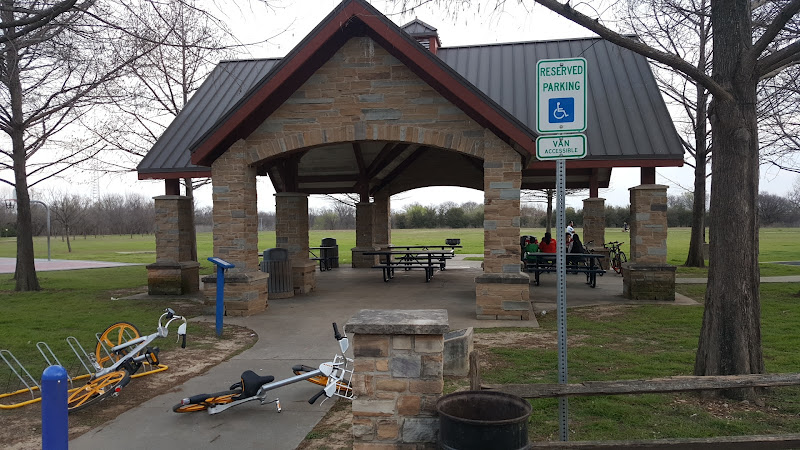
Trinity River Mountain Creek - Dallas County Nature Preserve

Northwest Park
Find Accommodations Nearby
Recommended Tours & Activities
Visitor Reviews
There are no reviews yet. Be the first one to write one.
Share Your Experience
Have you visited Irving Archives and Museum? Help other travelers by leaving a review.