
Iglesia de San Juan de Dios
About Iglesia de San Juan de Dios
Key Features
More Details
Updated April 16, 2024
## Iglesia de San Juan de Dios (Cádiz): what to notice, why it matters, and how to visit
If you’re building a Cádiz walk that prioritizes layered history over checkbox sightseeing, Iglesia de San Juan de Dios belongs near the top. It sits on Plaza de San Juan de Dios, right beside the city’s Ayuntamiento, in the old Barrio del Pópulo—one of those places where Cádiz’s civic life and religious life literally share a wall. Cádiz
The church is officially described as annexed to the hospital of the same name, and its location in the historic center makes it an easy “anchor stop” when you’re moving between the port-side edge of the old town and the denser medieval streets behind the arches. Cádiz
—
## Essential facts (confirmed)
– Name: Iglesia de San Juan de Dios Cádiz
– Address: Plaza de San Juan de Dios, 1, 11005 Cádiz, Spain Cádiz
– Area: Historic center; Barrio del Pópulo; next to the Ayuntamiento Cádiz
– Category: Religious building Cádiz
– Visitor hours (posted by Cádiz tourism): Monday–Friday, 10:00–13:30 Cádiz
– Mass times (posted by Cádiz tourism): Mon–Sat 10:30; Sun 11:30 Cádiz
– Pets: Not welcome (as listed) Cádiz
– Coordinates (from your dataset): 36.5295479, -6.2926756
Outdated-data flag: opening hours and service times can change around religious holidays, restorations, or parish schedules. Treat the above as “last published” and verify locally if timing is tight. Cádiz
—
## Start with the setting: Plaza de San Juan de Dios as Cádiz’s civic stage
This isn’t just a pretty square—it’s historically the city’s old Plaza Mayor, also known as La Corredera. It originally lay outside the walls, near an access gate (the old Puerta del Mar; today linked to the Arco del Pópulo), which is a useful clue to how Cádiz expanded and defended itself. Cádiz
By the 16th century, the plaza was already functioning as a center of urban activity, open to the port and dominated by the town hall. Its commercial role intensified with Cádiz’s Atlantic trade: products from “Indias” commerce were sold here, and by the late 18th century the city ordered permanent “market-style” structures that remained until the Central Market opened. Cádiz
More recently, the square’s remodeling finished in 2012 brought pedestrianization and new decorative elements; it also returned the monument to Sigismundo Moret to the plaza—where it had stood when it was inaugurated in 1909. Cádiz
Why this matters for your visit: the church doesn’t read as a stand-alone monument. It’s part of a civic-religious ensemble: Municipio + Iglesia + historic square. Seeing them together helps you understand Cádiz as a port city that built identity through institutions, not just fortifications and viewpoints. Cádiz
—
## What makes the church architecturally unusual (and easy to “read” once you know the trick)
Cádiz’s tourism office calls it a rare example of a church with a Greek-cross plan (equal arms) inserted into a square. That geometry isn’t academic trivia—it shapes how the interior feels: balanced, centralized, and designed to pull your attention toward the crossing and the dome rather than a long processional nave. Cádiz
The same source notes it’s covered by:
– a dome over the crossing
– and ribbed vaulting over the four arms Cádiz
Outside, the building was significantly reformed in the early 19th century, which is a good reminder not to “date” the entire structure from a single façade detail. Cádiz
—
## The tower: an 18th-century landmark with a named architect
The tower (1768) is singled out as a point of interest and is credited to Torcuato Cayón. It sits on the corner where the two façades meet—exactly where your eye tends to go when you approach from the plaza. Cádiz
If you like reading cities through their skylines, this is one of those Cádiz moments: you’re seeing how a compact old town uses vertical elements—towers, domes, civic buildings—to punctuate very tight streets and open squares.
—
## Inside: the high-impact Baroque centerpiece (and the later Neoclassical edits)
The interior’s focal point is the main altarpiece, described as:
– Baroque
– dated to 1688
– made in gilded wood Cádiz
But it isn’t “pure Baroque” in the way people often imagine. The central section includes Neoclassical reforms carried out by Torcuato Bejumeda in 1791—a concrete example of how Cádiz’s churches evolved rather than freezing in one period. Cádiz
Specific devotional artworks named on the official description include:
– the 18th-century image of the Virgen del Buen Suceso
– polychromed sculptures of San Rafael and San Carlos Borromeo on the sides
– and San Juan de Dios in the upper portion (“attic”) of the altarpiece Cádiz
Practical tip that improves what you see: step away from the altar and look back toward the crossing. In centralized-plan churches, the “wow” isn’t only the retablo; it’s the way dome + vaulting frame it. The building’s geometry is doing as much work as the gilding.
—
## How to visit respectfully (without overthinking it)
This is an active religious site with published mass times. If you arrive near 10:30 (Mon–Sat) or 11:30 (Sun), assume the atmosphere may shift from “quiet visiting” to “service underway.” Cádiz
A few low-friction habits that help anywhere in Spain:
– Keep voices low; pause photos if a service is happening.
– Give space to people who are praying—especially near side chapels and the front rows.
– If you’re traveling with children, a quick “inside voice + short visit” plan makes the experience smoother for everyone.
(These are general courtesy guidelines, not rules posted by the site.)
—
## Build it into a Cádiz route that actually flows
Because the church is on Plaza de San Juan de Dios and tied into the Barrio del Pópulo context, it works best early in a walking loop through the old town: start with the square while it’s bright and open, then move into the narrower historic streets behind it. The plaza itself is also part of the story—former Plaza Mayor, commercial hub linked to Atlantic trade, and modern pedestrianized civic space. Cádiz
—
## Quick reference box
– Place: Iglesia de San Juan de Dios
– Where: Plaza de San Juan de Dios, 1 (next to Cádiz City Hall) Cádiz
– What to look for: Greek-cross-in-a-square plan; dome + ribbed vaulting; 1768 tower (Torcuato Cayón); 1688 Baroque gilded retablo with 1791 Neoclassical interventions (Bejumeda). Cádiz
– When: Mon–Fri 10:00–13:30 (published) — verify day-of. Cádiz
—
### Note on your “internal links” requirement
I can’t add true internal links (URLs/slugs) without knowing how RealJourneyTravels.com structures Cádiz content. If you share two target URLs (e.g., your Cádiz city guide + your Barrio del Pópulo page), I’ll weave them in contextually and keep the anchor text natural.
Table of Contents
Key Highlights
Iglesia de San Juan de Dios
Location
Places to Stay Near Iglesia de San Juan de Dios
Find and Book a Tour
Explore More Travel Guides
No reviews found! Be the first to review!
Traveler Reviews for Iglesia de San Juan de Dios
There are no reviews yet. Be the first one to write one.
Have you visited Iglesia de San Juan de Dios? Help other travelers by sharing your review.
You Might Also Like
La Caleta
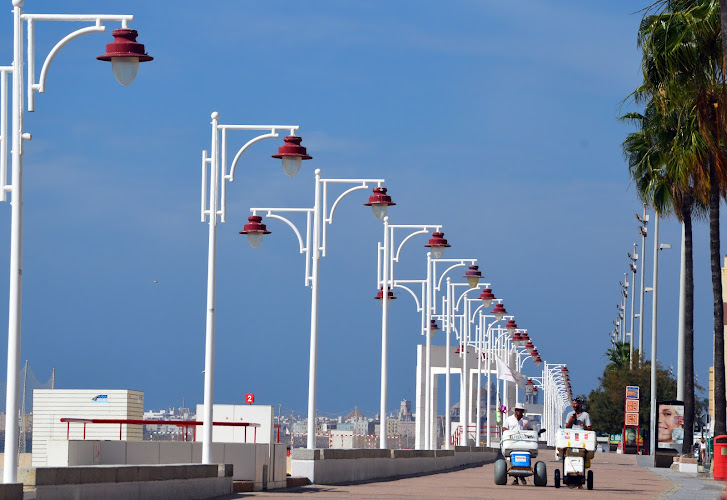
Costanera de Cadiz
Baluarte y Murallas de San Carlos
Find Accommodations Nearby
Recommended Tours & Activities
Visitor Reviews
There are no reviews yet. Be the first one to write one.
Share Your Experience
Have you visited Iglesia de San Juan de Dios? Help other travelers by leaving a review.