
House of the Huangcheng Chancellor
About House of the Huangcheng Chancellor
Key Features
More Details
Updated April 15, 2024
Shanxi Province: Architecture used by Black Myth Wukong
## House of the Huangcheng Chancellor (Huangcheng Xiangfu): what you’re actually looking at in Shanxi
If you’ve ever wondered what a fortified elite residence looks like when it’s built to function like a small city—defensive walls, watchtowers, layered courtyards, and a “street” economy right outside the gates—the House of the Huangcheng Chancellor is a clean case study.
This site is also commonly referred to by its Chinese name Huangcheng Xiangfu (皇城相府) and appears in English as the Premier’s Mansion / Prime Minister’s Mansion / Chancellor’s Mansion depending on the source.
Place details (from your dataset)
– Location: House of the Huangcheng Chancellor, Yangcheng County, Jincheng, Shanxi, China
– Address: GH6J+WRM, Yangcheng County, Jincheng, Shanxi, China, 048102
– Coordinates: 35.512328, 112.582051
– Rating: 4.2
– Type: Tourist attraction
—
## Why this place matters (beyond “nice old buildings”)
Huangcheng Xiangfu isn’t a single mansion in the way many travelers imagine. It’s a walled estate composed of numerous courtyard compounds (siheyuan-style) built into a hillside and reinforced with defensive towers and crenellated walls—architecture shaped as much by instability and protection as by status.
Two reasons it’s worth your time if you care about culture and built history:
– It shows how security and prestige overlapped in late imperial China. A residence could be a home, a symbol of rank, and a defensible stronghold at the same time.
– It’s tied to a specific historical figure and family network. The complex is associated with the Chen family, and sources describe major expansion connected to Chen Tingjing, a Qing scholar-official who served as a tutor to the Kangxi Emperor and as chief editor of the Kangxi Dictionary.
—
## A quick historical frame you can trust on-site
What the mainstream summaries tend to flatten is timeline: this complex reflects multiple building phases rather than a single moment in time.
What published references consistently agree on:
– Construction activity began under the Ming dynasty, with later fortification and expansion in the late Ming / early Qing period.
– The site is recognized as a national 5A (AAAAA) tourist attraction (China’s top scenic-area rating tier), with sources placing the 5A recognition in 2011.
Note on precision: Some online write-ups include very specific figures (exact visitor counts, exact opening hours, ticket prices, “must-see” performance schedules). Those operational details can change seasonally and year-to-year. For factual accuracy, treat them as unstable unless you verify via official channels right before you go.
—
## What to look for when you’re inside
### 1) The “estate-as-city” layout
Instead of expecting one grand hall and a few gardens, expect a network of courtyards connected by lanes and gates—space that communicates hierarchy: who gets privacy, who gets access, who must pass through controlled points. The Wikipedia summary describes numerous courtyards organized in siheyuan form and divided into sections by walls.
How to experience it well:
– Walk it like an urban neighborhood. Don’t rush courtyard-to-courtyard just to “see rooms.”
– Pause at thresholds (gates, inner walls, changes in elevation). Those are the design “sentences” in this architecture.
### 2) Defensive architecture (not decorative “castle vibes”)
Watchtowers and high walls here are not cosplay. The published descriptions emphasize defensive towers, fortified walls, and an estate designed to be protected.
That’s your cue to look for:
– Sightlines (what can be watched from above)
– Narrow passages and controlled entry points
– Elevation advantages (hill-slope positioning)
### 3) The Chen family story as social history
This site is also a lens into how elite families sustained status: education, civil service pathways, and patronage. The Wikipedia entry describes the Chen family’s emphasis on education and production of many officials and scholars across dynasties.
—
## Planning your visit: what’s safe to say (and what to verify)
### Getting there (practical reality)
The attraction is in Yangcheng County under Jincheng (晋城), Shanxi, so plan it as a regional day trip / overnight rather than something you casually “pop into” from far away. The site is explicitly placed in Yangcheng County, Jincheng City by multiple sources.
If you’re building this into a Shanxi itinerary, pair it with other Shanxi heritage stops (courtyard compounds, ancient towns, temples). For example, Pingyao is a common Shanxi anchor point for travelers planning historic architecture-focused routes (and you can route internally from your existing Pingyao content). Journey Tours & Travels
### Hours, tickets, and “what’s on today”
I’m deliberately not giving you exact hours or ticket prices here because:
– different travel platforms publish different figures, and
– these are the exact details most likely to be outdated.
Best verification path (stable, official-first):
– Check the attraction’s official web presence and announcements close to your travel date.
– Some guides also recommend verifying via the official WeChat public account used for updates and ticketing.
—
## Inclusivity + accessibility reality check
Historic fortified compounds typically involve:
– uneven stone surfaces
– steps without handrails
– tight doorways and thresholds
– steep sections where hillside construction meets fortification logic
If anyone in your group has mobility constraints, plan conservatively: prioritize the most accessible courtyards and viewpoints, and expect some areas to be difficult or impossible without assistance. (This is a general built-heritage constraint; verify on the ground and via official visitor info where available.)
—
## How long to budget (and how to avoid a low-value visit)
A strong visit isn’t about “seeing everything.” It’s about understanding why it was built this way.
To make the experience high-signal:
– Spend time on the defensive vantage points (towers/walls) and then re-walk a courtyard level—compare what’s visible from above vs. what’s hidden below.
– Read the site as two stories at once: elite domestic life and risk management. That dual-purpose design is the point.
—
## Nearby internal-link opportunities (contextual, relevant)
If you’re building a Shanxi cluster on RealJourneyTravels.com, these two existing pages are natural contextual bridges:
– Link: Pingyao travel planning / what to know before visiting — https://www.realjourneytravels.com/places/pingyao/ Journey Tours & Travels
– Link: Taiyuan nature/parks stop (for itinerary balance between heritage + outdoors) — https://www.realjourneytravels.com/places/taiyuan-n-modern-agr-park-s-gate/ Journey Tours & Travels
—
## Quick facts recap (verified elements only)
– Also known as: Huangcheng Xiangfu (皇城相府); translated variants include “Premier/Prime Minister/Chancellor’s Mansion.”
– Where: Yangcheng County, Jincheng, southeastern Shanxi, China.
– What it is: A large walled, fortified estate made up of multiple courtyard compounds, towers, and high walls.
– Recognition: Listed as a national 5A scenic spot, with sources citing a 2011 5A rating.
If you want, I can also produce: a Shanxi “heritage loop” itinerary structure (Jincheng/Yangcheng → Pingyao/Taiyuan anchors) that’s written to match RealJourneyTravels’ tone without relying on unstable operational details.
Table of Contents
Key Highlights
House of the Huangcheng Chancellor
Location
Places to Stay Near House of the Huangcheng Chancellor
Find and Book a Tour
Explore More Travel Guides
No reviews found! Be the first to review!
Traveler Reviews for House of the Huangcheng Chancellor
There are no reviews yet. Be the first one to write one.
Have you visited House of the Huangcheng Chancellor? Help other travelers by sharing your review.
You Might Also Like
Jincheng
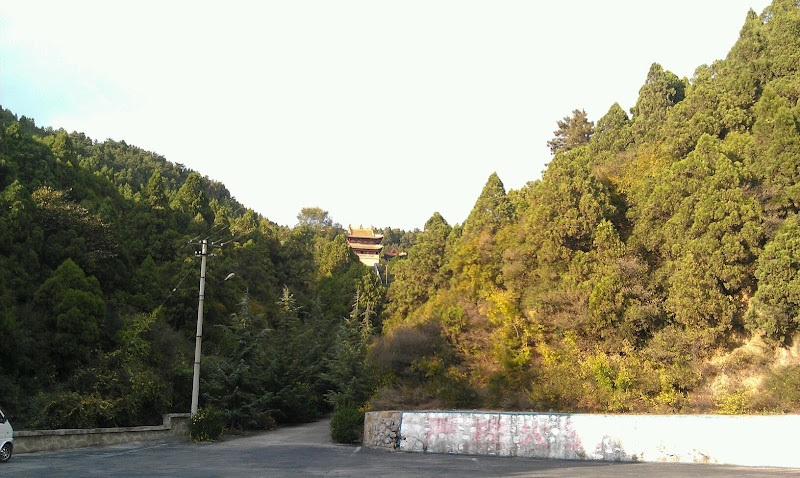
Kaihua Temple
Gaoping
Find Accommodations Nearby
Recommended Tours & Activities
Visitor Reviews
There are no reviews yet. Be the first one to write one.
Share Your Experience
Have you visited House of the Huangcheng Chancellor? Help other travelers by leaving a review.