
Hospital of the Holy Spirit
About Hospital of the Holy Spirit
Key Features
More Details
Updated April 15, 2024
Das Heiligen-Geist-Hospital in Lübeck
## Hospital of the Holy Spirit (Heiligen-Geist-Hospital), Lübeck: What to See, Why It Matters, and How to Visit
The Hospital of the Holy Spirit (German: Heiligen-Geist-Hospital) is one of Lübeck’s most recognizable landmarks on the Koberg—a large historic square in the Old Town. The complex is best known for its Brick Gothic architecture and for being a medieval social institution that has endured for centuries.
Quick facts (from your dataset + official tourism info):
– Address: Koberg 11, 23552 Lübeck, Germany
– Coordinates: 53.8714028, 10.6899675
– Type: Tourist attraction
– Rating: 4.4
– What it is: A historic hospital/foundation complex, completed in 1286, and frequently cited among the oldest still-existing social institutions.
### Why this place is a big deal (beyond “it’s old”)
Medieval hospitals weren’t hospitals in the modern, clinical sense. They were more like organized welfare institutions—religious, civic, and practical all at once. Lübeck’s Holy Spirit Hospital is described as a leading example of that model: a place built to care for people in need, supported by wealthy donors and a civic-religious foundation structure.
Today, it’s not just a preserved shell. The site remains tied to its historic “care” purpose in modern form: it is associated with a foundation administered in connection with the Hanseatic City of Lübeck (Stiftungsverwaltung / foundation administration).
## What you’ll actually see on site
### 1) The Brick Gothic façade and towers
Even if you only see the exterior, you’ll understand why this building is repeatedly singled out as a major monumental Brick Gothic structure. Lübeck tourism sources highlight:
– A multi-gabled show façade
– Four slender turrets
– The overall prominence of the complex as a major monument of Backsteingotik (Brick Gothic)
This is useful context in Lübeck specifically, where Brick Gothic is not a niche style—it’s a defining architectural language of the old Hanseatic city.
### 2) The church hall and the long nave
Inside, the complex includes a church hall and a longhouse/nave. Tourism descriptions explicitly reference the long nave as the space where beds for the needy were historically arranged in rows—an unusually direct architectural “trace” of how medieval care was organized.
If you’re interested in how buildings encode social history, this is one of Lübeck’s best examples: the layout isn’t just beautiful; it tells you how charity and care were physically structured.
### 3) The Bürgergärten (citizens’ gardens) behind the complex
Behind the historic building are the Bürgergärten, described as a green oasis. Lübeck tourism materials note you can walk through toward the garden side of the Behnhaus Museum.
This matters for planning because it means the stop can double as a quiet reset in the Old Town—especially useful if you’re moving between denser sightseeing blocks.
## The seasonal highlight: the arts & crafts market in Advent
A detail many visitors miss when planning: the Heiligen-Geist-Hospital is strongly tied to a specific seasonal tradition. Lübeck tourism sources state that in the pre-Christmas period (Advent) the building opens for about ten days for one of Lübeck’s best-known arts & crafts markets.
Planning takeaway: if your Lübeck trip overlaps late November/early December, this can shift the experience from “historic architecture visit” to “historic architecture + major seasonal event.” Event schedules can change year to year, so treat dates as dynamic and confirm close to your visit.
## How to visit smart (practical, accuracy-first)
### Know what’s stable vs. what changes
Some information is historicallytock-solid:
– The location (Koberg 11) and the core identity of the site
– Its completion date commonly given as 1286
– Its prominence as a Brick Gothic landmark
– Its association with Lübeck’s foundation administration
Other info is inherently changeable:
– Opening hours
– Whether specific interior areas are accessible on a given day
– Special closures (events, maintenance, exhibitions)
Because hours and access rules are time-sensitive, the safest approach is to confirm on official pages immediately before you go.
### Give yourself the right amount of time
If you’re doing Lübeck Old Town at a human pace, the Holy Spirit Hospital works well as:
– A short exterior stop (architecture + photos), or
– A deeper interior visit (church hall/nave + contextual reading), plus
– A garden detour behind the building
Your actual dwell time depends on whether the interior spaces you want to see are open that day—so build flexibility into the schedule.
## What to notice that most people walk past
These are “slow travel” details that make the visit more rewarding without requiring extra facts or speculation:
– Function shaped form: the longhouse isn’t random grandeur; it’s a space tied to real institutional care (beds arranged in rows historically).
– Civic identity: this is not only a church-adjacent charity relic; it’s also part of Lübeck’s long-running civic/foundation framework.
– Old Town geography: being on the Koberg makes it easy to combine with other Old Town sights on foot, without backtracking.
## Internal links (contextual placements)
I can’t know your exact RealJourneyTravels.com URL structure with certainty, so here are two safe, contextual internal-link placements (anchors only) you can point to whatever slugs you use:
– Link from the first “How to visit smart” section to your Lübeck Old Town walking route / city guide (anchor: “Lübeck Old Town guide”).
– Link from the Brick Gothic section to your explainer on Brick Gothic / Hanseatic architecture (anchor: “Brick Gothic architecture in Northern Germany”).
## Data freshness + inclusivity notes
– Outdated-data flag: Any statement about today’s hours, closures, or interior access can go stale quickly. Use the official Lübeck tourism page and/or the city’s foundation administration page for the latest operational details.
– Inclusivity & accuracy: The site’s historical purpose is often described using period terms like “needy.” That reflects the sources and the era’s framing, not a value judgment about people today.
Table of Contents
Key Highlights
Hospital of the Holy Spirit
Location
Places to Stay Near Hospital of the Holy Spirit
Find and Book a Tour
Explore More Travel Guides
No reviews found! Be the first to review!
Traveler Reviews for Hospital of the Holy Spirit
There are no reviews yet. Be the first one to write one.
Have you visited Hospital of the Holy Spirit? Help other travelers by sharing your review.
You Might Also Like
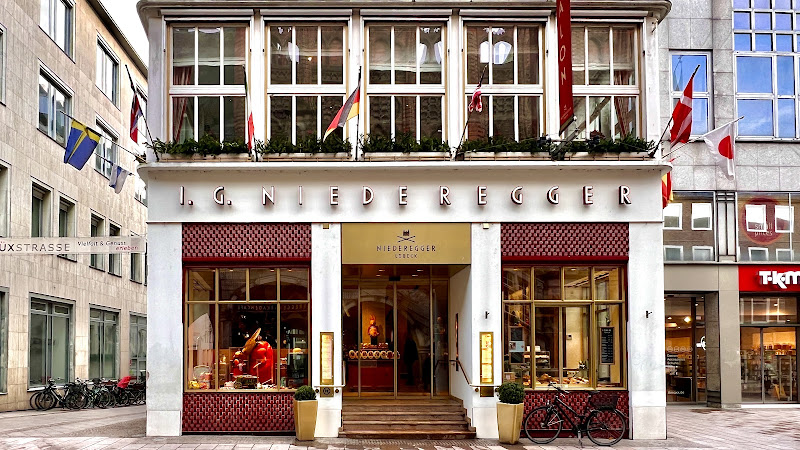
Marzipanmuseum Niederegger
Füchtingshof
Leuchtturm Travemünde
Find Accommodations Nearby
Recommended Tours & Activities
Visitor Reviews
There are no reviews yet. Be the first one to write one.
Share Your Experience
Have you visited Hospital of the Holy Spirit? Help other travelers by leaving a review.