
Füchtingshof
About Füchtingshof
Key Features
More Details
Updated June 11, 2025
## Füchtingshof (Füchting Court), Lübeck: how to visit this lived-in baroque courtyard respectfully
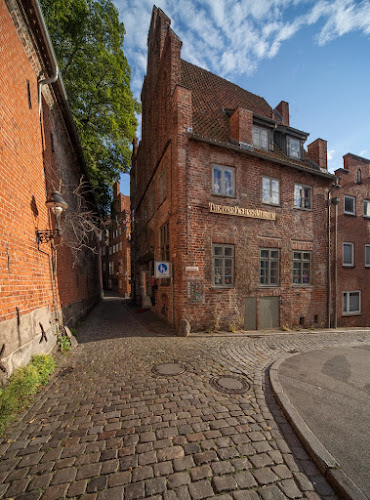
Tucked behind a street-facing entrance on Glockengießerstraße in Lübeck’s Old Town, the Füchtingshof is one of the city’s best examples of the “Gänge und Höfe” tradition—narrow passages opening into hidden residential courtyards. It’s also not a museum set piece. It’s a heritage-protected housing complex that is still inhabited, which is exactly why it feels so real when you step inside.
What makes Füchtingshof especially worth your time is the mix of social history (a foundation created to support vulnerable residents), early baroque architecture, and Old Town context—you’re in the heart of a UNESCO-listed historic cityscape where “ordinary” streets still contain centuries of civic and charitable infrastructure.
—
## Quick facts you can rely on
– Location: Glockengießerstraße, below St. Catherine’s Church (Katharinenkirche) in Lübeck’s Old Town.
– What it is: A historic foundation courtyard (Stiftungshof), considered among the largest and most splendid of Lübeck’s foundation courtyards.
– Who it served: Since 1639, it has served as housing for widows of sailors (Schiffer) and merchants.
– Ownership/management: The complex belongs to the still-existing foundation “Johann Füchting Testament.”
– Housing today: A renovation in the 1970s resulted in 28 apartments.
– Old Town setting: Lübeck’s historic Old Town has been a UNESCO World Heritage Site since 1987. World Heritage Centre
—
## Why Füchtingshof matters (beyond “pretty courtyard”)
Lübeck’s courtyards aren’t just aesthetic surprises; they’re a built response to dense medieval urban life and later civic welfare. The Füchtingshof stands out because it’s explicitly a charitable foundation project tied to a named Lübeck citizen (Johann Füchting) and a continuing legal entity (the foundation), rather than “just” an old back courtyard that survived redevelopment.
The site is repeatedly described by Lübeck tourism sources as a baroque jewel and a headline example within the city’s courtyard network—useful context if you’re building a self-guided walk focused on alleys, passages, and hidden residential architecture rather than the big-ticket monuments. Tourismus
—
## What to look for once you’re inside
### 1) The “threshold moment”: street → passage → courtyard
The classic Lübeck courtyard experience is the transition: a normal street façade, an entry passage, and then a sheltered interior space. In practical terms, this is why Füchtingshof is best visited slowly—pause at the entry and notice how the sound and light change as you move inward.
### 2) Early baroque character in a Hanseatic city
Lübeck is famous for Brick Gothic at its churches, but the Füchtingshof is routinely referenced as an early baroque residential ensemble.
That contrast—baroque residential calm within a city known for monumental brick churches—helps it feel different from many “Old Town photo stops.”
### 3) A place designed for living, not touring
Unlike cloisters or palace courtyards, you’re in a space that was built as housing and remains housing. The scale, door placement, and courtyard layout all point back to domestic routines. Lübeck’s official tourism guidance explicitly reminds visitors that these courtyards are still lived in. Tourismus
—
## Visiting hours, etiquette, and how to not be “that visitor”
### Visiting hours (may change)
Lübeck tourism listings publish two daily visiting windows: 10:00–12:00 and 15:00–18:00 (Mon–Sun). Treat this as a planning baseline, not a guarantee—courtyard access can depend on whether the gate is open. Tourismus
### Courtyard etiquette (important here)
Because residents live on-site, the best practice is simple and strict:
– Keep voices low; avoid phone calls inside the courtyard.
– Don’t photograph people at their doors/windows.
– Don’t peek into interiors or treat entrances as “props.”
– If the gate is closed, take that as a clear “not now.”
This isn’t just politeness; it’s what keeps Lübeck’s historic residential courtyards visit-able long-term.
—
## How to fit Füchtingshof into a smart Lübeck walking route
If you’re prioritizing high information gain per minute, combine Füchtingshof with a “courtyards + UNESCO Old Town fabric” loop rather than a churches-only loop.
A practical approach:
– Start in the Old Town (Altstadt) and aim for a sequence of Gänge und Höfe with Füchtingshof as the anchor “large and prestigious foundation courtyard.” Tourismus
– Layer in one or two major skyline points (church towers, gates) as navigation reference points—Lübeck’s UNESCO listing focuses on the historic cityscape and urban form, so this pairing helps you see what UNESCO is talking about rather than just reading plaques. World Heritage Centre
—
## Accessibility and comfort notes (what many guides skip)
– Surfaces: Expect uneven stone/cobblestones typical of historic Old Town passages; footwear matters.
– Space: Passages can be narrow; give way generously and avoid blocking entryways.
– Mobility: If you’re traveling with a wheelchair, stroller, or walker, the narrow entry and uneven surface may be limiting. (I did not find an official accessibility statement in the sources above; plan conservatively.)
—
## Outdated-data flags (what to double-check before publishing)
– Opening hours and access: Published visiting windows exist, but access depends on gates and local management; confirm close to publication if your article includes times. Tourismus
– Apartment count + renovation timing: Sources cite a 1970s rebuild leading to 28 apartments; keep that phrasing anchored to the source and avoid adding extra renovation claims without documentation.
—
Table of Contents
Key Highlights
Füchtingshof
Location
Places to Stay Near Füchtingshof"Domy te do teraz są zamieszkane. Czas potrzebny na zwiedzanie ..."
Find and Book a Tour
Explore More Travel Guides
No reviews found! Be the first to review!
Traveler Reviews for Füchtingshof
There are no reviews yet. Be the first one to write one.
Have you visited Füchtingshof? Help other travelers by sharing your review.
You Might Also Like
Leuchtturm Travemünde
Lübeck Museum of Theatre Puppets

Museumsquartier St. Annen
Find Accommodations Nearby
Recommended Tours & Activities
Visitor Reviews
There are no reviews yet. Be the first one to write one.
Share Your Experience
Have you visited Füchtingshof? Help other travelers by leaving a review.