
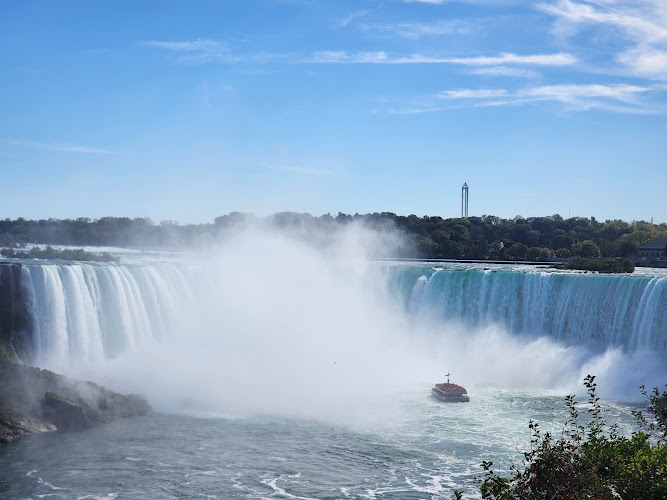
Horseshoe Falls
About Horseshoe Falls
Description
Horseshoe Falls, the grandest of the three waterfalls that make up Niagara Falls, is one of those places that manages to humble even the most seasoned traveler. Standing before it, you can feel the ground tremble just slightly beneath your feet, as if the earth itself is in awe of the sheer power of the water. Located along the Niagara River on the border between Canada and the United States, this natural wonder draws millions every year—and honestly, it’s not hard to see why.
The falls curve in a graceful crescent shape, which is how they earned the name “Horseshoe.” The water plunges about 167 feet (roughly 51 meters) down into the misty gorge below, and when the sun hits just right, you’ll often catch a rainbow shimmering in the spray. It’s the kind of sight that makes you forget about your phone for a moment—though, let’s be real, you’ll still want a photo or two. What’s fascinating is that about 90% of the Niagara River’s flow (after diversions for hydropower) rushes over this very edge. That’s an unimaginable amount of water, and yet it never stops—it’s been flowing for thousands of years, reshaping the landscape inch by inch.
Some travelers describe Horseshoe Falls as peaceful despite its force, while others say it’s overwhelming in the best possible way. Personally, I think it’s both. There’s something hypnotic about the sound—the deep, continuous roar that seems to drown out every other thought in your head. And if you visit at night, when the falls are illuminated in shifting colors, it’s pure magic. Whether you’re standing at Table Rock on the Canadian side or taking a boat ride that gets you close enough to feel the spray on your face, the experience is unforgettable.
Key Features
- Height: Approximately 167 feet (51 meters), creating a dramatic vertical drop that fills the air with mist.
- Width: Around 2,500 feet (760 meters) across the crest, forming a near-perfect horseshoe shape.
- Flow Rate: Roughly 90% of the Niagara River’s water flows over Horseshoe Falls after hydropower diversions.
- Location: Straddles the border between Ontario, Canada, and New York, USA, with the majority on the Canadian side.
- Accessibility: Easily viewed from multiple vantage points, including Table Rock Welcome Centre and boat tours like the famous Maid of the Mist or Hornblower Cruises.
- Night Illumination: The falls are lit up in vibrant colors every evening, creating a breathtaking nighttime spectacle.
- Rainbows: Frequent natural rainbows appear on sunny days due to the constant mist rising from the plunge pool.
Best Time to Visit
If you ask ten people when to visit Horseshoe Falls, you’ll probably get ten different answers, but here’s my take: late spring through early fall is when the area truly comes alive. Between May and September, the weather is warm enough to enjoy the outdoor viewpoints comfortably, and the boat tours are in full swing. Summer is undeniably the busiest season, but there’s a certain energy in the air—the chatter of tourists, the hum of the city, the thrill of being so close to something so powerful.
If you prefer fewer crowds, go early in the morning or visit during shoulder seasons like late April or October. The mist feels crisper, the air cooler, and you can take your time without bumping elbows. Winter, on the other hand, transforms Horseshoe Falls into a frozen wonderland. Ice forms along the edges, and the mist sometimes crystallizes into delicate shapes on nearby trees and railings. It’s cold, yes, but it’s also peaceful in a way that summer can’t match. Just bundle up properly—trust me, that wind off the Niagara River cuts deep.
How to Get There
Reaching Horseshoe Falls is pretty straightforward, especially if you’re already in the Niagara region. Most visitors approach from the Canadian side in Niagara Falls, Ontario. The city itself is well-connected by road, rail, and even air, so whether you’re driving from Toronto or crossing over from the U.S., it’s a smooth trip. There’s a certain excitement that builds as you get closer—you start to hear the distant roar before you even see the water.
If you’re staying nearby, you can easily walk to the viewing areas. The pedestrian pathways along Niagara Parkway offer spectacular views at every turn. Public transportation and tour buses also stop right near the falls, so you don’t have to worry about parking if that’s not your thing. For those who love a bit of adventure, you can hop on a boat tour that takes you right into the mist, or ride the Niagara City Cruises for a heart-pounding close-up. And if you’re coming from the U.S. side, you can cross the Rainbow Bridge on foot or by car—just remember your passport.
Tips for Visiting
Visiting Horseshoe Falls can be a once-in-a-lifetime experience, but a little planning goes a long way. Here are some tips I’ve picked up over the years (and from a few soggy mistakes):
- Bring a waterproof jacket or poncho. The mist is no joke, especially if you’re taking a boat tour or standing close to the edge. You’ll thank yourself later.
- Go early or late in the day. Sunrise and sunset are both spectacular times to visit. The light hits the water in ways that feel almost otherworldly, and the crowds are thinner.
- Don’t skip the nighttime illumination. The falls glow in a rainbow of colors after dark, and it’s free to watch. If you’re lucky, you might even catch fireworks on special evenings.
- Wear comfortable shoes. You’ll be walking—a lot. The area around the falls has plenty of paths and viewpoints worth exploring.
- Take the Journey Behind the Falls tour. It’s a bit touristy, sure, but standing in a tunnel behind that roaring curtain of water is something you’ll never forget.
- Stay hydrated and pack snacks. There are cafes and restaurants nearby, but prices can be steep. A small backpack with essentials will make your day smoother.
- Visit during different seasons if you can. Each one offers a new perspective—the lush greens of summer, the fiery colors of autumn, or the icy blues of winter.
One last bit of advice: take a moment to just stand still. Don’t rush to capture every angle or selfie. Let the sound of the water fill your ears, feel the mist on your skin, and breathe it all in. Horseshoe Falls has this uncanny ability to make you feel both tiny and infinite at the same time. It’s nature’s reminder that some things are simply beyond words—and that’s exactly what makes it worth the trip.
So whether you’re a thrill-seeker, a photographer, or just someone who appreciates the raw beauty of the natural world, Horseshoe Falls won’t disappoint. It’s not just a waterfall—it’s an experience that stays with you long after you’ve left the spray and roar behind.
Key Features
- Key Features
- Best Time to Visit
- How to Get There
- Tips for Visiting
Tours & Activities
GetYourGuide provides this tour inventory. We may earn a commission if you book through it; verify current availability, prices, and terms with the provider.
Visitor Reviews
There are no reviews yet. Be the first one to write one.
Share Your Experience
Have you visited Horseshoe Falls? Help other travelers by leaving a review.