
Hollingbury Hillfort
About Hollingbury Hillfort
Key Features
More Details
Updated June 11, 2025
## Hollingbury Hillfort, Brighton: what you’re actually looking at (and how to enjoy it safely)
Hollingbury Hillfort (also called Hollingbury Castle or Hollingbury Camp) sits on the northern edge of Brighton, East Sussex, with wide views over the city and out to the English Channel. It’s not a “castle” in the medieval sense—it’s an Early Iron Age hillfort preserved as earthworks: banks, ditches, and entrances you can still trace on foot today. England
The practical headline: this is a scheduled monument on open downland next to (and partly overlapping) a golf course, so it rewards slow, observant walking—and it demands basic awareness (including the very real risk of stray golf balls). England
—
## Quick facts (for planning)
– Location: Brighton, United Kingdom
– Coordinates: 50.855227, -0.123229
– What it is: Iron Age hillfort earthworks; interior also contains earlier Bronze Age burial mounds (bowl barrows). England
– Protection status: Scheduled monument (National Heritage List for England). England
– Setting: Adjacent to Hollingbury Park Golf Course.
—
## A short, accurate history (without the myth-buildup)
Historic England describes the site as a slight univallate hillfort (meaning a single main bank-and-ditch defensive circuit) dating to the Early Iron Age, positioned on a chalk hill with excellent coastal views. England
Within the enclosure are three Bronze Age bowl barrows (burial mounds), meaning the hill was significant long before the hillfort period.
If you’ve visited other hillforts in southern England, the feel is similar: the main “experience” is reading the landscape. You’re not coming for standing walls—you’re coming to understand how people shaped a hill to control movement, visibility, and (likely) local status.
—
## What to look for on the ground (so it doesn’t feel like “just a field”)
### The bank-and-ditch circuit
The fort is defined by a single bank and ditch forming a roughly squared shape with rounded corners, enclosing about 9 acres.
Tip: walk the perimeter slowly. The defensive line becomes much clearer when you watch how the ground rises and falls relative to the slope.
### Original entrance points
There were original entrances on the east and west sides; the western entrance is described as inturned (the banks curl inward), a classic hillfort detail that controlled access.
### The Bronze Age barrows inside the enclosure
The three bowl barrows sit inside the fort area and are aligned roughly north–south. They can read as subtle humps until you’re standing close—then the geometry makes sense.
### The view logic
From the hill you can see why it mattered: the site “enjoys excellent views” south toward the Channel coast. England
This is one of the best “instant payoff” hillforts around Brighton because the panorama helps the archaeology click.
—
## The golf course reality (and how to not get hit)
The hillfort is adjacent to Hollingbury Park Golf Course, and visitor reviews commonly flag low-flying golf balls as a real hazard.
Practical safety rules that don’t ruin the walk:
– Stick to obvious paths and keep an eye on fairways/tees—if you’re unsure, pause and scan before crossing open grass.
– Listen for “Fore!” If you hear it, stop moving and locate the ball’s direction.
– Don’t wear headphones if you’re walking across active playing areas.
– If you’re visiting with kids, this is a “hold hands / stay close” zone—not because it’s dangerous terrain, but because a wandering line can put you where golfers don’t expect pedestrians.
(These are general safety practices; golf course layouts and access conditions can change, so adapt on-site.)
—
## How to get there (and what’s likely to trip you up)
Because access points vary depending on the approach you choose, your best planning move is to aim for Hollingbury / north Brighton and then navigate on foot to the earthworks. For walkers, an established option is using a known circular route: AllTrails lists a Hollingbury Hillfort Circular at about 4.2 km taking roughly 1–1.5 hours (their figures reflect user-reported trail data and can change over time).
If you want a more structured group-walk approach, the Ramblers have run a Hollingbury Hillfort walk in partnership with Brighton & Hove Health Walks (again: schedules and logistics are time-sensitive—always verify before you go).
Outdated-data flag: Trail distances, estimated durations, and any public-transport guidance can drift over time due to reroutes, works, or policy changes. Use them as a baseline, not a guarantee.
—
## Accessibility and inclusivity notes (so nobody is surprised mid-walk)
Hollingbury Hillfort is primarily a downland earthworks site: expect uneven ground, grass paths, and (in wet weather) slippery chalky patches. That makes it enjoyable for many people, but it can be challenging for:
– Wheelchairs and many mobility aids (due to surface and gradients)
– Anyone needing step-free, firm paths throughout
If you’re planning for mixed mobility in a group, consider pairing this with a more accessible Brighton stop the same day so everyone gets a “yes” experience, not a compromise.
—
## Best time to visit (based on what the landscape does)
This site is all about contours and visibility, so the best conditions are:
– Clear days for the coastal view payoff (the view is part of the monument’s logic). England
– Low sun (morning or late afternoon) when shadows make banks and ditches stand out.
After heavy rain, chalk downland can get slick—good footwear matters more than usual.
—
## A simple, satisfying loop (no complicated navigation)
If you want a “minimal fuss” visit:
1. Walk up onto the open downland until you can identify the raised bank line.
2. Follow the perimeter for a full circuit to understand the fort’s shape.
3. Cut through the interior to locate the subtle barrow mounds.
4. Finish by pausing at the southern-facing edge for the Channel view.
This order helps the site read as a designed space rather than random earth bumps.
—
## Two nearby Brighton add-ons (easy internal next clicks)
If you’re turning this into a fuller Brighton half-day, these are natural pairings:
– Pair hillfort history with a quirky modern landmark: Upside Down House – Brighton Journey Tours & Travels
– Or lean into local heritage after your walk: Brighton Fishing Museum Journey Tours & Travels
Both work well as “reward stops” after a windswept hill walk.
—
## Responsible visiting (protecting the earthworks)
Because Hollingbury is a protected archaeological site, treat it like you would any fragile landscape feature:
– Don’t bike or cut new lines over the banks/ditches.
– Keep dogs under control near golfers and on narrow paths.
– Leave no trace—there’s no reason for litter to end up in a scheduled monument. England
—
## Bottom line: who Hollingbury Hillfort is for
You’ll enjoy Hollingbury Hillfort most if you like:
– Prehistoric landscapes you can “read” with your feet
– Short, view-heavy walks close to a city
– Sites where the history is subtle but real (and protected) England
If you want signage-heavy interpretation, indoor exhibits, or guaranteed step-free routes, build this into a broader Brighton day rather than making it your single headline stop.
And yes: watch out for low flying golf balls.
Table of Contents
Key Highlights
Hollingbury Hillfort
Location
Places to Stay Near Hollingbury Hillfort"Watch out for low flying golf balls though."
Find and Book a Tour
Explore More Travel Guides
No reviews found! Be the first to review!
Traveler Reviews for Hollingbury Hillfort
There are no reviews yet. Be the first one to write one.
Have you visited Hollingbury Hillfort? Help other travelers by sharing your review.
You Might Also Like
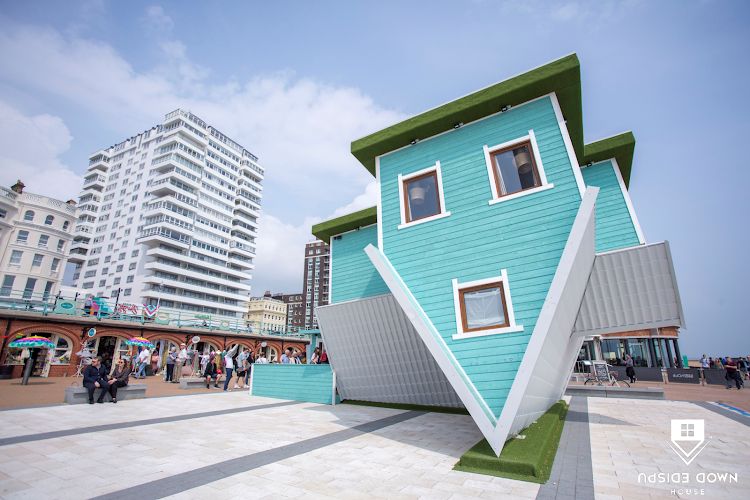
Upside Down House - Brighton

Brighton Toy and Model Museum
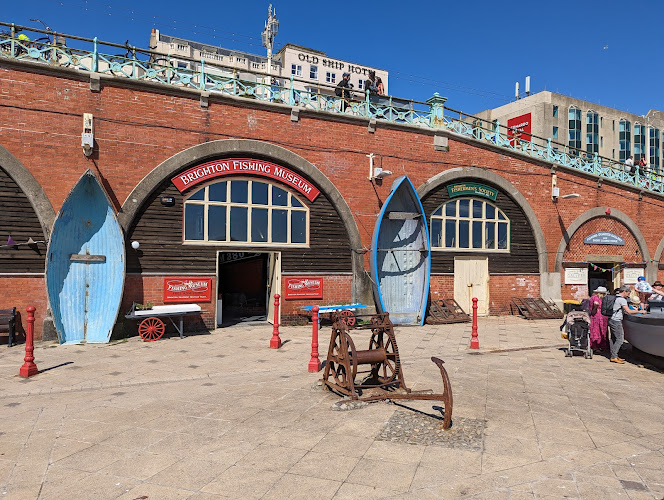
Brighton Fishing Museum
Find Accommodations Nearby
Recommended Tours & Activities
Visitor Reviews
There are no reviews yet. Be the first one to write one.
Share Your Experience
Have you visited Hollingbury Hillfort? Help other travelers by leaving a review.