
Hölbling Haus
About Hölbling Haus
Key Features
More Details
Updated April 15, 2024
## Hölbling (Helbling) Haus, Innsbruck: How to See the “Icing” Façade on Herzog-Friedrich-Straße
If you’re walking Innsbruck’s Altstadt and suddenly feel like the buildings got dramatically more theatrical, you’ve probably reached Hölbling Haus (more commonly spelled Helblinghaus / Helbling House). It sits at Herzog-Friedrich-Straße 10, 6020 Innsbruck, directly across from the Golden Roof (Goldenes Dachl)—so you can pair both sights in a single stop without detouring.
What makes it worth a dedicated pause is the façade: an 18th-century Rococo stucco “icing-like” surface layered over a much older core. The building began life as a 15th-century Gothic townhouse, then received its exuberant Baroque/Rococo makeover in the early 1700s.
—
## Quick facts (for planning)
– Name: Helblinghaus (Hölbling Haus)
– Address: Herzog-Friedrich-Straße 10, 6020 Innsbruck, Austria
– Area: Altstadt (Old Town), Innsbruck
– Coordinates: 47.2684382, 11.3929377 (as provided)
– How you visit: Exterior-only (official destination listing notes it’s only viewable from outside).
Outdated-data flag: Any “opening hours” you see listed for the site can be misleading because it’s not an interior attraction; always treat hours as informational rather than a sign you can enter.
—
## What you’re actually looking at (and why it’s unusual here)
### A Gothic house wearing an 18th-century costume
Helbling House is widely described as a 15th-century Gothic townhouse that later acquired a Baroque façade.
The eye-catching layer is the Rococo stucco decoration—the bows, frames, masks, shells, sculptural flourishes, and ornamental detailing that give the building its frosted-cake reputation.
### The “icing” was added under Johann Fischer, by Anton Gigl
Multiple sources attribute the lavish stuccowork redesign to Anton Gigl of the Wessobrunn school, commissioned under owner Johann Fischer (a cashier of the Hall mint), around c. 1730.
English-language summaries also note completion in the early 18th century and associate the redesign with Gigl.
Why this matters on the street: Innsbruck’s Old Town is dominated by medieval and Gothic façades; Helblinghaus stands out precisely because it reads as a highly ornamental Baroque/Rococo intervention amid older neighbors.
—
## How to experience Helblinghaus well (in 10 minutes)
### 1) Stand where the façade “pops”
Because the building sits across from the Golden Roof, you can use that open space to get a clean view of the façade without craning your neck. The decoration was designed to catch light and create depth—so even small shifts in where you stand can change what reads as shadow vs. relief.
### 2) Look for the density of detail, not one single “feature”
The easiest way to appreciate it is to scan in layers:
– Bay windows/oriels (projecting window sections)
– Ornamental frames around windows
– Clusters of shell-like and mask motifs
– Repeating floral and garland patterns that climb the façade
You’ll get more out of it by slowing down and tracing a single vertical line of decoration from street level upward—Rococo surfaces are meant to be read like continuous ornament, not a single focal statue.
### 3) Treat it as a photography stop—without needing a “ticket”
Helblinghaus is one of those rare city-center sights where the “visit” is really about vantage, timing, and attention. Since it’s exterior-only, your best upgrade is simply giving it a few minutes instead of snapping and moving on.
—
## Practical tips that aren’t usually mentioned
### Use it as a navigation anchor in the Altstadt
Because it’s opposite the Golden Roof on a major Old Town street, Helblinghaus works as a reliable “reset point” if you’re doing a self-guided walk and want to reorient without opening a map.
### What to expect for accessibility
Helblinghaus itself is a street-view attraction. Innsbruck’s Old Town is historic, so plan for typical historic-center conditions: tight pedestrian flows at peak times and stone paving underfoot. If you use a wheelchair, stroller, or mobility aid, it’s worth approaching at a quieter time for smoother positioning and more space to stop safely.
—
## Mini walking plan: pair it with two nearby stops
Because of the location, Helblinghaus naturally slots into an Old Town loop:
– Golden Roof (Goldenes Dachl) — directly across the street.
– Altstadt street wander — keep your eyes up; Helblinghaus is the dramatic outlier that makes the surrounding Gothic houses feel more “Innsbruck” by contrast.
### Suggested internal links (contextual)
If these exist (or you plan to publish them), they fit naturally in this post:
– Internal link #1: Innsbruck Old Town walking route (Altstadt self-guided loop)
– Internal link #2: Golden Roof (Goldenes Dachl) guide: history + what to notice from the square
—
## A detail worth knowing: the name comes from a 19th-century owner
The building is named after Sebastian Helbling (Hölbling), who owned it from 1800 to 1827.
That’s a useful detail for readers because it explains why a Rococo façade is tied to a later family name: the “Helbling” label refers to ownership history, not the original medieval construction.
—
## Bottom line: why Helblinghaus is worth your time
Helblinghaus is a high-impact, low-effort Old Town highlight: a 15th-century Gothic structure transformed by early 18th-century Rococo stucco work, positioned in the most walkable part of Innsbruck—across from the Golden Roof.
You don’t need a reservation, an opening hour window, or an itinerary overhaul. You just need to stop long enough to actually read the façade.
Table of Contents
Key Highlights
Hölbling Haus
Location
Places to Stay Near Hölbling Haus
Find and Book a Tour
Explore More Travel Guides
No reviews found! Be the first to review!
Traveler Reviews for Hölbling Haus
There are no reviews yet. Be the first one to write one.
Have you visited Hölbling Haus? Help other travelers by sharing your review.
You Might Also Like
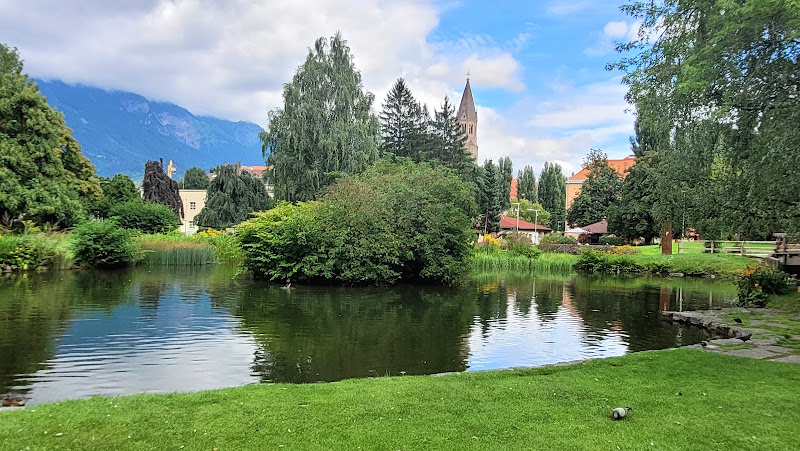
Rapoldipark
Colourful Houses Innsbruck
AUDIOVERSUM – ScienceCenter
Find Accommodations Nearby
Recommended Tours & Activities
Visitor Reviews
There are no reviews yet. Be the first one to write one.
Share Your Experience
Have you visited Hölbling Haus? Help other travelers by leaving a review.