
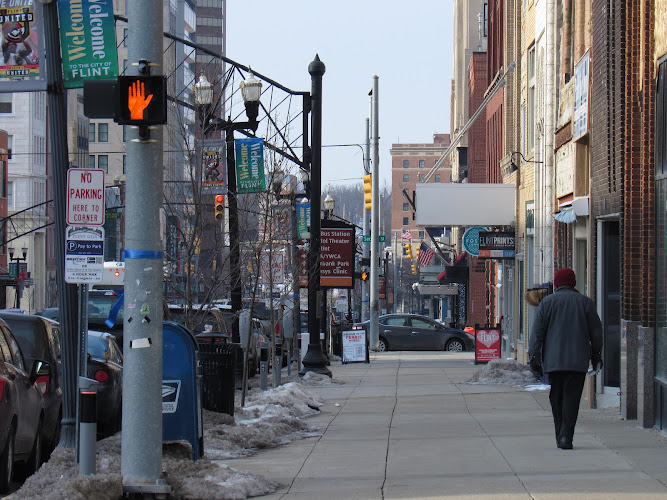
Historic Saginaw Street
About Historic Saginaw Street
Description
Historic Saginaw Street in downtown Flint, Michigan, carries the kind of charm that can’t be fabricated—it’s the real deal. Walking down this stretch feels like flipping through the pages of a living history book, one where every brick, arch, and storefront whispers a story from the city’s past. The street was first laid out in the mid-19th century, and by 1852, it had become a major route connecting Flint to the city of Saginaw. Back then, it was a plank road—yes, literally made of wooden planks—before the era of asphalt and automobiles took over. Today, it’s a pedestrian-friendly thoroughfare lined with restored buildings that once saw the rise of the lumber industry, the birth of the auto age, and the cultural rebirth of Flint itself.
There’s something about the way the vintage arches stretch across the street that makes you pause. They’re modeled after the ones that stood here in the early 1900s, glowing softly at night and giving the downtown area a warm, nostalgic glow. I remember the first time I saw them lit up—it felt like stepping into an old postcard. The sound of live music drifting from a nearby restaurant, the faint scent of roasted coffee from a corner café, and the laughter of people spilling out of the Capitol Theatre after a show—it all blends into this wonderful, timeless atmosphere. Sure, it’s not the busiest street in Michigan, but that’s part of its appeal. You can actually slow down, look around, and feel connected to the place.
Historic Saginaw Street isn’t just about pretty facades; it’s about resilience. Flint has seen its share of ups and downs, but this street stands as a reminder of what the city has survived and how it continues to reinvent itself. From the stately Mott Foundation Building to the beautifully restored Patterson Building, the architecture alone tells a story of ambition and artistry. And if you’re a fan of classic Americana, you’ll love the Halo Burger restaurant—a local legend that’s been serving up burgers since the early 20th century. There’s a kind of pride here that’s hard to miss, and it makes exploring the area feel personal, almost like you’re part of its ongoing story.
Key Features
- Historic arches that recreate the early 20th-century street lighting design, glowing beautifully at night.
- Architectural landmarks including the Mott Foundation Building, the Capitol Theatre, and the Patterson Building.
- Locally owned restaurants, cafés, and shops that bring a sense of community and authenticity.
- Public art installations and murals that celebrate Flint’s cultural heritage and creative spirit.
- Seasonal events and street festivals that transform the area into a lively gathering spot.
- Easy walkability with access to nearby museums, galleries, and the Flint River Trail.
What stands out most to me is how the street manages to blend history and modern life so effortlessly. You can grab a cup of coffee at a trendy café and then step next door into a century-old building that’s been meticulously preserved. It’s the kind of place where history doesn’t feel distant—it’s right there under your feet, in the brickwork and the echoes of old footsteps.
Best Time to Visit
If you ask me, the best time to explore Historic Saginaw Street is late spring through early fall. That’s when the weather is friendly enough for leisurely walks, and the city seems to come alive with outdoor events. Summer evenings are especially magical—the streetlights flicker on, the air buzzes with conversation, and there’s usually live music somewhere nearby. I once stumbled upon a small jazz performance outside the Capitol Theatre on a warm June evening, and it was one of those spontaneous moments that make traveling worth it.
Winter has its own quiet charm, too. The snow dusts the old buildings, the lights twinkle against the frosty air, and the cafés become cozy hideaways. If you don’t mind bundling up, you might actually prefer the slower pace. But if you want to experience the street at its liveliest, plan a visit between May and September when everything—from farmers markets to art walks—is in full swing.
How to Get There
Reaching Historic Saginaw Street is quite straightforward. It’s right in the heart of downtown Flint, easily accessible by car from major Michigan highways. There’s plenty of parking nearby, both on-street and in public lots, which is a relief if you’re driving in from out of town. For those using public transportation, local bus routes stop within walking distance of the main stretch. And if you’re the adventurous type, the Flint River Trail connects directly to the area, making it a great destination for cyclists or joggers exploring the city on two wheels.
I’ve driven there a few times myself, and one thing I always appreciate is how compact and walkable the downtown area is. You can park once and spend an entire afternoon exploring without needing to move your car. Plus, the signage and layout make it easy to navigate, even if it’s your first visit.
Tips for Visiting
Here’s a bit of friendly advice from someone who’s spent more than a few afternoons wandering around Historic Saginaw Street:
- Start early. The mornings are peaceful, and you can catch the sunlight hitting the old brick buildings just right—it’s a photographer’s dream.
- Don’t rush. This isn’t a place to sprint through. Take your time popping into local shops, chatting with business owners, and soaking in the details.
- Catch a show at the Capitol Theatre. Even if you’re not a huge theatre fan, the interior is stunning and worth a look.
- Stay for dinner. The food scene downtown has grown in recent years, with everything from classic diners to upscale bistros.
- Bring a camera or sketchpad. The architecture and street art here are genuinely inspiring—you’ll want to capture it somehow.
- Check the event calendar. Flint often hosts community events and festivals downtown, and they can really enhance your visit.
One little thing I learned the hard way—wear comfortable shoes. The sidewalks are old, charmingly uneven in spots, and you’ll end up walking more than you expect because there’s always something else to see around the corner. Also, if you’re into photography, the late afternoon light is unbeatable. The way it hits the arches and the warm brick facades makes for incredible photos.
Historic Saginaw Street isn’t just a destination; it’s an experience that sneaks up on you. You don’t realize how much it’s gotten under your skin until you’re driving away and already planning when to come back. It’s a place that rewards curiosity and patience—a reminder that history isn’t just in museums; sometimes it’s right there on the street, waiting for you to walk through it.
So, if you’re traveling through Michigan and want to see a piece of the state’s story that’s still alive and evolving, take a stroll down Saginaw Street. Let yourself get lost for a while. Grab a burger, peek into an art gallery, chat with a local, and just... be there. Because that’s really what this place is about—connection, community, and the quiet beauty of a city that remembers where it came from while still looking forward.
Key Features
- Historic arches that recreate the early 20th-century street lighting design, glowing beautifully at night.
- Architectural landmarks including the Mott Foundation Building, the Capitol Theatre, and the Patterson Building.
- Locally owned restaurants, cafés, and shops that bring a sense of community and authenticity.
- Public art installations and murals that celebrate Flint’s cultural heritage and creative spirit.
- Seasonal events and street festivals that transform the area into a lively gathering spot.
- Easy walkability with access to nearby museums, galleries, and the Flint River Trail.
More Details
Updated December 1, 2025
Table of Contents
Description
Historic Saginaw Street in downtown Flint, Michigan, carries the kind of charm that can’t be fabricated—it’s the real deal. Walking down this stretch feels like flipping through the pages of a living history book, one where every brick, arch, and storefront whispers a story from the city’s past. The street was first laid out in the mid-19th century, and by 1852, it had become a major route connecting Flint to the city of Saginaw. Back then, it was a plank road—yes, literally made of wooden planks—before the era of asphalt and automobiles took over. Today, it’s a pedestrian-friendly thoroughfare lined with restored buildings that once saw the rise of the lumber industry, the birth of the auto age, and the cultural rebirth of Flint itself.
There’s something about the way the vintage arches stretch across the street that makes you pause. They’re modeled after the ones that stood here in the early 1900s, glowing softly at night and giving the downtown area a warm, nostalgic glow. I remember the first time I saw them lit up—it felt like stepping into an old postcard. The sound of live music drifting from a nearby restaurant, the faint scent of roasted coffee from a corner café, and the laughter of people spilling out of the Capitol Theatre after a show—it all blends into this wonderful, timeless atmosphere. Sure, it’s not the busiest street in Michigan, but that’s part of its appeal. You can actually slow down, look around, and feel connected to the place.
Historic Saginaw Street isn’t just about pretty facades; it’s about resilience. Flint has seen its share of ups and downs, but this street stands as a reminder of what the city has survived and how it continues to reinvent itself. From the stately Mott Foundation Building to the beautifully restored Patterson Building, the architecture alone tells a story of ambition and artistry. And if you’re a fan of classic Americana, you’ll love the Halo Burger restaurant—a local legend that’s been serving up burgers since the early 20th century. There’s a kind of pride here that’s hard to miss, and it makes exploring the area feel personal, almost like you’re part of its ongoing story.
Key Features
- Historic arches that recreate the early 20th-century street lighting design, glowing beautifully at night.
- Architectural landmarks including the Mott Foundation Building, the Capitol Theatre, and the Patterson Building.
- Locally owned restaurants, cafés, and shops that bring a sense of community and authenticity.
- Public art installations and murals that celebrate Flint’s cultural heritage and creative spirit.
- Seasonal events and street festivals that transform the area into a lively gathering spot.
- Easy walkability with access to nearby museums, galleries, and the Flint River Trail.
What stands out most to me is how the street manages to blend history and modern life so effortlessly. You can grab a cup of coffee at a trendy café and then step next door into a century-old building that’s been meticulously preserved. It’s the kind of place where history doesn’t feel distant—it’s right there under your feet, in the brickwork and the echoes of old footsteps.
Best Time to Visit
If you ask me, the best time to explore Historic Saginaw Street is late spring through early fall. That’s when the weather is friendly enough for leisurely walks, and the city seems to come alive with outdoor events. Summer evenings are especially magical—the streetlights flicker on, the air buzzes with conversation, and there’s usually live music somewhere nearby. I once stumbled upon a small jazz performance outside the Capitol Theatre on a warm June evening, and it was one of those spontaneous moments that make traveling worth it.
Winter has its own quiet charm, too. The snow dusts the old buildings, the lights twinkle against the frosty air, and the cafés become cozy hideaways. If you don’t mind bundling up, you might actually prefer the slower pace. But if you want to experience the street at its liveliest, plan a visit between May and September when everything—from farmers markets to art walks—is in full swing.
How to Get There
Reaching Historic Saginaw Street is quite straightforward. It’s right in the heart of downtown Flint, easily accessible by car from major Michigan highways. There’s plenty of parking nearby, both on-street and in public lots, which is a relief if you’re driving in from out of town. For those using public transportation, local bus routes stop within walking distance of the main stretch. And if you’re the adventurous type, the Flint River Trail connects directly to the area, making it a great destination for cyclists or joggers exploring the city on two wheels.
I’ve driven there a few times myself, and one thing I always appreciate is how compact and walkable the downtown area is. You can park once and spend an entire afternoon exploring without needing to move your car. Plus, the signage and layout make it easy to navigate, even if it’s your first visit.
Tips for Visiting
Here’s a bit of friendly advice from someone who’s spent more than a few afternoons wandering around Historic Saginaw Street:
- Start early. The mornings are peaceful, and you can catch the sunlight hitting the old brick buildings just right—it’s a photographer’s dream.
- Don’t rush. This isn’t a place to sprint through. Take your time popping into local shops, chatting with business owners, and soaking in the details.
- Catch a show at the Capitol Theatre. Even if you’re not a huge theatre fan, the interior is stunning and worth a look.
- Stay for dinner. The food scene downtown has grown in recent years, with everything from classic diners to upscale bistros.
- Bring a camera or sketchpad. The architecture and street art here are genuinely inspiring—you’ll want to capture it somehow.
- Check the event calendar. Flint often hosts community events and festivals downtown, and they can really enhance your visit.
One little thing I learned the hard way—wear comfortable shoes. The sidewalks are old, charmingly uneven in spots, and you’ll end up walking more than you expect because there’s always something else to see around the corner. Also, if you’re into photography, the late afternoon light is unbeatable. The way it hits the arches and the warm brick facades makes for incredible photos.
Historic Saginaw Street isn’t just a destination; it’s an experience that sneaks up on you. You don’t realize how much it’s gotten under your skin until you’re driving away and already planning when to come back. It’s a place that rewards curiosity and patience—a reminder that history isn’t just in museums; sometimes it’s right there on the street, waiting for you to walk through it.
So, if you’re traveling through Michigan and want to see a piece of the state’s story that’s still alive and evolving, take a stroll down Saginaw Street. Let yourself get lost for a while. Grab a burger, peek into an art gallery, chat with a local, and just… be there. Because that’s really what this place is about—connection, community, and the quiet beauty of a city that remembers where it came from while still looking forward.
Key Highlights
- Historic arches that recreate the early 20th-century street lighting design, glowing beautifully at night.
- Architectural landmarks including the Mott Foundation Building, the Capitol Theatre, and the Patterson Building.
- Locally owned restaurants, cafés, and shops that bring a sense of community and authenticity.
- Public art installations and murals that celebrate Flint’s cultural heritage and creative spirit.
- Seasonal events and street festivals that transform the area into a lively gathering spot.
- Easy walkability with access to nearby museums, galleries, and the Flint River Trail.
Location
Places to Stay Near Historic Saginaw Street
Find and Book a Tour
Explore More Travel Guides
No reviews found! Be the first to review!
Traveler Reviews for Historic Saginaw Street
There are no reviews yet. Be the first one to write one.
Have you visited Historic Saginaw Street? Help other travelers by sharing your review.
You Might Also Like

Stepping Stone Falls

Bluebell Beach
Kearsley Park
Find Accommodations Nearby
Recommended Tours & Activities
Visitor Reviews
There are no reviews yet. Be the first one to write one.
Share Your Experience
Have you visited Historic Saginaw Street? Help other travelers by leaving a review.