
Himamaylan Welcome Arch
About Himamaylan Welcome Arch
Key Features
More Details
Updated April 16, 2024
## Himamaylan Welcome Arch (Negros Occidental, Philippines): What It Is + How to Visit Without Wasting Time
If you’re driving through southern Negros Occidental, the Himamaylan Welcome Arch is one of those quick, unmistakable “you’ve arrived” landmarks—useful as a navigation cue, a fast photo stop, and a clean starting point for exploring Himamaylan City and the surrounding area.
What makes this spot tricky (and why it’s worth a practical guide) is that online listings are sparse and often inconsistent about nearby administrative areas—so planning a stop works best when you rely on coordinates + road sense, not long descriptions.
### Quick facts (verified)
– Name: Himamaylan Welcome Arch
– Location (Plus Code): 5VJ8+M4Q, Himamaylan, Negros Occidental, Philippines
– Coordinates: 10.1817046, 122.8653609 (from your dataset)
– Type: Tourist attraction (landmark/roadside arch)
– Opening hours: Not reliably published; one major listing explicitly says to contact the attraction to confirm hours.
—
## Where it actually is (and why some sources confuse it)
Your dataset associates the arch with Binalbagan (via the full address string), but at least one travel listing places the same Plus Code in Himamaylan.
That mismatch is common with Plus Codes near boundaries or when listings inherit a broader area label. The practical takeaway:
– Trust the coordinates/Plus Code first.
– Treat “Binalbagan vs. Himamaylan” as a listing artifact, not a reason to reroute—especially if you’re already passing through the corridor.
Outdated-data flag: Because the most visible listing also notes uncertainty about hours, assume details like hours/signage may change without notice.
—
## What to expect when you stop
A “welcome arch” in the Philippines is typically a roadside gateway marker—a civic signifier rather than a stand-alone attraction with ticketing, staff, or facilities. For this specific arch, publicly available descriptions are minimal, so plan for it as:
– A brief pull-over/photo moment (think 2–10 minutes)
– A navigation checkpoint when you’re orienting yourself on a drive
– A spot that may be better in good light than at night (visibility + road safety)
Because the arch is listed without confirmed operating hours, treat it like a public roadway structure rather than a timed venue.
—
## How to visit efficiently (drive-by strategy that works)
### 1) Use coordinates, not place names
Plug 10.1817046, 122.8653609 into your map app. This prevents the “wrong municipality” issue that sometimes happens with text-based search.
### 2) Don’t assume formal parking
Roadside landmarks in the region often have:
– Limited shoulder space
– Informal pull-offs
– No marked parking bays
If you don’t see a safe, legal place to stop immediately, loop back when you find a wider shoulder rather than forcing it.
### 3) Build your stop around daylight and traffic flow
If you’re doing this as content capture (photos/video), the best results typically come from:
– Early morning (softer light, fewer vehicles)
– Late afternoon (warm light, higher contrast)
Avoid peak commuting windows when passing traffic makes roadside stopping uncomfortable.
—
## Safety + accessibility notes (real-world, not brochure talk)
### Road safety
This is the big one. A welcome arch sits where vehicles are actively moving. Treat it like a roadside pull-over:
– Wear bright clothing if you’re stepping out briefly
– Keep your group tight (especially with kids)
– Don’t stand in the roadway for a centered shot
### Accessibility considerations
You should expect variable curb/shoulder conditions, which can be challenging for:
– Wheelchair users
– Travelers with limited mobility
– Anyone with balance concerns
If your party needs step-free access, be ready to enjoy it as a slow roll-by landmark rather than a stop.
### Inclusivity note
Himamaylan is in a Hiligaynon-speaking province (Negros Occidental), with Filipino and English commonly used in travel contexts. If you’re asking locals for directions, a polite, simple ask plus showing a pin on your phone goes a long way.
—
## Pair it with something that’s actually “stay-worthy”
The arch itself is a quick hit. The better play is to use it as your arrival marker, then spend your time on experiences that justify a longer stop in/around Himamaylan City.
### Context: Himamaylan City at a glance (verified background)
Himamaylan is a component city in Negros Occidental.
If you’re building a broader itinerary, that matters because the city works as a base for:
– South Negros road trips
– Food stops and local markets
– Festival-season visits (Himamaylan is associated with the Himaya Festival per widely cited references)
Outdated-data flag: City officials and some civic details change over time; avoid baking leadership names into evergreen content unless you’re refreshing annually.
—
## Photography tips that don’t require special gear
If your goal is a clean “arrival” shot that reads well on mobile (Google Discover, social thumbnails), prioritize legibility:
– Frame wide enough to include road context, but close enough to read the arch text.
– Shoot one symmetrical shot, then a second at a slight angle to give depth.
– If traffic is steady, use burst mode and pick frames with fewer vehicles behind you.
For video:
– A 5–8 second clip of the approach (from inside the vehicle, safely) often looks better than standing on the roadside.
—
## Two smart internal links (contextual, non-spammy)
If you’re publishing this on RealJourneyTravels.com, these are the two internal links that will usually improve user flow without feeling forced:
– Guide hub idea: Negros Occidental road trip stops (clusters this arch with other quick landmarks)
– Destination guide idea: Himamaylan City travel guide (so the arch becomes the “entry point” to a fuller page)
(These are link recommendations—not claims that pages already exist.)
—
## The honest verdict
Himamaylan Welcome Arch is a “10-minute stop,” not a destination. Its value is in:
– confirming you’re in the right corridor,
– giving you a quick arrival photo,
– and serving as a natural transition into exploring Himamaylan and south Negros Occidental.
If you want, I can also generate:
– 5–8 caption options optimized for image search + Discover CTR (no clichés), and
– a compact FAQ schema block (only using verifiable statements + “hours not confirmed” language).
Table of Contents
Key Highlights
Himamaylan Welcome Arch
Location
Places to Stay Near Himamaylan Welcome Arch
Find and Book a Tour
Explore More Travel Guides
No reviews found! Be the first to review!
Traveler Reviews for Himamaylan Welcome Arch
There are no reviews yet. Be the first one to write one.
Have you visited Himamaylan Welcome Arch? Help other travelers by sharing your review.
You Might Also Like
Himamaylan city
Himamaylan
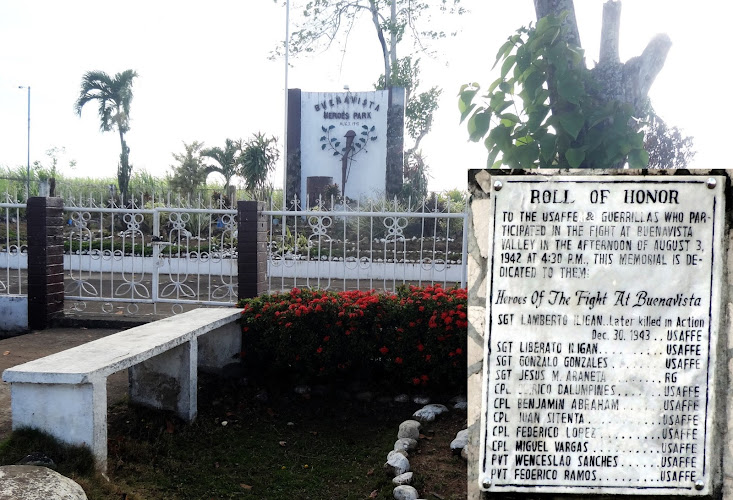
Buenavista Heroes Park
Find Accommodations Nearby
Recommended Tours & Activities
Visitor Reviews
There are no reviews yet. Be the first one to write one.
Share Your Experience
Have you visited Himamaylan Welcome Arch? Help other travelers by leaving a review.