
Himamaylan Cemetery
About Himamaylan Cemetery
Key Features
More Details
Updated April 16, 2024
CHR probes Himamaylan massacre | Daily Guardian
## Himamaylan Cemetery (Himamaylan City Public Cemetery): what it is and how to visit respectfully
If you’re mapping local places in Himamaylan City, Negros Occidental (Western Visayas, Philippines), the site often labeled online as Himamaylan City Public Cemetery matches the coordinates you provided (10.1054724, 122.8738403).
A quick data-quality note up front: the same cemetery is listed with different “street” fields across sources (e.g., Negros South Road in your record vs Segovia Street on one directory page). That doesn’t mean either is “wrong”—cemeteries can have multiple access points and local naming varies—but it’s a sign you should treat street-level labels as approximate and rely on pin-based navigation when routing.
—
## Location + navigation (what I can verify)
– Place name used online: Himamaylan City Public Cemetery
– Coordinates: ~10.10570, 122.87383 (crowdsourced directory listing)
– Your coordinates: 10.1054724, 122.8738403 (very close match; same area)
– City/province/region: Himamaylan City, Negros Occidental, Western Visayas
Practical routing advice: Use the coordinates (or plus code) rather than a street name. If you’re arriving by tricycle/ride-hail/local driver, give both the place name (“public cemetery”) and the pin.
—
## What to expect at a public cemetery in Himamaylan
What I can say with confidence from verified sources is limited to what the place is (a cemetery/public cemetery) and how it’s referenced/used in local reporting.
Local/regional news coverage has explicitly referenced burials taking place at a public cemetery in Himamaylan City, including events hosted/assisted by city offices (e.g., a reported burial at Barangay Aguisan Public Cemetery in Himamaylan City). That tells you the cemetery functions as an active municipal burial ground, not just a heritage site. Publishing Inc.
What I cannot verify reliably from authoritative sources (so I won’t claim):
– exact opening hours / gate policy
– onsite office/contact numbers for the cemetery itself
– whether there are formal visitor rules posted at entrances
– availability of restrooms, water points, or lighting
If those details matter for your itinerary, treat them as “ask locally on arrival.”
—
## Best times to visit (and when to avoid crowds)
### Quietest windows
– Weekday mornings are typically the calmest time to visit cemeteries in the Philippines (this is a practical travel heuristic, not a formal rule).
### Peak season: Undas (All Saints’ + All Souls’)
The Philippines observes Undas around Nov 1–2, when families traditionally visit cemeteries with candles, flowers, and prayers—often creating dense crowds and traffic near cemeteries. National reporting and explainers consistently describe cemeteries becoming focal gathering sites during these dates. News Agency
Actionable implication: if you want a reflective visit (or photography without people), avoid Nov 1–2 and the adjacent weekend.
—
## Etiquette that matters here (especially if you’re not local)
Cemeteries in the Philippines are active community spaces at certain times of year, but they’re still places of mourning and remembrance.
– Assume a funeral could be underway. If you see a gathering, keep distance and don’t take photos.
– Ask before photographing identifiable people or private tombs. If you’re documenting architecture or inscriptions, frame tightly and avoid faces.
– Dress and behavior: modest clothing, low voices, no music/speakers.
– Do not step on graves or low tomb structures. In many cemeteries, walkways and plot boundaries aren’t obvious—move slowly.
– If you’re visiting during Undas: expect families to be picnicking or spending extended time at graves; give them space.
This isn’t about being “extra polite.” It’s about not turning someone’s private grief into your travel content.
—
## Safety + accessibility (what’s reasonable to assume, and what isn’t)
I won’t claim site-specific safety conditions without official documentation, but here’s what you can do that’s universally sensible:
– Go in daylight. Even well-kept cemeteries can have uneven ground and hard-to-see edges.
– Footing: closed-toe shoes for grass, gravel, and broken concrete.
– Heat + rain: Negros Occidental climate is hot/humid with sudden downpours—bring water and a compact rain layer.
– Mobility: If you have limited mobility, cemeteries can be challenging due to uneven surfaces. Because I can’t verify accessibility features here, plan as if there may be steps, narrow paths, and non-paved sections.
—
## How to fit Himamaylan Cemetery into a wider Negros Occidental trip
Himamaylan is a component city in Negros Occidental, and it sits on the island’s transport spine that many travelers use to move between cities. Wikipedia (not an official government source, but widely cross-checked) places Himamaylan about 75 km south of Bacolod and notes broader geography context.
Practical use-case: If you’re doing a road day through the south of Negros Occidental, this stop is best treated as:
– a short, respectful visit (15–45 minutes)
– combined with errands/market stops in town rather than a standalone destination
—
## Two contextual internal links you can add (without guessing your site’s URLs)
Because I don’t have verified access to RealJourneyTravels.com’s existing URL structure, I won’t invent internal links. Here are two safe contextual placements you can link to if those pages exist on your site:
1. Negros Occidental logistics guide (getting around, buses, tricycles, driving)
– Anchor text idea: “How to get around Negros Occidental (transport + realistic travel times)”
2. Bacolod or Dumaguete base guide (where to stay, day trips, food)
– Anchor text idea: “Best base cities for exploring Negros: Bacolod vs Dumaguete”
—
## Data checks + potential outdated/inconsistent fields (flagged)
– Street label mismatch: “Negros South Road” vs “Segovia Street” appears across sources for cemetery-related navigation fields. Use coordinates/pin first.
– Crowdsourced cemetery directories: Find a Grave/Mapcarta are useful for pins, but they’re not official city records. Treat details like “total memorials,” photography %, etc. as non-authoritative.
—
## Quick visitor checklist (copy/paste)
– ✅ Navigate via 10.1054724, 122.8738403
– ✅ Daylight visit, closed-toe shoes, water
– ✅ Keep photos tight; avoid faces and active funerals
– ✅ Avoid Nov 1–2 (Undas) if you want quiet; expect crowds if you go then News Agency
If you want, paste 1–2 sentences about why someone would stop here (genealogy, local history research, a family visit, photography of funerary architecture, etc.), and I’ll tailor the intro and section emphasis without adding anything unverifiable.
Table of Contents
Key Highlights
Himamaylan Cemetery
Location
Places to Stay Near Himamaylan Cemetery
Find and Book a Tour
Explore More Travel Guides
No reviews found! Be the first to review!
Traveler Reviews for Himamaylan Cemetery
There are no reviews yet. Be the first one to write one.
Have you visited Himamaylan Cemetery? Help other travelers by sharing your review.
You Might Also Like
Cabanbaan
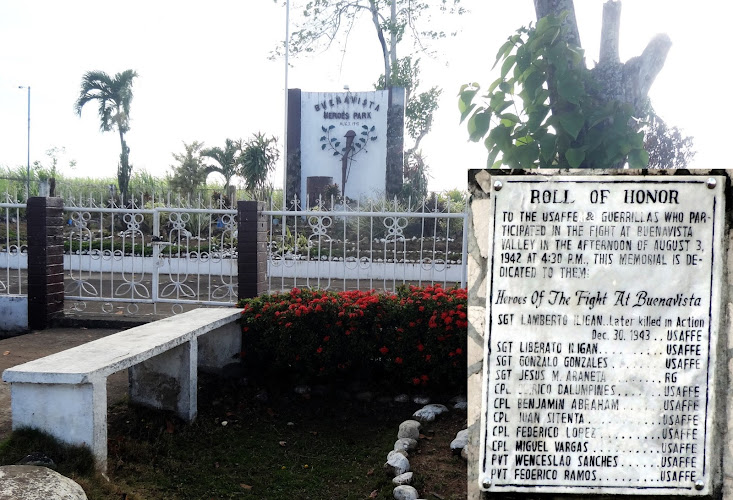
Buenavista Heroes Park
Hamungaya Campsite
Find Accommodations Nearby
Recommended Tours & Activities
Visitor Reviews
There are no reviews yet. Be the first one to write one.
Share Your Experience
Have you visited Himamaylan Cemetery? Help other travelers by leaving a review.