
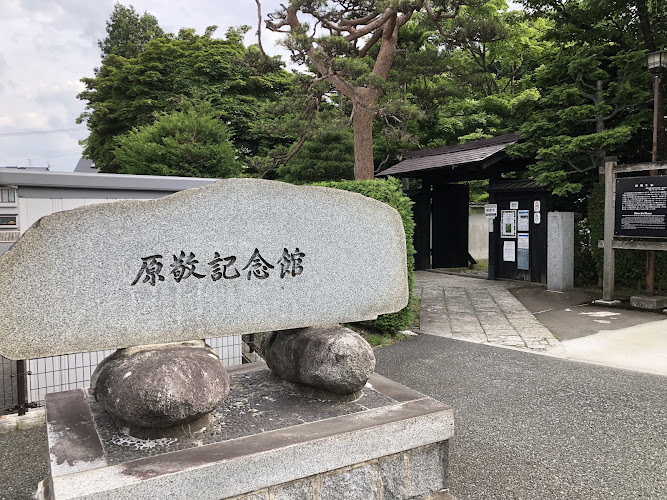
Hara-Kei Memorial Museum
About Hara-Kei Memorial Museum
Description
The Hara-Kei Memorial Museum in Morioka, Iwate, is a focused, quietly proud place that honors the life and political career of Hara Takashi, often remembered as one of Japan's most consequential early 20th-century leaders. More than a simple shrine to a single figure, the museum functions as a regional history museum with rotating exhibitions, archival materials, and contextual displays that trace the political, cultural, and social currents of the Meiji and Taisho eras. Visitors note that it feels intimate rather than grand — the kind of museum where a single object, a weathered letter or a pair of spectacles, can open up an entire era.
Exhibits emphasize Hara Takashi’s role in modern Japanese politics: how a commoner rose into national leadership, the party politics that shaped his tenure, and the events that marked turn-of-the-century governance. But alongside the political narrative, small galleries frame local life in Iwate and Morioka during Hara’s lifetime. That dual focus — national significance and local texture — gives the place a distinctive flavor. One might come for the statesman and stay for the neighborhood stories, local photographs, and the odd household item that anchors history in everyday reality.
The building itself is approachable and accessible, designed for visitors of varying mobility. It features a wheelchair-accessible entrance, designated accessible parking, and accessible restrooms, which makes it a reliable option for travelers who need those facilities. That accessibility is not just a checklist here; staff tend to be patient and practical when helping with directions or assistance inside the galleries. There is no on-site restaurant, so plan snack breaks elsewhere, but restrooms are available — a small but very welcome detail, especially in a compact museum where pacing yourself matters.
Atmospherically, Hara-Kei Memorial Museum is calm. Mornings often bring school groups or older visitors from the region, while afternoons can feel quieter. The interpretive style leans toward traditional museum presentation: display cases, carefully captioned artifacts, and timeline panels. Yet, visitors often find moments of surprise: a candid photograph that captures a forgotten street scene, or a pamphlet showing a political campaign slogan in a style that seems oddly modern. For travelers who enjoy slow-looking and the pleasures of small museums — the unexpected connections and the sense that one is peering into a lived past — this place rewards attention.
Practical notes about tone: the museum is not a blockbuster tourist magnet. Expectations should be managed: it is rich in local and historical value rather than flashy multimedia thrills. Some visitors arrive expecting a sweeping national monument and instead find an efficiently curated local memorial. Others, especially those interested in political history, regional identity, or the story of a commoner who made a national difference, come away impressed and moved. Overall, the experience tends to be thoughtful and reflective; it’s the kind of stop that adds texture to a Morioka itinerary.
Key Features
- Dedicated memorial museum focused on Hara Takashi and the era of early modern Japanese politics
- Regional history exhibits that place the statesman in local Morioka and Iwate contexts
- Personal artifacts, letters, photographs, and period documents displayed with careful captions
- Wheelchair-accessible entrance, wheelchair-accessible parking lot, and wheelchair-accessible restroom
- Clean, well-maintained restrooms on the premises (no on-site restaurant)
- Rotating or temporary exhibitions that periodically highlight specific themes or artifacts
- Compact galleries that can be explored in a dedicated 45–90 minute visit
- Helpful staff who can orient visitors and point out lesser-known highlights
Best Time to Visit
The most pleasant time to visit the Hara-Kei Memorial Museum is in late spring through early autumn when Morioka’s weather is mild and streets beyond the museum invite a bit of wandering. Spring, especially the weeks when cherry trees begin to bloom, often gives the surrounding neighborhood a peaceful, photogenic quality. Autumn brings crisp air and colorful leaves, which makes pairing the museum with a stroll around nearby parks a no-brainer.
Weekdays in the morning tend to be the quietest. If the visitor prefers fewer crowds and a slower pace for reading captions and studying exhibits, this slot is ideal. Weekends and local school holidays bring more domestic visitors — not necessarily a bad thing, but the museum’s smaller galleries can feel busier then. Also, if a temporary exhibition is on, it can elevate interest; checking local schedules beforehand is wise for those chasing a particular display.
Winter visits are still worthwhile, but weather can be a factor in Iwate. Heavy snow seasons may alter travel plans, so allow extra time for transit if coming from outside Morioka. In short: comfortable weather equals better walking and complementary sightseeing, but the museum itself welcomes visitors year-round when travel plans permit.
How to Get There
The Hara-Kei Memorial Museum sits in the Motomiya area of Morioka city and is reachable by a variety of local transport options. From Morioka Station, the simplest approach is usually a short taxi ride or a local bus that drops off in central Morioka neighborhoods — travelers will want to confirm routes that stop near Motomiya. Signs in the city tend to point toward major cultural sites; still, first-time visitors should allow a little extra time to find the entrance, especially on foot.
Those driving will appreciate that the museum includes wheelchair-accessible parking, making self-drive an easy option for travelers with mobility needs or those carrying additional gear. Street parking in parts of Morioka can be limited at peak times, so arriving earlier in the day helps. Local bus services and taxis are convenient and widely used; English signage on buses is mixed, so having a printed Japanese name of the museum or showing the address to the driver is a handy workaround.
Walking from nearby neighborhoods is pleasant for those who like a short promenade — it also provides an opportunity to see ordinary Morioka life: bakeries, small shops, and quiet streets that rarely make guidebooks but make a city feel lived-in. For itineraries combining multiple sites, the museum pairs well with nearby historical attractions and municipal parks, so planning a route that includes a stroll through a park or a visit to a nearby castle site enriches the day.
Tips for Visiting
- Plan for about 45–90 minutes. The museum is compact but dense; time enough to read labels and absorb the atmosphere makes the visit more rewarding.
- Carry cash. While many Japanese places accept cards, small museums sometimes prefer cash for ticket purchases or small gifts.
- There is no on-site restaurant. Pack a small snack or plan a lunch nearby after the visit; Morioka has several local eateries that offer soba, wanko soba, and other regional specialties.
- Respect photography rules. Some display cases may prohibit flash or photography; visitors who love photos should check signage or ask staff first.
- Accessibility is good, but bring any specific needs to the attention of staff. The museum’s wheelchair-accessible facilities make it friendly, but personalized assistance can smooth transitions between exhibits.
- Combine the visit with nearby attractions. The museum’s local focus makes it an excellent complement to a walk through Motomiya or a stop at other historical sites in Morioka.
- Expect mostly Japanese material with careful curation. Those with limited Japanese may find some panels concise but informative; taking time to look at objects and photographs often conveys meaning beyond language.
- Ask about temporary exhibitions. They sometimes highlight surprising themes or items not on permanent display — and can change the flavor of a visit.
- Be mindful of group visits. School groups or guided tours may visit at certain times, which can alter the quiet vibe. If solitude is important, pick a weekday morning.
- Keep an eye on local holidays. National holidays draw more domestic visitors, so if a quieter experience is wanted, avoid those dates.
In short, the Hara-Kei Memorial Museum is a considered stop for people who care about political history, regional stories, and museums that reward attention rather than spectacle. It’s not big, but it is deliberate; if the traveler likes a museum where artifacts whisper as much as they tell, this one will click. For a deeper pattern of Morioka’s past, the museum is an efficient, respectful place to learn, reflect, and then step back out into streets that still carry echoes of the era on the walls and in the quiet lanes.
Key Features
- Dedicated memorial museum focused on Hara Takashi and the era of early modern Japanese politics
- Regional history exhibits that place the statesman in local Morioka and Iwate contexts
- Personal artifacts, letters, photographs, and period documents displayed with careful captions
- Wheelchair-accessible entrance, wheelchair-accessible parking lot, and wheelchair-accessible restroom
- Clean, well-maintained restrooms on the premises (no on-site restaurant)
- Rotating or temporary exhibitions that periodically highlight specific themes or artifacts
- Compact galleries that can be explored in a dedicated 45–90 minute visit
- Helpful staff who can orient visitors and point out lesser-known highlights
More Details
Updated August 29, 2025
Table of Contents
Description
The Hara-Kei Memorial Museum in Morioka, Iwate, is a focused, quietly proud place that honors the life and political career of Hara Takashi, often remembered as one of Japan’s most consequential early 20th-century leaders. More than a simple shrine to a single figure, the museum functions as a regional history museum with rotating exhibitions, archival materials, and contextual displays that trace the political, cultural, and social currents of the Meiji and Taisho eras. Visitors note that it feels intimate rather than grand — the kind of museum where a single object, a weathered letter or a pair of spectacles, can open up an entire era.
Exhibits emphasize Hara Takashi’s role in modern Japanese politics: how a commoner rose into national leadership, the party politics that shaped his tenure, and the events that marked turn-of-the-century governance. But alongside the political narrative, small galleries frame local life in Iwate and Morioka during Hara’s lifetime. That dual focus — national significance and local texture — gives the place a distinctive flavor. One might come for the statesman and stay for the neighborhood stories, local photographs, and the odd household item that anchors history in everyday reality.
The building itself is approachable and accessible, designed for visitors of varying mobility. It features a wheelchair-accessible entrance, designated accessible parking, and accessible restrooms, which makes it a reliable option for travelers who need those facilities. That accessibility is not just a checklist here; staff tend to be patient and practical when helping with directions or assistance inside the galleries. There is no on-site restaurant, so plan snack breaks elsewhere, but restrooms are available — a small but very welcome detail, especially in a compact museum where pacing yourself matters.
Atmospherically, Hara-Kei Memorial Museum is calm. Mornings often bring school groups or older visitors from the region, while afternoons can feel quieter. The interpretive style leans toward traditional museum presentation: display cases, carefully captioned artifacts, and timeline panels. Yet, visitors often find moments of surprise: a candid photograph that captures a forgotten street scene, or a pamphlet showing a political campaign slogan in a style that seems oddly modern. For travelers who enjoy slow-looking and the pleasures of small museums — the unexpected connections and the sense that one is peering into a lived past — this place rewards attention.
Practical notes about tone: the museum is not a blockbuster tourist magnet. Expectations should be managed: it is rich in local and historical value rather than flashy multimedia thrills. Some visitors arrive expecting a sweeping national monument and instead find an efficiently curated local memorial. Others, especially those interested in political history, regional identity, or the story of a commoner who made a national difference, come away impressed and moved. Overall, the experience tends to be thoughtful and reflective; it’s the kind of stop that adds texture to a Morioka itinerary.
Key Features
- Dedicated memorial museum focused on Hara Takashi and the era of early modern Japanese politics
- Regional history exhibits that place the statesman in local Morioka and Iwate contexts
- Personal artifacts, letters, photographs, and period documents displayed with careful captions
- Wheelchair-accessible entrance, wheelchair-accessible parking lot, and wheelchair-accessible restroom
- Clean, well-maintained restrooms on the premises (no on-site restaurant)
- Rotating or temporary exhibitions that periodically highlight specific themes or artifacts
- Compact galleries that can be explored in a dedicated 45–90 minute visit
- Helpful staff who can orient visitors and point out lesser-known highlights
Best Time to Visit
The most pleasant time to visit the Hara-Kei Memorial Museum is in late spring through early autumn when Morioka’s weather is mild and streets beyond the museum invite a bit of wandering. Spring, especially the weeks when cherry trees begin to bloom, often gives the surrounding neighborhood a peaceful, photogenic quality. Autumn brings crisp air and colorful leaves, which makes pairing the museum with a stroll around nearby parks a no-brainer.
Weekdays in the morning tend to be the quietest. If the visitor prefers fewer crowds and a slower pace for reading captions and studying exhibits, this slot is ideal. Weekends and local school holidays bring more domestic visitors — not necessarily a bad thing, but the museum’s smaller galleries can feel busier then. Also, if a temporary exhibition is on, it can elevate interest; checking local schedules beforehand is wise for those chasing a particular display.
Winter visits are still worthwhile, but weather can be a factor in Iwate. Heavy snow seasons may alter travel plans, so allow extra time for transit if coming from outside Morioka. In short: comfortable weather equals better walking and complementary sightseeing, but the museum itself welcomes visitors year-round when travel plans permit.
How to Get There
The Hara-Kei Memorial Museum sits in the Motomiya area of Morioka city and is reachable by a variety of local transport options. From Morioka Station, the simplest approach is usually a short taxi ride or a local bus that drops off in central Morioka neighborhoods — travelers will want to confirm routes that stop near Motomiya. Signs in the city tend to point toward major cultural sites; still, first-time visitors should allow a little extra time to find the entrance, especially on foot.
Those driving will appreciate that the museum includes wheelchair-accessible parking, making self-drive an easy option for travelers with mobility needs or those carrying additional gear. Street parking in parts of Morioka can be limited at peak times, so arriving earlier in the day helps. Local bus services and taxis are convenient and widely used; English signage on buses is mixed, so having a printed Japanese name of the museum or showing the address to the driver is a handy workaround.
Walking from nearby neighborhoods is pleasant for those who like a short promenade — it also provides an opportunity to see ordinary Morioka life: bakeries, small shops, and quiet streets that rarely make guidebooks but make a city feel lived-in. For itineraries combining multiple sites, the museum pairs well with nearby historical attractions and municipal parks, so planning a route that includes a stroll through a park or a visit to a nearby castle site enriches the day.
Tips for Visiting
- Plan for about 45–90 minutes. The museum is compact but dense; time enough to read labels and absorb the atmosphere makes the visit more rewarding.
- Carry cash. While many Japanese places accept cards, small museums sometimes prefer cash for ticket purchases or small gifts.
- There is no on-site restaurant. Pack a small snack or plan a lunch nearby after the visit; Morioka has several local eateries that offer soba, wanko soba, and other regional specialties.
- Respect photography rules. Some display cases may prohibit flash or photography; visitors who love photos should check signage or ask staff first.
- Accessibility is good, but bring any specific needs to the attention of staff. The museum’s wheelchair-accessible facilities make it friendly, but personalized assistance can smooth transitions between exhibits.
- Combine the visit with nearby attractions. The museum’s local focus makes it an excellent complement to a walk through Motomiya or a stop at other historical sites in Morioka.
- Expect mostly Japanese material with careful curation. Those with limited Japanese may find some panels concise but informative; taking time to look at objects and photographs often conveys meaning beyond language.
- Ask about temporary exhibitions. They sometimes highlight surprising themes or items not on permanent display — and can change the flavor of a visit.
- Be mindful of group visits. School groups or guided tours may visit at certain times, which can alter the quiet vibe. If solitude is important, pick a weekday morning.
- Keep an eye on local holidays. National holidays draw more domestic visitors, so if a quieter experience is wanted, avoid those dates.
In short, the Hara-Kei Memorial Museum is a considered stop for people who care about political history, regional stories, and museums that reward attention rather than spectacle. It’s not big, but it is deliberate; if the traveler likes a museum where artifacts whisper as much as they tell, this one will click. For a deeper pattern of Morioka’s past, the museum is an efficient, respectful place to learn, reflect, and then step back out into streets that still carry echoes of the era on the walls and in the quiet lanes.
Key Highlights
- Dedicated memorial museum focused on Hara Takashi and the era of early modern Japanese politics
- Regional history exhibits that place the statesman in local Morioka and Iwate contexts
- Personal artifacts, letters, photographs, and period documents displayed with careful captions
- Wheelchair-accessible entrance, wheelchair-accessible parking lot, and wheelchair-accessible restroom
- Clean, well-maintained restrooms on the premises (no on-site restaurant)
- Rotating or temporary exhibitions that periodically highlight specific themes or artifacts
- Compact galleries that can be explored in a dedicated 45–90 minute visit
- Helpful staff who can orient visitors and point out lesser-known highlights
Location
Places to Stay Near Hara-Kei Memorial Museum
Find and Book a Tour
Explore More Travel Guides
No reviews found! Be the first to review!
Traveler Reviews for Hara-Kei Memorial Museum
There are no reviews yet. Be the first one to write one.
Have you visited Hara-Kei Memorial Museum? Help other travelers by sharing your review.
You Might Also Like
Genta-iwa Observation Deck
Morioka Zoological Park ZOOMO
Hachimantai Mikaeri Pass
Find Accommodations Nearby
Recommended Tours & Activities
Visitor Reviews
There are no reviews yet. Be the first one to write one.
Share Your Experience
Have you visited Hara-Kei Memorial Museum? Help other travelers by leaving a review.