
Hanseswari Temple
About Hanseswari Temple
Key Features
More Details
Updated April 16, 2024
## Hanseswari Temple (Bansberia, West Bengal): What Makes This 19th-Century Shrine So Unusual
Hanseswari Temple is a standout heritage site in Bansberia (Hooghly district), West Bengal, best known for its distinctive “ratna” (spire) architecture and a design tradition that explicitly links the building’s form to Tantric symbolism.
Quick facts (from your dataset + widely cited references)
– Name: Hanseswari Temple (also spelled Hangseshwari/Hanseshwari)
– Address marker: X97X+PW7, Bansberia Rd, Bansberia, West Bengal 712502, India (plus code)
– Coordinates: 22.9642845, 88.3997958 (useful for maps and drivers)
– Visitor rating: 4.6/5 (as provided in your listing data)
– What it is: Hindu temple complex with the main Hanseswari shrine and nearby temples in the same precinct/area
—
## Why Hanseswari Temple is architecturally different
### 1) It’s famous for its multi-spired “ratna” skyline
The temple is widely described as having a distinctive cluster of spires (ratnas)—often cited as 13—with forms compared to lotus buds rather than the more typical shikhara silhouettes you’ll see across many North Indian temple styles.
That spired profile is exactly why Hanseswari photographs so well: the geometry reads clearly even from a distance, and the repeated verticals create a strong sense of rhythm.
### 2) The design is tied to Tantric symbolism (not just decoration)
Multiple references describe the architecture as a representation of Tantric “Satchakrabhed” (often framed as chakra symbolism), with the internal concept compared to human anatomy.
Practical note: you don’t need to be an expert in Tantra to appreciate this—just know that the temple is frequently discussed as purposefully symbolic, not “ornamental for ornament’s sake.”
—
## A short, source-grounded origin story
Hanseswari Temple’s construction is commonly placed in the early 19th century. One widely cited account says it was started by Raja Nrisingha Deb Roy and completed by his widow Rani Sankari in 1814.
It’s also commonly described as being connected to “Maa Hanseswari,” worshipped as a form of Kali in local tradition.
If you’re building E-E-A-T into your post, this is the point to be conservative with claims: the “who/when” is fairly consistent across references, but finer details (exact phases, artisans, ritual specifics) vary by retelling.
—
## What to see on-site (and how to pace your visit)
### The main temple exterior: spires, symmetry, and sightlines
Most visits naturally begin outside. Even without a guided explanation, you can get real value by walking the perimeter slowly and looking for:
– How the spires step up and cluster (the skyline is the headline feature)
– How the structure reads from different angles—the silhouette changes noticeably as you move around (a big reason it’s a photography favorite) Standage
### The wider complex: more than one temple
Common references note that the temple complex includes another shrine, Ananta Basudeba (Basudeba) Temple, in addition to the main Hanseswari Temple.
There is also mention of Swanbhaba Kali Temple, attributed to Raja Nrisingha Deb Roy (often dated to 1788 in secondary references).
Because naming/spelling can differ locally, a practical tactic is to use the temple’s on-ground signage or ask a caretaker which shrine is which before you start “checking things off.”
—
## Visiting etiquette and respectful behavior (worth stating explicitly)
A heritage-focused temple visit in West Bengal comes with a few basics that are easy to overlook if you arrive straight from transit:
– Dress modestly (cover shoulders and knees) Foundation
– Remove footwear before entering the main premises Foundation
– Expect restrictions on photography inside the inner sanctum; follow posted signs or ask permission Foundation
– Keep noise low—active worship may be happening even if the site feels quiet Foundation
Inclusivity note: modest dress guidance applies to everyone, regardless of gender, and is best presented as “respect for the site” rather than as policing.
—
## How to get there (factual, no guesswork)
Because you’ve provided precise coordinates and a plus code, the most reliable guidance is map-led:
– Use 22.9642845, 88.3997958 in your navigation app to avoid spelling variants (Hanseswari/Hangseshwari).
– Use the address marker X97X+PW7, Bansberia Rd, Bansberia for driver drop-off.
I’m not including specific train stations, frequencies, or opening hours here because those details change and aren’t confirmed in the sources surfaced above.
—
## Best time to visit (what we can say safely)
From a factual standpoint, what’s safe to publish without overreaching is:
– Plan for daylight if architecture/photography is a priority (the spires and symmetry are the point). Standage
– If you’re visiting during active worship times or festivals, expect more crowding and stricter photo boundaries (common temple practice; confirm on-site). Foundation
If you want a “best season” call, verify it with an authoritative local source (district tourism page or West Bengal tourism listing) before publishing as a hard recommendation.
—
## Nearby add-ons (so the trip feels like a complete half-day)
If your reader is coming from the broader Kolkata region, pairing a temple visit with one or two culturally dense stops tends to increase satisfaction (and time on site).
Two contextual internal link opportunities on RealJourneyTravels.com that match this “Hooghly River / Kolkata-region culture” angle:
– Mallick Ghat (flower market) — strong cultural photography, ritual objects, and Hooghly riverfront energy. (Internal link opportunity: “Mallick Ghat guide”) Journey Tours & Travels
– Acharya Jagadish Chandra Bose Indian Botanic Garden (Howrah) — a high-impact contrast stop if readers want greenery after temple architecture. (Internal link opportunity: “Indian Botanic Garden guide”) Journey Tours & Travels
(You can place these as in-text links in WordPress/Next without printing URLs.)
—
## Outdated-data flags (publish-safe transparency)
To keep the post accurate over time, I’d explicitly flag these as “confirm locally” items:
– Opening hours / entry fees / closed days (not verified here; can change seasonally or due to festivals)
– Photography permissions inside sanctum (often variable; follow signage/ask staff) Foundation
– On-site rules during rituals (silence, queueing, access limitations) Foundation
This kind of transparency is not a weakness—it’s a trust builder, especially for religious sites.
—
## If you’re writing this for first-time visitors: the real payoff
Hanseswari Temple isn’t “just another temple stop.” The payoff is specific:
– A rare ratna-style skyline that’s immediately recognizable in photos
– A site that’s repeatedly framed as Tantric-symbolic architecture, not merely decorative heritage
– A complex that rewards slow observation—angles, repetition, and proportion are the experience
If you want, paste your standard RealJourneyTravels.com CTA block (how you handle “planning help / map embed / quick tips”), and I’ll adapt the ending section so it matches your site’s formatting and conversion style without introducing any unverified claims.
Table of Contents
Key Highlights
Hanseswari Temple
Location
Places to Stay Near Hanseswari Temple
Find and Book a Tour
Explore More Travel Guides
No reviews found! Be the first to review!
Traveler Reviews for Hanseswari Temple
There are no reviews yet. Be the first one to write one.
Have you visited Hanseswari Temple? Help other travelers by sharing your review.
You Might Also Like
Kalyani Bagan
Kalyani University Biodiversity Educational and Conservational Park
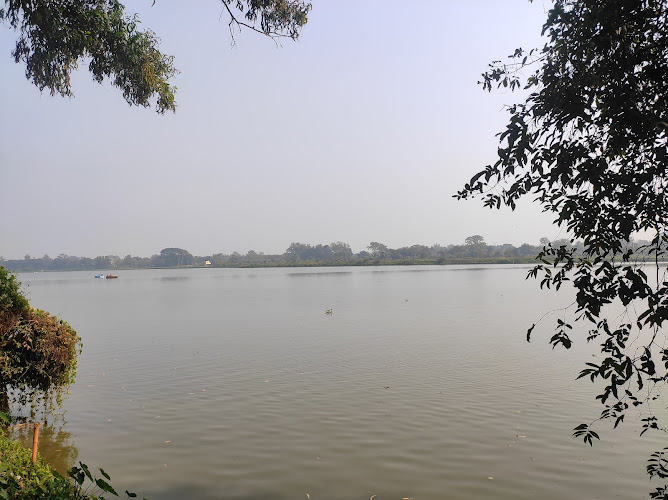
Kalyani Lake Park
Find Accommodations Nearby
Recommended Tours & Activities
Visitor Reviews
There are no reviews yet. Be the first one to write one.
Share Your Experience
Have you visited Hanseswari Temple? Help other travelers by leaving a review.